

10 Best Automotive Spot Welders for DIY Mechanics in 2026: Top Picks for Bodywork and Battery Repairs

The right spot welder can make automotive repairs faster, cleaner, and more consistent than conventional welding methods. This roundup covers ten options suited to different DIY jobs, including panel work, dent pulling, and battery-tab welding.
Before choosing, compare power requirements, material capacity, control options, portability, and the type of repair you plan to perform. The best automotive spot welders for DIY mechanics are not necessarily the most powerful—they are the ones matched to your workspace and projects.
Best 10 Automotive Spot Welders for DIY Mechanics Picks for 2026
Best Portable 110V Pick
Stark USA 110V Portable Spot Welder
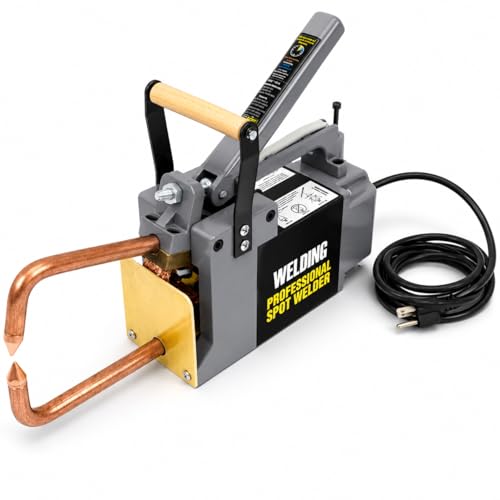
- 110V input with up to 5,500A output
- 1/8-inch capacity and 6-inch throat depth
- Handheld design with copper tips
Best For: Home garages and portable sheet-metal repairs
Best Integrated Dent-Repair System
EVSTUL Stud Welder Dent Puller

- Combines spot welding and dent pulling
- Six repair modes with auto/manual operation
- Overheat protection and 3-year support
Best For: Steel-panel dent and collision repairs
Best Heavy-Duty 220V Option
Stark USA 220V Portable Spot Welder

- 220V input with up to 6,750A output
- 1/8-inch capacity for sheet-metal work
- Includes replacement copper welding tips
Best For: 220V-equipped garages and frequent fabrication
Best for Battery-Pack Work
AWithZ UF20B Capacitor Spot Welder

- Automatic, manual, and foot-pedal modes
- 99 adjustable gears for material control
- Includes pen, pedal, and nickel-plated sheet
Best For: DIY battery-pack building and nickel-strip welding
Heavy-Duty Shop Pick
Hoteche 8KW Portable Spot Welder

- 8KW input with 120V operation
- Welds 1.2mm + 1.2mm material
- 50% duty cycle for repeated work
Best For: Home workshops and automotive sheet metal repairs
Battery-Pack Specialist
11.5KW 100-Gear Battery Spot Welder

- 100-level rotary power adjustment
- Hand trigger and foot-pedal control
- Thermal protection and auto shutdown
Best For: DIY battery packs and thin battery materials
Portable Battery Pick
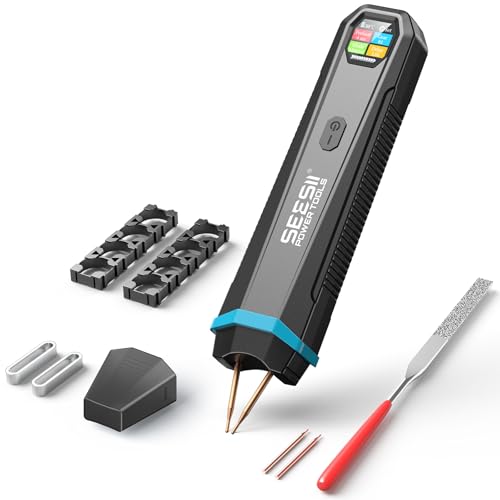
- Cordless handheld operation
- 99 gears with auto/manual modes
- Handles nickel-plated sheets up to 0.2mm
Best For: Portable battery-pack and cell repairs
High-Capacity Pick
AWithZ 1650A Portable Spot Welder

- 1650A output with 13.8KW maximum power
- 10000mAh battery for extended operation
- Auto, pen, and foot-pedal welding modes
Best For: Frequent DIY battery-pack projects
Portable Power Pick
8000W Handheld Battery Spot Welder

- 8000W output with pure copper welding needles
- Built-in rechargeable lithium battery
- 1–9 adjustment with automatic and manual modes
Best For: Mobile battery-welding projects
Compact Handheld Pick
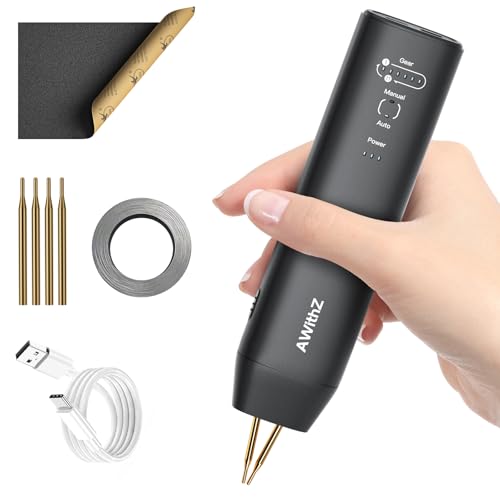
- Lightweight 8.8-ounce handheld design
- Integrated power supply and welding pen
- 11 gears for battery and nickel-sheet work
Best For: Portable small-battery repairs
Best Portable 110V Pick – Stark USA 110V Portable Spot Welder
For DIY mechanics looking for automotive spot welders for DIY mechanics, this 110V Stark USA model is a practical handheld option for sheet-metal and auto-body work. It offers a 1/8-inch welding capacity, a 6-inch throat depth, and a 5,500A maximum output in a portable design.
Best For: Home garages and DIY auto-body repairs that need a portable 110V spot welder.
Pros:
- Works from a standard 110V input and delivers up to 5,500A.
- Portable handheld design with an attached handle for moving between work areas.
- Copper welding tips are designed for repeated use and can support sheet-metal and automotive repairs.
- Simple lever-operated controls are approachable for beginners.
Cons:
- Its 1/8-inch capacity may not suit thicker materials.
- The listed 6,600-watt rating may require careful attention to circuit capacity.
This is a straightforward choice when household-voltage compatibility and portability matter most. It is better suited to general sheet-metal and auto-body projects than to specialized dent-pulling work.
Best Integrated Dent-Repair System – EVSTUL Stud Welder Dent Puller
Among automotive spot welders for DIY mechanics, this EVSTUL kit stands out for combining spot welding and dent pulling in one auto-body repair unit. Its six modes, automatic and manual operation, and included accessories are aimed at steel-panel dent work rather than basic joining alone.
Best For: DIY mechanics repairing dents, scratches, and other collision damage on steel vehicle panels.
Pros:
- Combines a 4,200A spot welder with an integrated dent puller.
- Six modes cover stud pulling, wave-line welding, single-sided spot welding, and carbon-rod burn-off.
- Automatic and manual modes support both quick repairs and more controlled adjustments.
- Overheat protection pauses operation at 70°C and resumes after cooling.
Cons:
- At 48.1 pounds, it is substantially less portable than handheld spot welders.
- Its feature set is focused on auto-body dent repair, so it may be excessive for simple sheet-metal joining.
- The supplied notes specify steel-panel applications rather than general aluminum welding.
The integrated puller and broad mode selection make this the most specialized option in the group. Choose it when dent correction is central to your projects and the heavier shop-style format is acceptable.
Best Heavy-Duty 220V Option – Stark USA 220V Portable Spot Welder
For DIY mechanics who have access to a 220V circuit, this Stark USA model provides a higher-power alternative among automotive spot welders for DIY mechanics. It is rated for 1/8-inch material, uses copper electrode tips, and reaches a listed maximum output of 6,750A.
Best For: Garage users handling regular sheet-metal fabrication or automotive repair with a compatible 220V outlet.
Pros:
- 220V input and 6,750A maximum output support demanding spot-welding tasks.
- Designed for carbon steel, aluminum, and sheet-metal fabrication according to the product listing.
- Includes a replacement pair of welding tips.
- Portable handheld format with simple lever-and-pressure operation.
Cons:
- Requires a suitable 220V power source, limiting plug-in flexibility.
- Its 28.9-pound weight is notable for a handheld unit.
- The 1/8-inch capacity may limit thicker repair materials.
This is the stronger Stark USA choice for users who already have 220V power available. The extra output and replacement tips are useful for frequent work, but the voltage requirement makes it less convenient for occasional home use.
Best for Battery-Pack Work – AWithZ UF20B Capacitor Spot Welder
This AWithZ UF20B serves a different niche from panel-repair machines in the automotive spot welders for DIY mechanics category. It is designed primarily for battery-pack building, with adjustable settings, interchangeable welding modes, and support for cylindrical cells, LiFePO4 batteries, and thin nickel-plated sheet.
Best For: DIY mechanics and makers building or repairing lithium battery packs with nickel strip.
Pros:
- Offers automatic, manual, and foot-pedal operating modes.
- Provides 99 adjustable gears for different materials and welding requirements.
- Supports 18650, 14500, 21700, LiFePO4, and other industrial battery applications.
- Includes a welding pen, foot pedal, nickel-plated sheet, file, and manual.
Cons:
- It is specialized for battery-pack and thin-sheet work rather than vehicle body-panel repair.
- The supplied notes state that it must remain connected to wall power while in use.
- Its capacitor-based operation may be less familiar to users accustomed to conventional welders.
Choose this model when your automotive projects involve battery rebuilding or nickel-strip welding. For conventional steel bodywork or dent pulling, one of the dedicated auto-body machines above is a more suitable fit.
Heavy-Duty Shop Pick – Hoteche 8KW Portable Spot Welder
Hoteche Portable Spot Welder Single Phase Spot Welding Machine with Durable Components
Check Price On AmazonFor DIY mechanics seeking automotive spot welders for DIY mechanics projects, the Hoteche offers a workshop-oriented option for sheet metal and auto body work. Its 8KW input, 120V operation, and rated 1.2mm + 1.2mm welding capacity make it suited to repeated repairs where a compact battery-powered unit would be underpowered.
Best For: Home workshops, automotive sheet metal repairs, and users who need a corded machine for repeated spot welds.
Pros:
- 8KW input capacity for demanding spot-welding tasks.
- Rated for welding 1.2mm + 1.2mm material.
- 50% duty cycle supports extended or repeated operation.
- Portable 26-pound metal construction with a 120V American plug.
Cons:
- At 26 pounds, it is less convenient to carry than handheld battery models.
- Its 120V corded design requires access to a suitable outlet.
The Hoteche is the most traditional shop-style choice here: heavier and less mobile, but better aligned with automotive sheet metal work and longer repair sessions. Confirm your material thickness and available electrical setup before buying.
Battery-Pack Specialist – 11.5KW 100-Gear Battery Spot Welder
This compact battery-powered unit is aimed primarily at battery-pack builders rather than conventional auto body welding. For DIY mechanics comparing automotive spot welders for DIY mechanics projects, its 100-level adjustment, dual-pulse output, and foot-pedal or hand-trigger control provide flexibility for small battery-related repairs.
Best For: DIY battery-pack assembly, cylindrical cells, phone batteries, and button batteries where fine power adjustment matters.
Pros:
- 100 adjustable power levels for delicate or heavier battery-cell work.
- Supports foot-pedal and hand-trigger operation.
- Thermal protection, overheating alerts, and automatic shutdown after eight minutes of inactivity.
- Includes welding pens, foot switch, nickel-plated sheet, and charging cable.
Cons:
- The supplied notes position it for 0.1–0.3mm battery materials, not automotive body panels.
- Its battery-powered format is more specialized than a shop welder for vehicle sheet metal.
Choose this model when your DIY work centers on battery packs and thin nickel strip. It offers useful control and safety features, but it is not the natural pick for structural or thicker automotive body repairs.
Portable Battery Pick – SEESII Cordless Spot Welder
The SEESII is a pocket-sized cordless option for DIY users who value portability and precise control. Among automotive spot welders for DIY mechanics, it is better suited to small battery repairs and light portable tasks than to full-size automotive sheet metal, with support for nickel-plated sheets up to 0.2mm and pure nickel up to 0.15mm.
Best For: Portable battery-pack repairs, cylindrical cells, phone batteries, and button batteries.
Pros:
- Cordless handheld design for work away from an outlet.
- 99 adjustment gears and auto/manual welding modes.
- Display shows welding status, temperature, and remaining battery.
- Includes nickel strip, replacement copper styluses, and preparation accessories.
Cons:
- Material limits are substantially thinner than typical automotive sheet metal.
- Performance depends on battery charge, and the unit should be fully charged before first use.
- Requires monthly charging during storage to maintain battery health.
The SEESII makes sense when compact, cordless battery work is the priority. Its display and 99-step adjustment are useful for controlled cell repairs, but its stated thickness limits make it a niche choice for automotive DIY mechanics.
High-Capacity Pick – AWithZ 1650A Portable Spot Welder
For DIY mechanics building or repairing battery packs, this automotive spot welder offers high output, flexible controls, and a battery-powered design. Its 1650A maximum output and dual-pulse operation support nickel, pure nickel, and steel materials up to 0.3mm thick.
Best For: Frequent DIY battery-pack projects where extended runtime and multiple operating modes matter.
Pros:
- 1650A output and 13.8KW maximum power support strong welds.
- Auto, welding-pen, and foot-pedal modes provide flexible control.
- Includes a 10000mAh battery, copper welding pen, foot switch, nickel sheet, and battery holders.
- Overheat, low-voltage, and temperature alerts add operating protection.
Cons:
- At 2.05 pounds, it is heavier than the compact handheld option in this roundup.
- The supplied details focus on battery-pack work rather than general automotive sheet-metal welding.
This is the most feature-rich choice here for sustained battery DIY work, especially if you value foot-pedal operation and a generous accessory package.
Portable Power Pick – 8000W Handheld Battery Spot Welder
This 8000W handheld model is a practical option for DIY mechanics who want a portable automotive spot welder for battery packs and nickel strips. Its built-in lithium battery eliminates the need for an external power source, while adjustable output and automatic or manual modes help accommodate different materials.
Best For: Mobile workshop, garage, or outdoor battery-welding tasks.
Pros:
- High-power 8000W design uses pure copper welding needles.
- Built-in rechargeable lithium battery supports welding away from an outlet.
- 1–9 output adjustment and dual welding modes provide control.
- Digital display shows remaining battery power.
Cons:
- The supplied notes do not specify the supported material thickness.
- Its power source is listed as AC, despite the built-in rechargeable battery, so buyers should verify charging requirements.
Choose this model when portability and straightforward power monitoring are priorities. It offers a useful balance of output adjustment and cordless convenience for battery-focused projects.
Compact Handheld Pick – AWithZ H1 Battery Spot Welder
For DIY mechanics who prioritize portability, this compact automotive spot welder combines the power supply and welding pen in one handheld unit. It is designed for cylindrical batteries such as 18650, 26650, and 36650 cells, with 11 output gears for nickel sheets and related repair work.
Best For: Small battery repairs and lightweight DIY projects where one-handed operation is useful.
Pros:
- Lightweight 8.8-ounce design is easy to carry.
- Built-in welding pen requires no separate pen or external power supply.
- 11 adjustable gears accommodate different battery and nickel-sheet applications.
- Includes nickel-plated sheet, charging cable, manual, and replaceable welding tips.
Cons:
- Its compact design is intended for battery work rather than broad sheet-metal welding.
- Lower gears and material guidance are focused on thin nickel sheets and battery repairs.
This is the simplest grab-and-go option in the group. Its small size, two-button operation, and integrated welding tip make it especially convenient for occasional battery replacement and pack-repair tasks.
How We Picked the Best Automotive Spot Welders for DIY Mechanics
We organized these picks around the jobs home mechanics are most likely to tackle: sheet-metal joining, dent repair, bodywork, and battery-pack assembly. We considered output claims alongside practical details such as voltage, throat depth, electrode or cable design, adjustment range, operating modes, and portability.
Because spot welders vary widely, the list includes both transformer-style machines for automotive panels and compact battery-powered units intended primarily for nickel strip. Always verify the manufacturer’s stated capacity and duty cycle before buying.
Quick Comparison
| Best For | Look For | Typical Advantage |
|---|---|---|
| Automotive sheet metal | 110V or 220V transformer, suitable throat depth | Consistent panel welds |
| Dent repair | Stud-welding accessories and high pulse output | Pulls attached studs without extensive disassembly |
| Battery tabs | Adjustable pulse control and foot pedal | More repeatable nickel-strip welds |
| Mobile or occasional work | Compact battery design | Easy transport and setup |
Key Buying Factors for Automotive Spot Welders for DIY Mechanics
Match the Welder to the Material
Check the maximum thickness for the metal you intend to join. Thin automotive panels and battery nickel strips require different pulse behavior, electrodes, and clamping pressure. A unit designed for battery tabs should not be assumed suitable for vehicle body panels.
Choose the Right Power Source
A 110V model is generally easier to use in a home garage, while a 220V machine may offer more headroom for heavier sheet metal. Battery-powered models improve portability but may have narrower application limits.
Prioritize Control and Repeatability
Adjustable power, pulse duration, dual-pulse operation, automatic and manual modes, and a foot pedal can help prevent inconsistent welds. Fine control matters especially when working with thin metal or delicate battery cells.
Check Workspace and Safety Requirements
Measure available clearance around the workpiece, including throat depth and electrode reach. Use appropriate eye protection, gloves, ventilation, and fire-safe surroundings. For battery work, avoid short circuits, overheating, and damaged cells.
Who Should Buy Which Automotive Spot Welders for DIY Mechanics?
Choose a transformer-style 110V model if you want a straightforward garage machine for lighter automotive sheet-metal work. A 220V unit is better for users with a suitable circuit who need additional capacity and expect frequent bodywork.
A stud-welder kit is the more practical choice for DIY dent repair, while a compact adjustable battery spot welder suits nickel-strip work on compatible cells. If you move between jobs or lack a convenient outlet, consider a rechargeable handheld model—but confirm its material limits first.
Whichever option you choose, treat advertised wattage and current as starting points rather than guarantees. Electrode condition, panel fit-up, contact pressure, pulse settings, and the machine’s duty cycle all affect real-world results.
