

10 Best Automotive Thermal Imagers for Faster Vehicle Diagnostics in 2026

Automotive thermal imagers help reveal temperature differences that ordinary inspection tools can miss, making them useful for diagnosing cooling systems, brakes, electrical connections, HVAC components, and engine-bay problems.
This roundup compares 10 handheld and phone-connected models across resolution, temperature range, refresh rate, targeting features, portability, and ease of use so you can choose the right thermal camera for your garage or workshop.
Best 10 Automotive Thermal Imagers Picks for 2026
Best Large-Screen Pick

- 3.5-inch display with TISR-enhanced imaging
- 64GB storage and Wi-Fi file transfer
- IP54 protection, drop resistance, and laser pointer
Best For: Standalone automotive inspections needing clear viewing and extensive storage
Best Pocket Smartphone Pick

- 512×384 imaging in a 3.52-ounce design
- Temperature tracking and high-temperature alarms
- Connects to compatible iPhone, Android, and tablet devices
Best For: Mobile automotive troubleshooting in tight spaces
Best PC Analysis Value

- 320×240 display with TISR enhancement
- Windows tools for 2D/3D analysis and reports
- 14°F–932°F range with alarms and 8-hour battery
Best For: Automotive inspections requiring Windows-based analysis and reporting
Best Phone-Powered Pick
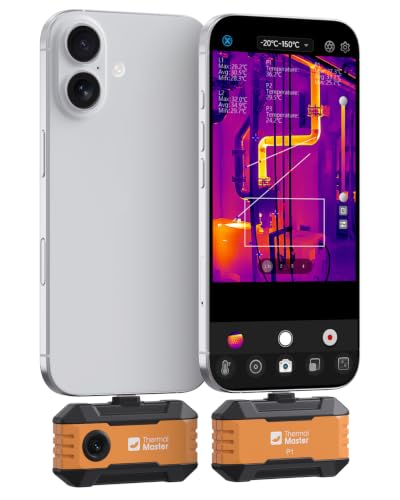
- Enhanced 320 x 240 thermal detail with 25Hz viewing
- -4°F to 1112°F measurement range
- Compact USB-C design with alarms and 15x zoom
Best For: Phone-based automotive and field inspections
Best Handheld Analysis Features

- 320 x 240 display with TISR-enhanced thermal detail
- 8GB storage for over 20,000 images and videos
- Windows analysis software with 2D/3D tools and reports
Best For: Technicians needing standalone inspection and reporting
Best Rugged Simplicity

- MSX-enhanced thermal images with bullseye laser
- -13°F to 572°F measurement range
- Drop-tested IP54 enclosure with extensive warranty coverage
Best For: Durable, quick automotive heat-source checks
Professional Precision
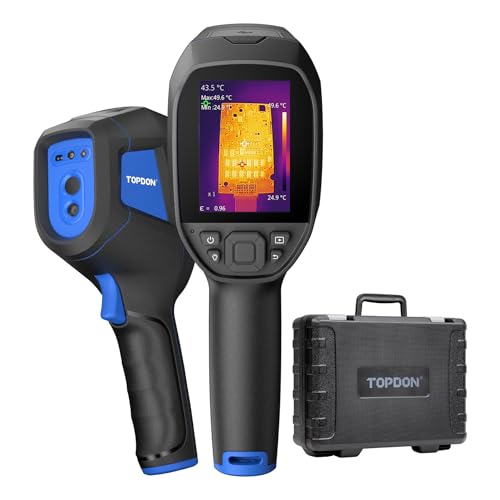
- Laser targeting measures distances up to 4 meters
- 3.5-inch display and 64GB storage
- Up to 8 hours of use with rugged IP54 housing
Best For: Professional technicians needing precise, well-documented inspections
High-Refresh Value

- TISR boosts imagery to 240×240 super resolution
- 25Hz refresh rate with temperature alarms
- Up to 9 hours of battery life and IP54 protection
Best For: Versatile automotive troubleshooting and general field diagnostics
Lightweight Detail

- 320×240 super-resolution imaging with 40mK NETD
- 9-ounce design and up to 10 hours of runtime
- Automatic alerts, video recording, and 8GB storage
Best For: Portable, detailed inspections by technicians and hobbyists
Best Large-Screen Pick – TOPDON TC004
For automotive thermal imagers that prioritize easy viewing and field-ready operation, the TOPDON TC004 combines a 3.5-inch display with enhanced thermal imaging up to 512×384 through TISR technology. Its wide temperature range, laser pointer, storage, and rugged construction make it practical for repeated inspections.
Best For: Automotive technicians and inspectors who want a standalone thermal camera with a large screen, strong storage capacity, and convenient target identification.
Pros:
- 3.5-inch display makes hot spots and temperature differences easier to view.
- 256×192 infrared resolution can be enhanced up to 512×384 with TISR.
- Built-in red laser pointer helps identify the measurement area.
- 64GB storage, Wi-Fi transfer, IP54 protection, and 2-meter drop resistance support field work.
Cons:
- At 2.11 pounds, it is less pocketable than a phone-connected imager.
- Its supplied temperature range starts at -4°F rather than extending to lower temperatures.
The TC004 is a well-rounded choice when display comfort, documentation, and durability matter more than the smallest possible form factor. Wi-Fi reporting and the integrated light add useful convenience during inspections in confined or poorly lit areas.
Best Pocket Smartphone Pick – GW340 Thermal Camera
The GW340 is one of the most compact automotive thermal imagers in this roundup, connecting to compatible iPhone, Android, or tablet devices. It offers 512×384 super-resolution imaging, a broad -4°F to 752°F range, and measurement tools suited to quick checks in tight spaces.
Best For: Mobile technicians who want a lightweight thermal camera for automotive repairs, under-car inspections, and on-the-go troubleshooting.
Pros:
- 512×384 super-resolution provides sharper images and smoother video.
- Pocket-sized design weighs only 3.52 ounces.
- Supports center, maximum, minimum, tracked, and rectangular temperature analysis.
- Distance and emissivity adjustments help improve measurement accuracy.
Cons:
- Requires a compatible phone or tablet and the THG Start app.
- Android users must enable OTG, while older Lightning-port Apple devices may have compatibility issues.
- Its maximum temperature range is 752°F, lower than several standalone options here.
The GW340 makes the most sense for buyers who already rely on a compatible mobile device and value portability. Confirm your phone’s connector and operating-system compatibility before purchasing, particularly if you use an older iPhone.
Best Smart Inspection Features – HF96 Thermal Camera
The HF96 stands out among automotive thermal imagers with AI-assisted scene detection, live super-resolution enhancement, and a 50° field of view. It also combines thermal imaging with a thermometer and laser pointer, giving users several ways to locate and evaluate heat anomalies.
Best For: Inspectors who want automated anomaly recognition, long battery life, and broad scanning coverage in a durable standalone device.
Pros:
- IntellFault scene detection helps identify water leaks and insulation gaps.
- Live enhancement produces 240×240 thermal clarity with sensitivity below 50mK.
- 11-hour battery life and storage for over 30,000 images support extended workdays.
- Laser pointer, custom alarms, 7 palettes, IP54 protection, and 6.6-foot drop testing add versatility.
Cons:
- The AI scene feature requires downloading the latest firmware.
- It does not provide moisture readings despite its leak-detection capability.
- The supplied compact-size dimensions may be less convenient to carry than a phone-connected unit.
The HF96 is appealing when automated assistance and extended operation are priorities. Its lack of moisture readings is worth noting, but the wide field of view, alarms, PC software, and durable design make it a flexible inspection tool.
Best PC Analysis Value – FOXWELL HT280
The FOXWELL HT280 is a practical option for automotive thermal imaging when post-inspection analysis matters. Its 320×240 display, TISR enhancement, temperature alarms, and Windows software provide a useful balance of live scanning and detailed review.
Best For: Vehicle technicians and inspectors who want a standalone imager with broad temperature coverage and Windows-based reporting tools.
Pros:
- 320×240 LCD with TISR enhancement to 260×260 provides clear viewing.
- Measures from 14°F to 932°F with stated accuracy of ±3.6°F or ±2%.
- Windows software supports point, line, and area analysis plus 2D/3D views and reports.
- Stores over 20,000 images or videos and runs for up to 8 hours.
Cons:
- PC analysis software is not compatible with Mac computers.
- The display is smaller than the TOPDON TC004’s 3.5-inch screen.
- Its minimum rated temperature is 14°F, limiting some below-freezing applications.
The HT280 is a strong fit for users who need more than a quick heat map and plan to analyze or report findings on a Windows PC. Its alarms, wide 50° field of view, and durable IP54 design also support routine workshop and field use.
Best Phone-Powered Pick – Thermal Master P1
For quick automotive thermal imagers checks, the Thermal Master P1 offers a compact, phone-powered setup with enhanced 320 x 240 thermal detail. Its broad temperature range and inspection-focused tools make it useful for tracking heat differences around vehicles and equipment without carrying a dedicated handheld unit.
Best For: Drivers, technicians, and DIY users who want a lightweight thermal camera for automotive repair and other field checks using a USB-C phone or tablet.
Pros:
- USB-C compatibility with iPhones, Android devices, tablets, and Windows devices; Lightning iPhones need a separate adapter.
- Enhanced 320 x 240 imaging, 25Hz refresh, and 0.04°C sensitivity support smoother viewing of subtle temperature differences.
- Measures from -4°F to 1112°F and includes hot/cold alarms, isotherm mode, adjustable settings, and 15x digital zoom.
- Compact, phone-powered design uses only 0.32W and includes a case and extension cable.
Cons:
- Requires a compatible phone or Windows device to operate.
- Lightning iPhone users must purchase a Type-C to Lightning adapter separately.
The P1 is a practical choice when portability and phone-based convenience matter most. Its wide measurement range suits automotive troubleshooting, while the supplied cable and case make it easier to inspect hard-to-reach areas.
Best Handheld Analysis Features – FOXWELL RT280 Thermal Camera
The FOXWELL RT280 is a full handheld option for automotive thermal imagers users who want a built-in screen, onboard storage, and PC analysis tools. Its enhanced thermal resolution, automatic temperature points, and rugged housing support detailed engine and mechanical inspections.
Best For: Automotive technicians and inspectors who need a standalone camera with extensive image storage, alerts, and Windows-based reporting capabilities.
Pros:
- 320 x 240 LCD, TISR-enhanced 240 x 180 effective resolution, 50° x 38° field of view, and 25Hz frame rate.
- Stores more than 20,000 images and videos on built-in 8GB eMMC storage.
- Offers Windows PC analysis with point, line, and area measurements, 2D/3D views, and automatic reports.
- Includes high/low alarms, nine color palettes, laser targeting, an LED light, 6.6-foot drop resistance, and IP54 protection.
Cons:
- Advanced PC software is compatible with Windows but not Mac.
- Its measurement range tops out at 1022°F, which is lower than the Thermal Master P1’s listed maximum.
With its standalone workflow and large storage capacity, the RT280 is well suited to repeated automotive inspections. The Windows software adds useful documentation and analysis capability for users who need to share or review findings later.
Best Rugged Simplicity – FLIR TG165-X Thermal Camera
The FLIR TG165-X is a straightforward handheld choice among automotive thermal imagers, combining a spot IR camera with FLIR’s MSX image enhancement and a bullseye laser. Its rugged enclosure and rechargeable battery make it practical for locating heat sources during routine automotive and equipment checks.
Best For: Users who prioritize a durable, easy-to-use handheld camera with laser-guided measurements and visual detail enhancement.
Pros:
- Measures temperatures from -13°F to 572°F with a 4,800-pixel IR camera.
- MSX overlays visual details on thermal images for easier interpretation.
- Bullseye laser indicates the measurement area and helps target readings faster.
- Drop-tested, IP54-rated housing protects against dirt, dust, and oil; it includes a two-year camera warranty and ten-year detector coverage.
Cons:
- Its temperature range is narrower than the ranges listed for the Thermal Master P1 and FOXWELL RT280.
- USB connectivity is provided, but the supplied notes do not indicate PC reporting or extensive onboard storage features.
- Listed response time is three seconds.
The TG165-X favors dependable operation over advanced analysis features. Its MSX imaging, laser targeting, and rugged IP54 design make it a sensible option for quick automotive troubleshooting in demanding working conditions.
Professional Precision – TOPDON TC005
For technicians who need dependable automotive thermal imagers with strong documentation tools, the TOPDON TC005 combines a dual-lens design, laser targeting, and a broad -4°F to 1022°F temperature range. Its larger 3.5-inch display and professional software support make it practical for inspecting vehicle systems and reviewing findings on-site.
Best For: Professional automotive technicians and field inspectors who need precise targeting, extended battery life, and organized reporting.
Pros:
- Integrated laser distance measurement supports precise targeting up to 4 meters.
- 3.5-inch display makes thermal readings easier to evaluate.
- 64GB storage, Wi-Fi app support, and PC software enable detailed documentation.
- Up to 8 hours of use, IP54 protection, and 2-meter drop resistance suit field work.
Cons:
- Its 1.04-pound weight may feel less convenient than lighter handheld options.
- Advanced reporting features may be more than casual users need.
The TC005 is a strong choice when measurement precision and inspection reporting matter as much as thermal viewing. It is especially well suited to demanding mobile workflows where durability and battery endurance are priorities.
High-Refresh Value – 240×240 TISR Thermal Camera
This thermal camera is a versatile option among automotive thermal imagers, using TISR enhancement to turn a 96×96 infrared image into a 240×240 super-resolution view. Its 25Hz refresh rate, wide temperature range, alarms, and multiple color palettes support fast troubleshooting of automotive, electrical, and mechanical problems.
Best For: DIY users and technicians seeking broad-purpose automotive diagnostics with automatic hot- and cold-spot tracking.
Pros:
- Super-resolution imaging, 25Hz refresh, and an AI sharpening algorithm improve heat-detail visibility.
- Measures from -4°F to 1022°F and provides high/low temperature alarms.
- Six color palettes and a 50°×50° field of view adapt to different inspection tasks.
- Up to 9 hours of battery life, IP54 protection, and 1.5-meter drop resistance support field use.
Cons:
- The listed specifications reference both 8GB SD-card storage and 4GB storage, so buyers should verify the included configuration.
- At 1.68 pounds, it is relatively heavy for extended handheld inspections.
With its wide measurement range and automatic warning features, this model offers a practical balance for general automotive troubleshooting. It is a useful fit when versatility and long runtime are more important than advanced connectivity.
Lightweight Detail – EX10 320×240 Thermal Camera
The EX10 is a lightweight choice for automotive thermal imagers, combining 320×240 super-resolution output with a 2.8-inch LCD, 40mK NETD, and a 25Hz refresh rate. Automatic temperature alerts, video recording, and three customizable tracking points help technicians document hotspots in vehicle components and other systems.
Best For: Technicians and dedicated hobbyists who want detailed imaging, long battery life, and easy one-handed operation.
Pros:
- 320×240 super-resolution imaging provides detailed thermal views.
- Light 9-ounce design is comfortable during longer inspection sessions.
- Stores over 48,000 thermal images and runs up to 10 hours.
- Automatic warnings, photo capture, video recording, and PC transfer support documentation.
Cons:
- The 2.8-inch display is smaller than the TC005’s 3.5-inch screen.
- Its 8GB memory is less than the TC005’s 64GB capacity.
The EX10 stands out when portability and high image detail are key considerations. Its extended runtime and alert-based workflow make it particularly convenient for repeated automotive inspections without adding much weight.
How We Picked the Best Automotive Thermal Imagers
We focused on features that matter during real vehicle inspections: infrared resolution, usable temperature range, refresh rate, display quality, targeting aids, image storage, portability, and connection type. Standalone cameras generally offer a more reliable workflow in a busy garage, while USB-C models can be smaller and convenient for technicians who already use a compatible phone or tablet.
We also considered practical diagnostic needs rather than selecting solely by headline resolution. A clear screen, dependable spot measurement, a laser pointer, and straightforward controls can be just as valuable as extra pixels when checking a vehicle quickly.
Quick Comparison
| Feature | Why It Matters | Best For |
|---|---|---|
| Resolution | Shows smaller hot or cold areas more clearly | Detailed component and wiring checks |
| Temperature range | Determines which engine, exhaust, HVAC, and electrical tasks are suitable | Broader diagnostic coverage |
| Refresh rate | Helps keep moving targets and changing temperatures easier to follow | Fans, belts, fluid flow, and live troubleshooting |
| Laser or crosshair targeting | Makes it easier to identify the measured point | Precise spot checks |
| Standalone display | Works without a phone and is easier to share in a workshop | Professional and home-garage use |
| USB-C connection | Reduces size and can simplify image transfer | Mobile diagnostics and travel |
Key Buying Factors for Automotive Thermal Imagers
Resolution and Thermal Sensitivity
Higher infrared resolution helps distinguish nearby components and identify smaller hot spots. For general engine-bay checks, moderate resolutions can be sufficient; advanced electrical, HVAC, and mechanical troubleshooting benefits from a sharper sensor and better thermal sensitivity.
Temperature Range and Accuracy
Check that the stated range covers your intended work. A wide range is useful for engines, exhaust-adjacent parts, catalytic converters, and overheating electrical connections. Remember that emissivity, reflective metal, distance, and environmental conditions affect readings, so use thermal images as diagnostic evidence rather than treating every number as laboratory-grade.
Refresh Rate, Focus, and Targeting
A faster refresh rate produces a smoother view when inspecting moving or rapidly changing systems. Fixed-focus cameras are quick to use, while adjustable focus can improve detail at different distances. Lasers, center spot markers, and multiple measurement areas help you connect a reading with the correct component.
Display, Storage, and Connectivity
Choose a standalone screen if you want instant operation, durability, and independence from a phone. Phone-connected models can be compact and convenient for reports, but verify operating-system support, connector type, app requirements, and whether your case or tablet blocks the port.
Who Should Buy Which Automotive Thermal Imagers?
Home mechanics: Choose an easy-to-use standalone model with a broad temperature range and a built-in display for checking overheating, brakes, fuses, relays, and HVAC issues.
Professional technicians: Prioritize higher resolution, dependable targeting, smooth refresh, image storage, and a rugged design. These features save time when diagnosing intermittent faults or documenting findings for customers.
Mobile technicians: A USB-C thermal camera is appealing when compact size and phone-based sharing matter most. Confirm compatibility before buying, especially with iPhones, iPads, and newer USB-C devices.
Advanced diagnostic users: Consider a dual-lens or higher-resolution camera if you need to compare thermal abnormalities with a conventional visual image or inspect smaller components at greater detail.
