

10 Best Battery Spot Welders for Reliable Pack Building in 2026

Choosing among today’s battery spot welders can be difficult when listings mix power ratings, pulse controls, electrode designs, and battery-pack compatibility. The right model should match your materials, workload, workspace, and preferred level of control.
We selected 10 options spanning compact handheld tools, foot-pedal machines, capacitor welders, and models with resistance testing or adjustable output. Use the comparison and buying advice below to narrow the list before you buy.
Best 10 Battery Spot Welders Picks for 2026
Best Multi-Mode Pick
AWithZ UF20B 10.5KW Capacitor Spot Welder

- Automatic, manual, and foot-pedal modes
- 99 adjustable gears for varied materials
- Includes welding pen, pedal, and nickel sheet
Best For: DIY battery-pack builders wanting flexible controls
Best Cordless Option
SEESII Wireless Battery Spot Welder

- Cordless design with built-in battery
- 80 power levels and visual display
- Handles up to 0.15 mm pure nickel
Best For: Portable battery repairs and DIY assembly
Best Handle Flexibility
SEQURE SW3 2500A Capacitor Spot Welder

- Auto and manual trigger modes
- Includes split and integrated handles
- Supports nickel, pure nickel, and copper sheet
Best For: 18650 and 21700 pack builders needing adaptable handles
Best Professional High-Current Pick
GLITTER 811H Battery Spot Welder
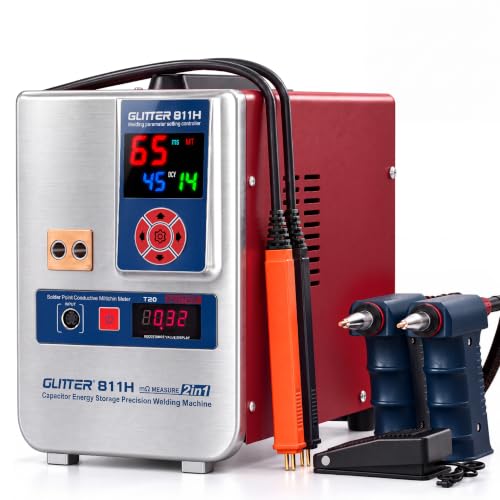
- 7000A output and 42KW pulse welding
- Supports copper, nickel, and busbar connections
- Integrated milliohm resistance testing
Best For: Professional workshops and demanding copper-welding jobs
High-Capacity Power Pick
AWithZ 1650A Battery Spot Welder

- 10,000mAh battery for extended cordless use
- Supports materials up to 0.3mm thick
- Three trigger modes and safety alerts
Best For: DIY battery pack builders seeking runtime and flexibility
Pocket Precision Pick
SEESII Custom Battery Spot Welder
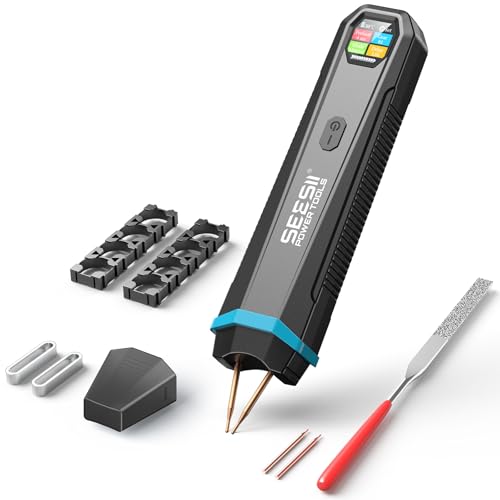
- Cordless handheld design for portable work
- 99 adjustment gears and visual display
- Welds pure nickel up to 0.15mm
Best For: Portable repairs and lighter-duty battery projects
Controlled Workshop Pick
11.5KW Rotary-Knob Spot Welder

- 100-level rotary power adjustment
- Hand trigger and foot-pedal operation
- Thermal protection and auto shutoff
Best For: DIY builders wanting precise controls and safety features
High-Power Pick

- Nine adjustable output levels
- Foot-pedal, dual-pulse operation
- Designed for 0.1–0.3 mm nickel sheets
Best For: DIY 18650 battery-pack assembly
Precision Portable Pick
3700W 1000A Battery Spot Welder

- 90 adjustable power levels
- Lightweight rechargeable design
- Automatic and manual welding modes
Best For: Portable, detail-focused battery work
Easy-Control Pick
Docreate 30-Level Mini Spot Welder

- Color LCD with live welding data
- 30 power and delay settings
- Multiple battery and safety protections
Best For: Guided DIY battery and metal projects
Best Multi-Mode Pick – AWithZ UF20B 10.5KW Capacitor Spot Welder
If you want battery spot welders with flexible controls, the AWithZ UF20B combines automatic, manual, and foot-pedal operation. Its 99 adjustable gears and included welding pen support work on common cylindrical cells and several sheet materials.
Best For: DIY battery-pack builders who want multiple trigger modes and broad material compatibility.
Pros:
- Offers automatic, manual, and foot-pedal modes.
- Provides 99 adjustable power settings.
- Supports 18650, 14500, 21700, LiFePO4, nickel-plated, stainless steel, and iron sheets.
- Includes a foot pedal, welding pen, nickel-plated sheet, file, and manual.
Cons:
- Must remain connected to wall power while in use; the capacitor stores only limited energy.
- The listed maximum material thickness is based on specific butt-welding conditions.
The UF20B is a versatile choice for users who value control options and adjustable settings. Its wall-powered capacitor design is less convenient for cordless work, but the included accessories make it ready for battery-pack projects.
Best Cordless Option – SEESII Wireless Battery Spot Welder
Among battery spot welders, the SEESII stands out for cordless portability and straightforward adjustment. Its display shows voltage, gear settings, and welding mode, while 80 power levels accommodate different sheet thicknesses.
Best For: Portable battery assembly, repairs, and DIY users working away from a fixed outlet.
Pros:
- Built-in battery enables cordless operation.
- Supports up to 0.2 mm nickel-plated sheet and 0.15 mm pure nickel sheet.
- Provides 80 adjustable power levels and a visual display.
- Includes nickel-plated sheet, cleaning file, sandpaper, cable, and tips.
Cons:
- Aluminum and copper are not recommended.
- Overheat protection stops welding above 65°C, which may interrupt extended work.
The SEESII is a practical pick when portability matters more than maximum industrial output. Its cordless design, display, and included maintenance accessories make it well suited to repair benches and mobile DIY projects.
Best Handle Flexibility – SEQURE SW3 2500A Capacitor Spot Welder
The SEQURE SW3 is one of the more adaptable battery spot welders for lithium battery pack work, combining auto and manual triggers with two handle styles. Its dual farad capacitors and high-current MOS design are intended for nickel, pure nickel, and copper sheet applications.
Best For: Builders who need both repetitive automatic welding and more controlled manual work on 18650 or 21700 packs.
Pros:
- Offers automatic and manual trigger modes.
- Includes split and integrated handles with weldable heads for different materials.
- Supports nickel-plated, pure nickel, and copper sheet welding.
- Includes a foot pedal, two chargers, four welding pins, and both handles.
Cons:
- Does not include a built-in battery.
- Recommended for use while charging, limiting fully cordless operation.
- Its two-handle setup may be more equipment than basic projects require.
The SW3 is compelling for users who want to switch between precision and higher-thickness welding heads. It offers a well-equipped package, but buyers should plan around its capacitor-based charging requirements.
Best Professional High-Current Pick – GLITTER 811H Battery Spot Welder
For demanding battery spot welders applications, the GLITTER 811H is designed around high-current copper, nickel, and busbar connections. It also adds milliohm resistance measurement, allowing workshops to check connection quality after welding.
Best For: Professional battery repair shops, manufacturers, energy-storage integrators, recyclers, and advanced DIY users.
Pros:
- Provides 7000A capacitor output and 42KW pulse welding capability.
- Handles copper, nickel, and nickel-aluminum composite connections.
- Built-in milliohm testing helps verify weld resistance and consistency.
- Includes a foot pedal, test leads, welding pen, and power cord.
Cons:
- Its professional 19.32-pound design is less portable than compact DIY units.
- High-current capabilities may be excessive for simple nickel-strip projects.
- Uses AC power rather than a cordless battery source.
The 811H is the strongest fit here for users who need copper-welding capability and post-weld verification. Its size, AC power, and professional feature set make it better suited to a dedicated workshop than casual field use.
High-Capacity Power Pick – AWithZ 1650A Battery Spot Welder
For battery pack builders who want extended cordless operation, this AWithZ model combines a 10,000mAh battery with up to 1,650A of output. It is a versatile choice among battery spot welders, with adjustable power, dual-pulse output, and several trigger options for different work setups.
Best For: DIY battery pack construction and users who need longer runtime with flexible operation.
Pros:
- Supports nickel, pure nickel, and steel up to 0.3mm thick.
- Offers auto, welding-pen button, and foot-pedal modes.
- Includes a 10,000mAh battery and 6-gauge pure copper welding pen.
- Provides overheat, low-voltage, and temperature alerts.
Cons:
- At 2.05 pounds, it is heavier than the pocket-style alternative.
- Its extensive accessory package may be more than casual users need.
The high battery capacity and 0.3mm material support make this a strong all-around option for repeated DIY pack work. Multiple controls also let you choose between hands-free convenience and more direct operation.
Pocket Precision Pick – SEESII Custom Battery Spot Welder
The SEESII is a compact cordless option for portable repairs and smaller battery projects. Its 99 adjustment gears, display screen, and auto/manual modes give users fine control, while the handheld design keeps the unit easy to carry and operate.
Best For: Portable battery repairs, compact DIY projects, and users working with pure nickel up to 0.15mm.
Pros:
- Handheld design eliminates the cable between the main unit and welding pen.
- Provides 99 power-adjustment levels for different materials and thicknesses.
- Display shows welding status, temperature, and remaining battery.
- Includes replacement copper styluses and basic battery-pack supplies.
Cons:
- Pure nickel capacity is limited to 0.15mm, below the larger models here.
- Welding performance is closely linked to the battery charge level.
- The unit should be fully charged before first use and monthly during storage.
Among battery spot welders, this model stands out for portability and granular settings rather than maximum material capacity. Its display and cordless pen make it convenient for field work and lighter-duty battery projects.
Controlled Workshop Pick – 11.5KW Rotary-Knob Spot Welder
This 11.5KW model is designed for users who prefer physical controls and repeatable settings. A rotary knob provides 100 levels of adjustment, while dual-pulse output, mode selection, and foot-pedal or hand-trigger operation make it adaptable for battery pack work.
Best For: DIY builders who want precise rotary control, hands-free operation, and thermal safeguards.
Pros:
- Offers 100 power levels for delicate and heavier battery applications.
- Supports hand-trigger and foot-pedal operation.
- Includes thermal monitoring, automatic trigger disabling, and eight-minute auto shutoff.
- Works with cylindrical, phone, and button batteries using selectable modes.
Cons:
- Its 1,380A maximum current is lower than the AWithZ model’s listed 1,650A.
- Rotary controls may be less convenient for users who prefer a handheld pen-style unit.
This is a practical choice among battery spot welders for users who value a clear interface and repeatable manual adjustments. Its thermal protection and automatic shutdown add useful safeguards during longer projects.
High-Power Pick – 8000W Handheld Spot Welder
For shoppers comparing battery spot welders for DIY battery-pack work, this handheld model emphasizes high output, adjustable power, and foot-pedal control. Its dual-pulse design is rated for nickel sheets from 0.1 to 0.3 mm, while the LCD shows the unit’s internal voltage.
Best For: DIY users assembling 18650 battery packs who want a foot-controlled welder with broad power adjustment.
Pros:
- Offers nine output settings, with adjustment from 0 to 800A.
- Dual-pulse output and foot-pedal operation support controlled welding.
- Includes removable, replaceable soldering pins and a nickel strip.
- Can also handle certain iron, stainless steel, and nickel-plated sheets.
Cons:
- The product should be fully charged before first use and charged below 7.3V.
- Its 1.9-pound body is less lightweight than some pencil-style alternatives.
This is a practical choice when output range and hands-free activation matter more than the smallest possible form factor. The voltage display and replaceable tips add useful convenience for recurring battery-pack projects.
Precision Portable Pick – 3700W 1000A Battery Spot Welder
This battery spot welder combines a compact wireless design with high-current output and fine control. It supports up to 1000A, offers 90 adjustable power levels, and includes automatic and manual modes for working with nickel-plated steel, pure nickel, steel, and some copper layers.
Best For: Users who need a lightweight, rechargeable welder with detailed settings and protection features for portable or batch work.
Pros:
- Supports up to 1000A and material thicknesses up to 0.3 mm for listed materials.
- Provides 90 adjustable levels and a 1.5-inch LCD display.
- Built-in protections warn or shut down for overheating, low temperature, and low voltage.
- Includes two pairs of welding pens, battery holders, nickel-plated sheet, and charging cable.
Cons:
- The supplied specifications describe a 2,500mAh battery and up to 2,000 welds at the lowest setting, so output-dependent runtime will vary.
- The feature-rich control system may take longer to learn than a simpler fixed-control tool.
With its 137g pencil-style body, interchangeable tips, and extensive adjustment range, this model is aimed at users who value portability and repeatable control. The included accessories also make it ready for projects soon after charging.
Easy-Control Pick – Docreate 30-Level Mini Spot Welder
For buyers seeking approachable battery spot welders, the Docreate mini model pairs a color LCD with 30 adjustable settings and automatic operation. It is designed for battery cells and thin metal up to 0.3 mm, with real-time information for voltage, temperature, and weld count.
Best For: DIY makers and repair users who want guided controls, safety monitoring, and a compact tool for battery and craft projects.
Pros:
- The 1.8-inch LCD displays voltage, temperature, and welding count.
- Thirty power and delay settings allow more tailored weld control.
- Supports 18650, 26650, 32650, and NiMH batteries, plus several thin metals.
- Includes protections against over-discharge, over-voltage, short circuits, over-current, and overheating.
Cons:
- It has 30 adjustment levels, fewer than the 90 levels offered by some competing models.
- The supplied details identify a spot-welding pen but do not list a broad accessory bundle.
The aluminum-alloy housing, memory function, and five-minute auto-shutdown make this a well-equipped option for structured DIY work. Its monitoring and safety alerts are especially useful for users who prefer visible feedback while learning or refining settings.
How We Picked the Best Battery Spot Welders
We compared these Battery Spot Welders by looking at output claims, pulse and power adjustment, operating modes, electrode configuration, portability, display and controls, and the types of battery-pack work they are intended to support. We also considered whether each design is better suited to occasional DIY repairs, repeated 18650 or 21700 pack building, or more controlled workshop use.
Specifications can vary by listing and operating conditions, so treat advertised wattage and current as indicators rather than guaranteed results. Actual weld quality depends on nickel thickness, cell condition, contact pressure, electrode cleanliness, and pulse settings.
Quick Comparison
| Best For | Look For | Featured Design Types |
|---|---|---|
| Portable repairs | Rechargeable battery, compact controls, LCD | Handheld and mini welders |
| DIY battery packs | Adjustable pulses and nickel-strip support | Capacitor and adjustable-current models |
| Repeated workshop use | Foot pedal, cooling, durable casing | Higher-power bench machines |
| Testing and setup | Resistance measurement and fine adjustment | Welder-and-tester combinations |
Key Buying Factors for Battery Spot Welders
Power and Pulse Control
Adjustable output is more useful than a headline power number because different cells and nickel strips require different energy levels. Dual-pulse operation can help produce consistent welds while limiting excessive heat, but it still requires testing on scrap material.
Material and Thickness Compatibility
Confirm the stated maximum thickness and whether the machine is designed for pure nickel, nickel-plated steel, or both. A welder rated for thin strip may not reliably handle thicker material. Always verify the product’s electrode spacing and included accessories for your intended pack layout.
Controls and Operating Modes
Automatic triggering can speed up repetitive work, while manual firing and a foot pedal provide more control over timing and positioning. LCD screens, rotary knobs, and multiple adjustment levels are helpful when you need repeatable settings.
Portability, Safety, and Serviceability
Handheld units are convenient for small repairs, but bench models may offer steadier electrode pressure and better workflow. Look for insulated handles, stable work surfaces, cooling provisions, replaceable tips, and clear instructions. Wear eye protection, avoid shorting cells, and work only with undamaged batteries in a suitable ventilated area.
Who Should Buy Which Battery Spot Welders?
Choose a compact handheld model if you need occasional repairs, small projects, or a tool that is easy to store. Choose an adjustable capacitor or foot-pedal welder for regular battery-pack assembly where repeatability and control matter more than portability. Choose a model with resistance testing if you want additional measurement capability while tuning weld settings. For demanding or frequent production work, prioritize durable construction, consistent electrode pressure, cooling, replacement parts, and dependable manufacturer support over maximum advertised wattage alone.
