

10 Best Budget Automotive Refrigerant Machines for Fast AC Service in 2026

Choosing the right automotive refrigerant machine can make AC recovery and recharge work faster, cleaner, and more consistent without requiring the cost of a premium shop system.
This roundup compares 10 budget-friendly options, including portable recovery units and fully automatic machines designed for R-134a, R-1234yf, R-32, or multiple refrigerants.
Best 10 Budget Automotive Refrigerant Machines Picks for 2026
Best Value Power
VIVOHOME 3/4 HP Recovery Machine

- 3/4 HP oil-less compressor recovers vapor and liquid refrigerants.
- Supports a broad range of common refrigerants.
- Portable design includes pressure and overcurrent protection.
Best For: Mobile automotive and HVAC recovery work
Best Automatic Dual-Refrigerant System
Airtek AC-Dual Recovery and Recharge Machine
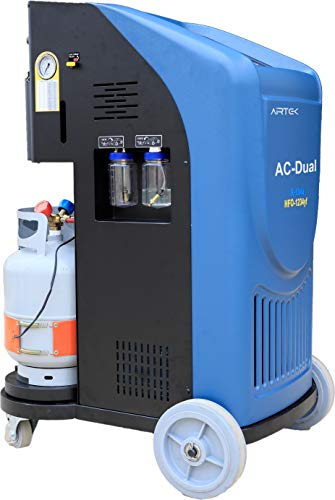
- Fully automatic recovery and recharge operation.
- Supports R134a and HFO1234yf systems.
- Separate tanks and software-controlled oil injection.
Best For: Professional shops serving mixed vehicle fleets
Best Lightweight Option
Robinair RG3 Portable Recovery Machine

- Weighs about 18 pounds and has a compact footprint.
- Recovers both liquid and vapor refrigerants.
- Includes broad compatibility and 550 PSI auto shut-off.
Best For: Portable automotive and HVAC recovery jobs
Best Feature-Rich Budget Pick
P PBAUTOS 3/4 HP Recovery Machine

- 3/4 HP compressor supports vapor and liquid recovery.
- Works with many refrigerants, including R32 and R1234yf.
- Adds self-purge, dual gauges, and overload protection.
Best For: Versatile automotive and HVAC recovery applications
Hands-Free Workshop Pick

- Automates recovery, recycling, and recharge
- Separate oil and dye pathways
- Supports R-134a or R-1234yf selection
Best For: Automotive workshops prioritizing automated service
Portable Value Pick

- Lightweight 29.7-pound design
- 3/4 HP oil-less compressor
- Automatic high-pressure shut-off
Best For: Portable recovery across multiple refrigerant types
Dual-Refrigerant Automation
AC2100 Recovery & Recharge Machine
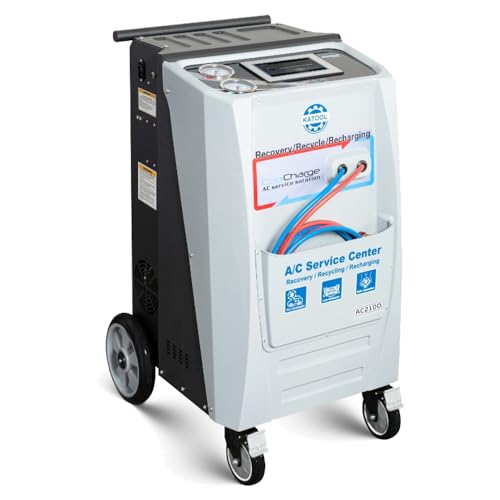
- Automates recovery, evacuation, and recharge
- Supports R-134a or R-1234yf
- Independent oil and dye pathways
Best For: Workshops needing automated automotive AC service
Best with Extra Features
3/4 HP Oil-Less Recovery Machine

- 3/4 HP oil-less compressor recovers vapor and liquid refrigerants
- Automatic high-pressure shutdown and overload protection
- Portable design with self-purge and broad refrigerant compatibility
Best For: Portable automotive, household, and commercial A/C recovery
Best Automated Option
Fully Automatic Automotive A/C Machine

- Combines recovery, vacuum, filtration, recharging, and oil replacement
- 10-inch touchscreen with vehicle database and real-time data
- Works with R134a and 1234yf in gasoline and electric vehicles
Best For: Automotive shops wanting guided, automated A/C servicing
Best Simple Recovery Tool
Portable 3/4 HP Rogvoc Machine
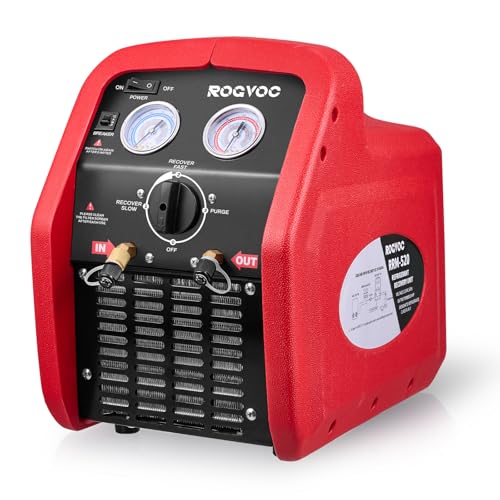
- 3/4 HP motor recovers vapor and liquid refrigerants
- High-pressure cutoff, filter drier, and reusable filter screen
- Portable design with a convenient self-cleaning purge function
Best For: Basic automotive and refrigeration recovery tasks
Best Value Power – VIVOHOME 3/4 HP Recovery Machine
For shoppers comparing budget automotive refrigerant machines, the VIVOHOME VH471 offers a strong balance of recovery speed, refrigerant compatibility, and portability. Its 3/4 HP oil-less compressor handles both vapor and liquid recovery, while dual filtration helps protect the machine during workshop or field-service use.
Best For: Automotive technicians and DIY users who need a portable machine with broad refrigerant compatibility.
Pros:
- 3/4 HP compressor and high-powered fan support faster vapor and liquid recovery.
- Compatible with numerous refrigerants, including R12, R134a, R22, R410A, R404A, and R509.
- Automatic shut-off at 558 PSI, overcurrent protection, and dual-stage filtration add practical safeguards.
- Compact 29.9-pound design with a carrying handle suits mobile work.
Cons:
- At nearly 30 pounds, it is heavier than some compact recovery units.
- The supplied notes describe recovery functionality rather than a complete automatic recharge system.
The VH471 is a practical budget choice when recovery performance and compatibility matter more than fully automated service functions. Its pressure protection, filtration, and portable form make it well suited to varied automotive and HVAC tasks.
Best Automatic Dual-Refrigerant System – Airtek AC-Dual Recovery and Recharge Machine
Airtek AC-Dual Fully Automatic Machine, HVAC Automotive Recovery and Recharge of R134 and HFO1234yf
Check Price On AmazonAmong budget automotive refrigerant machines, the Airtek AC-Dual stands out for buyers who want automated recovery and recharge rather than a recovery-only unit. It supports both R134a and HFO1234yf, serves domestic and foreign vehicles, and is designed for electric and hybrid applications.
Best For: Automotive shops servicing mixed vehicle fleets that use R134a and HFO1234yf.
Pros:
- Fully automatic operation allows technicians to enter information and walk away.
- Handles both R134a and HFO1234yf, with a stated 10-minute changeover between systems.
- Includes separate attached tanks for the two refrigerants.
- Software helps prevent incorrect oil injection, with oil injection supported on non-EV and hybrid vehicles.
Cons:
- At 275 pounds, it is substantially less portable than handheld recovery machines.
- Its dual-refrigerant focus may be more equipment than a single-refrigerant user needs.
- The supplied notes do not list specific recovery-machine pressure or compressor specifications.
The AC-Dual is best viewed as a shop-oriented automated service platform, not a lightweight field unit. Its ability to switch between two refrigerants and manage key service steps can justify the larger footprint for busy automotive operations.
Best Lightweight Option – Robinair RG3 Portable Recovery Machine
The Robinair RG3 is a compelling pick for shoppers seeking budget automotive refrigerant machines with a compact footprint. Weighing about 18 pounds according to the product description, it uses a 1/3 HP oil-less compressor to recover both liquid and vapor refrigerants and is built for easy transport.
Best For: Technicians who prioritize portability for automotive, residential, appliance, rooftop, or marine HVAC recovery jobs.
Pros:
- Compact design and lightweight construction make it easy to carry between work areas.
- Recovers both liquid and vapor refrigerants with a 1/3 HP compressor.
- Handles common CFC, HFC, and HCFC refrigerants, including R-410A.
- Features easy-to-read gauges, two-valve controls, a rugged case, and automatic shut-off above 550 PSI.
Cons:
- The 1/3 HP compressor is smaller than the 3/4 HP compressors in some competing options.
- It is a recovery machine rather than a fully automatic recovery-and-recharge system.
The RG3 makes the most sense when carrying convenience and straightforward operation are top priorities. Its broad refrigerant support and liquid/vapor capability provide useful flexibility, while the smaller compressor favors portability over maximum recovery speed.
Best Feature-Rich Budget Pick – P PBAUTOS 3/4 HP Recovery Machine
The P PBAUTOS RR250-S is one of the more versatile budget automotive refrigerant machines for users who want strong recovery output and extra operating safeguards. Its 3/4 HP oil-less compressor handles vapor and liquid refrigerants, while a purge function, pressure gauges, and replaceable filter drier support routine service work.
Best For: Automotive, household, and commercial users needing broad refrigerant compatibility and self-purge functionality.
Pros:
- 3/4 HP compressor and cross-flow cooling design support faster recovery and shorter cycle times.
- Compatible with many refrigerants, including R134a, R410A, R1234yf, and R32.
- Self-purge function helps clear residual refrigerant from the recovery kit.
- Automatic shut-off above 558 PSI, overload protection, dual gauges, and a replaceable filter drier add practical utility.
Cons:
- Its approximately 30-pound weight is less convenient than ultralight portable models.
- It cannot be used with single-use refrigerant tanks; approved refillable recovery cylinders are required.
- The supplied notes describe recovery functions, not automatic recharge operation.
The RR250-S is a strong fit for buyers who want more than basic recovery in a portable format. Its wide refrigerant range and purge function are useful advantages, but proper refillable-cylinder setup is essential for safe operation.
Hands-Free Workshop Pick – KATOOL AC1800
For workshops seeking budget automotive refrigerant machines with minimal manual intervention, the KATOOL AC1800 automates recovery, recycling, and recharging. Its filtration system and separated oil and dye pathways are designed for controlled, clean service work.
Best For: Automotive workshops that prioritize automated R-134a or R-1234yf service.
Pros:
- Automates the recovery, recycling, and recharge cycle.
- Uses advanced filtration to remove impurities.
- Separate PAG oil and UV dye pipelines help prevent cross-contamination.
- Includes quick couplers for R-134a and R-1234yf selection.
Cons:
- At 254 pounds, it is not a portable shop-floor machine.
- The refrigerant type must be selected carefully because switching after initial use is prohibited.
The AC1800 is a feature-rich choice for a fixed workshop bay, especially when hands-free operation and controlled fluid handling matter more than portability. Confirm the required refrigerant before first use.
Portable Value Pick – VIVOHOME RR250
The VIVOHOME RR250 stands out among budget automotive refrigerant machines for its compact, portable design and broad refrigerant compatibility. Its 3/4 HP motor, dual gauges, and automatic shut-off provide practical recovery support without the bulk of a full automatic recharge station.
Best For: Technicians who need a portable recovery machine for varied refrigerants.
Pros:
- Compact 29.7-pound housing includes a comfortable carrying handle.
- 3/4 HP oil-less compressor supports liquid and vapor recovery.
- Dual-pressure gauges and three valves help monitor operation.
- Automatic shut-off activates at high pressure and when recovery is complete.
Cons:
- It is a recovery machine rather than a fully automatic recovery-and-recharge station.
- Its broad refrigerant compatibility requires careful setup for the specific refrigerant being handled.
Choose the RR250 when portability and versatility are more important than automated recharge functions. The included purge switch, filter drier, and safety shut-off add useful practicality for routine recovery work.
Dual-Refrigerant Automation – AC2100 Recovery & Recharge Machine
The AC2100 is a budget automotive refrigerant machine for shops that want automated recovery, evacuation, and recharge in one unit. It supports R-134a or R-1234yf configurations and adds filtration plus independent oil and UV dye controls for more consistent servicing.
Best For: Workshops handling automotive systems that require automated recovery and recharge.
Pros:
- Automates recovery, evacuation, and recharging.
- Supports either R-134a or R-1234yf with the appropriate coupler.
- Independent PAG oil and UV dye pipelines help limit cross-contamination.
- Filtration is designed to remove impurities during service.
Cons:
- Its 254-pound weight and large package dimensions limit portability.
- The refrigerant choice cannot be changed after the machine has been used with one type.
The AC2100 fits a dedicated automotive service bay where automated workflow is the priority. Before operation, verify whether the shop needs R-134a or R-1234yf, since the machine must remain dedicated to the selected refrigerant.
Best with Extra Features – 3/4 HP Oil-Less Recovery Machine
For shoppers comparing budget automotive refrigerant machines, this portable 3/4 HP unit offers a practical balance of recovery speed, safety features, and broad refrigerant compatibility. Its oil-less compressor handles both vapor and liquid recovery, while the compact design is easier to transport between service locations.
Best For: Automotive, household, and commercial A/C recovery work where portability and wide refrigerant support matter.
Pros:
- 3/4 HP compressor supports quick vapor and liquid recovery.
- Automatic shutdown above 558 psi and built-in overload protection add safety.
- Self-purge function, replaceable filter drier, and ergonomic carry handle improve usability.
- Supports a wide range of Category III, IV, and V refrigerants.
Cons:
- Not compatible with explosive, flammable, or corrosive refrigerants.
- Requires approved refillable recovery cylinders rather than single-use tanks.
- At 29.8 pounds, it is portable but not especially lightweight.
This is a strong budget-oriented choice when you need a capable recovery-only machine with straightforward controls and useful protective features. Confirm the refrigerant and recovery-cylinder requirements before purchase.
Best Automated Option – Fully Automatic Automotive A/C Machine
Among budget automotive refrigerant machines, this VEVOR model stands out for combining recovery, vacuum, filtration, recharging, and oil replacement in one automated system. Its 10-inch touchscreen and vehicle database are designed for technicians who want guided operation and precise service data for automotive A/C systems.
Best For: Automotive shops servicing R134a and 1234yf systems in gasoline and electric vehicles.
Pros:
- Fully automatic workflow covers recovery, vacuum, filtration, recharging, and oil replacement.
- 10-inch touchscreen displays operating steps and real-time data.
- Supports both R134a and 1234yf refrigerants, including high-voltage vehicle systems.
- Includes high- and low-pressure protection plus overcurrent protection.
Cons:
- At 252 pounds and over 43 inches tall, it is substantially less portable than recovery-only units.
- Its stated compatibility is limited to R134a and 1234yf.
- The feature-rich design may be more than needed for basic refrigerant recovery.
This machine is better suited to a dedicated automotive service area than mobile work. Choose it when automated recharging and broader A/C service functions justify the larger footprint and heavier weight.
Best Simple Recovery Tool – Portable 3/4 HP Rogvoc Machine
This Rogvoc unit is a straightforward contender among budget automotive refrigerant machines, pairing a 3/4 HP motor with a fan and condenser for vapor and liquid recovery. It adds high-pressure shutdown, a filter drier, and a purge control without expanding into vacuum or recharge functions.
Best For: Users who need a portable recovery machine for automotive and other refrigeration equipment.
Pros:
- 3/4 HP, 1450 RPM motor provides strong recovery performance.
- Automatic stop at or above 558 psi helps protect the machine.
- Reusable filter screen and filter drier help limit moisture and impurities.
- Purge setting helps clear remaining refrigerant after use.
Cons:
- It is a recovery unit rather than a complete vacuum-and-recharge station.
- Weighing 33.9 pounds, it is heavier than some compact recovery machines.
- Users must manage approved recovery equipment and verify refrigerant compatibility.
For basic recovery tasks, this model keeps the feature set focused and practical. Its broad Category III, IV, and V refrigerant support is useful, but buyers should still confirm the specific refrigerant and cylinder setup for each job.
How We Picked These Budget Automotive Refrigerant Machines
We focused on machines that balance purchase price with practical service capability. The selection includes compact single-cylinder recovery machines for occasional work, as well as automatic recovery-and-recharge systems for higher throughput. We compared stated horsepower, oil-less or lubricated pump design, refrigerant compatibility, automation, portability, controls, and the type of automotive AC work each unit is intended to handle.
Because specifications and included accessories can vary by seller, verify the latest listing before buying. Confirm that the machine is approved for the refrigerant used in your vehicle and that required hoses, adapters, filters, tanks, and service tools are included or available separately.
Quick Comparison
- Best for basic recovery: Portable 3/4 HP single-cylinder units are typically the simplest and most affordable choice.
- Best for frequent shop work: Fully automatic machines reduce manual steps by combining recovery, vacuum, and recharge functions.
- Best for mixed vehicle fleets: Dual-refrigerant models support both R-134a and R-1234yf, helping avoid separate equipment purchases.
- Best for newer systems: A2L-compatible equipment is worth considering where mildly flammable refrigerants may be used.
- Best for portability: Compact recovery machines are easier to move between vehicles or service locations.
Key Buying Factors
Refrigerant Compatibility
Start with the refrigerant, not the machine price. R-134a remains common in older vehicles, while many newer vehicles use R-1234yf. R-32 and A2L-related equipment require additional compatibility and safety considerations. Never mix refrigerants or use a machine outside its stated specifications.
Recovery Speed and Pump Design
A 3/4 HP motor can offer useful performance for automotive service, but real-world speed also depends on refrigerant temperature, hose length, filter condition, and cylinder setup. Oil-less designs can simplify maintenance, while automatic machines may provide more consistent cycle control.
Automation and Controls
Manual recovery machines usually cost less and suit occasional use, but they require more operator involvement. Automatic systems can manage recovery, vacuuming, leak-check steps, and charging with less intervention. Look for clear controls, readable displays, and straightforward programming.
Safety and Serviceability
Prioritize over-pressure protection, reliable shutoff controls, suitable hoses, ventilation requirements, and accessible replacement filters. Follow the manufacturer’s instructions and applicable environmental regulations for refrigerant handling.
Who Should Buy Which Budget Automotive Refrigerant Machines?
DIY users and mobile technicians will generally get the best value from a portable single-cylinder recovery machine if they already own a vacuum pump, scale, and charging equipment. Independent repair shops may prefer a fully automatic model to save labor during repeated service appointments. Businesses working on mixed-age fleets should consider dual-refrigerant equipment, provided it has the correct separation and operating procedures. Buyers servicing newer vehicles should choose a model explicitly rated for the required refrigerant and A2L safety conditions rather than relying on similar-looking specifications.
