

10 Best Budget Automotive Thermal Imagers for Smarter Vehicle Diagnostics in 2026

Thermal imaging can reveal overheating components, uneven brake temperatures, electrical resistance, coolant-flow issues, and HVAC problems before they become expensive repairs. The best budget automotive thermal imagers make those checks faster without requiring a professional shop system.
This roundup compares handheld and USB-C models across resolution, temperature range, refresh rate, portability, and diagnostic features so you can choose the right tool for home maintenance, roadside troubleshooting, or regular workshop use.
Best 10 Budget Automotive Thermal Imagers Picks for 2026
Best All-Around Handheld

- 3.5-inch screen with enhanced thermal detail
- Laser targeting, LED light, and Wi-Fi transfer
- IP54 body with 64GB built-in storage
Best For: Automotive inspections and general field troubleshooting
Best Pocket Phone Attachment
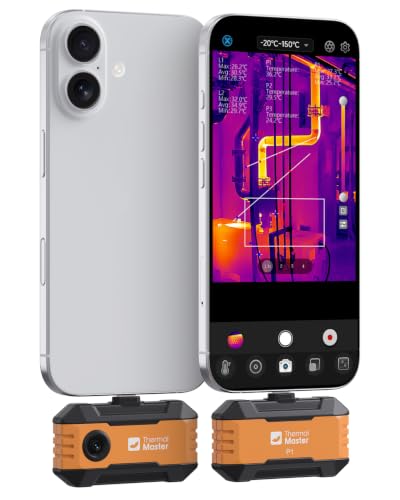
- USB-C plug-in design weighs 3.84 ounces
- 320×240 enhanced detail with 25Hz viewing
- Zoom, alarms, isotherm, and emissivity controls
Best For: Phone-based automotive checks and maximum portability
Best for PC Reporting

- TISR-enhanced thermal imaging for engine checks
- Windows software creates detailed analyses and reports
- 8GB storage holds over 20,000 images and videos
Best For: Windows-based automotive diagnostics and documentation
Best Pocket-Friendly Pick

- 240 x 240 TISR-enhanced imagery
- 15-hour battery and onboard storage
- Automatic alerts with photo capture
Best For: Portable standalone automotive and equipment inspections
Best Lightweight Option

- Only 240g with a non-slip grip
- Thermal and thermometer modes
- 14-hour battery with 1,022°F maximum
Best For: Lightweight vehicle, HVAC, and machinery checks
Best Phone-Based Resolution

- 512 x 384 TISR-enhanced output
- Dual-lens thermal and visible imaging
- Phone-powered with included adapters
Best For: Detailed automotive diagnostics using a compatible phone or tablet
Best Value for Everyday Checks
MILESEEY TR10 Thermal Imaging Camera

- 192×192 IR resolution and smooth 25Hz imaging
- -4°F to 1022°F range with adjustable emissivity
- 8-hour battery and 8GB image storage
Best For: DIY users and routine vehicle inspections
Best for Detailed Analysis
FOXWELL HT280 Thermal Imaging Camera

- 320×240 display with TISR-enhanced imaging
- Windows software enables 2D/3D analysis and reports
- Nine palettes, USB transfer, and over 20,000-image storage
Best For: Users needing detailed inspection records and Windows analysis
Best Battery Life and Protection

- 240×240 TISR resolution with 40mK sensitivity
- Up to 24 hours of continuous battery life
- IP65 protection and 6.56-foot drop resistance
Best For: Long inspections and demanding mobile work
Best All-Around Handheld – TOPDON TC004
For shoppers comparing budget automotive thermal imagers, the TOPDON TC004 stands out as a practical handheld option with a large screen, broad temperature range, and inspection-focused features. Its laser pointer, LED light, rugged construction, and ample storage make it well suited to repeated checks around vehicles and equipment.
Best For: Automotive inspections, mechanical troubleshooting, and users who want a self-contained thermal camera with a larger display.
Pros:
- 3.5-inch display provides a comfortable view of heat patterns.
- 256×192 infrared resolution can be enhanced to 512×384 with TISR technology.
- Built-in laser pointer, LED light, 64GB storage, and Wi-Fi support practical field work.
- IP54 protection and 2-meter drop resistance add durability for job-site use.
Cons:
- At 2.11 pounds, it is less pocketable than a phone-connected thermal camera.
- Its listed temperature range tops out at 1022°F, below some competing options.
The TC004 is a strong choice when ease of viewing, onboard storage, and field durability matter more than the smallest possible form factor. It offers a balanced feature set for automotive and general inspection work.
Best Pocket Phone Attachment – Thermal Master P1
The Thermal Master P1 is a compact alternative for buyers seeking budget automotive thermal imagers that work with a phone. It draws power from compatible USB-C devices, adds useful measurement controls, and fits easily into a tool bag for quick checks.
Best For: Mobile automotive diagnostics, quick heat checks, and users who prefer viewing and storing images on a phone or tablet.
Pros:
- USB-C compatibility supports compatible iPhones, Android devices, tablets, and Windows devices.
- X³ enhancement upgrades the native 160×120 sensor to 320×240 detail.
- 15x digital zoom, hot/cold alarms, isotherm mode, and adjustable emissivity support detailed checks.
- Weighs only 3.84 ounces and uses about 0.32W of phone power without separate charging.
Cons:
- Lightning iPhones require a separately sold Type-C-to-Lightning adapter.
- It depends on a compatible host device and the Thermal Master app.
The P1 makes the most sense for technicians who value portability and already carry a compatible phone. Its expanded temperature range and inspection controls give this tiny attachment useful flexibility for automotive work.
Best for PC Reporting – FOXWELL RT280
Among budget automotive thermal imagers, the FOXWELL RT280 is a good fit for users who want a dedicated handheld camera and more detailed post-inspection analysis. Its PC software, onboard storage, temperature alarms, and rugged design support organized diagnostic work.
Best For: Automotive engine inspections, repair documentation, and Windows users who need temperature analysis and report generation.
Pros:
- 320×240 LCD visuals and TISR enhancement improve visibility of small temperature differences.
- Windows software supports point, line, and area analysis, 2D/3D views, and automatic reports.
- Stores more than 20,000 images and videos on 8GB of built-in eMMC storage.
- Includes hot/cold/center-point detection, nine palettes, laser targeting, and an LED light.
Cons:
- The PC analysis software is not compatible with Mac.
- The supplied notes list differing screen-size specifications, so buyers should verify the current listing.
The RT280 is especially compelling when thermal images need to become organized diagnostic records. Its Windows-only analysis workflow is a limitation, but the combination of alerts, storage, and reporting tools adds practical value for automotive users.
Best for Guided Detection – HF96 Thermal Camera
The HF96 gives budget automotive thermal imagers a more guided inspection angle with AI scene recognition, automatic hotspot and cold-spot tracking, and configurable alarms. It is a self-contained camera with long battery life, onboard storage, and software for deeper review.
Best For: Users who want automated anomaly guidance for automotive, HVAC, electrical, and general inspection tasks.
Pros:
- IntellFault scene recognition is designed to help identify water leaks and insulation gaps.
- Live super resolution enhances thermal images to 240×240 clarity with 25Hz viewing.
- Tracks hot, cold, and center points while supporting custom high/low alarms.
- Up to 11 hours of operation, over 30,000-image storage, IP54 protection, and 6.6-foot drop resistance.
Cons:
- The AI scene feature requires firmware downloaded from the HSFTOOLS website.
- It does not provide moisture readings.
- The compact design and 240×240 enhanced output may offer less detail than higher-resolution handhelds.
The HF96 is a sensible pick for buyers who want assistance locating thermal anomalies rather than relying entirely on manual interpretation. Its long runtime and durable housing also make it practical for extended inspection sessions.
Best Pocket-Friendly Pick – TOPDON TC004 Mini
For shoppers comparing budget automotive thermal imagers, the TOPDON TC004 Mini is a compact standalone option with enhanced 240 x 240 TISR imagery, a 25Hz refresh rate, and a broad temperature range. It can help locate heat anomalies during automotive, electrical, HVAC, and general equipment inspections without relying on a phone.
Best For: DIYers and mobile technicians who want a portable thermal camera with automatic temperature alerts and onboard photo storage.
Pros:
- TISR enhances the 128 x 128 thermal image to 240 x 240 resolution.
- Measures from -4°F to 842°F and identifies center, highest, and lowest temperatures.
- Automatic alerts can capture photos when preset temperatures are exceeded.
- Offers up to 15 hours of runtime, IP54 protection, and 2-meter drop resistance.
Cons:
- The package includes a charging cable but no charging head.
- The electronic user manual must be downloaded rather than supplied in print.
The TC004 Mini stands out when portability, long battery life, and simple standalone operation matter more than phone-based analysis features. Its built-in storage and alert functions make it practical for repeated inspections.
Best Lightweight Option – GT14S Thermal Imaging Camera
The GT14S is a lightweight choice among budget automotive thermal imagers, weighing 240g and combining thermal imaging with a dedicated thermometer mode. Its wide 50° field of view, adjustable emissivity, and high temperature ceiling support quick scans of vehicles, machinery, HVAC systems, and other household equipment.
Best For: Users who prioritize low weight, long operating time, and both visual heat mapping and point-and-shoot temperature readings.
Pros:
- Dual modes provide full-screen thermal imaging or direct digital temperature readings.
- NETD below 50mK detects temperature differences down to 0.05°C.
- Measures from -4°F to 1,022°F with adjustable emissivity and distance settings.
- Up to 14 hours of continuous use from the built-in 2500mAh battery.
Cons:
- The supplied notes do not specify image storage capacity or connectivity features.
- A 1-year warranty is shorter than the lifetime technical support stated for some alternatives.
The GT14S is a sensible fit for inspections that involve extended handheld use. Its thermometer mode adds flexibility, while custom alarms and adjustable image settings help highlight temperature anomalies.
Best Phone-Based Resolution – TOPDON TC001 Max
For phone owners seeking budget automotive thermal imagers, the TOPDON TC001 Max adds thermal capability to compatible USB-C or Lightning devices. Its dual-lens design combines infrared and visible-light views, while TISR enhancement, app-based analysis, and a 25Hz refresh rate support detailed automotive diagnostics.
Best For: Drivers, technicians, and DIYers who want a highly portable thermal camera that uses a phone or tablet for viewing, recording, and analysis.
Pros:
- Dual-lens imaging provides infrared heat data alongside visible-light outlines.
- TISR enhances 256 x 192 infrared resolution to 512 x 384.
- Works with compatible Android, iPhone, iPad, and Windows devices using included adapters.
- Offers photo, video, 3D temperature analysis, trend graphs, and a -4°F to 1,022°F range.
Cons:
- It requires a compatible phone, tablet, or Windows device for operation.
- Phone-based use depends on the TopInfrared or TopView app experience.
The TC001 Max is the strongest choice here for users who value image detail and software analysis in a pocket-sized package. Its no-battery design reduces charging needs, but it is less self-contained than a dedicated handheld imager.
Best Value for Everyday Checks – MILESEEY TR10 Thermal Imaging Camera
For shoppers comparing budget automotive thermal imagers, the MILESEEY TR10 offers a useful combination of 192×192 infrared resolution, smooth 25Hz imaging, and a broad -4°F to 1022°F measurement range. It is a practical handheld option for locating temperature differences during vehicle and general equipment checks.
Best For: DIY users and technicians who want dependable hot-spot detection, adjustable emissivity, and long battery life.
Pros:
- 192×192 IR resolution with a 25Hz refresh rate for smooth thermal images.
- Measures from -4°F to 1022°F with stated accuracy of ±2°C and NETD below 50mK.
- Temperature alarms and automatic maximum, minimum, and center-point readings help identify anomalies.
- 8-hour battery life, 8GB storage, and 6.6-foot drop-test protection support field use.
Cons:
- Its 192×192 sensor resolution is lower than some higher-resolution alternatives.
- Connectivity is listed as wired rather than wireless.
The TR10 is a balanced budget choice when broad temperature coverage, simple anomaly alerts, and durable everyday operation matter more than advanced computer-based analysis.
Best for Detailed Analysis – FOXWELL HT280 Thermal Imaging Camera
Among budget automotive thermal imagers, the FOXWELL HT280 stands out for its larger 320×240 display and PC analysis tools. TISR enhancement, 25Hz imaging, and a 50°×50° field of view make it suited to inspections where clearer images and follow-up reporting are useful.
Best For: Vehicle, HVAC, electrical, and building inspections that benefit from Windows-based analysis and reports.
Pros:
- 320×240 LCD with TISR-enhanced 260×260 thermal imaging for added visual detail.
- Windows software supports point, line, and area analysis, 2D/3D views, and report generation.
- Stores over 20,000 images or video recordings and transfers files by USB.
- Offers nine color palettes, temperature alarms, a 50°×50° field of view, and 8-hour operation.
Cons:
- PC analysis software is not compatible with Mac computers.
- Its stated measurement accuracy is ±3.6°F or ±2%, depending on the specification.
- The supplied notes do not provide a complete product weight or full durability specification.
The HT280 is the strongest fit here for users who want more than on-screen readings, especially when thermal images need to be reviewed, compared, or included in Windows-based reports.
Best Battery Life and Protection – H128 Handheld Thermal Camera
The H128 is a compelling option for shoppers seeking budget automotive thermal imagers that can remain in service through lengthy inspection sessions. Its 240×240 TISR-enhanced resolution, 40mK sensitivity, and 25Hz frame rate are paired with a claimed 24-hour battery and IP65 protection.
Best For: Extended inspection work, mobile technicians, and users working in dusty or wet conditions.
Pros:
- TISR raises imaging clarity from 128×128 to 240×240, with 40mK sensitivity.
- Up to 24 hours of continuous operation supports long inspection days.
- IP65 protection and 6.56-foot drop resistance suit tougher working environments.
- Temperature alarms, automatic maximum/minimum/center readings, and adjustable emissivity aid diagnosis.
Cons:
- The stated temperature range ends at 842°F, narrower than some alternatives.
- Accuracy is listed as ±3%, which may be less precise than models with tighter stated specifications.
- The supplied notes do not mention image storage capacity or computer connectivity.
The H128 is particularly attractive when battery endurance and environmental protection take priority, while its enhanced resolution keeps thermal patterns easy to interpret during routine diagnostics.
How We Picked These Budget Automotive Thermal Imagers
We focused on practical automotive diagnostics rather than general-purpose imaging alone. The selected cameras cover a range of handheld and phone-connected designs, resolutions from 192 × 192 to 320 × 240, and features such as temperature measurement, laser pointers, AI scene detection, dual lenses, and thermal super-resolution.
We also considered operating temperature range, refresh rate, screen usability, battery life, weight, and connection requirements. Higher resolution can make small hot spots easier to identify, while a lightweight camera or USB-C module may be more convenient for repeated inspections. No thermal camera replaces a multimeter, scan tool, pressure gauge, or manufacturer service procedure, but it can help you locate suspicious areas quickly.
Quick Comparison
| What to compare | Why it matters |
|---|---|
| Resolution | Higher infrared resolution generally shows smaller temperature differences and hot spots more clearly. |
| Temperature range | A wider range is useful for checking exhaust-adjacent parts, overheated wiring, and engine-bay components. |
| Refresh rate | A 25Hz camera provides smoother viewing of moving or changing heat patterns than a slower sensor. |
| Form factor | Handheld models work independently; USB-C cameras are compact but depend on a compatible phone or tablet. |
| Measurement tools | Spot readings, area boxes, emissivity controls, alarms, and image blending improve interpretation. |
Key Buying Factors for Budget Automotive Thermal Imagers
Resolution and Thermal Sensitivity
Choose at least 192 × 192 for broad engine-bay checks, but consider 240 × 240 or 320 × 240 when you need to distinguish adjacent fuses, connectors, relays, hoses, or individual cylinders. Thermal super-resolution can improve displayed detail, but it does not replace a higher-native-resolution sensor.
Temperature Range and Accuracy
For automotive work, a range reaching roughly 1,000°F is useful near exhaust components and severe overheating events. Accuracy depends on distance, surface finish, reflected heat, focus, and emissivity. Matte rubber, plastic, and painted surfaces are usually easier to measure than shiny metal.
Ease of Use in the Garage
A built-in screen is convenient when wearing gloves or working away from your phone. USB-C models are easier to store and may offer stronger app controls, but check connector orientation, operating-system support, permissions, and whether your device supplies enough power.
Useful Diagnostic Features
Look for adjustable emissivity, center-spot and maximum/minimum markers, temperature alarms, image capture, visible-light overlays, and a laser pointer. Dual-lens designs can help correlate a thermal anomaly with the exact physical component.
Who Should Buy Which Budget Automotive Thermal Imagers?
Choose a compact USB-C model if you already carry a compatible Android device or iPhone and want an inexpensive inspection tool for occasional use. A handheld camera is the better choice for independent operation, quick roadside checks, and workshop use. Buyers diagnosing small electrical components or subtle temperature differences should prioritize 320 × 240 resolution or a strong thermal-super-resolution mode. For moving heat sources and fast-changing engine conditions, prioritize a 25Hz refresh rate.
For most home mechanics, the best balance is a camera with a built-in display, a broad temperature range, adjustable emissivity, and reliable spot measurements. Whichever model you choose, compare readings across similar components, let the camera and target stabilize, and confirm suspected faults with conventional automotive tests before replacing parts.
