

10 Best Budget Battery Load Testers for Reliable Car Diagnostics in 2026

A weak battery can leave you stranded, but you do not always need an expensive diagnostic system to find one. The best budget battery load testers provide a practical way to check voltage, cranking strength, and charging performance at home or in the garage.
We selected 10 affordable options for cars, trucks, RVs, golf carts, and other vehicles, including traditional analog load testers and digital tools with broader CCA ranges. Use the guide below to match features, voltage compatibility, and testing capacity to your needs.
Best 10 Budget Battery Load Testers Picks for 2026
Portable 100A Pick
TOPDC 100A Battery Load Tester
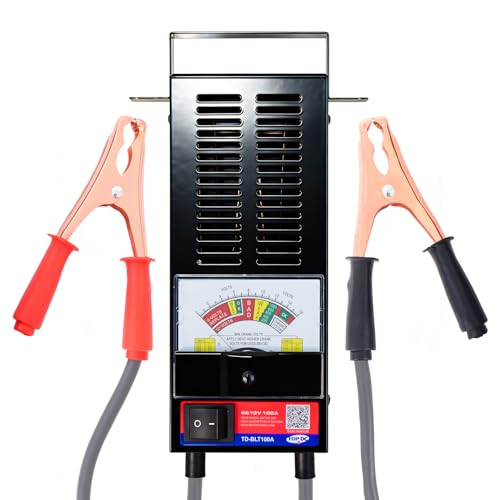
- Tests 6V and 12V batteries from 100–1,000 CCA
- Checks battery, cranking, and charging performance
- Portable ventilated design with color-coded clips
Best For: DIY vehicle owners needing broad battery compatibility
Alternator-Test Value

- Tests 6V and 12V batteries up to 1,000 CCA
- Includes an alternator-testing function
- Compact steel case with heavy-duty clamps
Best For: DIY users wanting battery and alternator checks together
Trusted Garage Classic

- Performs battery, charging, and starter tests
- 50A 6V and 100A 12V loads up to 1,000 CA
- Visible analog meter with color-coded clamps
Best For: Multi-vehicle garages wanting three tests in one unit
Simple High-Load Choice
Yaegoo 100A Battery Load Tester

- 50A load for 6V and 100A load for 12V batteries
- Supports up to 1,000 CCA with ±0.2V accuracy
- Portable handle, copper clips, and ventilated case
Best For: Routine DIY battery checks across common vehicles
Wide-Range Diagnostic Pick

- Tests 6V, 12V, and 24V batteries
- Checks battery, cranking, and charging systems
- Supports up to 3000 CCA
Best For: Multi-vehicle owners and DIY diagnostics
Simple Analog Load-Test Value

- Uses a 100A fixed load
- Tests both 6V and 12V batteries
- Simple color-coded operation
Best For: Basic home and garage battery checks
Color-Display Upgrade Pick

- Tests 12V and 24V batteries
- Includes battery, cranking, and charging tests
- Readable color display with memory function
Best For: Digital diagnostics across vehicles and equipment
Best with Extra Features

- Tests 12V and 24V systems
- Supports 20–2000 CCA batteries
- Performs battery, cranking, and charging tests
Best For: DIYers and mechanics with varied 12V and 24V vehicles
Protected Testing Pick

- Tests 12V batteries over 30Ah
- Includes four built-in safety protections
- Checks battery, cranking, and charging systems
Best For: 12V vehicle owners seeking simple, protected testing
Compact Everyday Pick

- Supports 100–2000 CCA batteries
- Performs three core testing functions
- Compact, glove-box-friendly design
Best For: DIY users checking common 12V lead-acid batteries
Portable 100A Pick – TOPDC 100A Battery Load Tester
For shoppers comparing budget battery load testers, the TOPDC offers broad vehicle compatibility and a straightforward analog readout. It tests 6V and 12V batteries, measures 100–1,000 CCA, and also checks cranking power and charging-system performance.
Best For: DIY owners who want a portable tester for cars, motorcycles, RVs, boats, ATVs, and similar vehicles.
Pros:
- Supports both 6V and 12V batteries with 50A and 100A load specifications.
- Tests batteries, cranking power, and charging systems in one device.
- Includes heavy-duty color-coded clips, rubber grips, and a ventilated case.
Cons:
- Uses an analog dial rather than a digital display.
- Its listed operating range tops out at 13.8 volts.
The TOPDC is a practical budget choice when portability and broad vehicle coverage matter. Its analog meter keeps operation simple, while the ventilated, shock-resistant design supports regular garage or roadside use.
Alternator-Test Value – QWORK 12V 100A Battery Tester
The QWORK is a versatile option among budget battery load testers, combining battery and voltage checks with an alternator-testing function. Its 1,000-CCA capacity and compatibility with 6V and 12V batteries suit a range of automotive and recreational vehicles.
Best For: Vehicle owners, golf-cart users, and DIY mechanics who want battery and alternator testing in one compact tool.
Pros:
- Tests 6V and 12V batteries up to 1,000 CCA.
- Adds alternator testing to standard battery and voltage checks.
- Features a shock-resistant steel case, copper-plated clamps, and a carry handle.
Cons:
- The supplied details do not specify warranty coverage.
- The notes do not state the exact 6V and 12V load amperages.
Choose the QWORK if alternator diagnosis is especially important. The durable case and portable format make it convenient for home garages, while its vehicle coverage extends beyond standard passenger cars.
Trusted Garage Classic – Schumacher BT-100 Load Tester
The Schumacher BT-100 is a well-rounded choice among budget battery load testers, combining three useful checks in one analog unit. It tests battery health, charging-system performance, and starter-motor draw on 6V and 12V batteries up to 1,000 CA.
Best For: Garage owners who need one tester for cars, motorcycles, ATVs, lawn tractors, boats, light trucks, and RVs.
Pros:
- Runs battery, charging-system, and starter-motor-draw tests.
- Provides 50A 6V and 100A 12V load testing up to 1,000 CA.
- Uses a visible analog meter, top-mounted rocker switch, and color-coded clamps.
Cons:
- The analog display may be less precise to read than a digital screen.
- Its listed dimensions are relatively large for a handheld tester.
Schumacher’s BT-100 stands out for its clearly specified load levels and broad vehicle compatibility. It is a sensible pick for users who prefer simple analog operation and want starter testing included.
Simple High-Load Choice – Yaegoo 100A Battery Load Tester
The Yaegoo delivers the core features many shoppers seek in budget battery load testers: 6V and 12V support, 1,000-CCA capacity, and clearly stated 50A and 100A load tests. Its analog operation and portable handle make it suitable for quick checks at home or in a garage.
Best For: DIY users who want an easy-to-carry tester for cars, trucks, RVs, motorcycles, and boats.
Pros:
- Tests 6V batteries at 50A and 12V batteries at 100A.
- Supports batteries up to 1,000 CCA with stated voltage accuracy of ±0.2V.
- Includes insulated carrying handle, copper clips, and a ventilated case.
Cons:
- The supplied details do not list included components.
- It uses an analog-style load-testing approach rather than a digital display.
The Yaegoo is a straightforward fit for routine battery and charging-system checks. Its defined load ratings, portable handle, and ventilation give it a useful balance for budget-conscious garage users.
Wide-Range Diagnostic Pick – VDIAGTOOL BT500
For shoppers comparing budget battery load testers, the VDIAGTOOL BT500 stands out as a versatile digital option for 6V, 12V, and 24V batteries. It reports voltage, resistance, state of health, and state of charge while also checking cranking and charging systems.
Best For: DIYers and vehicle owners who need one tester for cars, trucks, motorcycles, ATVs, SUVs, boats, and multiple battery types.
Pros:
- Supports 6V, 12V, and 24V batteries from 5–3000 CCA.
- Tests battery condition, cranking performance, and alternator charging.
- Includes reverse-polarity and short-circuit protection, plus a shock-resistant housing.
- Works with flooded, AGM, GEL, and EFB batteries.
Cons:
- Not designed for lithium, deep-cycle, or golf-cart batteries.
- Correct battery type, testing standard, and CCA value must be selected for accurate results.
The BT500 is a strong budget-friendly choice when broad voltage compatibility and system diagnostics matter more than a simple voltage reading. Its added protections and guided interface also make it approachable for occasional home use.
Simple Analog Load-Test Value – 6/12V Battery Load Tester
If you want budget battery load testers with straightforward operation, this 6/12V model uses a fixed load and a color-coded display to assess battery condition. Its single-switch design makes it suitable for quick checks at home, in a garage, or in a shop.
Best For: Budget-minded users who want a portable, easy-to-operate tester for common 6V and 12V automotive batteries.
Pros:
- Tests 6V and 12V batteries with a 100A fixed load.
- Can help assess battery capacity, starter motor consumption, and charging-system performance.
- Color-coded display and a simple toggle-switch operation are easy to use.
- Rubber-insulated handles, heavy-duty clips, and ventilated housing support safer operation.
Cons:
- The load should be held for no more than 10 seconds.
- It uses a fixed 100A load rather than adjustable load testing.
- Voltage accuracy is specified at ±0.3V.
This tester favors simplicity over detailed digital reporting. It is a practical pick for basic battery-load checks, especially if you do not need CCA readings or advanced battery-health data.
Color-Display Upgrade Pick – TOPDON BT200 12V/24V Tester
The TOPDON BT200 is a good fit for shoppers seeking budget battery load testers with digital guidance and broad 12V/24V compatibility. Its conductance testing covers 100–2000 CCA batteries, while dedicated cranking and charging tests help separate starting and alternator problems.
Best For: DIYers, garages, and fleet owners who want readable digital diagnostics for cars, trucks, RVs, boats, motorcycles, and other 12V or 24V equipment.
Pros:
- Tests 12V and 24V batteries rated from 100–2000 CCA.
- Supports flooded, AGM, GEL, and deep-cycle batteries.
- Provides battery, cranking, and charging-system tests.
- Features a sunlight-readable color display, memory function, one-year warranty, and lifetime technical support.
Cons:
- Its minimum operating voltage is 12V, so it is not intended for 6V batteries.
- The supported CCA range is narrower than the BT500’s.
Choose the BT200 when display readability and guided digital results are priorities. It offers a useful middle ground between a basic load tester and more comprehensive professional diagnostic equipment.
Best with Extra Features – TopDiag BT300
For shoppers comparing budget battery load testers, the TopDiag BT300 stands out for broad 12V and 24V vehicle coverage. It reports battery health, charge status, CCA, and impedance, while also testing cranking and charging systems.
Best For: DIYers and mechanics who need one tester for 12V and 24V vehicles and multiple battery standards.
Pros:
- Tests 12V and 24V automotive systems and batteries from 20–2000 CCA.
- Supports lead-acid, AGM, and gel batteries across numerous rating standards.
- Provides battery, cranking, and alternator/charging tests with results in about 10 seconds.
- Includes a backlit display, multiple languages, and USB software updates.
Cons:
- Not compatible with 6V or lithium batteries.
- Requires connection to the vehicle battery; it is not rechargeable.
- Quick testing requires entering the correct battery information.
The BT300 is a particularly versatile budget battery load tester for households or garages maintaining different vehicle types. Its 24V support and wide standards coverage add value, though users with lithium or 6V batteries will need another tool.
Protected Testing Pick – ANCEL BA101
The ANCEL BA101 is a practical choice among budget battery load testers for 12V batteries over 30Ah. It combines battery health, charge, CCA, cranking, and charging-system readings with a straightforward display and built-in protections.
Best For: 12V car, truck, boat, RV, and powersports owners who want clear readings and added protection against common testing mistakes.
Pros:
- Measures SOH, SOC, voltage, current, CCA, cranking, and charging performance.
- Works with flooded, AGM, GEL, and EFB 12V batteries over 30Ah.
- Includes reverse-polarity, short-circuit, overcurrent, and overvoltage protection.
- Uses a backlit screen, adjustable contrast, reinforced housing, and direct vehicle power.
Cons:
- Not designed for lithium, 6V, 8V, or 24V batteries.
- Not recommended for motorcycles below 30Ah.
- Accurate results depend on entering the battery type, rating, and temperature correctly.
With its broad 12V compatibility and four-part protection, the BA101 is a sensible everyday tester for home garages. Its limitations are mainly voltage and battery-type related, so confirm compatibility before buying.
Compact Everyday Pick – TOPDON BT100
The TOPDON BT100 is a compact option for shoppers seeking budget battery load testers for routine 12V maintenance. It delivers battery health, charge, voltage, current, and rating information, plus dedicated cranking and charging-system tests.
Best For: DIY users, garages, and vehicle owners who want a small tester for common 12V lead-acid batteries.
Pros:
- Supports 100–2000 CCA flooded, AGM, EFB, and GEL batteries.
- Performs battery health, cranking, and charging-system tests.
- Compact 5.3-by-3-inch design fits easily in a glove box or console.
- Offers color-coded LEDs, copper clamps, reverse-polarity prevention, and spark-proof features.
Cons:
- Tests only 12V batteries.
- Intended for lead-acid battery types rather than lithium batteries.
- The vehicle ignition must be off during testing.
The BT100 keeps the feature set focused and the form factor small, making it convenient for occasional checks and roadside preparedness. It is best suited to common 12V vehicles rather than multi-voltage fleets.
How We Picked the Best Budget Battery Load Testers
We focused on affordable testers that offer useful automotive diagnostics without unnecessary complexity. Selection criteria included supported battery voltages, load capacity, CCA range, readability, testing functions, construction, and suitability for home mechanics. We also considered whether each tool can help evaluate starting and charging systems rather than only displaying resting voltage.
Most options in this roundup support 6V or 12V batteries, while some also accommodate 24V systems. Digital models generally provide more precise readings and wider testing ranges; analog testers remain appealing for their straightforward operation and low cost.
Quick Comparison
| What to Compare | Why It Matters |
|---|---|
| Voltage support | Confirms compatibility with 6V, 12V, or 24V batteries. |
| CCA range | Shows whether the tester suits small cars, trucks, RVs, or larger batteries. |
| Load capacity | Determines how substantial a battery load the tester can apply. |
| Display type | Digital screens are precise; analog gauges are simple and durable. |
| Extra tests | Alternator, charging, and cranking checks add diagnostic value. |
Key Buying Factors for Budget Battery Load Testers
Battery and Vehicle Compatibility
Check the tester’s voltage range before buying. A 12V-only model is suitable for most modern cars, but 6V support helps with older vehicles, motorcycles, and specialty equipment. If you work on commercial vehicles or paired-battery systems, verify that 24V testing is explicitly supported.
CCA Range and Load Rating
Choose a tester whose CCA range covers the batteries you expect to test. A broad range offers more flexibility, but the maximum load rating is equally important. A tester should apply an appropriate load without exceeding its intended specifications.
Readability and Operation
Analog gauges are quick to interpret and often require no batteries in the tester itself. Digital displays can make borderline results easier to read and may provide clearer voltage or charging information. Look for clearly labeled controls, insulated clamps, and instructions explaining test timing.
Safety and Durability
Load testing creates heat, so ventilation and reasonable duty-cycle limits matter. Use eye protection, keep sparks away from batteries, and follow the manufacturer’s recommended test duration. Heavy-gauge leads, secure clamps, and a protected case are useful indicators of long-term practicality.
Who Should Buy Which Budget Battery Load Testers?
Choose a basic 6V/12V analog tester if you want an inexpensive tool for occasional battery checks and prefer simple operation. A digital 12V model is a better fit for drivers who want easier readings and additional charging or cranking information. For a mixed vehicle fleet, select a tester with a wide CCA range and support for multiple voltages. If you service trucks, RVs, or commercial equipment, prioritize a model that explicitly supports 24V systems and has an appropriately high load capacity.
Whichever tester you choose, use it as part of a diagnosis rather than as the only source of evidence. Battery age, terminal corrosion, temperature, alternator output, and cable condition can all affect results.
