

10 Best Budget EV Diagnostic Scanners of 2026 for Smarter At-Home Troubleshooting

If you want a scan tool that can handle EVs without paying dealership prices, the right choice depends on more than just code reading. Features like bidirectional control, battery testing, and full-system coverage can make a big difference.
This roundup of the best budget EV diagnostic scanners for 2026 focuses on practical tools that help you diagnose issues faster, understand warning lights, and choose the right level of capability for your vehicle and budget.
Best 10 Budget EV Diagnostic Scanners Picks for 2026
Premium EV Diagnostic Suite
LAUNCH CRP919 EV 2026 Bidirectional Scan Tool

- Full-system EV and hybrid diagnostics
- 3000+ active tests and bidirectional control
- 43+ resets with ECU coding support
Best For: EV and new-energy diagnostics with advanced service functions
Basic Emissions Checker
V860 OBD2 Scanner for Car and Trucks

- Reads and clears engine fault codes
- Battery, O2, EVAP, and readiness tests
- USB-C report export with lifetime updates
Best For: Standard OBD-II drivers needing simple engine and emissions checks
Feature-Heavy EV Tool
LAUNCH X431 CRP919 EV Bidirectional Scanner

- EV, hybrid, and new-energy coverage
- ECU coding plus bidirectional active tests
- 43+ reset services and full-system diagnostics
Best For: Users who want advanced diagnostics and service functions for modern vehicles
Portable Home Scanner
BluSon YM319 OBD2 Scanner Diagnostic Tool

- Reads/clears codes with 63,000+ definitions
- Battery, O2, EVAP, and readiness checks
- Cloud printing and color-screen handheld design
Best For: Everyday drivers needing simple engine and battery diagnostics
Budget-Friendly Basic Scanner
V500 OBD2 Scanner Diagnostic Tool

- Reads and clears engine codes with DTC lookup.
- Includes live data, freeze frame, I/M readiness, O2 and EVAP tests.
- Plug-and-play design with a color screen and no app required.
Best For: Drivers who want a simple, compact OBD2 tool for everyday checks.
DIY Starter Pick
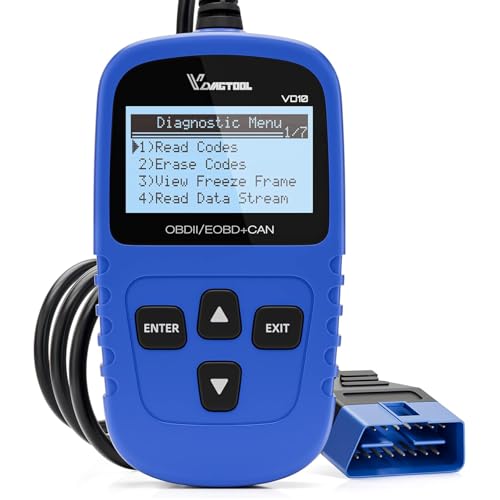
- Built-in database shows over 3,000 DTC definitions.
- Reads/clears codes and supports live data, freeze frame, and I/M readiness.
- Simple plug-and-play design for most OBDII vehicles.
Best For: DIYers who want an easy, low-friction scanner for basic fault-code checks.
3-in-1 Value Pick
T300Pro OBD2 Scanner and Battery Tester

- Adds 6-mode battery and charging tests to standard OBD2 scanning.
- Includes live data, freeze frame, I/M readiness, and EVAP/O2 tests.
- Breakout circuit diagnosis helps find communication and power issues.
Best For: Home mechanics who want a versatile budget tool for codes, batteries, and charging checks.
Basic OBD2 Starter
MUCAR CDL20 Universal OBD2 Scanner

- Full OBD2 functions for code reading, clearing, live data, and EVAP testing
- Plug-and-play with no app, charging, or software needed
- Works with most 1996+ OBDII vehicles and supports multiple languages
Best For: DIY drivers needing a simple, low-cost check-engine scanner
Value Multi-System Pick
FOXWELL Car Scanner NT604 Elite

- Scans engine, ABS, SRS, and transmission systems
- Live data, DTC library, playback, and print features included
- Autovin and 60+ brand support with no extra software fee
Best For: Drivers who want affordable multi-system diagnostics
2-in-1 Budget Combo
NOVEINN Bluetooth OBD2 Scanner

- OBD2 scanner plus 12V battery tester in one tool
- Standalone screen and Bluetooth app modes available
- Supports live data, EVAP tests, freeze frame, and I/M readiness
Best For: DIYers who want engine diagnostics and battery testing in one device
Premium EV Diagnostic Suite – LAUNCH CRP919 EV 2026 Bidirectional Scan Tool
If you want one of the most capable budget EV diagnostic scanners in the higher-feature tier, the LAUNCH CRP919 EV is built for newer electric, hybrid, and new energy vehicles. It combines full-system diagnostics, bidirectional control, ECU coding, and a large reset menu, making it a strong fit for users who need more than basic code reading.
Best For: EV and new-energy owners or independent repair users who want dealer-style functions without stepping into a full professional platform.
Pros:
- Supports EVs, hybrid cars, and new energy vehicles with OE-level full system diagnostics.
- Offers 3000+ active tests plus bidirectional control for components like fans, windows, pumps, and lights.
- Includes 43+ reset services, ECU coding, CANFD/DoIP support, and FCA SGW AutoAuth access.
- Built on Android 10 hardware with 4+64GB memory, dual Bluetooth/USB, and saved report sharing.
Cons:
- Some modern vehicle coverage requires an optional CANFD/DoIP adapter.
- FCA SGW access depends on registered AutoAuth service.
- Feature depth may be more than casual DIY users actually need.
This is a feature-rich pick for buyers who want broad EV coverage and advanced service functions in one scanner. It makes the most sense when diagnostics, coding, and active testing all matter in the same tool.
Basic Emissions Checker – V860 OBD2 Scanner for Car and Trucks
For shoppers comparing budget EV diagnostic scanners, this V860 is better understood as a general OBD2 code reader for gas-powered vehicles rather than an EV-specific tool. It focuses on dependable engine diagnostics, emissions checks, and easy report exporting, which makes it practical for everyday maintenance on compatible vehicles.
Best For: Drivers who want an affordable, straightforward check-engine and emissions scanner for standard OBD-II vehicles.
Pros:
- Reads and clears engine fault codes with a built-in database of 98,963 universal code definitions.
- Includes live data, freeze frame, I/M readiness, Mode 6, O2 sensor, EVAP, and battery voltage testing.
- Supports printable/exportable reports through USB-C and offers lifetime free updates.
- Works with most 1996+ U.S. vehicles and 2003+ EU/Asian OBD-II models.
Cons:
- Not designed for new energy vehicles or hybrids.
- Only covers engine-system OBD-II/EOBD diagnostics, not full-system service functions.
- Live data shows up to 4 parameters at once, which is modest versus advanced scanners.
This is a solid low-cost option if your main goal is to diagnose check-engine lights and pass emissions inspections. It is not the right pick if you specifically need EV coverage or dealer-level functions.
Feature-Heavy EV Tool – LAUNCH X431 CRP919 EV Bidirectional Scanner
Among budget EV diagnostic scanners, the LAUNCH X431 CRP919 EV stands out for buyers who want broad coverage and advanced functions in one handheld tool. It supports electric vehicles, hybrid cars, and new energy vehicles while also adding full-system diagnostics, bidirectional control, and a large menu of reset services.
Best For: DIYers and independent techs who need advanced EV diagnostics with coding, active tests, and broad vehicle coverage.
Pros:
- Supports EVs, hybrid cars, and new energy vehicles with OE-level full-system diagnostics.
- Includes bidirectional control, active tests, ECU coding, adaptation, calibration, and initialization.
- Offers 43+ reset services such as oil reset, EPB, TPMS, ABS bleeding, and injector coding.
- Uses Android 10 hardware, dual Bluetooth/USB connectivity, and data export/report sharing tools.
Cons:
- CANFD/DoIP support requires an optional adapter for compatible vehicles.
- FCA SGW access requires registered AutoAuth service.
- The feature set is extensive, so casual users may not use everything it offers.
This model is a strong choice if you want a versatile scanner that goes well beyond basic code reading. It is especially appealing when you need advanced service functions and modern-vehicle compatibility in the same device.
Portable Home Scanner – BluSon YM319 OBD2 Scanner Diagnostic Tool
The BluSon YM319 fits the budget end of the diagnostic market for drivers who mainly need a simple, reliable OBD2 scanner for standard vehicles. It focuses on check-engine code reading, battery testing, live data, and easy report sharing, so it is best viewed as a practical maintenance tool rather than a full vehicle diagnostic platform.
Best For: Everyday car owners who want an easy handheld scanner for engine faults, battery checks, and emissions-related testing.
Pros:
- Reads and clears engine codes and includes a built-in database of over 63,000 fault codes.
- Offers battery health checks, O2 sensor testing, EVAP testing, freeze frame data, and I/M readiness.
- Can record live data curves and create cloud-printable diagnostic reports.
- Compact design with a 2.4-inch color screen, shortcut keys, and multi-language support.
Cons:
- Not compatible with new energy vehicles or hybrid vehicles.
- Only supports standard OBD-II vehicle coverage, not full-system diagnostics.
- Live data display is limited compared with more advanced scan tools.
This scanner makes sense if you want a straightforward tool for routine troubleshooting and emissions-related checks. It delivers good everyday value, but buyers needing EV support should look elsewhere.
Budget-Friendly Basic Scanner – V500 OBD2 Scanner Diagnostic Tool
If you’re shopping for budget EV diagnostic scanners and want a simple, no-app tool for everyday OBD2 checks, the V500 is a practical pick. It focuses on core engine diagnostics like reading and clearing codes, live data, I/M readiness, and a few helpful test functions without adding setup complexity.
Best For: Drivers who want a compact plug-and-play scanner for basic troubleshooting, emissions checks, and quick vehicle info.
Pros:
- Reads and clears engine fault codes with built-in DTC lookup.
- Shows live data, freeze frame, I/M readiness, O2 sensor, and EVAP test results.
- Works with OBD2/EOBD vehicles from 1996+ US, 2000+ EU, and 2008+ Asian models.
- Runs directly from the vehicle and uses an easy color display with buttons.
Cons:
- Focused on core OBD2 functions rather than advanced service features.
- Best suited to engine/emissions diagnostics, not broader repair system coverage.
The V500 makes sense if you want a straightforward scanner that handles the essentials well. Its compact design and built-in display keep it easy to use for quick checks, while still offering enough data to support basic troubleshooting.
DIY Starter Pick – VDIAGTOOL VD10 OBD2 Scanner
For shoppers comparing budget EV diagnostic scanners and looking for an easy first code reader, the VD10 keeps things simple. It covers the essentials—reading and clearing codes, live data, freeze frame, I/M readiness, and vehicle info—while staying focused on plug-and-play use.
Best For: DIY drivers and beginners who want a straightforward scanner for check-engine light troubleshooting and smog pre-checks.
Pros:
- Built-in database with more than 3,000 code definitions on screen.
- Reads/clears generic and manufacturer-specific codes plus pending codes.
- Supports live data, freeze frame, I/M readiness, and vehicle information.
- Compatible with most OBDII cars, SUVs, and light trucks on standard protocols.
Cons:
- Designed around basic engine diagnostics rather than advanced service functions.
- Uses a simple 2-line LCD, so it is less feature-rich than color-screen models.
The VD10 is a solid entry-level option if you want fast answers without a learning curve. It gives you the key diagnostic basics in a compact tool that is easy to carry, connect, and use when the check engine light comes on.
3-in-1 Value Pick – T300Pro OBD2 Scanner and Battery Tester
If you want budget EV diagnostic scanners that do more than read engine codes, the T300Pro stands out for combining OBD2 diagnostics with battery testing. It adds cranking and charging analysis, breakout circuit diagnosis, and recording features, which makes it more versatile than a basic code reader.
Best For: Home mechanics and small shops that want a budget-friendly scanner with battery, charging, and emission-diagnostic coverage.
Pros:
- Combines OBD2 code reading with a 6-mode battery and charging system tester.
- Supports live data, freeze frame, I/M readiness, O2 sensor, EVAP, VIN lookup, and MIL status.
- Includes breakout circuit diagnosis for ECU communication, wiring, and port power issues.
- Offers record and playback for reviewing data after repairs.
Cons:
- More specialized than a basic code reader, so some users may not need all the extras.
- Compatibility is focused on OBD2 gasoline vehicles and 12V motorcycles.
The T300Pro is a smart value choice if you want one tool for multiple diagnostic jobs. It gives you more troubleshooting depth than a standard scanner while still keeping the setup simple with direct plug-in operation.
Basic OBD2 Starter – MUCAR CDL20 Universal OBD2 Scanner
If you want budget EV diagnostic scanners that cover the essentials without app setup or charging, the MUCAR CDL20 is a straightforward pick. It focuses on core OBD2 functions like code reading, clearing, freeze frame, EVAP testing, and I/M readiness, making it useful for quick check-engine troubleshooting on 1996+ OBDII vehicles.
Best For: DIY drivers who want a simple plug-and-play code reader for basic engine diagnostics and emissions checks.
Pros:
- Full OBD2 coverage including read/erase codes, live data, freeze frame, EVAP test, and I/M readiness
- Plug-and-play design with no app, software, battery, or charger required
- Compact body with long cable and built-in DTC lookup
- Supports a wide range of 1996+ OBDII vehicles and multiple languages
Cons:
- Limited to OBD2-level diagnostics and does not add advanced system coverage
- Clearing codes won’t fix an underlying mechanical issue
Overall, this is a practical low-cost scanner for basic fault finding and emissions prep. It is best suited to drivers who want a dependable, no-frills tool rather than deeper module diagnostics.
Value Multi-System Pick – FOXWELL Car Scanner NT604 Elite
For shoppers comparing budget EV diagnostic scanners with broader coverage, the FOXWELL NT604 Elite stands out because it goes beyond basic engine codes. It scans ABS, SRS, transmission, and engine systems, so it’s a strong all-around choice for drivers who want more insight into warning lights before visiting a shop.
Best For: Car owners who want affordable multi-system diagnostics without paying dealership prices.
Pros:
- Reads and clears common fault codes in engine, ABS, SRS, and transmission systems
- Works out of the box with the latest software already installed
- Includes live data, built-in DTC library, data playback, and print functions
- Autovin and broad brand support across 60+ makes from America, Asia, and Europe
Cons:
- Does not support service/reset functions like oil reset, relearn, or ABS bleeding
- Vehicle compatibility can vary, and some features may not work on older models
- SRS crash/collision data cannot be cleared
This is a smart middle-ground scanner if you want more than a basic code reader but still want to stay budget-conscious. Its value comes from broad everyday diagnostics rather than advanced repair functions.
2-in-1 Budget Combo – NOVEINN Bluetooth OBD2 Scanner
If you want budget EV diagnostic scanners with extra utility, the NOVEINN Bluetooth OBD2 Scanner adds both engine diagnostics and 12V battery testing in one tool. It handles common OBD2 tasks like code reading, clearing, live data, freeze frame, EVAP testing, and I/M readiness, while also checking battery health for drivers who want a more complete driveway tool.
Best For: DIYers who want an OBD2 scanner and battery tester in one compact device.
Pros:
- Combines full OBD2 diagnostics with a 12V battery analyzer
- Supports key functions like live data, EVAP testing, freeze frame, and I/M readiness
- Standalone color screen plus Bluetooth app support with no subscription required
- Works with a wide range of 1996+ OBD2-compliant vehicles and includes battery clamps
Cons:
- It focuses on engine and battery checks rather than advanced vehicle modules
- App features may be more than some users need for basic code reading
For budget-minded buyers, this combo tool makes sense if you also want battery health data alongside check-engine diagnostics. It offers solid everyday coverage without splitting your budget across two separate devices.
How We Picked These Budget EV Diagnostic Scanners
We focused on tools that offer strong value for drivers who want more than a basic code reader. Priority went to EV-capable options, clear diagnostic features, useful live data access, and added functions such as battery testing, freeze frame data, and I/M readiness. We also considered how useful each tool is for everyday maintenance, not just rare fault checks.
Quick Comparison: What Stands Out
Some Budget EV Diagnostic Scanners are built for broader vehicle coverage and deep system access, while others are simpler engine-code tools with battery or alternator checks. Bidirectional scanners and full-system models are best if you want advanced troubleshooting. Entry-level OBD2 readers are better if you mainly need fast fault-code retrieval and basic health checks.
Key Buying Factors for Budget EV Diagnostic Scanners
EV and Vehicle Compatibility
Make sure the scanner supports your specific EV or new-energy vehicle platform. Not every OBD2 tool works equally well on electrified vehicles, so compatibility should come before extra features.
Diagnostic Depth
For most buyers, live data, DTC lookup, freeze frame, and EVAP or battery testing are the most useful everyday features. If you want better fault isolation, look for bidirectional control or full-system diagnostics.
Power and Battery Testing
Many drivers shopping for Budget EV Diagnostic Scanners also need help checking the 12V battery, charging health, or starting system. A combined scan tool and battery tester can be a smart value choice, especially for households with multiple vehicles.
Ease of Use
Clear menus, readable data, and fast setup matter. A tool that is easy to understand is often more valuable than one with advanced functions you will never use.
Who Should Buy Which Budget EV Diagnostic Scanners?
If you want the broadest EV-focused capability, choose an advanced bidirectional scanner with full-system support. If you mainly need check-engine help, emissions checks, and a few useful tests, a simpler OBD2 scanner will usually be enough. Drivers who want one tool for both diagnostics and battery health should look for a 2-in-1 or 3-in-1 model. For budget-minded buyers, the best option is the one that matches your vehicle type and the depth of troubleshooting you realistically need.
