

10 Best Budget Paint Correction Polishers for Safer DIY Results in 2026

Paint correction does not have to require a professional shop or an expensive machine. The right budget polisher can help remove light swirls, oxidation, water spots, and dullness while making routine detailing faster.
This roundup compares 10 affordable options, from beginner-friendly dual-action machines and cordless kits to rotary polishers, waxers, and compound systems. Consider your paint condition, experience level, working area, and desired finish before choosing.
Best 10 Budget Paint Correction Polishers Picks for 2026
Best Budget DA Polisher
WORKPRO 6-Inch Dual Action Kit
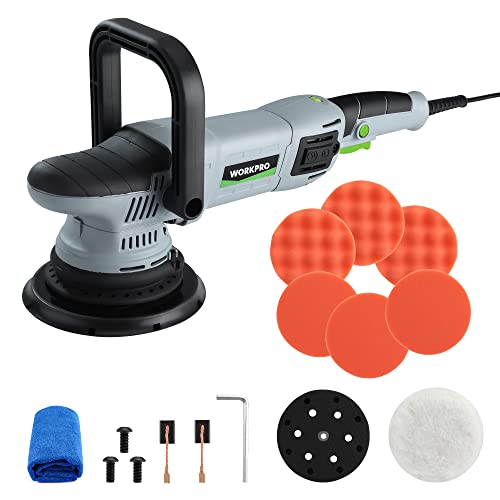
- 15mm dual-action orbit with a 1080W motor
- 1400–5000 RPM variable-speed control
- Includes pads, backing pad, handle, and brushes
Best For: DIY detailers wanting a versatile, accessory-rich polisher
Best One-Step Polish
3D One Scratch & Swirl Remover

- Combines compound and finishing polish
- Works by hand or with a DA polisher
- Zero-dust formula in an 8-ounce bottle
Best For: Streamlined spot or full-panel paint correction
Best Basic Waxer
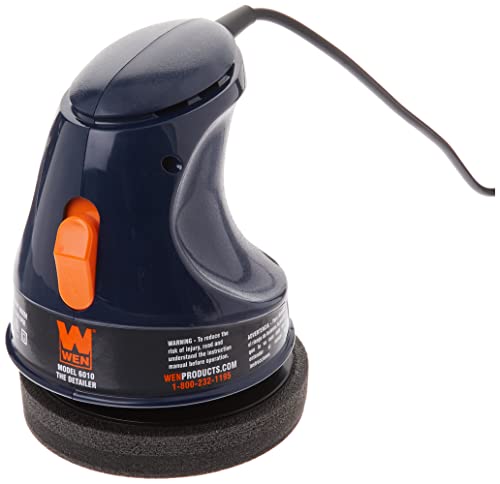
- 3500 RPM corded polishing motor
- Includes applicator and terry cloth bonnets
- Compact 3.4-pound ergonomic design
Best For: Occasional waxing and light polishing tasks
Best Two-Step Compound Kit
Chemical Guys C4 & P4 Paint Correction Kit
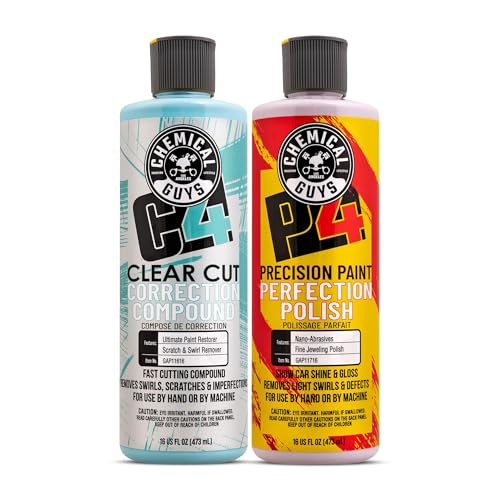
- C4 compound cuts common paint defects
- P4 polish refines gloss and clarity
- Suitable for DA, rotary, or hand application
Best For: Users wanting a dedicated two-stage correction workflow
Best Budget Rotary Pick

- 1600W motor with seven speeds from 1000-3500 RPM
- Includes sponge, wool, and sanding accessories
- 4.5-pound body with detachable and side handles
Best For: DIY users seeking powerful, versatile rotary polishing
Best Simple Waxing Option
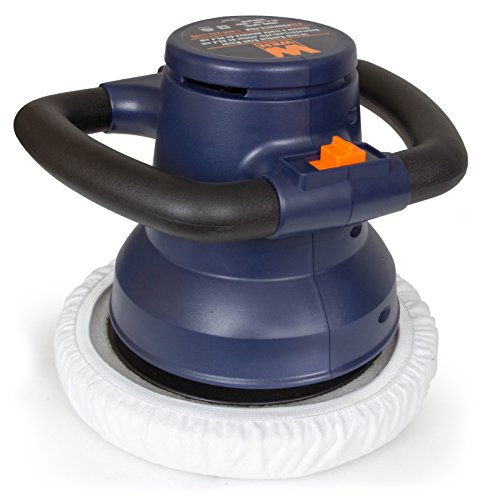
- 10-inch format for covering broad surfaces
- Runs at 3200 orbits per minute
- Includes multiple bonnets, mitt, and storage case
Best For: Home users prioritizing simple waxing and polishing
Best Cordless Pick

- Cordless 8mm dual-action design
- Two 21V batteries included
- Six speeds and broad accessory kit
Best For: Beginners seeking portable car polishing and waxing
Best High-Power Value

- 1600W motor for tougher defects
- Seven speeds from 1,000–3,500 RPM
- Three handle configurations
Best For: Experienced users tackling oxidation and heavy polishing
Best Complete Kit

- 750W dual-action random orbital
- Six speeds up to 5,200 RPM
- Compounds, pads, handles, and bag included
Best For: DIY detailers wanting an all-in-one corded setup
Best Budget DA Polisher – WORKPRO 6-Inch Dual Action Kit
For shoppers comparing budget paint correction polishers, the WORKPRO 6-inch kit offers a capable dual-action setup with a 15mm orbit, 9-amp motor, and adjustable speed control. Its included pads and accessories make it a practical option for car detailing and other polishing projects.
Best For: DIY detailers who want an all-in-one dual-action polisher for correction, waxing, and general polishing.
Pros:
- 1400–5000 RPM variable-speed range supports waxing and polishing tasks.
- Powerful 1080W motor and 15mm dual-action orbit provide strong correction performance.
- Includes six foam pads, a wool pad, backing pad, handle, and replacement carbon brushes.
- Auxiliary handle, grip hood, and switch lock support controlled, more comfortable use.
Cons:
- Its 3.37 kg weight may feel substantial during extended work.
- The broad application range may be more than needed for occasional waxing alone.
This is the most complete machine-focused choice in the group, especially if you need correction power and accessories in one purchase. The variable-speed control also gives beginners room to start conservatively and increase speed as needed.
Best One-Step Polish – 3D One Scratch & Swirl Remover
Among budget paint correction polishers and compounds, 3D One stands out as a one-step product rather than a machine. Its hybrid formula combines cutting and finishing, making it useful for removing swirls, scratches, and oxidation with less product switching.
Best For: Detailers who want a single compound-and-polish formula for spot correction or full-panel work.
Pros:
- Combines cutting compound and finishing polish in one formula.
- Can be applied by hand or with a dual-action polisher.
- Zero-dust formula is designed to leave a clean finish across paint colors.
- Made in the USA and suitable for daily drivers, classics, and show cars.
Cons:
- It is an 8-ounce bottle, so frequent full-vehicle correction may require replenishment.
- As a one-step formula, it may not replace a dedicated multi-stage process for every defect.
3D One is a convenient choice when minimizing steps matters more than building a full correction system. It can simplify a garage detailing workflow while still supporting both hand application and DA polishing.
Best Basic Waxer – WEN 6010 6-Inch Polisher
The WEN 6010 is a simple, low-powered option for shoppers seeking budget paint correction polishers for light polishing and waxing. Its 3500 RPM motor, compact 6-inch design, and included bonnets make it straightforward for basic garage tasks.
Best For: Occasional users who primarily need an uncomplicated corded waxer and polisher.
Pros:
- Compact 6-inch design with an ergonomically contoured body and palm grip.
- Lockable on/off switch supports continuous operation.
- Includes both applicator and terry cloth bonnets.
- Lightweight 3.4-pound construction is manageable for one- or two-hand use.
Cons:
- Its 0.5-amp, 60-watt motor is less powerful than dedicated DA correction machines.
- There is no listed variable-speed control.
- The supplied notes describe it primarily as a waxer/polisher rather than a heavy-correction tool.
The WEN makes sense when affordability and simplicity take priority. Choose it for light polishing and wax application, but consider a stronger dual-action machine for substantial scratch, swirl, or oxidation correction.
Best Two-Step Compound Kit – Chemical Guys C4 & P4 Paint Correction Kit
For a more structured paint-correction process, the Chemical Guys C4 & P4 kit pairs a cutting compound with a finishing polish. This two-step approach is useful for budget paint correction polishers owners who want to address defects first, then refine clarity, gloss, and color.
Best For: Enthusiasts and detailers who prefer separate compounding and polishing stages.
Pros:
- C4 is designed to remove scratches, swirls, oxidation, towel marks, and etching.
- P4 refines micro-marring while enhancing depth, gloss, and color vibrancy.
- Works on clear coat, single-stage, and ceramic-coated vehicles.
- Compatible with dual-action, rotary, or hand application.
Cons:
- The two-step process takes more time than a one-step product.
- Users need to manage two separate bottles and stages.
- The supplied details list the set as two 16-ounce products but also show inconsistent unit-count information.
This kit is the better fit when correction quality and process control matter more than absolute simplicity. C4 handles the defect-removal stage, while P4 provides a dedicated refining step for a higher-gloss finish.
Best Budget Rotary Pick – 1600W Variable-Speed Buffer
If you are comparing budget paint correction polishers for occasional detailing or heavier correction work, this corded rotary model offers a strong feature set. Its 1600W motor, seven speed settings from 1000 to 3500 RPM, and included pads make it adaptable for oxidation, fine scratches, waxing, and polishing.
Best For: DIY users who want a powerful, versatile rotary polisher with multiple grip options and a two-year warranty.
Pros:
- 1600W motor with constant-power control for extended operation
- Seven adjustable speeds cover delicate finishing through heavier polishing
- Lightweight 4.5-pound design with detachable D-handle and side handle
- Includes sponge pads, wool pads, and sandpapers
Cons:
- As a rotary polisher, it requires careful speed and pad selection around paint
- Corded operation limits mobility compared with cordless tools
This is the most capable all-around option here for shoppers who want correction-focused power without moving into a professional price category. The broad speed range and accessory selection improve its flexibility, while the ergonomic design helps make longer jobs more manageable.
Best Simple Waxing Option – WEN 10-Inch Waxer/Polisher
For shoppers seeking budget paint correction polishers for basic paint care, the WEN 10PMC is a straightforward, larger-format waxer and polisher. It uses a 10-inch pad, runs at 3200 orbits per minute, and arrives with multiple bonnets, a washing mitt, and a storage case.
Best For: Home users focused on waxing, polishing, and maintaining large painted surfaces with a simple orbital-style tool.
Pros:
- 10-inch applicator and polishing bonnets cover broad areas efficiently
- 3200 orbits per minute support routine waxing and polishing
- Includes wool blend bonnet, washing mitt, and storage case
- High-impact insulated housing
Cons:
- Supplied notes do not list variable-speed control
- At 9 pounds, it is heavier than the 4.5-pound rotary option
- The 10-inch format may offer less control for tight or localized correction
The WEN is better suited to broad, routine paint maintenance than aggressive defect removal. Its case and extra bonnets add convenience for beginners, but buyers seeking adjustable correction speeds or targeted scratch work may prefer one of the rotary models.
Best Value Correction Tool – 7-Inch Variable-Speed Rotary
This 7-inch rotary polisher is a practical choice among budget paint correction polishers when you need adjustable control for waxing, polishing, and paint-defect removal. Its 10-amp motor and six speed settings from 1500 to 3500 RPM are designed for different stages of automotive detailing.
Best For: DIY detailers who want a conventional 7-inch rotary with adjustable speeds, a lock button, and flexible handle positioning.
Pros:
- 10-amp motor supports polishing and paint-defect removal
- Six speeds from 1500 to 3500 RPM suit waxing through oxidation correction
- Side and D-shaped handles can be positioned for user preference
- Quick-change tray and wool pad support multiple polishing tasks
Cons:
- Rotary action can demand more technique than a basic waxer
- Included-component notes specifically list the polisher, while accessory details are limited
- Corded design requires access to a power outlet
This model balances correction-oriented power and user control at a budget-friendly level. It is more adaptable than a fixed-speed waxer, though beginners should start at a lower setting and use appropriate pads when working on automotive paint.
Best Cordless Pick – Beginner-Friendly DA Polisher
For shoppers comparing budget paint correction polishers, this cordless dual-action model is a convenient choice for light correction, waxing, and scratch-removal work. Its 8mm random-orbital action, six speed settings, and 3.3-pound body make it approachable for beginners, while two batteries help support longer detailing sessions.
Best For: Beginners who want a lightweight, cordless polisher for cars and occasional multi-surface projects.
Pros:
- Cordless design avoids cable clutter and includes two 21V batteries.
- Six speeds from 2,800 to 5,800 RPM with an LED speed and battery display.
- Includes multiple foam, wool, microfiber, non-woven, and sanding accessories.
- Lightweight 3.3-pound design with an 8mm dual-action motion.
Cons:
- The included battery system is not compatible with DeWalt or other third-party batteries.
- Overheating protection may shut the tool off after more than 20 minutes at high speed.
- Batteries should be fully charged before first use for optimal performance.
This is the most flexible option for users who value portability and a generous accessory bundle. Its automatic cooling limitation means it is better suited to controlled sections and moderate sessions than uninterrupted heavy correction.
Best High-Power Value – 1600W Rotary Buffer
This 1600W rotary buffer stands out among budget paint correction polishers for shoppers who need strong cutting power. Seven variable speeds from 1,000 to 3,500 RPM, multiple handle positions, and a selection of wool and foam pads make it suitable for oxidation, scratches, stains, and broader polishing tasks.
Best For: Experienced users who want a powerful corded rotary polisher for cars, boats, furniture, floors, and metal.
Pros:
- Powerful 1600W motor is designed for oxidation, scratches, and stubborn stains.
- Seven speed settings provide control from delicate sanding to aggressive polishing.
- Can be used with the body, D-handle, or side handle for different working positions.
- Includes seven pad types plus 6-inch and 7-inch accessories and a carrying bag.
Cons:
- As a rotary polisher, it requires careful pressure and technique to avoid overloading.
- Recommended working periods should not exceed 15 minutes before a five-minute cooling break.
- Corded operation limits mobility compared with a battery-powered model.
The LDHTHOPI is the power-focused choice in this group, particularly for tougher defects and larger surfaces. Its rotary design and high output favor users comfortable managing speed, pressure, and heat.
Best Complete Kit – SPTA 5-Inch DA Polisher
For a complete entry-level setup, this SPTA dual-action random-orbital polisher is one of the more practical budget paint correction polishers. The 750W motor, six-speed control, constant-power electronics, and included compounds and pads cover waxing, polishing, swirl removal, and light defect correction without requiring as many immediate add-on purchases.
Best For: DIY detailers who want a corded 5-inch DA polisher with compounds, pads, handles, and sanding supplies included.
Pros:
- Dual-action motion is designed for swirls, scratches, and painted-surface defects.
- Six speeds range from 2,000 to 5,200 RPM for waxing, polishing, and correction.
- Constant power and smooth start support steadier, more comfortable operation.
- Bundle includes coarse and fine compounds, multiple pads, handles, towels, and a bag.
Cons:
- Corded 110V operation requires access to a suitable power source.
- The kit is heavier on included accessories than portability, making it less convenient outdoors.
- Its 750W motor is less powerful on paper than the 1600W rotary option.
This SPTA kit offers a balanced starting point for DIY paint correction. Its dual-action format and broad bundle make it easier to begin, while the variable speed control accommodates waxing through more intensive defect removal.
How We Picked These Budget Paint Correction Polishers
We selected products that cover the main needs of DIY detailers: safe and forgiving paint correction, basic waxing, heavier defect removal, portability, and value. The lineup includes dual-action random orbital polishers, rotary buffers, cordless models, compact kits, and compatible compounds or pads.
We also considered useful specifications such as pad size, speed adjustment, included accessories, handling features, and whether each product is better suited to correction or simple wax application. A low price alone does not make a polisher a good choice; control, compatibility, and ease of use matter just as much.
Quick Comparison
| Type | Best For | Main Advantage | Watch For |
|---|---|---|---|
| Dual-action polisher | Beginners and light correction | More forgiving motion | May remove defects more slowly |
| Rotary polisher | Experienced users and heavier defects | Fast, powerful correction | Greater risk of heat or paint damage |
| Waxer/polisher | Wax and sealant application | Simple operation and broad coverage | Often less suitable for true correction |
| Cordless DA | Mobile or outdoor detailing | No power cord | Battery runtime and charging |
| Compound and polish kit | Working with an existing machine | Provides a matched correction system | Does not replace a polisher |
Key Buying Factors for Budget Paint Correction Polishers
Choose the Right Polisher Type
For most first-time users, a dual-action random orbital machine is the safest starting point because its oscillating motion is less likely to create severe holograms or concentrated heat. Rotary machines can correct faster, but they require better technique and constant movement. Waxers are useful for spreading products but may not provide the control needed for meaningful defect removal.
Match Pad Size and Speed to the Job
Five- and six-inch pads offer a practical balance of coverage and control. Smaller pads are easier around mirrors, pillars, and tight contours, while larger pads cover broad panels faster. Variable speed is valuable: use slower settings for spreading product and increase speed gradually for correction, following the polish manufacturer’s instructions.
Check Accessories and Compatibility
Included backing plates, foam or wool pads, bonnets, handles, cases, and batteries can significantly affect overall value. Confirm the pad diameter, backing-plate connection, battery availability, and replacement-pad supply before buying. Compounds and polishes should match the defect severity; begin with the least aggressive combination that produces the desired result.
Prioritize Control and Safety
Look for a comfortable grip, manageable weight, speed control, and overload or thermal protection where available. Always wash and decontaminate the vehicle first, tape delicate trim, work in small sections, and inspect your progress frequently. Machine polishing cannot correct deep scratches that reach the primer or metal.
Who Should Buy Which Budget Paint Correction Polishers?
Choose a dual-action kit if you are new to paint correction or want the best balance of safety and versatility. A cordless DA is a convenient option for driveway users who value mobility and already have a plan for battery charging. Choose a rotary buffer only if you understand pad pressure, working temperature, and machine movement.
For occasional waxing, a larger WEN-style waxer can be practical and easy to operate. If you already own a compatible polisher, a matched compound-and-polish kit may deliver better value than buying another machine. Whichever of these Budget Paint Correction Polishers you choose, test on a small inconspicuous area first and use realistic expectations about the defects it can remove.
