

10 Best Budget Wheel Balancer Machines for Home Shops and Small Garages in 2026

Choosing among budget wheel balancer machines can be difficult when listings combine tire changers, balancers, bead blasters, and different power requirements. The right setup depends on your workload, wheel sizes, available space, and service goals.
This roundup compares 10 affordable options ranging from compact portable balancers to full 110V tire changer and wheel balancer combos, helping you narrow the field before buying.
Best 10 Budget Wheel Balancer Machines Picks for 2026
Heavy-Duty Combo
XK Tire Changer and Wheel Balancer

- 110V tire changer and balancer combo
- Multiple balancing modes, including motorcycle mode
- 6-9 second cycle with ±1g accuracy
Best For: Small tire shops needing a combined service machine
Versatile Manual Pick
Motool Technology KT-710G Balancer

- 1g balancing accuracy
- 10-24 inch rim capacity
- Self-calibration and ALU functions
Best For: Workshops handling standard and specialty tires
Professional Combo
WEIZE 2.0 HP Tire Changer and Balancer
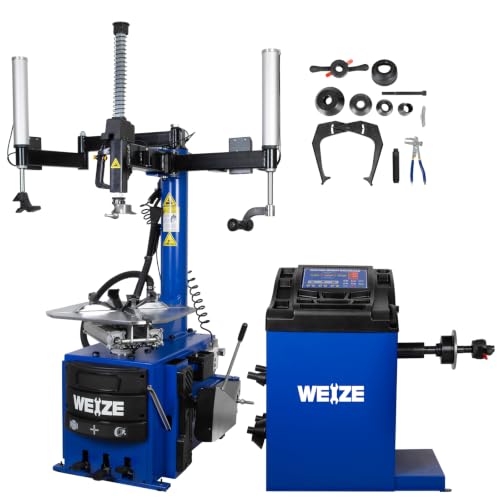
- 2.0 HP changer with dual assist arms
- Handles tires up to 41 inches
- Quiet balancer measures 10-28 inch wheels
Best For: Busy garages servicing large and low-profile tires
Compact Garage Pick
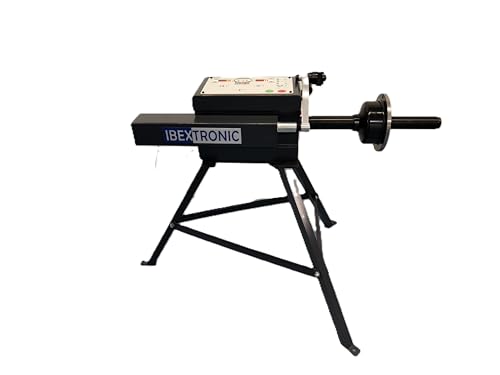
- 44-pound main unit with compact footprint
- USB-C 5V/1A power and hand-spin operation
- 1g accuracy with ALU2/ALU3 support
Best For: Home garages, workbenches, and mobile setups
Best High-Volume Combo

- 12-24-inch outside and 14-26-inch inside clamping
- Integrated tire changer and wheel balancer
- Protective, heavy-duty construction for shop use
Best For: High-volume tire shops needing broad rim coverage
Best Value Shop Combo

- Combines tire changer and wheel balancer
- Multiple modes accommodate different rim types
- Includes a 12-month full parts warranty
Best For: Garage shops wanting flexible all-in-one service equipment
Best Large-Rim Coverage

- Balancer supports rims up to 28 inches
- 14-24-inch inside clamp range
- 110V system with bead-blast assist arm
Best For: Workshops servicing larger wheels and rims
Best All-in-One Value
BILT Hard Tire Changer and Wheel Balancer Combo

- 110V combo with a 2.0HP tire changer and 250W balancer
- Supports broad rim and tire size ranges
- Includes dynamic, static, and four ALU balancing modes
Best For: Mid-volume shops and serious DIY garages
Best Heavy-Duty Shop Package
KATOOL KT-T835 and KT-B750 Combo

- Includes assist arm, bead-blast seater, and protected mounting head
- Balancer provides automatic measurement and a laser guide
- Backed by a 12-month all-parts warranty
Best For: Dedicated automotive repair shops
Best Large-Wheel Shop Combo
KATOOL ME 24-Inch Tire Changer and Balancer

- Handles tire-changer applications up to 24-inch inside clamps
- Balances wheels up to 143 pounds with a 6–9-second cycle
- Includes rim protection and pedal-controlled inflation
Best For: Tire repair shops handling larger wheels
Heavy-Duty Combo – XK Tire Changer and Wheel Balancer
For shops seeking budget wheel balancer machines with tire-changing capability, this XK combo pairs a 110V tire changer with a dedicated wheel balancer. It supports a broad range of passenger-car wheel sizes and includes multiple balancing modes for everyday shop work.
Best For: Small tire shops and garages that need one combined tire-changing and balancing setup.
Pros:
- Combo setup includes both tire changer and wheel balancer.
- Wheel balancer offers dynamic, static, ALU 1-3, and motorcycle modes.
- Balancing accuracy is listed at -1g to +1g with a 6-9 second cycle time.
- Tire changer includes dual turntable operation and bead-break force up to 5,600 pounds.
Cons:
- Heavy 780-pound item weight requires substantial space and handling equipment.
- The motorcycle adapter shown in the picture is not included.
- The tire changer and balancer have different stated rim-clamping ranges.
This is a practical value choice when you want two core tire-service functions in one purchase. Verify your available floor space, electrical supply, and wheel-size requirements before ordering.
Versatile Manual Pick – Motool Technology KT-710G Balancer
Motool Technology Professional Auto Wheel Balancer Portable Car Tire Balancer for Tire Workshops
Check Price On AmazonThis manual Motool Technology balancer is a focused option among budget wheel balancer machines. It offers 1g balancing accuracy, a 10- to 24-inch rim range, and self-calibration for standard and specialized tires.
Best For: Tire workshops that want a dedicated balancer for passenger, motorcycle, racing, and specialty rims.
Pros:
- Listed balancing accuracy is 1g.
- Handles rim diameters from 10 to 24 inches.
- Self-calibration system can adjust across a wide range.
- ALU function supports rims with various special shapes.
Cons:
- This is a manual wheel balancer rather than a tire changer combo.
- The supplied notes do not specify motor power or cycle time.
- Shipping is handled through FedEx or UPS, so delivery arrangements may vary.
The KT-710G makes sense when balancing flexibility matters more than an integrated tire changer. Its self-calibration and ALU functions broaden its usefulness for shops handling mixed wheel types.
Professional Combo – WEIZE 2.0 HP Tire Changer and Balancer
The WEIZE combo is a large-capacity choice for buyers comparing budget wheel balancer machines with full tire-service equipment. Its 2.0 HP tire changer combines dual assist arms and an air bead blaster, while the balancer measures wheels from 10 to 28 inches.
Best For: Professional-grade garages servicing passenger cars, light trucks, low-profile tires, and larger wheels.
Pros:
- External clamping reaches 10-22 inches and internal clamping 12-24 inches.
- Handles tires up to 41 inches in diameter and 16 inches wide.
- Dual assist arms help with run-flat and low-profile tire mounting.
- Balancer operates below 70 dB and includes a measuring ruler for 10-28-inch wheels.
Cons:
- Its listed 795-pound weight demands significant floor space and installation planning.
- The notes do not state the balancer’s exact accuracy or cycle time.
- The large integrated setup may be more machine than a small home garage needs.
With its broad tire capacity and assist features, the WEIZE is aimed at higher-volume service work rather than occasional balancing. Confirm shop clearance, electrical needs, and handling requirements before purchase.
Compact Garage Pick – I40 PRO Mini Wheel Balancer
For home users seeking budget wheel balancer machines without a full-size shop footprint, the I40 PRO is a compact, USB-C-powered option. Its hand-spin design weighs only 44 pounds for the main unit and supports wheels up to 22 inches.
Best For: Home garages, workbenches, mobile setups, and small repair spaces with limited room.
Pros:
- Compact design can be installed in garages, repair shops, workbenches, or vehicles.
- Uses DC 5V/1A power through a USB Type-C interface.
- Supports ALU2 and ALU3 non-standard modes for aluminum rims.
- Offers 1g accuracy and includes a 12-month full parts warranty.
Cons:
- Hand-spin operation requires two to three manual rotations.
- Maximum wheel diameter is limited to 22 inches.
- It is a balancer only, not a tire-changing machine.
The I40 PRO stands out when portability and low power requirements are more important than automated shop throughput. Its smaller capacity makes it best suited to routine garage work within the 22-inch wheel limit.
Best High-Volume Combo – KATOOL KT-T830+KT-B700
For shops comparing budget wheel balancer machines, the KATOOL KT-T830+KT-B700 stands out as an integrated tire changer and balancer designed to move efficiently from mounting to balancing. Its broad clamping range and protective features make it a practical option for frequent service work.
Best For: High-volume tire shops that need a combined changer and balancer for 12- to 26-inch rim applications.
Pros:
- Outside clamps fit 12-24-inch rims, while inside clamps fit 14-26-inch rims.
- Integrated design streamlines tire changing and wheel balancing in one workflow.
- Closed body, alloy-steel jaws, and soft jaw covers help protect equipment and rims.
- 2.0HP system with an 8-inch cylinder is built for demanding shop use.
Cons:
- At 583 pounds, it requires substantial space and careful installation.
- The extensive shop-focused design may be more equipment than occasional users need.
This is a strong choice when throughput, rim coverage, and reduced operator strain matter more than portability. Its integrated construction and reinforced components support regular professional use.
Best Value Shop Combo – KATOOL KT-T800/B700
This KATOOL combo is a practical contender among budget wheel balancer machines for garage and shop environments. It pairs the KT-T800 tire changer with the KT-B700 balancer, including rim-protection features and multiple balancing modes for different wheel types.
Best For: Garage shops and tire-service operators seeking an all-in-one changer and balancer with flexible balancing options.
Pros:
- Combines tire changing and wheel balancing in one equipment package.
- Spade cover helps prevent rim damage during tire-changing work.
- Multiple balance modes support different rim types and applications.
- Includes a 12-month full parts warranty.
Cons:
- The supplied notes do not specify the machine’s rim-size range.
- As shop equipment, it may require dedicated installation space and setup.
Its main advantage is balanced functionality: rim protection, pedal control, and selectable balancing methods in a single package. It is worth considering when flexibility and warranty coverage are priorities.
Best Large-Rim Coverage – KATOOL KT835+KT-B760
For buyers evaluating budget wheel balancer machines with larger-wheel capability, the KATOOL KT835+KT-B760 offers a tire changer and balancer combination with a 28-inch balancing capacity. Its 110V setup, bead-blast assist, and pull-type pedal controls are aimed at efficient workshop operation.
Best For: Professional mechanics and workshops servicing larger rims and needing a combined tire-changing and balancing setup.
Pros:
- Wheel balancer supports rims up to 28 inches.
- Tire changer inside clamp range is 14-24 inches.
- Double-side assist arm and bead-blast seater help streamline service work.
- 110V power supply and pull-type pedal controls simplify operation and setup.
Cons:
- At 661 pounds, this is a heavy, largely stationary shop machine.
- The supplied notes do not specify a warranty period or detailed balancing modes.
This combo makes the most sense when large-rim capability is a deciding factor. Its assist arm and bead-blast features can help reduce time and effort during repeated tire-service jobs.
Best All-in-One Value – BILT Hard Tire Changer and Wheel Balancer Combo
For shoppers comparing budget wheel balancer machines, the BILT Hard combo offers a complete tire-service setup for a shop or serious home garage. Its 110V design combines a 2.0HP tire changer with a 250W balancer, supporting a broad range of rim and tire sizes.
Best For: Mid-volume auto shops and serious DIY garages needing tire changing and balancing in one setup.
Pros:
- Handles 12–24-inch rims and tires up to 39.4 inches; the balancer supports 10–28-inch rims.
- Provides dynamic and static balancing with four ALU modes for alloy-wheel work.
- Uses standard 110V power and includes hands-free pedal operation plus manual A and D value input.
Cons:
- The product dimensions are listed as 1 x 1 x 1 inches, so the actual equipment footprint is not clear from the supplied details.
- The combo may offer more capability than occasional tire-service users need.
This is a practical choice when versatility matters more than a compact footprint. The combination of broad fitment, alloy-wheel modes, and standard household voltage makes it a strong budget-oriented package for regular use.
Best Heavy-Duty Shop Package – KATOOL KT-T835 and KT-B750 Combo
Among budget wheel balancer machines, this KATOOL combo is aimed at buyers who want a substantial shop-oriented package. The KT-T835 tire changer includes a bead-blast seater, assist arm, rim-protective mounting head, and pneumatic-system filtration, while the KT-B750 balancer adds automatic measurement and a laser guide.
Best For: Automotive repair shops prioritizing durable construction, guided measurements, and included tire-service features.
Pros:
- Includes a stainless mounting head with a plastic rim-protection cover and a double-side assist arm.
- Features bead blasting, pedal-controlled inflation, and a filter with drop-oil system for the pneumatic setup.
- Offers automatic measurement, a laser guide, and a 12-month all-parts warranty for the tire changer and balancer.
Cons:
- The listed 661-pound weight makes this a substantial installation rather than a portable option.
- Its 46 x 34 x 33-inch package dimensions require significant floor and delivery planning.
This package is better suited to a dedicated service area than a small garage. Its assist hardware, measurement aids, and stated warranty add practical value for shops that expect frequent use.
Best Large-Wheel Shop Combo – KATOOL ME 24-Inch Tire Changer and Balancer
For buyers seeking budget wheel balancer machines with larger-wheel capability, this KATOOL 24-inch combo covers common shop and garage applications. The tire changer supports outside clamping from 12–22 inches and inside clamping from 14–24 inches, while the balancer handles rims up to 24 inches and wheels up to 143 pounds.
Best For: Tire repair shops and general automotive service departments working with larger wheels.
Pros:
- Supports up to 24-inch inside-clamp tire-changer applications and 39-inch maximum tire diameter.
- The balancer accommodates 10–24-inch rims, 1.5–20-inch rim widths, and up to 143-pound wheels.
- Includes rim-protective covers, pedal-controlled inflation, alloy-steel jaws, and a stated 6–9-second balancing cycle.
Cons:
- The 473-pound equipment weight makes it difficult to relocate once installed.
- The listed package dimensions of 45 x 32 x 32 inches call for dedicated floor space.
- The notes identify a North American 120V/1-phase/1.5HP motor configuration, so buyers should verify the exact electrical specification before purchase.
This combo stands out when wheel size and balancer capacity are more important than portability. Its broad fitment range and quick stated cycle time make it a sensible shop-focused option for regular tire-service work.
How We Picked These Budget Wheel Balancer Machines
We focused on the specifications that matter most in a garage or small tire shop: power supply, wheel-size range, balancing controls, portability, included tire-changing equipment, and the type of work each machine is designed to handle. We also considered whether a product is best suited to occasional home use, regular shop service, or a broader range of passenger-vehicle repairs.
Because advertised configurations can vary, verify the seller’s current specifications, accessories, warranty, and electrical requirements before ordering. A combo machine may offer strong value, but it also requires more floor space and may need a dedicated circuit or compressed-air setup.
Quick Comparison
| Best For | Look For | Typical Advantage |
|---|---|---|
| Occasional home use | Compact, portable design | Easy storage and lower setup demands |
| Garage tire service | 110V combo with broad rim range | One purchase handles changing and balancing |
| Small professional shop | Automatic measurement and laser guidance | Faster, more repeatable operation |
| Larger wheels and tough tires | Bead blaster, assist arms, and extended clamping | More capability for demanding jobs |
Key Buying Factors for Budget Wheel Balancer Machines
Wheel and Tire Compatibility
Check both the minimum and maximum rim diameter, clamping method, maximum tire diameter, and wheel width. Outside-clamp and inside-clamp specifications are not interchangeable, so confirm that the machine matches the wheels you service most often.
Balancing Accuracy and Controls
Automatic measurement rulers, laser guides, digital displays, and multiple balancing modes can reduce setup time and improve consistency. A simpler portable unit may be sufficient for occasional balancing, but higher-volume work benefits from automated measurements and a stable cabinet.
Power, Air, and Installation
Many affordable combos use 110V power, while tire-changing functions may also require compressed air. Confirm voltage, motor horsepower, breaker requirements, air pressure, and whether hoses, regulators, adapters, and wheel cones are included.
Space, Portability, and Support
Measure your available floor space with the machine’s swing arm and work area in use. Portable designs are convenient for storage, while fixed shop machines are generally easier to operate repeatedly. Review replacement-part availability, assembly instructions, warranty coverage, and seller support before purchase.
Who Should Buy Which Budget Wheel Balancer Machines?
Choose a portable mini balancer if you need occasional wheel balancing and value low storage requirements. Choose a basic combo if you want one machine for routine home-garage tire changes and balancing. Choose a dual-assist or bead-blaster combo for frequent work, stiff sidewalls, or larger wheels. Choose an automatic-measurement professional setup when speed, repeatability, and reduced operator effort matter more than the lowest upfront price.
Before checkout, compare the complete package rather than the headline price. Shipping, assembly, air equipment, balancing cones, service tools, and electrical upgrades can materially affect the final cost.
