

10 Best Car Air Purifiers for Cleaner, Fresher Drives in 2026

A car air purifier can help reduce airborne dust, smoke, pet dander, food odors, and other irritants in a small cabin. The right choice depends on whether you prioritize particle filtration, odor control, quiet operation, portability, or low maintenance.
We selected 10 options spanning True HEPA models, ionizers, plasma-based cleaners, and charcoal odor absorbers so you can match the technology and features to your driving habits.
Best 10 Car Air Purifiers Picks for 2026
Best Portable Pick
PureZone Mini Cordless HEPA Purifier

- True HEPA and activated carbon filtration
- Up to 12 hours of cordless use on low
- Lightweight design with three fan speeds
Best For: Drivers who want a rechargeable purifier for personal-space use
Best Plug-In Value
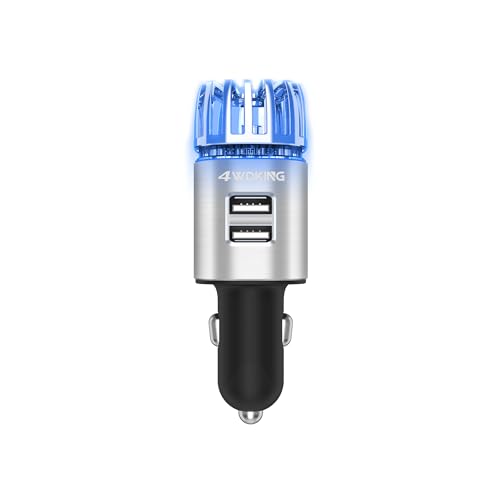
- Compact 12V plug-in design
- Dual 2.1A USB charging ports
- Continuous ionic purification while driving
Best For: Drivers wanting an ionizer and charger in one compact accessory
Best Feature-Rich HEPA Pick

- Four-stage H13 True HEPA filtration
- Built-in PM2.5 sensor and auto ignition
- CARB-certified and ozone free
Best For: Drivers wanting sensor-equipped filtration and automatic operation
Best Scented HEPA Pick

- True H13 HEPA filter for common airborne contaminants
- Built-in platform for essential oils or perfume
- Compact, quiet, and USB powered
Best For: Drivers who want filtered air plus customizable fragrance
Best Adjustable HEPA Pick

- True H13 HEPA filtration rated at 99.97%
- Three modes for everyday or stubborn odors
- 22 dB operation with filter-change indicator
Best For: Drivers wanting adjustable filtration for allergens, smoke, or pet odors
Natural Odor Control

- Unscented bamboo charcoal absorbs odors and moisture
- Reusable for up to two years with monthly sun refreshing
- Four large bags with built-in hanging hooks
Best For: Fragrance-free, zero-power odor control in cars and enclosed spaces
Smart Filtered Freshness
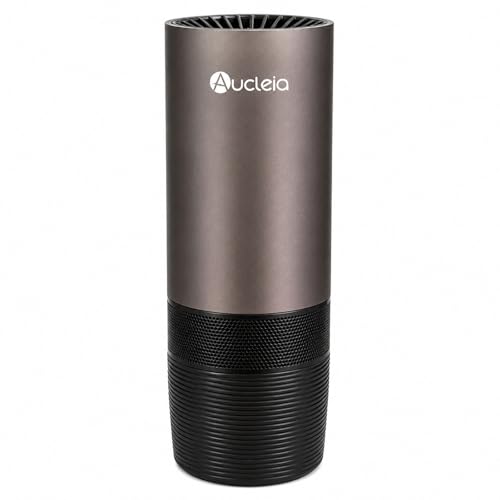
- H13 HEPA and carbon cotton multi-layer filtration
- Auto VOC detection with three fan speeds
- Compact aluminum-alloy body with 22 dB operation
Best For: Drivers wanting sensor-assisted, powered filtration for smoke, dust, and odors
Filterless Portable Cleaning

- Filterless design eliminates routine replacement parts
- Rechargeable and usable while charging
- Quiet mode plus timed 15- and 30-minute refresh modes
Best For: Cordless, low-maintenance odor management in cars and small spaces
Best Portable Pick – PureZone Mini Cordless HEPA Purifier
For shoppers comparing car air purifiers, the PureZone Mini stands out as a lightweight, cordless option with True HEPA filtration. It is designed for personal spaces and can run away from an outlet, making it convenient for car trips and other travel.
Best For: Drivers who want a rechargeable, portable purifier for personal-space use.
Pros:
- Two-stage filtration combines an activated carbon pre-filter with a True HEPA filter.
- Rechargeable battery lasts up to 12 hours on the low setting.
- Weighs less than 1 pound and offers three fan speeds.
- Adjustable or removable handle supports flexible placement.
Cons:
- Designed for small personal spaces rather than whole-vehicle purification.
- Requires recharging when used away from USB power.
The PureZone Mini is a practical choice when portability matters most. Its cordless design and HEPA-plus-carbon filter setup make it more versatile than a basic plug-in car accessory, though its compact coverage is best suited to the air immediately around one person.
Best Plug-In Value – 4WDKING Ionic Car Purifier
Among car air purifiers, the 4WDKING is a compact 12V ionizer built for continuous use while driving. It also adds two USB charging ports, helping keep the cabin fresh without occupying much space.
Best For: Drivers who want a small plug-in ionizer with device charging built in.
Pros:
- Plugs directly into a vehicle’s 12V outlet for continuous operation.
- Produces up to 5.6 million negative ions per cubic centimeter.
- Dual 2.1A USB ports can charge phones, tablets, and other devices.
- Compact stainless-steel design fits neatly in the cigarette-lighter socket.
Cons:
- Uses ionic air purification rather than a replaceable HEPA filter.
- Must remain plugged in for operation.
- Its ozone-like scent may not suit every passenger.
The 4WDKING makes sense for shoppers prioritizing simplicity and charging convenience. Its small footprint and silent operation are well suited to daily commutes, while buyers specifically seeking mechanical particle filtration may prefer a HEPA-based model.
Best Feature-Rich HEPA Pick – LUFTRUM H13 Car Purifier
For shoppers seeking car air purifiers with more monitoring and automation, this LUFTRUM model combines four-stage filtration with an H13 True HEPA filter. Its PM2.5 sensor, automatic ignition operation, and three fan speeds add useful control for regular driving.
Best For: Drivers who want a sensor-equipped, ozone-free purifier with multi-stage filtration.
Pros:
- Four-stage filtration is designed to address exhaust fumes, VOCs, odors, and particles.
- Built-in PM2.5 sensor provides an air-quality reading.
- Automatically turns on and off with the car engine ignition.
- CARB-certified and described as 100% ozone free.
Cons:
- At 2.2 pounds, it is heavier than the smaller portable options.
- Its listed dimensions may require more deliberate placement in the vehicle.
- It relies on vehicle power rather than a rechargeable battery.
This is the strongest fit for drivers who value filtration features and automatic operation over ultra-compact portability. The sensor and four-stage system provide a more feature-focused approach, while the corded design is best for in-car use.
Best Compact Charger Combo – Muted Chrome Car Ionizer
This compact ionizer is one of the more space-saving car air purifiers for drivers who want odor-focused operation and USB charging. It plugs into a 12V socket and uses multi-needlepoint ionization while leaving the cabin free of a larger tabletop unit.
Best For: Smokers and commuters who want a compact ionizer with built-in charging.
Pros:
- Very compact 12V design requires little space in the vehicle.
- Produces a stated 5.6 million negative ions per cubic centimeter.
- Built-in 2.1A USB ports support phone and tablet charging.
- Muted chrome aluminum body is designed to reduce distracting glare.
Cons:
- Ionization works over time rather than providing an instant effect.
- Uses ionic purification instead of a conventional replaceable filter.
- The unit may produce audible ionizer sounds under some conditions.
The Muted Chrome model is a sensible option when socket convenience and a tiny footprint are higher priorities than HEPA filtration. Its supplied notes specifically recommend longer trips and daily use for odor control, so it is better suited to regular commuters than occasional short drives.
Best Scented HEPA Pick – Carbon Fiber Car Air Purifier
For drivers who want car air purifiers that address airborne contaminants while adding fragrance, this cup-holder model combines a true H13 HEPA filter with an essential-oil diffuser. Its compact, USB-powered design is suited to everyday commutes and longer trips.
Best For: Drivers who want filtered air and customizable fragrance in a cup-holder-friendly unit.
Pros:
- True H13 HEPA filtration targets common airborne contaminants and particles down to 0.3 micron.
- Built-in perfume platform supports essential oils or favorite perfume.
- Compact 2.8-inch design, quiet 25 dB operation, and simple USB power.
- Carbon-fiber wrap provides a distinctive appearance.
Cons:
- Requires a USB connection for power.
- Uses a replaceable filter, with replacement recommended after six months.
- Fragrance performance depends on the oils or perfume used.
This is a practical choice if you want a traditional filtered purifier with an added scent option. Its cup-holder fit and quiet operation keep the setup unobtrusive, though filter upkeep is part of ownership.
Best Filterless Odor Control – Yakry Mini Ionizer
If your priority in car air purifiers is reducing cabin odors without replacing filters, the Yakry Mini uses bipolar plasma ion technology in a compact vent-mounted design. It is intended for smoke, food, pet, and stale-air odors without added fragrance.
Best For: Drivers seeking filterless, unscented odor control that preserves cup-holder space.
Pros:
- Filterless design avoids recurring filter replacement costs.
- Bipolar plasma ion technology targets common vehicle odors without masking them with scent.
- Clips to horizontal, vertical, and round-style vents, leaving cup holders available.
- Whisper-quiet, ozone-safe operation with a USB-A to USB-C cable and two-year warranty.
Cons:
- It is an ionizer rather than a HEPA-filter purifier.
- Requires a compatible vent location and USB power.
- The supplied notes focus on odor control rather than specific particle-filtration performance.
The Yakry is a straightforward option for odor-focused buyers who do not want filter maintenance or fragrance. Its vent clip is space-efficient, but shoppers wanting HEPA filtration should consider a filtered alternative.
Best Adjustable HEPA Pick – Aucleia Portable Car Purifier
Among car air purifiers, the Aucleia stands out for combining true H13 HEPA filtration with three operating modes and a filter-replacement indicator. It fits standard cup holders, runs at a stated 22 dB, and can also be used in offices, hotels, or other small spaces.
Best For: Allergy-conscious drivers, pet owners, and travelers who want adjustable filtration and maintenance reminders.
Pros:
- True H13 HEPA filter is rated to capture 99.97% of particles including dust, pollen, dander, and smoke.
- Three modes provide standard, fast, and boost settings for different odor levels.
- Filter indicator alerts users after 360 hours of use.
- 22 dB operation, cup-holder fit, USB power, and an aromatherapy pad add flexibility.
Cons:
- Requires eventual filter replacement.
- Its compact coverage is intended for a vehicle cabin or similarly small area, not a large room.
- Using the aromatherapy feature may not suit drivers who prefer an unscented cabin.
This model offers the most control of the three, with selectable airflow modes and a clear maintenance reminder alongside HEPA filtration. It is a strong fit for buyers who want one compact purifier for commuting, travel, and small personal spaces.
Natural Odor Control – CLEVAST Charcoal Bags
For shoppers seeking simple car air purifiers, these unscented bamboo charcoal bags offer a passive way to absorb odors and moisture without fragrances, chemicals, cords, or filters. The four large bags can be hung or placed in odor-prone areas.
Best For: Drivers who want maintenance-light, fragrance-free odor control in cars and other enclosed spaces.
Pros:
- Uses 100% natural bamboo charcoal with no added fragrance or chemicals.
- Designed to absorb odors, moisture, and impurities in enclosed spaces.
- Reusable for up to two years when refreshed in direct sunlight monthly.
- Built-in hooks support flexible placement in cars, closets, bathrooms, and more.
Cons:
- Passive charcoal bags do not provide powered airflow or HEPA filtration.
- Best results may require placing multiple bags where odors linger.
This is a practical choice for odor and moisture management rather than particle-focused air cleaning. Its unscented, reusable design makes it especially appealing for small spaces where you prefer a zero-power solution.
Smart Filtered Freshness – Aucleia Ionic Car Purifier
Among car air purifiers, the Aucleia combines an H13 HEPA filter, carbon cotton filtration, and automatic VOC detection in a compact aluminum-alloy body. Its three fan speeds and cup-holder-friendly shape make it suited to daily driving and travel.
Best For: Drivers who want powered filtration, automatic VOC sensing, and adjustable airflow in a compact purifier.
Pros:
- Multi-layer filtration includes H13 HEPA and carbon cotton filters.
- Auto VOC detection adjusts fan speed to help maintain airflow.
- Three fan speeds and a stated 22 dB operating noise level support flexible use.
- Compact aluminum-alloy design fits car cup holders and handles heat dissipation.
Cons:
- It requires the compatible KQ-11 filter for replacement.
- Unlike filterless models, ongoing filter replacement is part of ownership.
The Aucleia is the more feature-rich option for smoke, dust, pet dander, pollen, and odors. Its sensor-controlled operation and quiet profile add convenience, while the proprietary filter requirement is worth considering before purchase.
Filterless Portable Cleaning – Rechargeable Ion Air Purifier
This rechargeable option gives car air purifiers a filterless, portable format for vehicles, RVs, desks, and other small spaces. It offers quiet operation, a cup-holder base, and timed intensive modes for situations where you want a convenient, low-maintenance air refresher.
Best For: Travelers and commuters who prioritize rechargeable, filter-free operation and flexible placement.
Pros:
- Filterless design avoids routine filter replacement.
- Rechargeable battery supports cordless use and operation while charging.
- Three modes include quiet negative-ion operation plus 15- and 30-minute timed modes.
- Portable body and included cup-holder base suit cars, RVs, offices, and travel.
Cons:
- It does not provide HEPA filtration or a replaceable particulate filter.
- Timed intensive modes should be used only in unoccupied spaces with doors and windows closed.
This model emphasizes convenience over conventional filtration. Its filterless construction and rechargeable battery reduce maintenance, while the multiple modes make it adaptable for everyday odor management in personal spaces.
How We Picked the Best Car Air Purifiers
We compared these Car Air Purifiers by looking at filtration technology, odor-control approach, power requirements, portability, maintenance, and practical vehicle compatibility. True HEPA models are evaluated for their ability to capture fine airborne particles, while ionizers and plasma cleaners are included for shoppers focused on odors and low-maintenance operation. We also considered useful extras such as USB charging, cordless use, auto-sensing, rechargeable batteries, and compact designs.
Because vehicle cabins vary widely, no single purifier is ideal for every driver. A compact model may suit a commuter, while a stronger filter-based unit may be more appropriate for frequent highway travel, pets, smoke, or allergy concerns.
Quick Comparison
| Type | Best For | Maintenance | What to Know |
|---|---|---|---|
| True HEPA | Dust, pollen, and fine particles | Replace filters periodically | Look for a clear replacement-filter path and suitable airflow. |
| H13 HEPA | Smoke, exhaust-related particles, and allergens | Replace filters periodically | Useful when particle filtration is the main priority. |
| Ionizer or plasma | Odors and low-maintenance use | Usually minimal | Check whether the product generates ozone and follow safety guidance. |
| Charcoal bags | Passive odor and moisture absorption | Refresh or replace as directed | No power or fan; performance depends on placement and ventilation. |
Key Buying Factors for Car Air Purifiers
Filtration and Odor Control
Choose a True HEPA or H13 HEPA model if you want active removal of dust, pollen, smoke particles, and other airborne contaminants. Activated carbon can complement particle filtration by helping with odors and some gases. Ionizers and plasma systems approach air cleaning differently, so review the manufacturer’s claims and ozone information before buying.
Power, Size, and Placement
Check whether the purifier uses a 12V outlet, USB power, a rechargeable battery, or no power at all. A cordless unit is easier to move between vehicles, while a plug-in model can run continuously. Make sure the purifier fits securely without blocking visibility, controls, vents, or airbags.
Noise and Maintenance
Fan-based purifiers can produce audible airflow, especially at higher settings. For quiet commuting, compare noise information and look for multiple speed settings. Filter models require replacement filters, so confirm availability and estimated replacement intervals. Filterless options reduce upkeep but may not provide the same particle-capture method as HEPA filtration.
Safety and Real-World Expectations
A purifier cannot replace ventilation, cabin-air-filter changes, or cleaning the vehicle interior. Avoid relying on any device to eliminate dangerous exhaust gases or compensate for a mechanical problem. Follow the operating instructions, particularly for products that use ionization or plasma technology.
Who Should Buy Which Car Air Purifiers?
For allergy and dust concerns: Choose a compact True HEPA or H13 HEPA purifier with replaceable filters. For smoke and strong odors: Favor a model combining HEPA filtration with activated carbon, while also removing the odor source. For pet owners: Look for a filter-based unit with adequate airflow and easy-to-clean prefilter surfaces. For low-maintenance odor control: An ionizer, plasma purifier, or charcoal bag may be convenient, provided its limitations suit your needs. For drivers who change vehicles: A rechargeable or cordless portable model offers the most flexibility. Finally, shoppers who need charging convenience may prefer a purifier with built-in USB ports, but should ensure it does not occupy the only outlet needed for other accessories.
