

10 Best Compact Automotive Refrigerant Machines for Faster AC Service in 2026

The best compact automotive refrigerant machines make vehicle AC recovery and recharge work easier without taking up the space or cost of a full-size shop system. The right choice depends on refrigerant compatibility, automation, recovery performance, and how often you service vehicles.
We compared 10 portable and automatic models for different workloads, from straightforward recovery jobs to dual-refrigerant automotive AC service. Use the guide below to narrow the list by capability, safety, and overall value.
Best 10 Compact Automotive Refrigerant Machines Picks for 2026
Best Portable Workhorse
VIVOHOME 3/4 HP Recovery Machine

- 3/4 HP oil-less compressor recovers vapor and liquid
- Supports a wide range of common refrigerants
- Dual filtration and 558 PSI safety shut-off
Best For: Portable shop and field recovery work
Best Fully Automatic Option
Airtek AC-Dual Recovery and Recharge
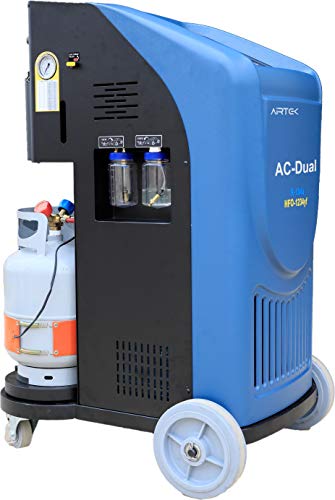
- Automatically recovers and recharges R134a and HFO1234yf
- Supports domestic, foreign, electric, and hybrid vehicles
- Separate tanks switch between refrigerants in about 10 minutes
Best For: Professional automotive shops with mixed vehicle fleets
Best Lightweight Pick
Robinair RG3 Portable Recovery Machine

- Weighs about 18 pounds with a small footprint
- Recovers liquid and vapor refrigerants
- 550 PSI shut-off and simple two-valve controls
Best For: Mobile technicians and smaller recovery jobs
Best Self-Purge Design
3/4 HP Oil-Less Recovery Machine

- Fast liquid and vapor recovery from a 3/4 HP compressor
- Self-purge function clears residual refrigerant
- Broad refrigerant compatibility with pressure protection
Best For: Automotive, household, and commercial AC recovery
Dual-Refrigerant Workshop Pick
AC2100 Automatic Recovery & Recharge Machine
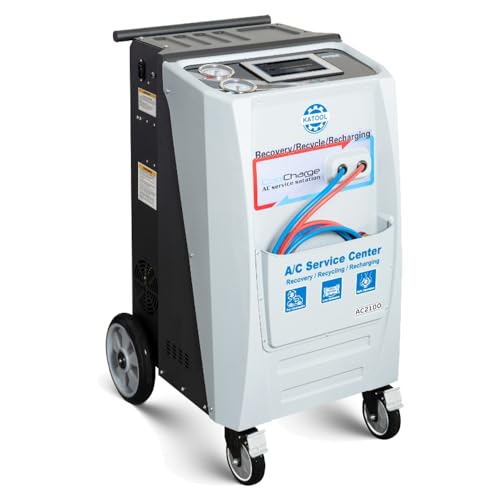
- Fully automatic recovery, evacuation, and recharge
- Supports R134a or R1234yf
- Independent PAG and UV oil pipelines
Best For: Automotive workshops servicing one selected refrigerant type
Portable Value Pick
VIVOHOME A2L 3/4HP Recovery Machine

- 29.7-pound portable housing
- 3/4 HP oil-less compressor
- Automatic shut-off above 558 psi
Best For: Mobile technicians and space-limited recovery work
Professional Automation Pick
KATOOL 2100 Fully Automatic AC Machine
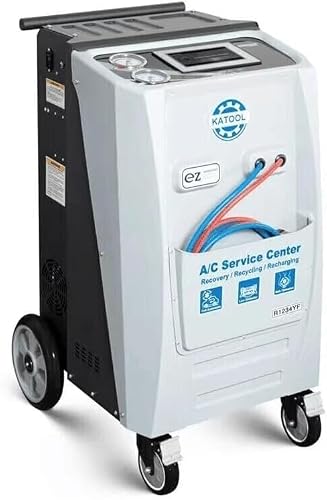
- Integrated recovery, recycling, and recharge
- Multi-stage filtration and deep cleaning
- Separate PAG and UV pipelines
Best For: Professional workshops needing repeatable automated AC service
Best Portable Pick
Jack Boss RR250 Refrigerant Recovery Machine

- 3/4 HP recovery at up to 4.85 lb/min
- 29.7-pound portable design with carry handle
- Dual filtration and self-cleaning purge mode
Best For: Mobile technicians and compact service setups
Best Hands-Free Station
KATOOL AC1800 Automatic R134a Recovery Machine

- Automates recovery, recycling, and recharge
- Separate oil and UV dye pipelines reduce cross-contamination
- Supports R134a or R1234yf with included couplers
Best For: Busy automotive shops with a dedicated service bay
Best High-Tech Option
VEVOR Automatic R134a and 1234yf AC Machine

- 10-inch touchscreen with vehicle database
- Automates recovery, vacuum, recharge, and oil replacement
- Supports gasoline and electric vehicles
Best For: Professional shops needing guided multi-function A/C service
Best Portable Workhorse – VIVOHOME 3/4 HP Recovery Machine
For buyers comparing compact automotive refrigerant machines, the VIVOHOME VH471 combines a 3/4 HP oil-less compressor with liquid and vapor recovery in a portable 29.9-pound design. Its broad refrigerant compatibility, filtration, and safety controls make it practical for shop or field work.
Best For: Automotive technicians and HVAC users who need fast, portable recovery across multiple refrigerant types.
Pros:
- Recovers both vapor and liquid refrigerants with a 3/4 HP compressor.
- Compatible with numerous refrigerants, including R12, R134a, R22, R410A, R404A, and R509.
- Includes dual-stage filtration, a 558 PSI automatic shut-off, and overcurrent protection.
- Portable 15.7-by-9.8-by-14-inch design with an ergonomic handle.
Cons:
- At nearly 30 pounds, it is heavier than the smallest portable units.
- It is designed for recovery rather than a fully automatic recovery-and-recharge workflow.
The VIVOHOME stands out when recovery speed, refrigerant versatility, and job-site portability matter more than minimum weight. Its filtration and protective features add useful support for regular service work.
Best Fully Automatic Option – Airtek AC-Dual Recovery and Recharge
Airtek AC-Dual Fully Automatic Machine, HVAC Automotive Recovery and Recharge of R134 and HFO1234yf
Check Price On AmazonAmong compact automotive refrigerant machines, the Airtek AC-Dual is the most comprehensive service platform in this group. It automatically recovers and recharges both R134a and HFO1234yf systems, allowing technicians to enter vehicle information and let the machine handle the process.
Best For: Automotive shops servicing domestic, foreign, electric, and hybrid vehicles with both supported refrigerants.
Pros:
- Supports recovery and recharge for both R134a and HFO1234yf.
- Fully automatic operation reduces hands-on involvement.
- Software helps prevent incorrect oil injection, with oil injection available for non-EV and hybrid vehicles.
- Includes separate refrigerant tanks and switches between systems in about 10 minutes.
Cons:
- At 275 pounds, it is not as portable as the other machines in this roundup.
- Its dual-refrigerant capability is focused on R134a and HFO1234yf rather than a broad list of refrigerants.
The Airtek is better viewed as a shop-based service machine than a lightweight field unit. Its automatic workflow and dual-refrigerant support can justify the larger footprint for facilities handling varied vehicle fleets.
Best Lightweight Pick – Robinair RG3 Portable Recovery Machine
The Robinair RG3 is a strong choice for shoppers seeking compact automotive refrigerant machines that are easy to carry. Weighing about 18 pounds and using a 1/3 HP oil-less compressor, it recovers both liquid and vapor refrigerants while maintaining a small footprint.
Best For: Technicians who prioritize portability for residential, appliance-sized, rooftop, or marine HVAC recovery work.
Pros:
- Compact 6.5-by-9.5-by-12.5-inch design with a 40 percent smaller footprint.
- Handles common CFC, HFC, and HCFC refrigerants, including R410A.
- Recovers both liquid and vapor with a 1/3 HP oil-less compressor.
- Features a 550 PSI automatic shut-off, readable gauges, and simple two-valve controls.
Cons:
- The 1/3 HP compressor is less powerful than the 3/4 HP units in this selection.
- It is intended for recovery and does not provide the Airtek’s automatic recharge functions.
The RG3 is the most convenient option when carrying weight and storage space are major concerns. Its lower-power compressor may trade some recovery muscle for a notably easier-to-transport package.
Best Self-Purge Design – 3/4 HP Oil-Less Recovery Machine
This 3/4 HP single-cylinder unit is one of the more capable compact automotive refrigerant machines for buyers who want quick recovery and a self-purge function. Its oil-less compressor, cross-flow cooling design, and support for liquid and vapor recovery suit automotive, household, and commercial AC work.
Best For: Users who want a portable recovery machine with broad refrigerant compatibility, pressure monitoring, and residual-refrigerant purging.
Pros:
- 3/4 HP compressor recovers liquid and vapor refrigerants quickly.
- Self-purge switch helps clear residual refrigerant from the recovery kit.
- Supports a broad range of Category III, IV, and V refrigerants.
- Includes intake and discharge gauges, a 558 PSI automatic shut-off, overload protection, and a replaceable filter drier.
Cons:
- At about 29.8 pounds, it is not as light as the Robinair RG3.
- It cannot be used with explosive, flammable, or corrosive refrigerants.
- It requires approved refillable recovery cylinders; single-use tanks are incompatible.
The self-purge feature gives this machine a practical advantage for repeated service work, while the broad compatibility supports varied applications. Buyers should carefully follow the supplied cylinder and refrigerant restrictions.
Dual-Refrigerant Workshop Pick – AC2100 Automatic Recovery & Recharge Machine
For shops comparing compact automotive refrigerant machines, the AC2100 stands out as a fully automatic recovery, evacuation, and recharge solution. It supports R134a or R1234yf systems, includes filtration, and is designed for workshop use.
Best For: Automotive workshops that need automated servicing for one selected refrigerant type.
Pros:
- Automates recovery, evacuation, and recharging.
- Supports R134a or R1234yf with corresponding quick couplers.
- Uses deep cleaning and filtration to remove impurities.
- Independent PAG and UV oil pipelines help prevent mixing.
Cons:
- At 254 pounds, it is not especially portable.
- The refrigerant type must be selected carefully; switching restrictions apply after use.
The AC2100 is a capable shop-focused option when automation matters more than portability. Confirm the required refrigerant before purchase and first use.
Portable Value Pick – VIVOHOME A2L 3/4HP Recovery Machine
Among compact automotive refrigerant machines, the VIVOHOME RR250 emphasizes portability and straightforward operation. Its 3/4 HP compressor, dual gauges, automatic shut-off, and 29.7-pound housing make it practical for mobile or space-limited recovery work.
Best For: Beginners, mobile technicians, and users who need a portable recovery-only machine.
Pros:
- Compact 29.7-pound design includes a carrying handle.
- Oil-less air-cooled piston compressor supports liquid and vapor recovery.
- Dual-pressure gauges and three valves simplify monitoring.
- Automatic high-pressure shut-off activates above 558 psi.
Cons:
- It is a recovery machine rather than a fully automatic recovery-and-recharge station.
- Its broad refrigerant compatibility still requires following proper refrigerant handling procedures.
The VIVOHOME is the most transportable choice here and offers useful safety and monitoring features. Choose it when recovery flexibility and easy storage matter more than integrated recharge automation.
Professional Automation Pick – KATOOL 2100 Fully Automatic AC Machine
The KATOOL 2100 is one of the more workshop-oriented compact automotive refrigerant machines, combining an integrated recovery, recycling, and recharge cycle with multi-stage filtration. Its design targets repeatable service work and reduced hands-on monitoring.
Best For: Professional workshops seeking an automated R134a or R1234yf service workflow.
Pros:
- Runs recovery, recycling, and recharge as an integrated closed-loop cycle.
- Deep cleaning and multi-stage filtration help remove impurities.
- Separate PAG and UV pipelines reduce the risk of fluid mixing.
- Includes quick couplers for R134a and R1234yf selection.
Cons:
- The 254-pound machine is difficult to move frequently.
- Once a refrigerant type is used, switching between R134a and R1234yf is prohibited.
For a professional shop, the KATOOL 2100 offers strong automation and fluid separation features. Treat refrigerant selection as a permanent operating decision and verify compatibility before commissioning the unit.
Best Portable Pick – Jack Boss RR250 Refrigerant Recovery Machine
For technicians seeking compact automotive refrigerant machines, the Jack Boss RR250 emphasizes portability without giving up useful recovery features. Its 3/4 HP motor supports vapor and liquid recovery at up to 4.85 lb/min, while dual filtration and a purge mode help simplify routine service work.
Best For: Mobile technicians and smaller shops that need a relatively lightweight recovery machine for compatible refrigerants.
Pros:
- Supports vapor and liquid recovery at up to 4.85 lb/min.
- Works with several refrigerants, including R32, R1234yf, R134a, R12, R401A, and R410A.
- Dual filtration, automatic high-pressure cutoff, overload protection, and visible pressure monitoring add practical safeguards.
- At 29.7 pounds, it is easier to carry onsite than larger automated equipment.
Cons:
- It is not intended for flammable, explosive, or corrosive refrigerants.
- It is a recovery and recycling machine rather than a fully automatic recovery-and-recharge station.
The RR250 is a practical choice when transportability and broad refrigerant compatibility matter more than full automation. Its self-cleaning purge function is especially useful for reducing cleanup between jobs.
Best Hands-Free Station – KATOOL AC1800 Automatic R134a Recovery Machine
The KATOOL AC1800 is designed for shops that want an automated workflow rather than a handheld unit. Among compact automotive refrigerant machines, it combines recovery, recycling, and recharging with hands-free operation, but its 254-pound build makes it better suited to a permanent workshop location.
Best For: Automotive shops handling repeated R134a or R1234yf service jobs and prioritizing automated operation.
Pros:
- Automates the recovery, recycling, and recharge cycle.
- Uses advanced filtration for cleaning recovered refrigerant.
- Separate pipelines and solenoid valves for PAG oil and UV dye help prevent cross-contamination.
- Includes quick couplers for R134a and R1234yf configurations.
Cons:
- At 254 pounds with large package dimensions, it is not especially portable.
- The refrigerant type must be selected at first use; switching between R134a and R1234yf afterward is prohibited.
The AC1800 makes the most sense for a dedicated service bay where automation and repeatable processing outweigh mobility. Buyers should confirm the intended refrigerant before commissioning the machine.
Best High-Tech Option – VEVOR Automatic R134a and 1234yf AC Machine
The VEVOR automatic system targets shops servicing both conventional and electric vehicles. It combines recovery, vacuum, filtration, recharging, and oil replacement, while a 10-inch touchscreen and vehicle database guide the process. Its 252-pound size places it firmly in the shop-equipment category rather than the portable-tool class.
Best For: Automotive service centers that want touchscreen-guided automation for R134a and R1234yf systems, including gasoline and electric vehicles.
Pros:
- Combines recovery, vacuum, filtration, recharging, and oil replacement.
- 10-inch touchscreen displays operation steps and real-time data.
- Built-in vehicle database and independent electronic scales support precise charging.
- Supports gasoline and electric vehicles and includes U.S.-standard adapters.
Cons:
- Its 252-pound weight and large dimensions limit portability.
- Compatibility is limited to R134a and 1234yf refrigerants.
For a professional shop, the VEVOR stands out for combining broad service functions with a guided touchscreen interface. It is a strong fit when measurement, automation, and support for high-voltage vehicle A/C systems are priorities.
How We Picked These Compact Automotive Refrigerant Machines
We focused on machines designed for automotive air-conditioning service, prioritizing portability, recovery capability, refrigerant support, operating convenience, and suitability for occasional or professional use. The lineup includes recovery-only units, fully automatic recovery-and-recharge systems, and models supporting R134a, R1234yf, HFO1234yf, or multiple refrigerants.
We also considered practical details such as oil-less or single-cylinder designs, control interfaces, vacuum and recharge functions, stated recovery accuracy, and whether a machine is better suited to mobile work, a home garage, or a busy service bay. Always confirm the manufacturer’s specifications and local handling requirements before purchase.
Quick Comparison
| Best For | Look For | Likely Fit |
|---|---|---|
| Basic refrigerant recovery | Portable recovery-only design | Robinair RG3 or a compact single-cylinder unit |
| Frequent automotive servicing | Automatic recovery, vacuum, and recharge cycles | Airtek, AC2100, KATOOL, or VEVOR systems |
| R134a vehicles | Dedicated R134a compatibility | KATOOL AC1800 or another R134a-specific model |
| Mixed or newer vehicle fleets | R134a and R1234yf support | Dual-refrigerant automatic machines |
| Mobile service | Compact housing, manageable weight, and simple controls | VIVOHOME, Jack Boss, or Robinair portable models |
Key Buying Factors for Compact Automotive Refrigerant Machines
Refrigerant Compatibility
Check the exact refrigerant before connecting any machine. R134a and R1234yf systems require appropriate equipment, fittings, and procedures, while A2L-compatible equipment may be necessary for mildly flammable refrigerants. A dual-refrigerant machine can offer more flexibility, but only when its specifications clearly support the refrigerants you intend to handle.
Recovery Versus Full AC Service
A recovery machine removes refrigerant from a vehicle, while a fully automatic service station may also separate oil, pull a vacuum, test for leaks, and recharge by weight. Choose a recovery-only model for occasional evacuation or component replacement. For repeated service work, automation can reduce setup time and improve consistency.
Capacity, Speed, and Duty Cycle
Horsepower and cylinder design affect recovery performance, but they are not the only considerations. Review stated recovery rates, liquid and vapor capability, continuous-duty limitations, cooling requirements, and recommended pause intervals. A smaller unit may be easier to transport, while a heavier-duty machine is better for multiple vehicles per day.
Controls, Accuracy, and Maintenance
Digital displays, automatic shutoff, programmed cycles, weighing accuracy, and clear status indicators can make service more repeatable. Also check filter replacement, oil management, hose connections, warranty coverage, and availability of replacement parts. Touchscreen features are useful only if the interface remains easy to operate in a busy workshop.
Who Should Buy Which Compact Automotive Refrigerant Machines?
Choose a portable recovery-only machine if you mainly recover refrigerant before repairs and already own a separate vacuum pump or charging equipment. It is usually the simplest and most affordable route for a home garage or occasional technician.
Choose a fully automatic model if you service vehicles regularly and want one system to handle recovery, evacuation, and recharge. Dual-refrigerant models are the better long-term option for mixed fleets, provided you follow required separation and contamination-control procedures.
For mobile technicians, prioritize weight, durable construction, straightforward controls, and power requirements over large displays or extra automation. For a fixed shop, favor recovery speed, cycle automation, capacity, serviceability, and a strong parts and support network. Regardless of the model, use approved cylinders, verify connections, and follow the machine manual and applicable refrigerant regulations.
