

10 Best Compact Automotive Thermal Imagers for Faster Vehicle Diagnostics in 2026

Compact automotive thermal imagers make hidden heat patterns visible, helping you investigate electrical connections, cooling systems, brakes, batteries, and HVAC components without unnecessary disassembly.
We compared resolution, sensitivity, phone compatibility, portability, and practical inspection features across 10 models to help you choose the right thermal camera for your vehicle work.
Best 10 Compact Automotive Thermal Imagers Picks for 2026
Best Pocket-Sized Standalone

- 240 x 240 TISR-enhanced imaging
- 15-hour battery and 8,000-photo storage
- IP54-rated, 2-meter drop-resistant body
Best For: Standalone vehicle and equipment inspections
Best Phone-Powered Detail
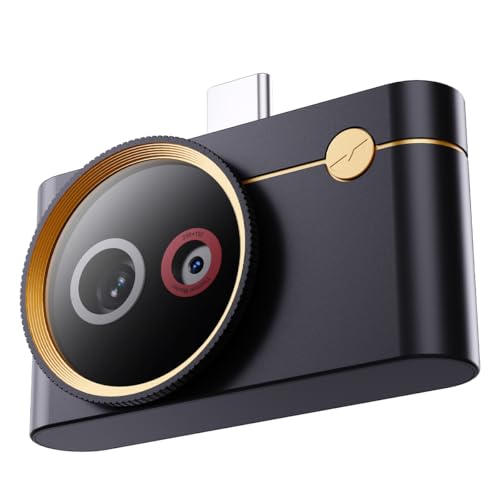
- 256 x 192 imaging with 512 x 384 super resolution
- 35mK sensitivity and 15x digital zoom
- No separate battery or charging required
Best For: Android and Windows automotive diagnostics
Best Simple Handheld

- Built-in screen for direct viewing
- Physical buttons for on-unit control
- Compact body for service-bag portability
Best For: Routine HVAC, electrical, and equipment checks
Best USB-C Phone Attachment
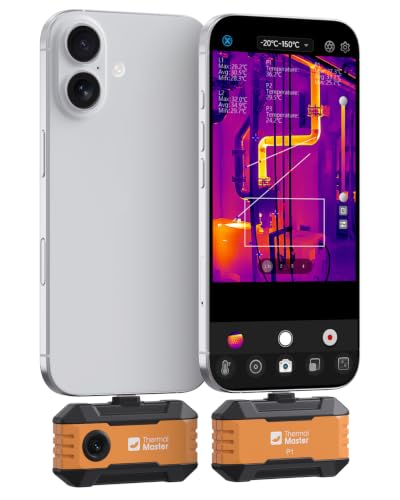
- 320 x 240 enhanced detail at 25Hz
- 15x zoom with hot/cold spot alarms
- Phone-powered design with included extension cable
Best For: USB-C phone-based automotive diagnostics
Best Handheld Scanner
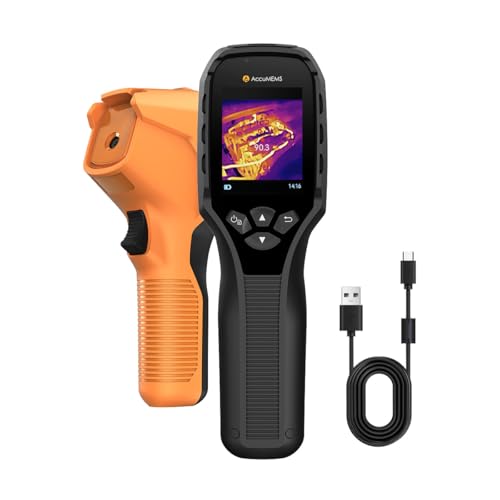
- -4°F to 1022°F measurement range
- 50° field of view with temperature alarms
- Up to 14 hours of continuous operation
Best For: Extended automotive inspections and wide-area scanning
Best iPhone Attachment
FLIR ONE Thermal Imaging Camera

- Connects to iPhone 15 and newer via USB-C
- 240x180 Super Resolution with MSX
- Drop-rated to 1.5 meters
Best For: Portable automotive checks with compatible iPhones
Best Android Module
TOPDON TC001 Thermal Imaging Camera

- Enhanced resolution up to 512x384
- Nine-area point, line, and surface readings
- Compact one-ounce Android-connected design
Best For: Android-based automotive diagnostics and detailed measurements
Pocket Smartphone Pick

- 192×192 resolution with a 50° field of view
- -4°F to 752°F range with ±2% accuracy
- Tiny USB-C design for phone-based inspections
Best For: Portable automotive, HVAC, and electrical checks using a compatible smartphone
High-Detail Mobile Pick
TOPDON TC001 Mini Thermal Camera

- 384×384 images from a 96×96 sensor with TISR
- Wide -4°F to 1,022°F measurement range
- Advanced tools, PC reporting, and AI inspection guidance
Best For: Detailed automotive diagnostics and multi-device inspection workflows
Ultra-Light Value Pick

- Only 0.48 ounces with a pocket-sized USB-C body
- 192×192 resolution and 50° field of view
- -4°F to 752°F range with ±2% accuracy
Best For: Quick, lightweight automotive and DIY inspections from a compatible phone
Best Pocket-Sized Standalone – TOPDON TC004 Mini
For buyers comparing compact automotive thermal imagers, the TOPDON TC004 Mini is a standalone option with a built-in screen, enhanced 240 x 240 TISR resolution, and a 40° x 30° field of view. Its long runtime and broad temperature range make it practical for vehicle, electrical, machinery, and home inspections.
Best For: Mobile diagnostics where you want a self-contained thermal camera rather than a phone attachment.
Pros:
- Enhances 128 x 128 imaging to 240 x 240 with TISR and provides a smooth 25Hz refresh rate.
- Measures from -4°F to 842°F with automatic high, low, and center temperature readings.
- Offers up to 15 hours of runtime, 512MB storage for up to 8,000 photos, and automatic alerts with photo capture.
- Pocket-friendly body with 2-meter drop resistance and IP54 protection.
Cons:
- Charging cable is included, but a charging head is not.
- Paper manuals are not included; the electronic manual must be downloaded.
The TC004 Mini is a strong fit when portability, battery life, and standalone operation matter most. It is especially useful for repeated inspection work where recording temperature images and receiving threshold alerts can speed up troubleshooting.
Best Phone-Powered Detail – Thermal Master P4
The Thermal Master P4 is one of the most compact automotive thermal imagers for Android and Windows users who want phone-powered operation. Its dual-lens setup, 35mK sensitivity, super-resolution processing, and wide field of view support detailed checks of engines, circuits, HVAC systems, and other equipment.
Best For: Android or Windows users who prefer a lightweight thermal attachment with strong image detail and no separate battery.
Pros:
- Combines a 256 x 192 infrared sensor with upscaled 512 x 384 super resolution and 15x digital zoom.
- NETD below 35mK helps reveal subtle temperature differences.
- 25Hz refresh rate, hotspot tracking, and a 56.0° x 42.2° field of view support fast scanning.
- Powered directly by the phone, with photo and video capture and an included protective carry bag.
Cons:
- Compatible with Android and Windows devices, so it is not presented as a universal phone accessory.
- Phone-powered operation depends on the connected device.
- It measures surface-emitted infrared energy and cannot see through materials such as glass, concrete, or wood.
The P4 makes sense for users who want detailed thermal context in an exceptionally small package. Its dual-lens imaging and sensitivity are useful for spotting smaller issues, while direct phone power eliminates a separate charging routine.
Best Simple Handheld – Compact HVAC Thermal Imager
For buyers seeking compact automotive thermal imagers with straightforward operation, this handheld thermal imager uses a built-in screen and physical buttons instead of relying on a phone. Its compact 197 x 72 x 60 mm body is designed for service-bag portability and routine HVAC, electrical, pipe, and equipment checks.
Best For: Maintenance users who want direct on-device viewing and controls for routine automotive and equipment inspections.
Pros:
- Compact handheld format is easier to carry between inspection points.
- Built-in display allows thermal images to be viewed directly on the unit.
- Physical front buttons provide direct control without requiring a connected phone.
- Supports stated use cases including HVAC screening, pipe inspection, electrical maintenance, and equipment checks.
Cons:
- The supplied notes do not confirm resolution, temperature range, refresh rate, or measurement accuracy.
- Confirmed package information lists the main thermal imager only, with no verified accessory list.
This model is best considered a basic, self-contained service tool. Its appeal is the direct screen-and-button layout and compact body, but shoppers who need specific imaging or measurement specifications should verify those details before buying.
Best USB-C Phone Attachment – Thermal Master P1
The Thermal Master P1 is a pocket-size choice among compact automotive thermal imagers, connecting to USB-C iPhones, Android phones, tablets, or Windows devices. Its X³ enhancement, 15x zoom, alarms, and broad measurement range make it useful for automotive repair, electrical panels, HVAC work, and equipment maintenance.
Best For: Phone-based inspections where compact size, high displayed resolution, and flexible diagnostic controls are priorities.
Pros:
- Upscales a native 160 x 120 sensor to 320 x 240 detail with 25Hz live imaging.
- Measures from -4°F to 1112°F with stated ±3.6°F accuracy.
- Includes 15x digital zoom, hot/cold spot alarms, isotherm mode, and adjustable emissivity and distance settings.
- Uses only 0.32W of phone power and includes a zipper case and 50cm extension cable.
Cons:
- Lightning iPhones require a Type-C-to-Lightning adapter sold separately.
- Operation depends on a compatible phone, tablet, or Windows device and the Thermal Master app.
- The camera itself does not have a separate battery.
The P1 is a practical pick for technicians who already use a compatible phone and want a small thermal tool with useful diagnostic modes. The extension cable can also help maintain safer viewing angles during vehicle and equipment checks.
Best Handheld Scanner – GT14S Thermal Imaging Camera
For shoppers comparing compact automotive thermal imagers, the GT14S stands out as a self-contained handheld option with broad temperature coverage, anomaly alerts, and a comfortable 240g design. Its full-screen thermal view is suited to scanning moving or larger components without relying on a smartphone.
Best For: Automotive technicians and inspectors who want a dedicated thermal camera for extended, wide-area checks.
Pros:
- Measures from -4°F to 1022°F with adjustable emissivity and distance settings.
- 50° field of view, high/low temperature alarms, and level-and-span adjustment support quicker anomaly detection.
- NETD below 50mK and sensitivity to temperature differences as small as 0.05°C.
- 2500mAh battery provides up to 14 hours of continuous operation.
Cons:
- Heavier and less pocketable than smartphone-connected thermal modules.
- Its dedicated handheld format may be more equipment than occasional users need.
The GT14S is the most inspection-focused choice here, especially when long battery life, broad coverage, and on-device controls matter more than minimum size.
Best iPhone Attachment – FLIR ONE Thermal Imaging Camera
The FLIR ONE is a highly portable choice among compact automotive thermal imagers, plugging directly into USB-C iPhones 15 and newer. It pairs thermal imagery with the phone’s display and app tools, making it convenient for quick troubleshooting and documented inspections.
Best For: iPhone 15-and-newer users who want a lightweight thermal attachment for automotive and general inspection work.
Pros:
- Extremely compact at 2.6 x 1.3 x 0.6 inches and 1.28 ounces.
- Vivid IR upscales 80×60 native imagery to 240×180, while MSX overlays visual detail.
- FLIR app includes step-by-step inspection guides for issues such as air leaks and moisture buildup.
- Built for jobsite use and rated to withstand a 1.5-meter drop.
Cons:
- Compatibility is limited to USB-C iPhones 15 and newer.
- Temperature accuracy specifications apply within stated ambient and scene ranges.
This is the easiest pick for compatible iPhone owners who prioritize pocketability, guided app workflows, and visual context over standalone operation.
Best Android Module – TOPDON TC001 Thermal Imaging Camera
The TOPDON TC001 is a phone-powered option for shoppers seeking compact automotive thermal imagers with detailed measurement tools. It connects to compatible Android devices, offers enhanced imagery up to 512×384 with TISR, and supports point, line, and surface temperature analysis.
Best For: Android users who want a highly portable module with multiple measurement areas and image-analysis features.
Pros:
- Compact 2.8 x 1.65 x 0.55-inch design weighing about one ounce.
- TISR enhances 256×192 thermal imagery to 512×384 resolution; the device uses only 0.35W.
- Point, line, and surface measurements can cover up to nine areas simultaneously.
- Measures from -4°F to 1022°F and supports waveform graphs showing high, low, and average temperatures.
Cons:
- Requires a compatible Android phone or tablet with OTG support.
- Not compatible with iPhone 15, and TISR support varies by Android phone.
- Operational time depends on the paired phone’s battery, with the stated estimate at 4–7 hours for 3000–5000mAh phones.
The TC001 offers the richest measurement flexibility of these phone-connected options, but buyers should verify Android and TISR compatibility before ordering.
Pocket Smartphone Pick – Thermal Master GW192A
For shoppers comparing compact automotive thermal imagers, the Thermal Master GW192A is a pocket-sized USB-C option that turns a compatible smartphone into a thermal inspection tool. Its 192×192 sensor, 50° field of view, and -4°F to 752°F range make it suitable for scanning vehicle engines, electrical components, HVAC systems, and other hard-to-reach areas.
Best For: DIYers and mobile professionals who want a lightweight phone-connected imager for automotive troubleshooting and general inspections.
Pros:
- Compact 1.77 × 0.43 × 1.34-inch design weighs 3.2 ounces.
- 192×192 infrared resolution and 12μm pixel pitch provide detailed thermal images.
- Wide 50° field of view helps scan engines, walls, ceilings, and electrical panels.
- Plug-and-play USB-C operation requires no built-in battery or wireless pairing.
Cons:
- Requires a compatible smartphone or tablet for operation.
- Compatibility is specifically noted for iPhone 15/16/17 series phones and Android devices with USB-C.
The GW192A stands out when portability matters most. It offers a useful temperature range and solid resolution in an especially small package, though buyers should confirm device compatibility before ordering.
High-Detail Mobile Pick – TOPDON TC001 Mini Thermal Camera
The TOPDON TC001 Mini is a strong choice among compact automotive thermal imagers for users who want enhanced image detail from a mobile device. Its 96×96 sensor uses TISR processing to produce 384×384 thermal images, while a 25 Hz refresh rate and sensitivity of ≤40 mK support responsive checks around vehicles, HVAC equipment, and electrical systems.
Best For: DIY inspectors and technicians who want advanced measurement tools, PC reporting, and broad device compatibility in a 30 g camera.
Pros:
- Produces 384×384 thermal images using a 96×96 sensor and TISR processing.
- Measures from -4°F to 1,022°F, covering a wide range of automotive and home inspections.
- Supports iOS, Android, and Windows devices through mobile and PC software.
- Includes measurement points, areas, isotherms, alarms, reporting, and AI-powered inspection guidance.
Cons:
- Requires a compatible phone or Windows device rather than operating independently.
- Advanced software features may be more than casual users need.
- Operation depends on connecting the camera to the host device.
The TC001 Mini is the most feature-rich option in this group. Its wider temperature range and software toolkit make it appealing for more involved automotive diagnostics, provided you are comfortable using a connected device.
Ultra-Light Value Pick – GOYOJO GW192A Thermal Imager
The GOYOJO GW192A is an ultra-light option for shoppers seeking compact automotive thermal imagers without carrying a separate handheld unit. It connects through USB-C, delivers 192×192 infrared resolution, and uses a 50° field of view to help identify overheating components, electrical hotspots, plumbing issues, and other temperature differences around a vehicle or home.
Best For: Smartphone users who prioritize minimal size and quick plug-and-play checks for automotive repair, HVAC, and DIY inspection tasks.
Pros:
- Very small 1.77 × 0.43 × 1.34-inch body weighs just 0.48 ounces.
- 192×192 resolution with a 12μm pixel pitch supports detailed thermal scans.
- 50° field of view is useful for broader scans of engines, walls, and electrical panels.
- Detects -4°F to 752°F with stated ±2% accuracy.
Cons:
- Needs a compatible smartphone or tablet to display and analyze images.
- Compatibility is emphasized for iPhone 15/16/17 series and USB-C Android devices.
- No standalone battery-powered operation is provided.
GOYOJO’s GW192A is especially appealing when weight and storage space are top priorities. It offers the same core resolution and temperature capabilities as a practical phone-based inspection tool, but users should verify their phone’s connector and compatibility first.
How We Picked the Best Compact Automotive Thermal Imagers
We focused on the features that matter during real vehicle inspections rather than treating resolution as the only deciding factor. Our comparison considers infrared resolution, thermal sensitivity, image enhancement, temperature measurement, connection type, operating convenience, and overall portability.
Phone-connected cameras can be especially practical for drivers, technicians, and DIY mechanics who already carry a compatible iPhone or Android device. Standalone handheld models may be a better fit when you want an integrated screen, fewer compatibility concerns, or a tool that can be passed between users.
Quick Comparison: Compact Automotive Thermal Imagers
Higher-resolution models generally reveal smaller hot spots and offer more detail when inspecting connectors, fuses, battery terminals, circuit boards, and engine components. The selected cameras range from compact phone attachments to handheld units, with resolutions from 80×60 native infrared imaging to 512×384-class output or enhanced images.
Before buying, confirm the listed connector matches your phone or tablet. USB-C compatibility is useful for newer devices, but iPhone support can vary by model, operating system, adapter, and app requirements. Also check whether the camera requires a dedicated application and whether the app supports image capture, video, temperature readings, and sharing.
Key Buying Factors for Compact Automotive Thermal Imagers
Resolution and Image Detail
Choose a higher infrared resolution when you need to distinguish nearby heat sources or inspect small components. Lower-resolution cameras can still identify major temperature differences, making them suitable for broad scans of radiators, exhaust areas, HVAC vents, and visibly overheating parts.
Thermal Sensitivity and Measurement
Better sensitivity can help reveal subtle temperature changes, while accurate spot measurement is valuable for comparing terminals, hoses, fuses, wheel hubs, and cooling-system components. Treat readings as diagnostic guidance and account for emissivity, reflective surfaces, distance, and airflow.
Form Factor and Connectivity
A mini phone attachment is easy to store and can use the phone’s display and battery. A handheld camera offers a more self-contained workflow. For automotive work, a compact design, secure connector, simple controls, and a comfortable grip can matter more than a long feature list.
Software and Field Use
Look for clear palettes, center-spot or multiple temperature markers, image enhancement, and straightforward file sharing. If you inspect vehicles outdoors or in dim workshops, consider screen visibility, startup speed, battery demands, and the camera’s ability to capture stable images.
Who Should Buy Which Compact Automotive Thermal Imagers?
Choose a high-resolution model for professional diagnostics, electrical troubleshooting, and detailed component comparisons. Choose a phone-connected mini camera for occasional DIY inspections, roadside checks, and easy documentation. Choose a handheld model if you prefer an integrated display or need a shared shop tool. Choose a dual-lens or enhanced-imaging model when you want better context around thermal anomalies.
For the best result, use thermal imaging as one part of a diagnosis. Confirm suspicious readings with a multimeter, scan tool, pressure test, visual inspection, or manufacturer service procedure before replacing parts.
