

10 Best Cordless Automotive Inspection Cameras for Mechanics in 2026

Need a better view inside an engine bay, dash cavity, or hidden hose run? The right cordless automotive inspection cameras can save time, reduce guesswork, and make tricky inspections far less frustrating.
Below, we focus on practical options that balance image quality, probe flexibility, screen usability, and reach for real-world mechanic work.
Best 10 Cordless Automotive Inspection Cameras Picks for 2026
Ultra-Slim Precision Pick
FOXWELL Y400 220° 2-Way Articulating Borescope

- 6.2mm ultra-slim probe for tight engine spaces
- 220° two-way steering with thumb-wheel control
- 5–7 hour battery and 32GB onboard storage
Best For: tight automotive inspections where slim access is critical
Budget-Ready Workhorse
Teslong Borescope Camera with Light

- 8 adjustable LEDs and 78° view for dark spaces
- 16.5ft semi-rigid cable for easier positioning
- Captures photos and videos with included accessories
Best For: everyday inspections for mechanics, plumbers, and DIYers
High-Definition Steering Pick
VEVOR 4-Way Articulating Borescope
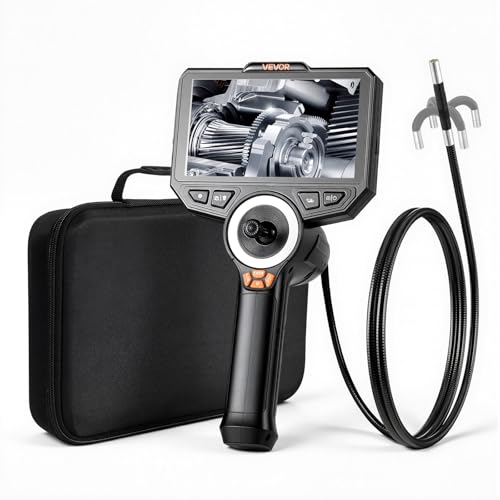
- True 1080P HD with a large 6-inch IPS screen
- 4-way articulation gives 360° coverage
- 5–6 hour battery for longer inspection sessions
Best For: detailed inspections that benefit from full 4-way steering and a larger display
Simple 1080P Scanner
Endoscope Camera with Light 1920P HD

- 1920x1080P imaging on a 4.3-inch IPS screen
- 8 adjustable LEDs for dark inspection areas
- 16.6ft flexible cable with IP67 waterproof probe
Best For: basic automotive and home inspections with no app setup
220° Two-Way Articulating Pick
DXZtoz 1080P Articulating Borescope

- 220° two-way articulation for tight turns
- 4.3" IPS screen with true 1080P viewing
- Includes accessories, 32GB card, and 4-hour battery
Best For: Mechanics needing a compact articulating scope for close automotive inspections
Simple Screen-Based Choice
Ditomil 1080P Endoscope Camera

- 4.3" IPS screen with 1080P HD live view
- 16.5 ft semi-rigid cable for extended reach
- IP67 waterproof probe with 8 adjustable LEDs
Best For: Users who want a simple, no-phone borescope for longer reach
Tight-Space Precision Pick
Anykit 210° Articulating Borescope

- 0.22-inch slim probe for cramped spaces
- 210° articulation with thumb-slider control
- Overheat alarm plus 8GB card and 3000mAh battery
Best For: Technicians who need a slim, articulating scope for tight automotive diagnostics
Budget-Friendly 4.3" Screen Pick
WINWEND 180° Rotating Borescope

- 4.3-inch LCD with 1080P viewing
- 180° image rotation and 8 LEDs
- 16.5-foot semi-rigid detachable cable
Best For: Routine auto checks when you want a simple, self-contained viewer
Dual-Lens Shop Workhorse
Teslong 5" Dual Lens Borescope

- Forward and side cameras with independent LEDs
- 5-inch IPS screen and 16.5-foot cable
- 5000mAh battery for about 4.5 hours of use
Best For: Engine bays and confined spaces where dual-view access helps
Precision Articulating Pick
Teslong Two-Way 210° Borescope

- Two-way 210° articulation for angled access
- 4.5-inch IPS screen with LED lighting
- Micro SD recording for photos and video
Best For: Detailed inspections where probe steering matters more than reach
Ultra-Slim Precision Pick – FOXWELL Y400 220° 2-Way Articulating Borescope
If you’re shopping for cordless automotive inspection cameras, the FOXWELL Y400 is built for situations where clearance is the real challenge. Its 6.2mm probe, 220° two-way steering, and bright IPS display make it easier to inspect tight automotive spaces without taking parts apart first.
Best For: Mechanics and DIY users who need an ultra-slim probe for spark plug holes, valve seats, and other narrow engine spaces.
Pros:
- Ultra-slim 0.24-inch / 6.2mm probe reaches tight spaces more easily than bulkier scopes.
- 220° two-way articulation with thumb-wheel control offers smooth, direct probe steering.
- HD IPS screen with 6 LEDs and 2X/4X zoom helps reveal details in dark cavities.
- 5–7 hour battery life and 32GB storage support longer jobs without pairing or Wi-Fi.
Cons:
- Uses 2-way articulation rather than full 4-way steering.
- Best suited to close-range inspections, since the focus is on precision in tight areas.
- Overheat protection will shut the probe down at 158°F/70°C during extended use.
The Y400 stands out when reach matters more than screen size or advanced software. For vehicle diagnostics in cramped spaces, it offers a practical balance of slim access, clear imaging, and simple cordless operation.
Budget-Ready Workhorse – Teslong Borescope Camera with Light
For cordless automotive inspection cameras that keep things straightforward, the Teslong borescope is a practical pick for everyday diagnosing. It pairs an 8mm probe, 8 LED lights, and a 4.3-inch screen with simple controls, so you can inspect vehicles, plumbing, and HVAC systems without a complicated setup.
Best For: Mechanics, plumbers, and DIYers who want a simple, ready-to-use inspection camera with useful accessories.
Pros:
- 8 adjustable LEDs and a 78° viewing angle help brighten dark inspection areas.
- 16.5ft semi-rigid cable holds its shape for better probe placement.
- Captures photos, videos, and freeze frames for documenting findings.
- Includes hook, magnet, and side mirror accessories plus a 24-month warranty.
Cons:
- Battery life is listed at up to 3 hours, which may be limiting for longer sessions.
- Uses an 8mm probe, so it is less compact than ultra-slim alternatives.
- Resolution is 720p, which is modest compared with newer 1080p models.
This is a solid all-around tool if you want a cordless inspection camera that’s easy to use and covers the basics well. It is especially appealing for users who value accessories, portability, and straightforward operation over premium image specs.
High-Definition Steering Pick – VEVOR 4-Way Articulating Borescope
If you want cordless automotive inspection cameras with more visual clarity and control, the VEVOR 4-Way Articulating Borescope is a strong option. It combines true 1080P HD, a 6-inch IPS screen, and 4-way articulation so you can inspect engine areas, pipes, and other tight spaces from multiple angles.
Best For: Users who want a larger display, sharper image quality, and full 4-way probe control for complex inspections.
Pros:
- True 1080P HD and a 6-inch IPS screen provide sharper detail and more viewing area.
- 4-way articulating probe offers 360° coverage without blind spots.
- 0.24-inch camera head and flexible 4.9ft cable improve access in tight spaces.
- IP67 waterproof design and 5–6 hour battery support demanding jobsite use.
Cons:
- At 4.9ft, the cable is shorter than some longer inspection cameras.
- It is larger and heavier than compact handheld scopes, at 2.5 pounds.
- Best for users who need advanced steering; it may be more tool than casual users require.
The VEVOR model leans into clarity and control, making it a good fit for more detailed diagnostics. If you want a cordless borescope that feels closer to a professional inspection tool, this one delivers a lot of capability in one unit.
Simple 1080P Scanner – Endoscope Camera with Light 1920P HD
Among cordless automotive inspection cameras, this endoscope is aimed at users who want a simple screen-based tool without app setup. It offers a 4.3-inch IPS display, 1920x1080P imaging, 8 LEDs, and an IP67 waterproof probe for checking pipes, engine compartments, and other wet or dim areas.
Best For: Users who want a no-app, easy-to-use inspection camera for basic automotive and home maintenance checks.
Pros:
- 1920x1080P real-time imaging on a 4.3-inch IPS screen.
- 8 LED lights with adjustable brightness help in dark environments.
- IP67 waterproof probe and flexible 16.6ft cable suit wet, tight spaces.
- Includes hook, magnet, and side mirror accessories for utility tasks.
Cons:
- It cannot take or store photos, which limits documentation options.
- No Wi-Fi or smartphone connection is needed, but that also means fewer smart features.
- Best focus range is close up, so it’s not intended for distant viewing.
This model keeps the formula simple: turn it on, inspect, and move on. For buyers who care more about straightforward operation than storage or app integration, it’s a practical cordless choice.
220° Two-Way Articulating Pick – DXZtoz 1080P Articulating Borescope
If you’re shopping for cordless automotive inspection cameras that can reach around bends and behind obstacles, this DXZtoz borescope is built for tight, close-up work. The 220° two-way articulation, 4.3″ IPS display, and 8 LED lights make it easier to inspect engine internals, spark plugs, valves, and other hard-to-see areas without using a phone app.
Best For: Mechanics and DIY users who need a portable, screen-based articulating scope for engine and mechanical inspections.
Pros:
- 220° two-way articulation helps steer around obstacles in cramped spaces.
- 4.3″ IPS screen with true 1080P viewing keeps setup simple and phone-free.
- 8 adjustable LED lights and 1-15 cm close focal range support detailed inspections.
- Includes hook, magnet, side mirror, case, 32GB card, and rechargeable battery.
Cons:
- 5.5 ft probe is shorter than some longer inspection cameras.
- Best for short insertion, close-up viewing rather than long-distance inspection.
Overall, this is a practical pick if steering control matters more than cable length. Its combination of articulation, screen clarity, and included accessories makes it well suited to automotive diagnostic work and other tight-space checks.
Simple Screen-Based Choice – Ditomil 1080P Endoscope Camera
For buyers comparing cordless automotive inspection cameras, this Ditomil endoscope keeps things straightforward: power it on and inspect directly on the built-in 4.3″ IPS screen. With 1080P HD resolution, 8 adjustable LED lights, and a 16.5 ft semi-rigid cable, it’s a practical option for viewing engines, vents, drains, and other narrow spaces without a phone or app.
Best For: Home users, DIYers, and mechanics who want a no-phone inspection camera with a longer cable.
Pros:
- 4.3″ IPS screen with 1080P HD gives a clear real-time view.
- 16.5 ft semi-rigid cable reaches farther than shorter handheld scopes.
- 8 adjustable LED lights help brighten dark inspection areas.
- IP67 waterproof probe suits damp or wet conditions.
Cons:
- Cannot take photos or videos.
- No phone connection or app support, so it is focused purely on live viewing.
This model makes sense if you want a simple inspection tool for routine checks rather than advanced imaging features. The longer cable and built-in display are the main advantages for automotive and household troubleshooting.
Tight-Space Precision Pick – Anykit 210° Articulating Borescope
If your priority in cordless automotive inspection cameras is maneuverability in extremely tight spaces, the Anykit 210° articulating borescope stands out with its slim 0.22-inch probe. It pairs a 4.3″ IPS screen with 1920x1080P HD imaging, 3-level zoom, image flip, and a thumb-slider control, making it a strong fit for detailed engine, HVAC, plumbing, and wall-cavity checks.
Best For: Mechanics and technicians who need a slim probe and easy articulation for cramped inspection points.
Pros:
- 0.22-inch slim probe is designed for tighter access than bulkier scopes.
- 210° two-way articulation and thumb-slider control improve positioning.
- 1920x1080P imaging, 3-level zoom, and bright LEDs support clear viewing.
- Includes 8GB TF card, 3000mAh battery, and USB-C charging.
Cons:
- 4 ft semi-rigid cable is shorter than some competing inspection cameras.
- Best suited to close-range diagnostics rather than long-reach jobs.
For tight engine bays and other cramped inspection points, this model offers a thoughtful balance of slim design and controllable articulation. The built-in overheat alarm is also a useful safeguard if you work near hotter machinery or exhaust areas.
Budget-Friendly 4.3" Screen Pick – WINWEND 180° Rotating Borescope
If you want a straightforward cordless automotive inspection camera for basic vehicle checks, this WINWEND borescope focuses on the essentials: a built-in 4.3-inch screen, 1080P viewing, and a 16.5-foot semi-rigid cable. The 180° image rotation and adjustable LED lighting make it easier to look into dark engine areas, tight spaces, and other hard-to-reach spots without needing a phone or app.
Best For: Mechanics or DIY users who want a simple, self-contained inspection camera for routine automotive and household inspections.
Pros:
- 4.3-inch color LCD screen shows live viewing right on the unit
- 180° image rotation helps reorient the view in tight spaces
- 8 adjustable LED beads support low-light inspections
- 16.5-foot detachable semi-rigid cable adds reach and flexibility
Cons:
- Does not capture photos or videos
- Screen is smaller than 5-inch alternatives
- Best suited to viewing, not documenting inspections
This model is a practical pick if you mainly need clear live visibility and don’t want to rely on a smartphone. It covers the basics well for automotive maintenance, but buyers who need image capture or more advanced features may want to look higher up the range.
Dual-Lens Shop Workhorse – Teslong 5" Dual Lens Borescope
For cordless automotive inspection camera buyers who want more viewing flexibility, this Teslong model stands out with dual lenses: one forward-facing and one side camera, each with its own LEDs. The 5-inch IPS screen and 16.5-foot semi-rigid cable make it well suited for engine compartments, ducts, and other deep inspection areas where switching perspectives matters.
Best For: Mechanics and DIYers who need a dual-view borescope for engine bays, walls, and other dark, confined spaces.
Pros:
- Dual-lens design lets you switch between forward and side views
- 5-inch IPS display is larger than compact-screen options
- 5000mAh battery is rated for about 4.5 hours of continuous use
- Includes a hard carrying case plus hook, magnet, and mirror accessories
Cons:
- Bulkier setup than smaller screen models
- Charging time is about 5 hours
- Focused on viewing, not smartphone-based workflows
This is a strong all-around inspection tool if you want more than a basic camera feed. The dual-lens setup adds useful versatility for automotive diagnostics, while the self-contained screen keeps operation simple on the job.
Precision Articulating Pick – Teslong Two-Way 210° Borescope
If your work calls for a cordless automotive inspection camera that can steer into awkward angles, this Teslong articulating borescope is built for that kind of precision. Its two-way 210° probe, 4.5-inch IPS screen, and built-in LED lighting help you inspect tight mechanical spaces with more control than a fixed-head scope.
Best For: Mechanics who need a maneuverable borescope for detailed inspections in complex or hard-to-reach areas.
Pros:
- Two-way 210° articulation improves control in tight spaces
- 4.5-inch IPS LCD screen provides sharp live viewing
- Built-in high-brightness LEDs with adjustable illumination
- Photo and video capture supported on micro SD card
Cons:
- Only 5 feet of semi-rigid cable, so reach is shorter than 16.5-foot models
- Smaller cable length may limit deeper inspections
- Not the best choice if you want maximum probe reach
This model makes the most sense when access and angle control matter more than cable length. For detailed automotive work, the articulating probe and onboard recording support give it a clear edge in precision-focused inspections.
How We Picked the Best Cordless Automotive Inspection Cameras
For this roundup, we focused on tools that make sense for automotive use first: slim probes that can fit through small openings, enough articulation to aim around corners, and displays or controls that are easy to manage in a shop environment. We also looked at image clarity, cable length, build quality, and whether the camera is practical for repeated inspections under the hood, inside a dash, or around HVAC components.
Because the best Cordless Automotive Inspection Cameras are used in tight, dirty, and awkward spaces, usability matters as much as resolution. A bright screen, responsive controls, and a probe that holds its position can be more valuable than a spec sheet that looks impressive on paper.
Quick Comparison
If you want the shortest path to a decision, start with your main job: ultra-tight access points call for a thinner probe, while engine and chassis inspections benefit from stronger articulation and a longer cable. For everyday mechanic work, a balanced model with clear imaging and easy one-hand operation is usually the safest pick. If you handle mixed jobs, consider a camera that can also serve plumbing, wall, or HVAC inspections so it stays useful beyond the garage.
Key Buying Factors for Cordless Automotive Inspection Cameras
Probe Size and Flexibility
A slimmer probe is easier to feed behind components, through spark plug openings, and around intake hardware. Articulating tips help you steer the view without constantly repositioning the cable.
Image Quality and Lighting
Look for strong enough resolution to distinguish cracks, buildup, corrosion, leaks, and damaged connectors. Good built-in lighting should be adjustable so shiny metal parts do not wash out the image.
Screen, Connectivity, and Controls
Integrated displays are convenient for quick shop use, while phone-connected tools may offer broader workflow flexibility. In either case, controls should be simple enough to operate with gloves or one hand.
Battery Life and Durability
Cordless Automotive Inspection Cameras should last through a diagnostic session without constant recharging. Rugged housing and a probe that can handle contact with grime, oil, and vibration are important for shop reliability.
Who Should Buy Which Cordless Automotive Inspection Cameras?
Choose a slim, highly maneuverable model if you regularly inspect small engine openings or packed electrical areas. Pick a higher-resolution or wider-screen option if you want easier evidence capture and more confidence during visual diagnostics. For general mechanics who need one tool for multiple tasks, a versatile cordless model with solid lighting, dependable articulation, and a comfortable display will usually offer the best value.
If you are shopping for Cordless Automotive Inspection Cameras for professional use, prioritize the features that save time in real inspections, not just the biggest numbers on the box.
