

10 Best Heavy-Duty Automotive Thermal Imagers for Faster Diagnostics in 2026

Thermal imaging can help automotive technicians spot abnormal heat before a component fails. From cooling-system problems and electrical resistance to HVAC restrictions and bearing wear, the right imager makes invisible temperature differences easier to diagnose.
We compared 10 heavy-duty automotive thermal imagers across resolution, temperature range, display design, portability, connectivity, and practical shop features. The best choice depends on whether you need a rugged standalone camera, a mobile attachment, dual-lens imaging, or built-in electrical testing.
Best 10 Heavy-Duty Automotive Thermal Imagers Picks for 2026
Best Large-Screen Pick

- 3.5-inch display for comfortable hotspot viewing
- TISR-enhanced resolution up to 512×384
- 64GB storage with Wi-Fi transfer and rugged protection
Best For: Technicians needing easy viewing and extensive inspection documentation
Best High-Detail Imaging

- 640×480 AI-enhanced thermal imaging
- Dual-camera Visual, Thermal, Fusion, and PIP modes
- Wi-Fi, alarms, and adjustable measurement settings
Best For: Detailed automotive troubleshooting with visual context
Best Rugged Documentation Tool

- TISR-enhanced imaging with a 320×240 display
- Stores over 20,000 images and videos
- PC analysis, alarms, IP54 protection, and 6.6-foot drop resistance
Best For: Technicians creating extensive inspection archives and reports
Best Portable Phone-Connected Pick

- Dual-lens thermal and visible-light imaging
- 512×384 TISR-enhanced output with 25Hz refresh
- 33-gram, no-battery design for USB-C or Lightning devices
Best For: Mobile diagnostics using a compatible phone, tablet, or Windows device
Rugged Laser Pick

- 4,800-pixel IR camera with MSX image enhancement
- -25°C to 300°C measurement range and Bullseye laser
- IP54, drop-tested housing with FLIR 2-10 warranty
Best For: Automotive troubleshooting and fast spot-temperature checks
High-Resolution Smart Pick

- AI-upscaled 640x480 thermal output at 25 Hz
- -4°F to 932°F range with ±3.6°F accuracy
- Wi-Fi app control, alarms, and five imaging modes
Best For: Detailed inspections with wireless viewing and reporting
Long-Running Field Pick

- -4°F to 1022°F range with ±3.6°F accuracy
- 512x384 enhanced output, 8x zoom, and five imaging modes
- 10.5-hour battery, IP54 body, and 2-meter drop resistance
Best For: Extended field inspections and high-temperature troubleshooting
Best All-Around Inspection Camera

- 320×240 display with TISR-enhanced 260×260 thermal resolution
- -10°C to 500°C range with temperature alarms
- Rugged IP54, drop-rated design with up to 8-hour battery life
Best For: Automotive maintenance and general field inspections
Best Phone-Based Option
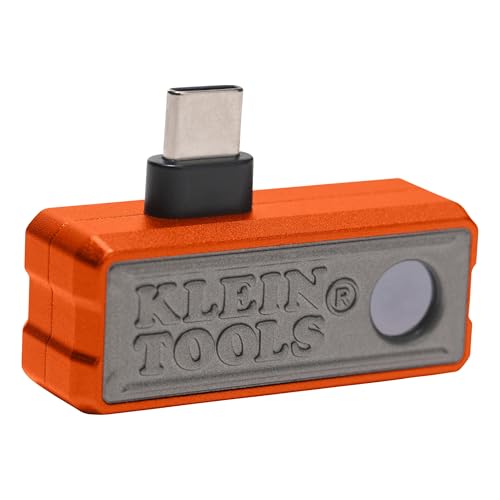
- 19,200-pixel thermal imaging for hot- and cold-spot detection
- USB-C connection supports iOS and Android devices
- -4°F to 752°F range with image, video, and time-lapse capture
Best For: Mobile inspections and easy documentation
Best Multimeter Combo
FIXCHIGO 2-in-1 Thermal Camera

- Thermal imager and 20,000-count multimeter in one device
- -20°C to 550°C range with 15 color modes
- Standalone 3.5-inch LCD with USB-C charging and data transfer
Best For: Automotive electrical diagnostics and equipment troubleshooting
Best Large-Screen Pick – TOPDON TC004
The TOPDON TC004 is a practical choice among heavy-duty automotive thermal imagers when you want a larger screen, broad temperature coverage, and plenty of storage for documenting inspections. Its 3.5-inch display, laser targeting, and integrated light support faster troubleshooting around engines, electrical systems, and confined work areas.
Best For: Automotive technicians who prioritize easy viewing, extensive image storage, and field-ready construction.
Pros:
- 3.5-inch display makes hot spots and temperature differences easier to view.
- 256×192 infrared resolution with TISR enhancement up to 512×384.
- 64GB storage, Wi-Fi transfer, IP54 protection, and 2-meter drop resistance.
Cons:
- Uses a handheld form factor rather than a phone-connected design.
- Its 2.11-pound package weight may be less convenient for pocket carry.
For automotive inspection work that involves repeated documentation, the TC004 stands out for its storage capacity and comfortable viewing experience. The laser pointer and LED light add useful precision when locating suspected faults.
Best High-Detail Imaging – HSFTOOLS F2VW Thermal Camera
The HSFTOOLS F2VW is a strong option for heavy-duty automotive thermal imagers when visual context matters as much as heat detection. Its thermal and visual cameras, four viewing modes, AI-assisted anomaly recognition, and 640×480 super-resolution output help clarify possible mechanical or electrical problems.
Best For: Automotive troubleshooting that benefits from thermal, visual, fusion, and picture-in-picture inspection modes.
Pros:
- Live AI Super Resolution enhances 256×192 detector data to 640×480 imaging resolution.
- Dual cameras support Visual, Thermal, Fusion, and PIP modes.
- Offers Wi-Fi sharing, temperature alarms, adjustable emissivity, and a -4°F to 1022°F range.
Cons:
- Requires more setup and feature navigation than a basic thermal scanner.
- At 2.01 pounds, it is less pocketable than a phone-connected camera.
The F2VW is particularly compelling when identifying a heat source requires matching the thermal pattern to surrounding components. Its measurement controls and IntellFault features add useful support for repeatable diagnostic work.
Best Rugged Documentation Tool – FOXWELL RT280 Thermal Camera
The FOXWELL RT280 is well suited to heavy-duty automotive thermal imagers buyers who need durable hardware and organized inspection records. It combines TISR-enhanced imaging, automatic temperature-point detection, PC analysis software, and rugged protection for engine, mechanical, electrical, and HVAC checks.
Best For: Shop and field technicians who need to save large inspection archives and create detailed PC-based reports.
Pros:
- 320×240 display with TISR enhancement from 120×90 to 240×180.
- Built-in 8GB eMMC stores more than 20,000 images and videos.
- Supports PC point, line, area, 2D, 3D, and report analysis, plus IP54 and 6.6-foot drop resistance.
Cons:
- Included PC software is not compatible with Mac.
- The supplied details list a 4.3-inch screen while the product title identifies a 2.8-inch LCD, so buyers should verify the display specification.
The RT280 makes the most sense when thermal inspections need to become shareable records rather than quick visual checks. Its alarms, laser targeting, LED light, and rugged enclosure support efficient work in demanding environments.
Best Portable Phone-Connected Pick – TOPDON TC001 Max
The TOPDON TC001 Max offers a compact alternative to traditional heavy-duty automotive thermal imagers by connecting directly to compatible USB-C or Lightning devices. It uses dual-lens imaging and the TopInfrared or TopView apps for thermal analysis, recording, temperature trends, and multiple viewing options.
Best For: Mobile technicians who want a lightweight thermal camera for automotive maintenance and on-the-go diagnostics.
Pros:
- Dual-lens thermal and visible-light imaging improves component identification.
- TISR enhances 256×192 infrared data to 512×384, with a 25Hz refresh rate.
- Compact 33-gram design needs no battery, charging, or wireless pairing.
Cons:
- Requires a compatible phone, tablet, or Windows device for operation.
- Phone-connected use may be less convenient when working with gloves or in harsh environments.
The TC001 Max is a strong fit when portability and app-based analysis outweigh the convenience of a dedicated handheld display. Its broad -4°F to 1,022°F range covers common automotive inspection tasks, while the visible camera helps put heat patterns in context.
Rugged Laser Pick – FLIR TG165-X
For buyers seeking heavy-duty automotive thermal imagers, the FLIR TG165-X focuses on straightforward temperature checks in a compact, rugged package. Its 4,800-pixel infrared camera, Bullseye laser, and MSX image enhancement help make automotive heat anomalies easier to locate and interpret.
Best For: Automotive troubleshooting, quick spot-temperature checks, and technicians who prioritize a durable, simple handheld imager.
Pros:
- Measures temperatures from -25°C to 300°C (-13°F to 572°F).
- MSX overlays visual details onto thermal images for clearer interpretation.
- Drop-tested design with IP54 protection against dirt, dust, and oil.
- Includes a Bullseye laser and rechargeable battery.
Cons:
- Its 300°C upper limit is lower than some higher-temperature inspection cameras.
- Response time is listed at 3 seconds.
- Connectivity is limited to USB in the supplied specifications.
The TG165-X is a practical choice when ruggedness, easy targeting, and understandable thermal images matter more than advanced wireless reporting or a very broad temperature range. Its FLIR warranty coverage adds reassurance for regular field use.
High-Resolution Smart Pick – TT27D Dual-Lens
The TT27D is a feature-rich option among heavy-duty automotive thermal imagers, pairing UIRA-IR-enhanced thermal imaging with a 2MP visual camera. Its fusion modes, Wi-Fi connectivity, alarms, and high-temperature capability suit users who need more than basic readings during detailed inspections.
Best For: Automotive professionals and inspectors who want high-resolution visualization, multiple measurement tools, and app-based image management.
Pros:
- AI-upscaled 640×480 thermal output with a 25 Hz frame rate.
- Measures from -4°F to 932°F with less than 40 mK NETD and ±3.6°F accuracy.
- Offers Visual, Thermal, Fusion, PIP, and Blending modes.
- Wi-Fi streaming, remote control, alarms, and storage for over 5,500 files.
Cons:
- Its extensive AI and analysis features may be more than needed for simple checks.
- The supplied notes do not specify an IP rating or formal drop-test height.
- App-based workflows require Wi-Fi connectivity and compatible software.
With its wide temperature range and dual-lens presentation, the TT27D is well suited to complex diagnostic work where visual context and organized records are valuable. The compact 8-ounce design also supports mobile inspections.
Long-Running Field Pick – Thermal Master Thor002
The Thermal Master Thor002 combines a broad temperature range, enhanced thermal resolution, and field-ready durability in a full-size handheld design. For heavy-duty automotive thermal imagers used across troubleshooting and inspection tasks, its laser pointer, 8x digital zoom, PC analysis, and extended battery life are useful additions.
Best For: Technicians who need extended runtime, high-temperature measurements, and documentation features for demanding field inspections.
Pros:
- Measures from -4°F to 1022°F with ±3.6°F accuracy.
- X³ processing upscales 256×192 infrared data to 512×384, with 40 mK sensitivity.
- Provides five imaging modes, six-point temperature measurement, and 8x digital zoom.
- Offers up to 10.5 hours of runtime, IP54 protection, and a 2-meter drop-tested design.
Cons:
- The larger 3.5-inch display and rugged case may be less compact than pocket-sized alternatives.
- PC analysis and wireless viewing add setup requirements for users wanting only basic readings.
- Fixed focus may limit flexibility for some close-up inspection situations.
The Thor002 stands out for demanding jobs that benefit from a high upper temperature limit, long operating time, and report-oriented workflow. Its included rugged hard case further supports organized transport between service locations.
Best All-Around Inspection Camera – FOXWELL HT280
For buyers comparing heavy-duty automotive thermal imagers, the FOXWELL HT280 stands out as a practical handheld option for vehicle maintenance and broader inspection work. Its 320×240 display, TISR-enhanced 260×260 thermal resolution, 50mK sensitivity, and 25Hz frame rate are designed to make heat patterns easier to interpret.
Best For: Automotive maintenance, HVAC troubleshooting, electrical inspection, and building inspections where a standalone camera and onboard storage are useful.
Pros:
- Measures from -10°C to 500°C with automatic high, central, and low temperature detection.
- Stores more than 20,000 images or video recordings in internal memory.
- Offers PC analysis on Windows, nine color palettes, a 50°×50° field of view, and adjustable emissivity.
- Built for field use with a 6.6-foot drop rating, IP54 protection, and up to eight hours of operation.
Cons:
- PC analysis software is not compatible with Mac computers.
- Its temperature range starts at 14°F, so it may not suit applications requiring lower readings.
The HT280 is a strong fit when you want a rugged, feature-rich thermal camera rather than a phone accessory. Temperature alarms, video capture, and Windows reporting support make it especially useful for repeat diagnostic work.
Best Phone-Based Option – Klein Tools TI223
The Klein Tools TI223 is a compact choice among heavy-duty automotive thermal imagers for technicians who prefer using a mobile device. It connects to iOS and Android devices through USB-C and provides 19,200-pixel thermal imaging for locating hot and cold spots during vehicle, electrical, or HVAC troubleshooting.
Best For: Technicians who want a lightweight mobile thermal camera for quick inspections, documentation, and sharing.
Pros:
- Works with iOS and Android devices and accommodates phone cases up to 1/5 inch thick.
- Measures a broad -4°F to 752°F range, covering many automotive diagnostic situations.
- Supports spot, high/low, and differential temperature readings.
- Can capture thermal images, standard video, and time-lapse video for reporting.
Cons:
- Requires a compatible iOS or Android device for operation.
- Provides three color palettes, fewer than some standalone thermal cameras.
At just 1.12 ounces, the TI223 is easy to carry and deploy for fast checks. Its mobile workflow is convenient for sharing results, though buyers seeking a self-contained imager with its own display may prefer a handheld model.
Best Multimeter Combo – FIXCHIGO 2-in-1 Thermal Camera
For automotive professionals who also perform electrical diagnostics, this FIXCHIGO model combines thermal imaging and a 20,000-count multimeter in one standalone device. That combination makes it a practical alternative to carrying separate tools while troubleshooting vehicles, machinery, and electrical equipment.
Best For: Automotive and electrical troubleshooting where thermal hot-spot detection and comprehensive multimeter measurements are needed together.
Pros:
- Combines a thermal camera with AC/DC voltage, resistance, capacitance, diode, continuity, frequency, and duty-cycle testing.
- Uses a VOx sensor with 256×192 thermal pixels, 427×320 displayed resolution, and a 25Hz capture rate.
- Measures temperatures from -20°C to 550°C and offers 15 color palettes with adjustable emissivity.
- Includes a 3.5-inch LCD, local image storage, USB-C charging/data transfer, and a carrying bag.
Cons:
- At 15.8 ounces, it is heavier than a compact phone-connected thermal camera.
- The supplied notes do not specify an ingress-protection or drop-resistance rating.
The FIXCHIGO is the most versatile pick of these three for electrical-minded automotive work. Its integrated multimeter reduces tool switching, while the broad temperature range and standalone screen keep diagnostics independent of phone compatibility.
How We Picked the Best Heavy-Duty Automotive Thermal Imagers
We focused on features that matter during real automotive diagnostics rather than relying on resolution alone. Our comparison considered infrared image quality, temperature range, measurement clarity, screen size, visual-camera support, focus and targeting tools, battery or mobile compatibility, and the ability to document findings. We also looked for models suited to repeated use in garages, service bays, fleet maintenance, and roadside troubleshooting.
A higher pixel count can reveal smaller hot spots, but it is only useful when paired with sensible measurement tools and a display that is easy to read. Dual-lens models can provide helpful visual context, while mobile cameras may be more convenient for technicians who already work from a phone or tablet.
Quick Comparison
| What to prioritize | Best fit |
|---|---|
| Standalone shop diagnostics | Dedicated cameras with built-in displays and broad temperature ranges |
| Detailed thermal patterns | Higher-resolution models with image enhancement or dual-lens imaging |
| Portable phone-based inspection | USB-C or mobile-compatible thermal attachments |
| Electrical troubleshooting | Thermal imagers with precise spot measurement, laser targeting, or multimeter functions |
| HVAC and engine-bay work | Models with wide temperature coverage and clear hot-and-cold contrast |
Key Buying Factors for Heavy-Duty Automotive Thermal Imagers
Temperature Range and Accuracy
Choose a range that covers both cold-start inspections and high-heat components such as exhaust parts, turbochargers, catalytic converters, and overheated electrical connections. A wide range is helpful, but accuracy and repeatable readings matter more than an impressive maximum alone.
Resolution and Image Presentation
Higher infrared resolution can make it easier to isolate small connectors, fuses, terminals, and bearing hot spots. Look for a clear display, useful color palettes, adjustable emissivity, and measurement markers that help distinguish a real fault from reflected heat.
Targeting, Visual Context, and Documentation
A laser pointer, center spot, multiple measurement points, or a visible-light camera can speed up inspections. Image storage and simple transfer are valuable when creating repair records, comparing before-and-after readings, or explaining a diagnosis to a customer.
Form Factor and Connectivity
Standalone units are generally easier to use with gloves and in busy service bays. Mobile attachments are lighter and often convenient for sharing images, but they depend on device compatibility and may be less practical in harsh environments. Check the connector, operating-system support, battery life, and accessory requirements before buying.
Who Should Buy Which Heavy-Duty Automotive Thermal Imagers?
Choose a standalone camera with a built-in screen if you need dependable daily use across engine bays, undercarriages, electrical panels, or fleet vehicles. Select a higher-resolution or dual-lens model when identifying small hot spots and documenting thermal patterns is a priority. A compact phone-connected unit makes sense for technicians who value portability and already use a compatible iPhone, iPad, or Android device. If electrical testing is central to your workflow, a model combining thermal imaging with multimeter functions can reduce the number of tools you carry.
For most buyers, prioritize reliable measurements, practical targeting controls, and compatibility with your diagnostic routine over headline specifications. The best Heavy-Duty Automotive Thermal Imagers are the ones that let you find abnormal heat quickly, verify the cause, and save evidence of the problem without slowing down the repair.
