

10 Best Paint Correction Polishers for DIY Mechanics in 2026

Paint correction can transform dull, swirled, or lightly scratched paint, but the right polisher makes the work safer, faster, and more consistent. This roundup compares 10 options for DIY mechanics, including dual-action, rotary, mini, cordless, and drill-powered tools.
Whether you are polishing a daily driver in the garage or handling occasional detailing jobs, focus on control, pad compatibility, speed adjustment, ergonomics, and the type of defects you need to remove.
Best 10 Paint Correction Polishers for DIY Mechanics Picks for 2026
Best Complete Kit
Chemical Guys TORQX Random Orbital Polisher

- 9-piece kit includes pads, polishes, and compounds
- 8mm random-orbital throw with a 700W motor
- Beginner-friendly design for paint and detailing work
Best For: DIYers wanting an all-in-one correction kit
Best Compact DA
Adam's Polishes SK Pro 12mm Car Polisher

- 3-inch backing plate for compact detailing work
- 12mm throw with variable 2,000-6,000 OPM speed
- Vibration-control features and a detachable 25-foot cord
Best For: DIYers seeking a compact, controlled DA polisher
Best Rotary Option

- 7-inch polishing format for broad surface coverage
- Variable trigger and dial with constant-speed control
- Soft start and rubberized operator-contact areas
Best For: Experienced DIYers with their own polishing accessories
Best Long-Throw Value

- 15mm throw with an 8-amp motor
- Six speeds from 2,000 to 5,200 RPM
- Includes three pad types, display, and two-year warranty
Best For: DIYers wanting a versatile long-throw DA package
Best for Tight Spots
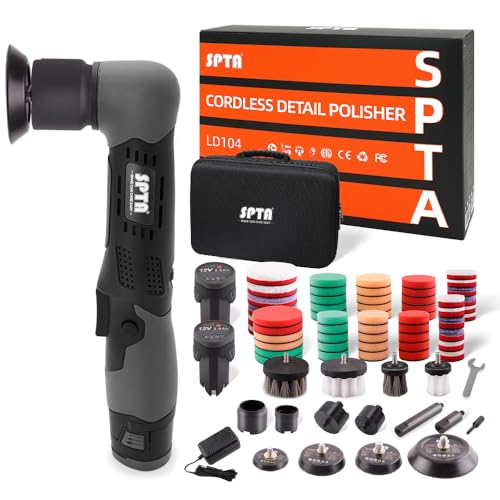
- Cordless 12V design for portable detailing
- 25mm, 50mm, and 80mm backing plates
- Two batteries and extensive pad selection
Best For: Emblems, body lines, and confined correction areas
Best Simple Waxer
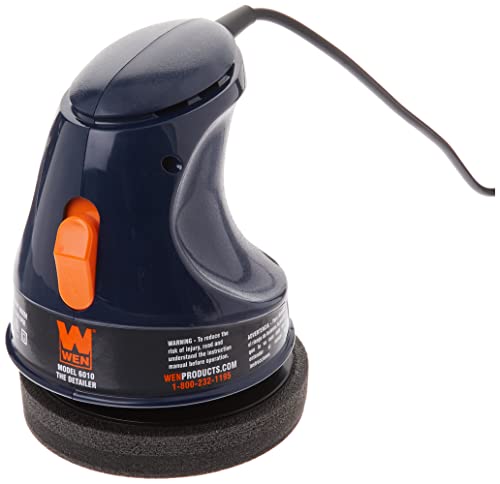
- 6-inch corded polishing format
- 3500 rpm fixed-speed motor
- Includes applicator and terry cloth bonnets
Best For: Routine waxing and light garage buffing
Best Variable-Speed Option
AOBEN 6-Inch Dual Action Polisher
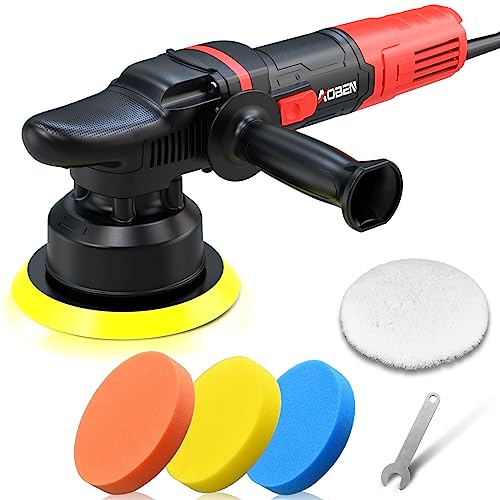
- Six speeds from 1000 to 4500 rpm
- Random-orbit motion for polishing and waxing
- Includes foam and synthetic wool pads
Best For: Versatile DIY correction, waxing, and oxidation removal
Best Cordless Pick

- Cordless 8mm dual-action design
- Six speeds with LED display
- Two batteries and broad accessory kit
Best For: Beginners and portable home detailing
Best Heavy-Duty Option
1600W Variable-Speed Rotary Buffer

- Powerful 1600W corded motor
- Seven speeds from 1000–3500 RPM
- Handles and pads support longer jobs
Best For: Garage-based users doing demanding correction work
Best Budget Adapter
Forced Dual-Action Drill Attachment

- Converts a compatible drill into a polisher
- Combines rotary and orbital movement
- Includes three polishing pads
Best For: Occasional users who already own a suitable drill
Best Complete Kit – Chemical Guys TORQX Random Orbital Polisher
For DIY mechanics looking for paint correction polishers, the Chemical Guys TORQX is a practical starter kit. Its 8mm random-orbital throw, 700W motor, pads, polishes, and compounds cover compounding, polishing, and finishing in one package.
Best For: Beginners who want a ready-to-use paint correction and detailing setup.
Pros:
- Includes the polisher, pads, polishes, and compounds in a 9-piece kit.
- Random-orbital action is designed for controlled work on paint, clear coat, headlights, and wheels.
- Ergonomic, balanced design is intended for comfortable extended use.
Cons:
- The included warranty is limited to 30 days through Amazon.
- The 8mm throw is less aggressive than the longer-throw option in this roundup.
The TORQX makes the most sense when convenience matters as much as machine capability. It gives a DIY user the core supplies needed to address light scratches, swirls, oxidation, and haze without assembling a separate product list.
Best Compact DA – Adam's Polishes SK Pro 12mm Car Polisher
Among paint correction polishers for DIY mechanics, the Adam’s SK Pro offers a compact 3-inch backing plate and 12mm throw. Variable operation from 2,000 to 6,000 OPM, vibration-reducing touch-points, and a detachable 25-foot cord support controlled detailing work.
Best For: DIY mechanics who want a smaller dual-action polisher for automotive detailing.
Pros:
- 3-inch backing plate suits more compact polishing work.
- 12mm throw and 550W brushed motor provide a professional-oriented setup.
- Raised rubber touch-points and a lightened counterweight are designed to improve comfort and smoothness.
- Includes a 1-year manufacturer warranty and detachable 25-foot cord.
Cons:
- The product listing specifies the polisher but does not include a broader pad or compound kit.
- At 7.7 pounds without the cord, it may feel substantial during longer sessions.
This model is a focused machine rather than an all-in-one package. Its compact plate and variable speed make it a useful choice for DIY users prioritizing control and access over included accessories.
Best Rotary Option – Makita 9237C 7-Inch Polisher
The Makita 9237C is a 7-inch variable-speed polisher for DIY mechanics who prefer a rotary-style tool for paint correction and polishing. Its trigger and dial controls, constant-speed electronics, soft start, and protective design features support steady operation.
Best For: Experienced DIY users who want a larger 7-inch polisher with speed control.
Pros:
- Variable-speed dial and trigger allow adjustment for different applications.
- Constant-speed control helps maintain speed under load.
- Soft start helps reduce initial polish or wax fling.
- Rubberized handles, gear housing protection, and wire-mesh intake covers add practical usability features.
Cons:
- At 7.5 pounds, it is heavier than the compact dual-action options listed here.
- The supplied notes identify it as a polisher but do not list included pads or compounds.
- Its 3,200-rpm maximum speed is presented as a single listed speed rather than a broad OPM range.
The 9237C is best suited to shoppers who already have compatible polishing accessories and value Makita’s electronic speed management. Its larger pad size can cover more area, while the heavier body may demand more control from the operator.
Best Long-Throw Value – WEN 15mm Dual Action Polisher
The WEN AA6158 combines a 15mm dual-action throw with an 8-amp motor and six speed settings from 2,000 to 5,200 RPM. For DIY mechanics comparing paint correction polishers, its included pads, LED display, paddle switch, and 16-foot cord make it a versatile detailing package.
Best For: DIY users wanting a long-throw dual-action polisher with useful included accessories.
Pros:
- 15mm dual-action throw is designed for faster application and a streak-free finish.
- Six speed settings support finishing, compounding, waxing, polishing, buffing, and deoxidizing.
- Includes coarse, medium, and fine pads plus a hook-and-loop base.
- LED display shows speed, maintenance reminders, and session runtime; a two-year warranty is included.
Cons:
- The 5-inch pad size offers less coverage per pass than the Makita’s 7-inch format.
- The feature-rich design may be more than needed for occasional light polishing.
This WEN is a strong fit when you want long-throw dual-action movement without separately sourcing basic pads. Its display and paddle switch add convenience, while the broad speed range supports both correction and finishing tasks.
Best for Tight Spots – SPTA Cordless Mini Polisher
For DIY mechanics comparing paint correction polishers for DIY mechanics, the SPTA Cordless Mini Polisher stands out as a compact option for emblems, body lines, and other confined areas. Its cordless 12V design, dual-action motion, multiple backing plates, and included pads make it convenient for detail work without an extension cord.
Best For: Small paint-correction areas, tight spaces, and portable detailing work.
Pros:
- Cordless design supports flexible work around the vehicle.
- Includes 25mm, 50mm, and 80mm backing plates for different areas.
- Dual-action motion is designed for hologram-free polishing.
- Comes with two batteries and a large selection of polishing pads and accessories.
Cons:
- Its mini format is less suited to covering large panels quickly.
- The 12V battery-powered design may be less appropriate for heavy, extended correction work.
This is a practical specialist tool rather than an all-purpose panel polisher. Choose it when access, portability, and accessory variety matter more than maximum coverage.
Best Simple Waxer – WEN 6010 Waxer/Polisher
The WEN 6010 is a straightforward corded waxer/polisher for DIY mechanics who want a simple machine for applying and removing wax. Its 3500 rpm motor, palm-and-body grip design, and included bonnets provide a basic setup for garage maintenance, though it offers less adjustment than a variable-speed correction machine.
Best For: Basic waxing, buffing, and occasional polishing on a home-garage vehicle.
Pros:
- Compact 6-inch format is suitable for routine vehicle care.
- 3500 rpm permanent-magnet motor provides a consistent operating speed.
- Ergonomic design supports one- or two-hand use.
- Includes applicator and terry cloth bonnets.
Cons:
- Corded operation requires access to a 120V outlet.
- Single-speed operation offers less control for paint correction tasks.
- The supplied notes identify it primarily as a waxer/polisher rather than a dedicated defect-removal tool.
The WEN is best viewed as an uncomplicated maintenance polisher. It can suit beginners focused on waxing and light buffing, but DIY mechanics seeking adjustable paint correction may prefer a dual-action model.
Best Variable-Speed Option – AOBEN 6-Inch Dual Action Polisher
For DIY mechanics evaluating paint correction polishers for DIY mechanics, the AOBEN 6-Inch Dual Action Polisher offers broad speed control for waxing, polishing, cleaning, and paint-defect work. Its 1000–4500 rpm range, random-orbit movement, multiple handle positions, and included foam and wool pads make it a versatile corded choice for larger panels.
Best For: DIY vehicle owners who want one variable-speed polisher for waxing, polishing, and oxidation or defect removal.
Pros:
- Six speed settings cover applications from waxing to higher-speed defect removal.
- Dual-action random orbital motion is intended to help produce a swirl-free finish.
- Side and top handles provide setup flexibility and can reduce fatigue.
- Includes three foam pads and a synthetic wool pad.
Cons:
- Corded 120V operation limits mobility without an outlet.
- At 6.8 pounds, it may feel substantial during extended use.
- The supplied notes warn that excessive pressure can stop the machine at lower speed settings.
This is the strongest all-rounder of the three for working across larger painted surfaces. Its variable speed and dual-action movement give beginners more control, while the included pads support several common detailing jobs.
Best Cordless Pick – Beginner-Friendly DA Polisher
For DIY mechanics seeking paint correction polishers for DIY mechanics, this cordless dual-action model offers a convenient way to polish, wax, clean, and address light scratches without managing a power cord. Its 8mm random orbital motion and six speed settings make it approachable for varied detailing tasks.
Best For: Beginners and home detailers who want a lightweight, cordless kit for cars, SUVs, and occasional household surfaces.
Pros:
- Cordless 3.3-pound design with two 21V batteries for flexible garage, driveway, or outdoor use.
- Six speed levels from 2800–5800 RPM with an LED speed and battery display.
- Includes multiple sponge, wool, microfiber, non-woven, and sanding accessories.
- 8mm dual-action motion is designed for even coverage with low noise and heat control.
Cons:
- The included battery system is not compatible with DeWalt or other third-party batteries.
- Overheating protection may shut the tool off after more than 20 minutes continuously at high speed.
- Batteries should be fully charged before first use for optimal performance.
This is a practical all-in-one option when portability and ease of use matter most. Plan around the high-speed runtime protection and proprietary batteries, and it can serve as a versatile entry-level detailing tool.
Best Heavy-Duty Option – 1600W Variable-Speed Rotary Buffer
For DIY mechanics comparing paint correction polishers for DIY mechanics, this corded rotary buffer emphasizes sustained power for oxidation, fine scratches, stains, and heavier polishing work. Its 1600W motor, seven speed settings, and included pad assortment suit users who prefer a more powerful shop-style tool.
Best For: DIY detailers tackling larger correction jobs who have dependable access to an outlet and want adjustable rotary polishing performance.
Pros:
- 1600W motor with seven variable speeds from 1000–3500 RPM.
- Constant-power control is designed for extended operation without overheating.
- Detachable D-handle and side handle provide multiple gripping options.
- Includes sponge pads, wool pads, and sandpapers for automotive and other surfaces.
Cons:
- Corded operation limits mobility compared with a battery-powered polisher.
- At 4.5 pounds, it is heavier than the cordless option in this roundup.
- A rotary design may require more careful speed and pad selection on delicate paint.
This model is the stronger choice for power-focused users and extended polishing sessions. Its adjustable speeds and handle configuration add versatility, while the corded format is best suited to a garage or workshop setup.
Best Budget Adapter – Forced Dual-Action Drill Attachment
For DIY mechanics who already own a compatible drill, this adapter provides an economical entry into paint correction polishers for DIY mechanics. Its forced dual-action system combines rotary and orbital movement for compounding, polishing, waxing, and addressing oxidation, water spots, scratches, and swirls.
Best For: Home users who want a compact, lower-cost polishing solution that attaches to an existing standard drill.
Pros:
- Attaches to most standard drills and is recommended for 3/8-inch corded drills running at 1200–2500 RPM.
- Forced dual-action movement is intended to improve defect-removal efficiency.
- Supports compounding, polishing, buffing, waxing, and oxidation removal.
- Includes three polishing pads and weighs about 0.57 kg.
Cons:
- Requires a compatible drill; it is not a standalone polisher.
- The recommended setup is corded, limiting flexibility during use.
- Only a six-month manufacturer warranty is listed.
This adapter makes sense when minimizing cost and storage space is more important than having a dedicated machine. It can be a useful starting point for occasional correction work, provided your drill matches the recommended size and speed range.
How We Picked These Paint Correction Polishers for DIY Mechanics
We focused on tools suited to home garages and hands-on vehicle maintenance rather than high-volume detailing shops. The selection covers dual-action polishers for safer paint correction, rotary models for experienced users and heavier defects, compact tools for tight areas, and cordless choices for mobility. We also considered motor power, speed ranges, backing-plate sizes, included pads or accessories, control design, and the practical value of each kit.
Specifications can vary by seller and package, so confirm the included backing plate, battery count, pad sizes, warranty, and voltage before ordering.
Quick Comparison
- Best all-around starting point: A 5- or 6-inch dual-action polisher with variable speed and a complete pad kit.
- Best for safer DIY use: A random-orbital or dual-action model, which generally reduces the risk of concentrating heat in one spot.
- Best for experienced users: A rotary polisher when fast cutting and maximum control matter more than an easy learning curve.
- Best for small areas: A mini polisher for bumpers, pillars, mirrors, trim-adjacent panels, and spot repairs.
- Best for mobility: A cordless polisher, provided you have enough battery capacity for the vehicle.
Key Buying Factors for Paint Correction Polishers for DIY Mechanics
Polisher Type
Dual-action machines are the most versatile choice for beginners because their oscillating movement helps limit heat buildup and uneven cutting. Rotary polishers can correct defects quickly but require more technique to avoid holograms, burning, or paint damage. Drill adapters are inexpensive for occasional spot work, but they usually provide less control and comfort than a dedicated machine.
Speed and Power
Variable speed is essential. Lower speeds help spread compound, polish delicate areas, and apply wax; higher speeds provide more cutting power when paired with the right pad and compound. Amperage or wattage alone does not determine correction performance, so also consider the machine’s throw, stall resistance, trigger or paddle control, and balance.
Size, Ergonomics, and Accessories
A 5-inch backing plate is easier to control and works well on curved panels, while 6- or 7-inch systems can cover large areas faster. Look for a comfortable grip, manageable weight, low vibration, and a long power cord. Starter kits that include multiple foam pads, microfiber pads, backing plates, or compounds can reduce the cost of building a compatible setup.
Power Source and Safety
Corded tools deliver consistent power for long correction sessions. Cordless models improve portability but add battery weight and runtime limits. Regardless of the tool, tape off trim, clean the paint and pads regularly, work in small sections, and use the least aggressive combination that achieves the result.
Who Should Buy Which Paint Correction Polishers for DIY Mechanics?
New DIY detailers should start with a dual-action machine, moderate throw, variable speed, and a 5- or 6-inch pad system. Experienced mechanics correcting deeper defects may prefer a more powerful dual-action model or rotary polisher, along with proper paint-thickness awareness and technique. Owners working on tight spaces should add a mini polisher rather than forcing a large pad into narrow areas. Shoppers prioritizing convenience can choose cordless equipment, while those doing full-car corrections regularly will usually get more consistent runtime from a corded model.
