

10 Best Paint Correction Polishers for Home Garages in 2026: A Practical Buying Guide

Correcting swirls, scratches, oxidation, and water spots at home is easier when your polish, compound, and application tool match the condition of the paint. The right setup can improve gloss without requiring professional shop equipment.
This roundup compares 10 paint correction options, including complete kits, dual-action polisher pairings, drill attachments, and standalone compounds for different skill levels and correction goals.
Best 10 Paint Correction Polishers for Home Garages Picks for 2026
Complete Correction System
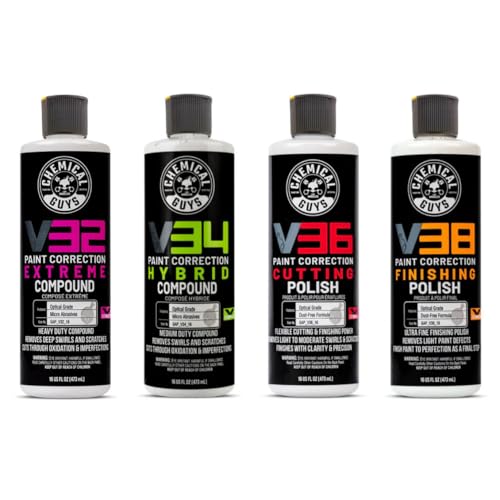
- Four products span heavy correction to final polish.
- Works with DA, rotary, or hand application.
- Suitable for several paint and coating types.
Best For: DIY detailers wanting a staged correction system
Polisher Starter Package

- Includes the G9 machine, pad, and ceramic all-in-one wax.
- 1,000-watt motor and 9mm orbit support correction.
- Adds SiO₂ protection after light paint correction.
Best For: Beginners seeking a machine-and-product starter kit
Two-Step Finish
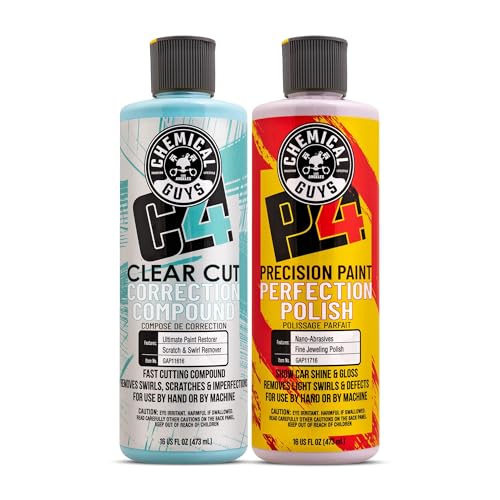
- C4 cuts defects; P4 refines gloss and clarity.
- Suitable for DA, rotary, or hand application.
- Works across multiple automotive paint types.
Best For: DIY users wanting a simple two-stage correction process
Bulk DA Compound
Meguiar's D300 Microfiber Compound

- One-gallon size supports repeated correction work.
- Targets light to moderate paint defects.
- Designed for DA microfiber cutting discs.
Best For: Frequent DA users who need a high-volume compound
Versatile Paint Correction
Griot's Garage Complete Compound

- Hand or machine application
- Removes swirls, scratches, and oxidation
- Dust-free, coating-ready finish
Best For: All-around DIY paint correction
Heavy-Duty Cutting Power
Malco Super Duty Heavy Cut Compound
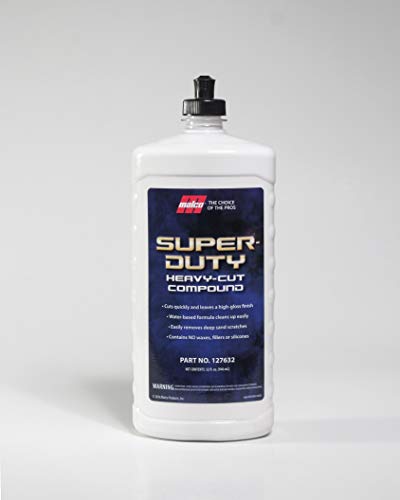
- Targets heavy scratches and oxidation
- Handles P1500-grit and finer sanding marks
- 32-ounce professional-size bottle
Best For: Heavy correction on automotive and gel-coat surfaces
Beginner-Friendly Scratch Kit
ExoForma Car Scratch Remover Kit

- Includes drill attachment and towel
- Targets light clear-coat defects
- Hand or drill-assisted application
Best For: Small at-home spot repairs
Best One-Step Pick
3D One Hybrid Compound & Polish

- Cuts and polishes in one step
- Works by hand or with a DA polisher
- Zero-dust formula for a clean finish
Best For: DIY detailers wanting a simplified correction routine
Best Heavy-Cut Option
CARPRO ClearCut Correction Compound

- Removes 1200-grit and finer sanding marks
- Works with DA or rotary machines
- Low dusting and fast cutting
Best For: Experienced users correcting deeper paint defects
Best Complete Kit
LAUCO Three-Step Paint Correction System
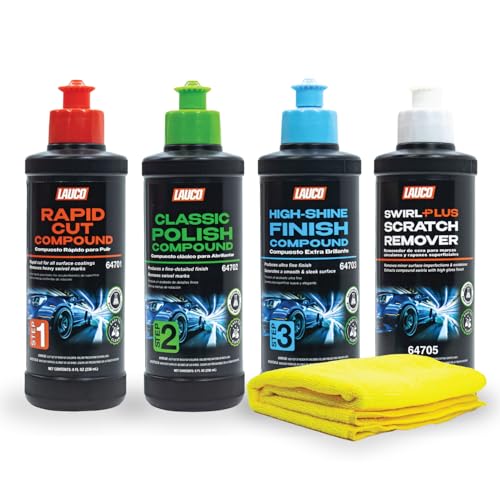
- Includes heavy cut, fine polish, and finish compounds
- Adds a spot-repair scratch remover and towel
- Built for staged correction and high gloss
Best For: Detailers wanting a complete multi-step workflow
Complete Correction System – Chemical Guys V Line Kit
For home garages that need a flexible approach to paint correction polishers for home garages, the Chemical Guys V Line kit provides four labeled products covering heavy correction through final polishing. Its staged system can be used with dual-action or rotary polishers, or by hand.
Best For: DIY detailers handling everything from deep scratches and oxidation to final gloss refinement.
Pros:
- Four-step lineup covers heavy-to-light correction and finishing.
- Designed for use on clear coat, single-stage, and ceramic-coated finishes.
- Clearly labeled bottles simplify product selection during correction.
Cons:
- A four-bottle system requires more steps and storage than a one-product solution.
- The kit does not include a polisher or pads.
This is a practical choice when you want one correction system for multiple paint conditions. It offers broad versatility, though you will need compatible tools and pads to complete the setup.
Polisher Starter Package – Griot's Garage G9 Kit
For shoppers comparing paint correction polishers for home garages, this Griot’s Garage package combines the G9 random orbital polisher, an orange correcting pad, and ceramic all-in-one wax. It is a streamlined option for correcting light defects while adding protection in the same project.
Best For: Home users who want a complete machine-polishing starter setup for light to moderate defects.
Pros:
- Includes a 1,000-watt G9 polisher, 6.5-inch pad, and 8-ounce all-in-one wax.
- Its 9mm orbit is designed for efficient defect removal and smooth operation.
- The wax addresses fine scratches and leaves SiO₂ protection that can last up to a year with proper maintenance.
- Ergonomic design, fan cooling, and a detachable cord support longer sessions.
Cons:
- The included all-in-one product is aimed at light defects rather than severe correction.
- The package includes one correcting pad, limiting initial pad choice.
This kit stands out when you need both the machine and basic finishing supplies in one purchase. It is especially convenient for routine paint improvement, but heavier defects may call for additional correction products.
Two-Step Finish – Chemical Guys C4 & P4 Kit
For paint correction polishers for home garages, the Chemical Guys C4 and P4 kit offers a focused two-step process: use C4 Clear Cut Compound to remove defects, then P4 Precision Polish to refine the finish. Both products can be applied with a dual-action or rotary polisher, or by hand.
Best For: Enthusiasts who want a straightforward compound-and-polish workflow for scratches, swirls, and towel marks.
Pros:
- C4 is formulated to address scratches, swirls, oxidation, etching, and towel marks.
- P4 follows with refinement of micro-marring, depth, gloss, and color vibrancy.
- Compatible with clear coat, single-stage, and ceramic-coated finishes.
- The two-step format is simpler than a multi-bottle correction system.
Cons:
- The kit includes liquids only, not a polisher or pads.
- A two-step process may require extra finishing work for particularly demanding defects.
This combination is a sensible middle ground between a single all-in-one product and a larger correction system. It keeps the workflow clear while providing separate cutting and polishing stages.
Bulk DA Compound – Meguiar's D300 Microfiber Compound
For busy home garages or frequent detailing, Meguiar’s D300 is a one-gallon correction compound designed for dual-action polishers. It targets light to moderate scratches, swirls, and oxidation, with a formula intended to work alongside DA microfiber cutting discs.
Best For: Enthusiasts and professional-style users who need a large supply for repeated DA correction work.
Pros:
- One-gallon size suits repeated vehicle correction or shared garage use.
- Formulated for light to moderate scratches, swirls, and oxidation.
- Optimized for DA Microfiber Cutting Discs and Xtra Cut Discs.
- Longer working time and easy wipe-off support a practical workflow.
Cons:
- The bulk container may be excessive for occasional users.
- It is a correction compound rather than a complete compound-and-polish system.
- The notes specify compatibility with glossy OEM paint finishes, not every surface type.
D300 makes the most sense when a DA polisher is already part of your garage setup and volume matters. Its focused formula and large container favor repeat correction jobs over small, one-time projects.
Versatile Paint Correction – Griot's Garage Complete Compound
For home garages looking for paint correction polishers for home garages, Griot’s Garage Complete Compound is a flexible medium-cut option that can be applied by hand or with a machine polisher. It targets scratches, swirl marks, water spots, oxidation, and other defects across automotive paint finishes, then wipes away without dust.
Best For: DIY detailers correcting a range of common paint defects and preparing paint for waxes, sealants, or ceramic coatings.
Pros:
- Works by hand or with a polisher pad.
- Addresses scratches, swirls, oxidation, and water spots.
- Wipes off easily and leaves no dust.
- Contains no silicone or fillers and is body shop safe.
Cons:
- The 16-ounce size may be less suitable for extensive multi-vehicle correction.
- As a medium compound, it may not be the ideal choice for very deep defects.
Its combination of application flexibility, clean wipe-off, and coating-ready results makes it a practical all-around compound for garage-based paint correction.
Heavy-Duty Cutting Power – Malco Super Duty Heavy Cut Compound
When comparing paint correction polishers for home garages, Malco Super Duty is aimed at substantial correction work rather than light finishing. This 32-ounce heavy-cut compound is designed to remove P1500-grit and finer sanding scratches, heavy oxidation, and defects from clear-coat, gel-coat, automotive, marine, and industrial surfaces.
Best For: Experienced DIY detailers tackling heavy sanding marks or oxidation on cars, trucks, boats, and other glossy coated surfaces.
Pros:
- Designed for heavy sand scratches and oxidation.
- Can remove P1500-grit and finer scratches.
- Works on clear-coat painted and gel-coat surfaces.
- Leaves a high-gloss finish and is body shop safe.
Cons:
- Best results call for a 100% twisted white wool cutting pad.
- Its heavy-cut focus may be more aggressive than needed for light swirls.
- Follow-up polishing may be needed depending on the correction job.
Choose this compound when defect removal and a generous 32-ounce supply matter more than having a gentle, one-step product for minor imperfections.
Beginner-Friendly Scratch Kit – ExoForma Car Scratch Remover Kit
For approachable paint correction polishers for home garages, the ExoForma kit bundles a 4-ounce scratch remover with a drill attachment, applicator pad, and microfiber towel. Its micro-abrasives are intended for light clear-coat scratches, swirls, haze, water spots, and oxidation, with hand or drill-assisted application.
Best For: Beginners handling small paint-correction jobs at home who want the essential applicator accessories included.
Pros:
- Includes scratch remover, drill attachment, applicator pad, and towel.
- Suitable for light scratches, swirls, haze, and oxidation.
- Can be applied by hand or with the included drill attachment.
- Designed for all paint colors and modern clear coats when used as directed.
Cons:
- Not intended for deep gouges, bare metal, or missing paint.
- The 4-ounce quantity is better suited to spot repairs than large corrections.
- Testing on an inconspicuous area is recommended before use.
This is a convenient entry point for localized, light-duty correction, especially when an at-home user wants a compact kit rather than a standalone polish.
Best One-Step Pick – 3D One Hybrid Compound & Polish
For home garages seeking paint correction polishers for home garages, 3D One is a practical one-bottle option. Its hybrid formula combines cutting and polishing to address swirls, scratches, and oxidation, while working by hand or with a DA polisher.
Best For: DIY detailers who want a simplified correction process for daily drivers, classics, or show cars.
Pros:
- Combines cutting compound and finishing polish in one formula.
- Works by hand for spot correction or with a DA polisher on full panels.
- Zero-dust formula is designed to leave a clean, glossy finish.
- Made in the USA and suitable for home-garage detailing.
Cons:
- The 8-ounce size may be less suitable for repeated full-vehicle correction.
- A one-step formula may not replace a dedicated multi-stage process for every paint condition.
Choose 3D One when convenience matters most. It is a versatile starting point for enthusiasts who want correction and gloss without managing several separate bottles.
Best Heavy-Cut Option – CARPRO ClearCut Correction Compound
For tougher correction jobs, CARPRO ClearCut is a heavy-cut compound worth considering among paint correction polishers for home garages. It is formulated to remove scratches, swirls, etching, and sanding marks from 1200 grit and finer, using a DA or rotary machine.
Best For: Experienced DIY detailers handling deeper defects or sanding marks who need a fast-cutting, body-shop-safe compound.
Pros:
- Designed for fast correction of scratches, swirls, oxidation, and etching.
- Compatible with dual-action and rotary machines.
- Works with foam, microfiber, and wool pads.
- Low-dusting formula finishes down like a polish on many medium-to-hard paints.
Cons:
- As a heavy-cut compound, it may require a follow-up polish for the desired finish.
- The 34-ounce size may be more product than occasional users need.
- Its aggressive correction focus may be excessive for minor surface defects.
ClearCut is the stronger choice when correction speed and defect removal take priority. Plan on pairing it with a finishing polish when the paint needs maximum refinement.
Best Complete Kit – LAUCO Three-Step Paint Correction System
LAUCO offers a more structured approach for home garages shopping for paint correction polishers for home garages. The kit includes heavy cut, fine polish, and high-shine finishing compounds, plus a dedicated scratch remover and towel for staged correction and gloss refinement.
Best For: DIY detailers who prefer a complete multi-step system for correcting defects and building toward a high-gloss finish.
Pros:
- Includes three correction and finishing stages in one kit.
- Step 1 targets deep scratches, oxidation, and sanding marks.
- Step 2 refines haze and light swirls before finishing.
- Step 3 and Swirl+Plus focus on gloss, micro-marring, and spot repairs.
Cons:
- A three-step process requires more time and effort than a one-step product.
- The supplied notes do not specify machine compatibility.
- The kit may be more involved than necessary for minor defects.
Choose LAUCO if you want flexibility across multiple correction stages. Its 32-ounce kit is designed for users who value a complete workflow rather than the fastest single-product solution.
How We Picked the Best Paint Correction Polishers for Home Garages
We focused on correction systems that make sense for home users, including complete kits and compounds commonly paired with dual-action polishers. Our evaluation criteria included ease of use, correction range, compatibility with automotive clear coats, included accessories, product size, and the likelihood of achieving consistent results without professional body-shop equipment.
Because several selections are compounds rather than polishers, consider this list a practical paint-correction buying guide: the abrasive product and the machine or attachment work together to determine the final result.
Quick Comparison
- Best for an all-in-one setup: Griot’s Garage G9 kit combines a random-orbital machine with a ceramic all-in-one wax.
- Best for multi-step correction: Chemical Guys V Line and C4 & P4 kits provide separate polishing or compounding options.
- Best for heavy defects: Malco Super Duty and CARPRO ClearCut are aimed at faster, more aggressive correction.
- Best for versatility: 3D One combines compound and polish functions in one product.
- Best for drill-based beginners: ExoForma includes a drill attachment, pad, and towel for a lower-cost entry point.
Key Buying Factors for Paint Correction Polishers for Home Garages
Machine Type and Control
A dual-action or random-orbital polisher is generally the safest choice for beginners because its movement helps reduce the risk of creating severe holograms or localized heat. Rotary tools can correct quickly but demand more technique. Drill attachments may be convenient for small areas, but they offer less control and can be tiring over a full vehicle.
Correction Strength
Heavy-cut compounds remove deeper scratches, oxidation, and sanding marks more quickly, but they usually require a finishing polish afterward. Medium or one-step products are better for light swirls and routine gloss enhancement. Always begin with the least aggressive combination that can address the defect.
Pad, Paint, and Working Conditions
Pad material changes the result as much as the compound. Cutting microfiber or firm foam increases correction, while softer foam is more suitable for finishing. Work in a clean, shaded area and test a small section before treating the entire car. Clean pads frequently to prevent spent abrasive and removed paint from reducing performance.
Formula and Quantity
Silicone-free formulas may be preferable when you need to inspect true correction before applying protection. Larger bottles make sense for repeated detailing, while smaller kits are more practical for occasional home use. Check whether towels, pads, backing plates, or machine accessories are included before comparing prices.
Who Should Buy Which Paint Correction Polishers for Home Garages?
New DIY detailers should prioritize a random-orbital kit or a complete system with clear steps. Experienced enthusiasts may prefer separate heavy-cut and finishing products for more control. Owners correcting isolated scratches can save money with a drill attachment or small polishing kit, provided they work slowly and avoid edges. Those maintaining already-good paint should choose a milder one-step compound rather than a heavy-cut formula.
Whichever option you choose, wash and decontaminate the vehicle first, measure progress after each test pass, and apply a wax, sealant, or ceramic protection product once correction is complete.
