

10 Best Portable Dash Cameras in 2026 for Clearer, Safer Road Recording

The best portable dash cameras make it easier to document collisions, monitor your vehicle, and capture clear footage without committing to a complicated permanent installation.
We compared 10 options across video quality, camera coverage, connectivity, storage, parking features, and installation flexibility so you can choose the right setup for your car and driving habits.
Best 10 Portable Dash Cameras Picks for 2026
Best All-Around Coverage
70mai T800E 3-Channel 4K Dash Cam

- 4K front plus 1080P rear and interior cameras
- GPS, Wi-Fi 6, voice control, and 64GB card
- Switchable IR interior night recording
Best For: Rideshare drivers, families, and full-coverage recording
Best for Fast Video Transfers

- Upscaled 4K front and 1080P rear recording
- STARVIS 2 sensor with HDR and night vision
- 5.8GHz Wi-Fi and free 128GB card
Best For: Drivers who frequently review or share footage
Best Budget Front Camera

- 1296P QHD front recording with 130° field of view
- Wi-Fi app control, WDR, and night vision
- Supports loop, time-lapse, and parking recording
Best For: Commuters wanting an uncomplicated front camera
Best True 3-Camera Resolution

- True 4K front and rear with 1080P cabin video
- Infrared cabin recording and wide viewing angles
- 128GB card, GPS, Wi-Fi 6, and three-year guarantee
Best For: Rideshare drivers needing high-resolution coverage
Most Complete Coverage

- Four-channel coverage with 4K front video
- 5.8GHz Wi-Fi and 64GB card included
- Parking mode requires a hardwire kit
Best For: Drivers wanting broad, multi-angle coverage
Best Compact Design
Galphi 4K Screen-Free Dash Cam

- Compact, screen-free 4K front camera
- 5GHz Wi-Fi with app-based downloads
- Includes a 32GB card; hardwire kit optional
Best For: Drivers who prefer a discreet, low-clutter setup
Best Value Dual Camera
2.5K Front and 1080P Rear Dash Cam
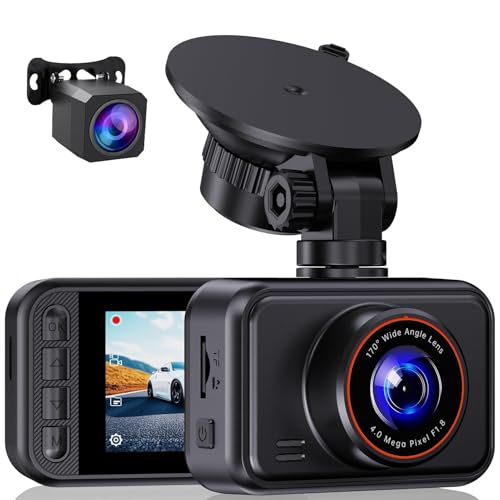
- Dual-camera recording with a 2-inch IPS screen
- 170-degree front view with WDR night vision
- MicroSD card and hardwire kit sold separately
Best For: Drivers wanting practical front-and-rear coverage
Maximum Coverage Pick

- Four 1080p cameras record front, rear, left, and right views.
- Includes 128GB card, night vision, WDR, and 5GHz Wi-Fi.
- GPS logger and hardwire kit are sold separately.
Best For: Drivers wanting comprehensive vehicle coverage
Balanced Dual-Camera Pick
E-YEEGER S50 Front and Rear Dash Cam
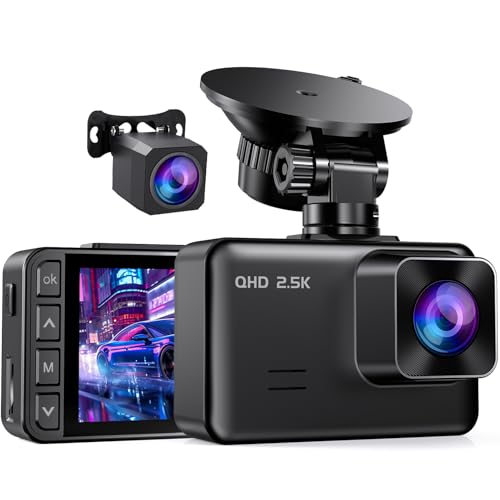
- Combines 2.5K front and 1080p rear recording.
- Includes starlight night vision, WDR, loop recording, and G-sensor locking.
- Optional hardwire kit is needed for 24-hour parking mode.
Best For: Commuters wanting simple front-and-rear recording
Simple Three-View Pick
SUVCON J06 Triple-Channel Dash Cam

- Records front, cabin, and rear views simultaneously.
- Includes a 32GB card and installation accessories.
- HDR, infrared cabin lighting, G-sensor, and loop recording support daily use.
Best For: Drivers wanting included storage and interior coverage
Best All-Around Coverage – 70mai T800E 3-Channel 4K Dash Cam
For drivers comparing portable dash cameras, the 70mai T800E stands out with three-channel coverage: 4K video in front, 1080P inside, and 1080P at the rear. Built-in GPS, Wi-Fi 6, voice control, and a 64GB card make it a well-equipped choice for daily driving, rideshare work, and family vehicles.
Best For: Uber and Lyft drivers, families, and anyone wanting front, rear, and cabin recording.
Pros:
- Three-camera coverage with 4K front recording and 1080P interior and rear video.
- HDR, 3D noise reduction, and switchable infrared for clearer low-light and cabin footage.
- Includes a 64GB card and supports cards up to 512GB.
- Built-in GPS, Wi-Fi 6, voice control, and super-capacitor power design.
Cons:
- 24/7 parking monitoring requires a compatible hardwire kit.
- 4G connectivity is not supported.
- The three-camera setup may require more installation and cable management than a front-only camera.
The T800E is a strong all-purpose option when broad coverage matters more than a minimal installation. Its included memory card and hands-free controls add convenience, while the interior camera is particularly useful for rideshare or family use.
Best for Fast Video Transfers – ROVE R2-4K Dual Dash Cam
The ROVE R2-4K Dual is one of the more connected portable dash cameras, pairing a front camera with a 1080P rear unit and dual-band Wi-Fi. Its front footage is captured at 2.5K and upscaled to 4K, and the included 128GB card provides more ready-to-use storage.
Best For: Drivers who want dual-camera coverage, quick app downloads, GPS data, and a generous included memory card.
Pros:
- Front 2.5K footage is upscaled to 4K, with 1080P rear recording.
- Sony STARVIS 2 sensor, HDR, and wide apertures support improved low-light detail.
- Dual-band 5.8GHz and 2.4GHz Wi-Fi enables downloads up to 20MB/s.
- Includes a 128GB card and supports cards up to 1TB.
Cons:
- The front resolution is upscaled 4K rather than native 4K.
- Parking mode requires a hardwire kit, which is not included.
- It records the front and rear, but not the vehicle interior.
This model balances image quality, storage, and smartphone convenience. The fast Wi-Fi and GPS overlays are useful for reviewing or sharing clips, while the dual-camera design provides more coverage than a front-only system without adding a cabin camera.
Best Budget Front Camera – 70mai M310 QHD Dash Cam
The 70mai M310 is a straightforward choice among portable dash cameras for drivers who primarily need a compact front-facing recorder. Its 1296P QHD video, 130-degree field of view, Wi-Fi app control, and parking features cover the essentials, though a microSD card must be purchased separately.
Best For: Commuters seeking a simple front dash cam with sharper-than-1080P recording and app access.
Pros:
- 1296P QHD recording captures more detail than standard 1080P.
- 130-degree viewing angle helps cover multiple lanes and reduce blind spots.
- WDR and 3D noise reduction support clearer footage in challenging lighting.
- Includes loop recording, G-sensor evidence protection, Wi-Fi, and time-lapse parking recording.
Cons:
- A microSD card is not included.
- Parking monitoring and time-lapse require the separately sold UP03 hardwire kit.
- It is a front-only camera, so it does not record the rear or cabin.
The M310 keeps installation and operation relatively simple while still adding useful smartphone and parking features. It is best suited to everyday commuters who do not need multi-camera coverage and are comfortable supplying their own compatible Class 10-or-higher card.
Best True 3-Camera Resolution – AProX 4K+4K+1080P Dash Cam
For buyers who want maximum coverage from portable dash cameras, this AProX system combines true 4K front recording, 4K rear recording, and 1080P cabin video. It also includes a 128GB card, GPS, Wi-Fi 6, and infrared cabin lighting for a feature-rich setup aimed at rideshare and security use.
Best For: Rideshare drivers and vehicle owners who want high-resolution front-and-rear footage plus interior monitoring.
Pros:
- Records true 4K video at both the front and rear, plus 1080P cabin footage.
- Wide 170-degree front, 150-degree rear, and 150-degree cabin views provide broad coverage.
- Four infrared lights help the cabin camera record in complete darkness.
- Includes a 128GB card, GPS, Wi-Fi 6, app control, and a three-year guarantee.
Cons:
- 24-hour parking monitoring requires a hardwire kit.
- The three-camera configuration may be more involved to install than a single-camera system.
- Its extensive feature set may be more than front-only drivers need.
This is the strongest fit when resolution and complete vehicle coverage are the priority. The cabin infrared lighting and broad viewing angles make it especially practical for rideshare work, while the included card and long guarantee improve its out-of-box value.
Most Complete Coverage – 4K 4-Channel 360° Dash Cam
For drivers who want broad coverage, this portable dash cameras option records from four angles at once. It combines a 4K front camera with three adjustable 1080P cameras, app connectivity, and included storage for a feature-rich setup.
Best For: Drivers seeking 360° coverage, high-resolution front footage, and app-based video access.
Pros:
- Four-channel recording helps cover the front, rear, and sides of the vehicle.
- 4K front video, 1080P auxiliary cameras, infrared night vision, and WDR support detailed footage in changing light.
- 5.8GHz Wi-Fi, app control, and a pre-installed 64GB card simplify video access and initial setup.
- Includes loop recording, G-sensor incident locking, and 24-hour parking monitoring support.
Cons:
- Parking monitoring requires a separately purchased hardwire kit.
- The four-camera setup requires more installation and cable routing than a basic front camera.
This is the most capable choice of the three for reducing blind spots, though its extra cameras and parking-mode requirements make installation more involved.
Best Compact Design – Galphi 4K Screen-Free Dash Cam
This compact option suits drivers who prefer portable dash cameras with minimal windshield clutter. It records in 4K, connects to a phone over 5GHz Wi-Fi, and includes a 32GB card so recording can begin without an immediate accessory purchase.
Best For: Drivers who want a discreet, screen-free camera with 4K recording and straightforward app access.
Pros:
- 4K front recording and a 160-degree lens provide detailed, wide road coverage.
- Screen-free design helps reduce visual distraction and keeps the camera compact.
- 5GHz Wi-Fi and the companion app support faster downloads than a 2.4GHz connection.
- Includes a pre-installed 32GB card, loop recording, G-sensor locking, and night-vision features.
Cons:
- No built-in screen for checking footage or changing settings directly on the camera.
- 24-hour parking mode requires a Type-C hardwire kit, which is not included.
- The included card is 32GB; a larger compatible card may be preferable for extended storage.
Choose this model when a small, unobtrusive design matters more than an integrated display or multiple camera angles.
Best Value Dual Camera – 2.5K Front and 1080P Rear Dash Cam
For practical front-and-rear recording, this portable dash cameras model balances useful coverage with a simple 2-inch display. It records 2.5K video in front and 1080P at the rear, while the suction mount makes repositioning or removal convenient.
Best For: Drivers who want dual-camera coverage, an onboard screen, and a straightforward installation.
Pros:
- 2.5K front and 1080P rear recording document activity ahead of and behind the vehicle.
- The 2-inch IPS screen allows direct viewing and basic setting adjustments.
- WDR, a wide 170-degree front lens, and infrared night vision support footage review in varied lighting.
- Includes loop recording, G-sensor incident locking, and a 360-degree adjustable suction mount.
Cons:
- MicroSD card is not included, so storage must be purchased separately.
- 24-hour parking monitoring requires a compatible Type-C hardwire kit.
- Front resolution is lower than the 4K models in this roundup.
This is a sensible middle-ground pick for buyers who value rear coverage and a built-in screen without stepping up to a more complex multi-camera system.
Maximum Coverage Pick – ZMOPO D435 4-Channel Dash Cam
For drivers who want broad vehicle coverage, this portable dash cameras option records simultaneously from the front, rear, left, and right sides. Four 1080p cameras, infrared night vision, WDR, 5GHz Wi-Fi, and an included 128GB card make it a feature-rich choice for documenting daily driving and incidents.
Best For: Drivers seeking comprehensive exterior and interior coverage in one system.
Pros:
- Four-channel recording covers the front, rear, left, and right sides.
- Includes a 128GB memory card and supports cards up to 256GB.
- Offers infrared night vision, WDR, loop recording, and incident locking.
- 5GHz Wi-Fi enables convenient video transfers through the mobile app.
Cons:
- GPS tracking requires a separately sold GPS logger.
- Parking mode requires an optional ACC hardwire kit.
- The four-camera setup may involve more installation and cable management.
This is the strongest fit when coverage takes priority over simplicity. Its included storage and app connectivity add convenience, while the optional accessories mean the advertised GPS and parking features require additional purchases.
Balanced Dual-Camera Pick – E-YEEGER S50 Front and Rear Dash Cam
This portable dash cameras setup pairs a 2.5K front camera with a wired 1080p rear camera for useful two-way road coverage. Its compact design, 2-inch IPS screen, starlight night vision, and physical controls make it practical for commuters who want straightforward operation.
Best For: Everyday drivers who want higher-resolution front recording and a simple rear camera setup.
Pros:
- Records in 2.5K at the front and 1080p at the rear.
- Wide 170-degree front and 160-degree rear viewing angles provide added context.
- Starlight night vision, an F/1.6 aperture, and WDR help in changing light.
- 2-inch IPS display and physical buttons support easy local control.
Cons:
- 24-hour parking mode requires the separately sold V5F hardwire kit.
- The standard car charger records only while the vehicle supplies power.
- A microSD card is not identified as included in the supplied details.
The S50 offers a sensible balance of image quality, rear coverage, and usability. It is less elaborate than a multi-channel system, but its compact screen and direct controls suit drivers who prefer a conventional dash cam without app-dependent operation.
Simple Three-View Pick – SUVCON J06 Triple-Channel Dash Cam
For shoppers looking for portable dash cameras with cabin coverage, the SUVCON J06 records the front road, vehicle interior, and rear view. It includes a 32GB card, an IPS screen, HDR, infrared cabin lighting, and plug-and-play installation for uncomplicated daily use.
Best For: Drivers who want front, rear, and passenger-area recording with included storage.
Pros:
- Three channels cover the front, cabin, and rear of the vehicle.
- Includes a 32GB memory card, rear camera cable, mount, and cable-management tools.
- HDR and four infrared LEDs support balanced footage and low-light cabin recording.
- G-sensor emergency locking and loop recording help preserve important clips.
Cons:
- The included and maximum supported memory capacity is limited to 32GB.
- Parking monitoring is listed, but the supplied details do not specify a required hardwire kit.
- The 1296p front resolution is lower than the 2.5K front resolution of the E-YEEGER S50.
This model is appealing for buyers who value a complete three-view package and easy setup. The included card and accessories reduce initial shopping, while the smaller storage limit may require more frequent file management.
How We Picked the Best Portable Dash Cameras
We focused on the features that matter most in daily use: video resolution, sensor performance, viewing angles, camera count, night recording, storage support, app connectivity, GPS, parking monitoring, and installation requirements. The selection includes compact front cameras, dual-camera systems, and three- or four-channel models for drivers who want cabin and side coverage.
Higher resolution can preserve useful details such as license plates, but image quality also depends on the sensor, lens, lighting, and video compression. We therefore considered the overall feature set rather than judging cameras by resolution alone.
Quick Comparison
| Setup | Best For | Features to Look For |
|---|---|---|
| Front only | Simple everyday protection | Compact design, good night vision, reliable loop recording |
| Front and rear | Collision documentation | Rear-camera cable length, synchronized recording, parking mode |
| Three channel | Full front, rear, and cabin coverage | Interior infrared recording, larger storage capacity, heat management |
| Four channel | Maximum surrounding visibility | Side cameras, installation space, higher storage demands |
Key Buying Factors for Portable Dash Cameras
Video Quality and Night Performance
Choose 4K or 2.5K front recording if identifying details is a priority. For nighttime driving, check for a capable image sensor, wide dynamic range, HDR or WDR processing, and infrared illumination for cabin footage. A sharp front camera does not automatically mean the rear or interior cameras will match it.
Coverage and Installation
Dual-camera models cover the road ahead and behind, while three-channel systems add the passenger cabin. Four-channel cameras can add side views but require more wiring and mounting space. Confirm that the included cables can reach the rear window and that the camera will not obstruct your view.
Storage, Wi-Fi, and GPS
Loop recording automatically replaces older clips when the memory card fills. Verify the supported card capacity and use a high-endurance microSD card when required. Wi-Fi makes it easier to transfer clips to a phone, while GPS can record location and speed data. Some models include a card, but capacity and durability still matter.
Parking Monitoring and Power
Parking mode may require a hardwire kit or another constant power source. Before choosing this feature, check whether the kit is included, whether installation is comfortable for you, and how the camera manages battery drain. A portable setup is easiest to move between vehicles, but permanent wiring may provide more dependable parked-car monitoring.
Who Should Buy Which Portable Dash Cameras?
Choose a compact front-facing model if you want straightforward installation and basic evidence recording. A front-and-rear camera is the better all-around choice for most drivers because rear impacts are otherwise difficult to document. Pick a three-channel system if rideshare work, family travel, or personal security makes cabin footage valuable. A four-channel model suits drivers who want the broadest coverage and are willing to accept additional setup complexity.
Finally, prioritize usability over headline specifications. A camera with accessible controls, dependable recording, adequate storage, and an easy-to-use phone app is more useful than a higher-resolution model that is difficult to install or maintain.
