

10 Best Premium Automotive Spot Welders for Professional Bodywork in 2026

Choosing among premium automotive spot welders can be difficult when product listings emphasize wattage, amperage, and accessories without explaining how those specifications affect real bodywork.
We selected 10 models spanning portable resistance welders and stud-welding dent-repair systems, with options for collision shops, restoration work, and serious home garages.
Best 10 Premium Automotive Spot Welders Picks for 2026
Compact Lenco Spot Welding Solution
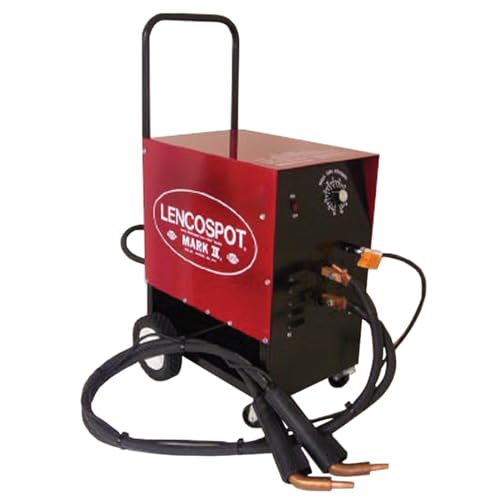
- Compact 9 x 3 x 2-inch design
- AC-powered spot-welding setup
- Includes Welder Mark II
Best For: Compact workshop spot-welding applications with compatible 208/230V power
High-Output Handheld Spot Welder
Stark USA 220V 1/8-Inch Spot Welder

- 6,750A maximum listed output
- 1/8-inch welding capacity
- Portable design with replaceable copper tips
Best For: Automotive bodywork and sheet-metal fabrication requiring 220V power
Complete Dent-Repair Stud Welder Kit
VEVOR 5500 Stud Welder Dent Repair Kit

- Includes slide hammer and repair accessories
- Overheat protection at 95°C
- Touch-trigger one-handed operation
Best For: Vehicle dent pulling and automotive body-panel repair
Portable Automotive Sheet-Metal Welder
Stark USA 110V 1/8-Inch Spot Welder

- 6-inch throat depth
- 5,500A maximum listed output
- Portable design for automotive repair
Best For: Automotive sheet-metal work using compatible 120V AC power
Versatile Shop Pick
2-in-1 Stud Welder Dent Repair Kit

- 3500W/4200A output with six repair modes
- Integrated welding gun and dent puller
- 15 accessories plus overheat protection
Best For: Steel-panel auto body repair shops
Dual-Material Professional Choice

- 5KW system for steel and aluminum panels
- 10 welding modes with auto/manual control
- Complete accessory set for dent repair
Best For: Professional shops repairing steel and aluminum
Compact Automatic Performer

- 3KW output with six welding modes
- Automatic contact welding for consistent timing
- 16 accessory types in a portable toolbox
Best For: General automotive and motorcycle dent repair
High-Output Shop Pick

- 3KW power and up to 3500A peak output
- Seven modes with 77-level current adjustment
- Rolling cart with three-tier storage
Best For: Busy workshops needing power and organized mobility
Portable Repair Choice

- Seven modes with auto/manual welding
- Includes five stud types and toolbox
- Compact 43.2-pound design with handle
Best For: DIYers and mobile dent-repair users
Paint-Conscious Pick

- 3KW output for steel car and truck panels
- Seven modes with auto/manual operation
- Portable toolbox with included accessories
Best For: Precise, portable dent repair with attention to surrounding paint
Compact Lenco Spot Welding Solution – Lencospot II 208/230V
For buyers comparing premium automotive spot welders, the Lenco LCO-L-4000 Mii Lencospot II is a compact AC-powered option designed specifically for spot-welding installation needs. Its listed dimensions make it easy to accommodate where workspace is limited.
Best For: Buyers seeking a compact Lenco spot-welding unit for automotive or workshop use with compatible 208/230V power.
Pros:
- Compact 9 x 3 x 2-inch listed dimensions.
- AC power source supports workshop installation.
- Includes the Welder Mark II component.
Cons:
- Requires a compatible 208/230V electrical supply.
- The supplied notes do not specify welding capacity, output current, or included accessory range.
The Lencospot II stands out primarily for its compact format and straightforward spot-welding setup. Confirm electrical compatibility and capacity requirements before choosing it for a particular automotive repair workflow.
High-Output Handheld Spot Welder – Stark USA 220V 1/8-Inch Spot Welder
Among premium automotive spot welders, this Stark USA 220V model combines a 2.5KVA rated input with a listed 6,750A maximum output current and a 1/8-inch welding capacity. Its handheld lever operation is suited to automotive repair and sheet-metal fabrication.
Best For: Automotive bodywork, sheet-metal fabrication, and users who need a portable 220V resistance spot welder.
Pros:
- Supports materials up to 1/8 inch according to the product title.
- Lists 2.5KVA input capacity and 6,750A maximum output current.
- Includes replaceable copper electrode tips and a portable handle.
- Simple pull, pressure, and press operating method.
Cons:
- Requires a 220V power supply.
- At 28.9 pounds, it is portable but not especially lightweight.
- The supplied notes do not specify duty cycle or weld-timer controls.
This Stark USA model offers a useful balance of output and portability for automotive and fabrication work. Its 220V requirement and 28.9-pound weight should be factored into shop setup and job-site planning.
Complete Dent-Repair Stud Welder Kit – VEVOR 5500 Stud Welder Dent Repair Kit
For premium automotive spot welders focused on dent repair, the VEVOR 5500 kit provides a stud-welding gun, slide hammer, electrodes, nails, pads, and storage case. Its touch-trigger operation and overheat protection are designed for practical vehicle bodywork.
Best For: Automotive dent pulling and body-panel repair where a complete stud-welding accessory kit is useful.
Pros:
- Includes a multifunctional pulling hammer, electrodes, nails, pads, and accessories.
- Touch-switch trigger supports one-handed operation.
- Thermal protection activates when the transformer reaches 95°C.
- ABS housing and pure-copper electrode movement are specified.
Cons:
- This is a stud-welding dent-repair system rather than a general sheet-metal spot welder.
- At 28.5 pounds, it may be cumbersome for extended carrying.
- Requires a 110V AC power supply.
The VEVOR kit is best evaluated as a dedicated dent-repair package, not simply as a conventional resistance spot welder. Its broad accessory selection can reduce the need to purchase separate pulling and welding components.
Portable Automotive Sheet-Metal Welder – Stark USA 110V 1/8-Inch Spot Welder
This Stark USA 110V model is a practical choice among premium automotive spot welders for sheet-metal and repair work. It lists a 1/8-inch capacity, 6-inch throat depth, 1.5KVA input, and 5,500A maximum output current in a portable design.
Best For: Automotive repair and sheet-metal fabrication in shops equipped with standard 120V AC power.
Pros:
- Designed for materials up to 1/8 inch according to the product title.
- Provides a 6-inch throat depth for added workpiece access.
- Lists 1.5KVA input capacity and 5,500A maximum output current.
- Portable construction with a handheld lever-style operating method.
Cons:
- Its 110V model is listed with a 120V AC input, so electrical compatibility should be confirmed.
- The supplied information does not state a duty cycle or control settings.
- Application reach is limited by the specified 6-inch throat depth.
With its moderate output, 6-inch throat, and portable format, this Stark USA welder is suited to accessible automotive sheet-metal jobs. Verify the required outlet and workspace reach before purchase.
Versatile Shop Pick – 2-in-1 Stud Welder Dent Repair Kit
For shops seeking premium automotive spot welders with integrated dent-pulling capability, the EVSTUL Stud Welder Dent Repair Kit combines 3500W/4200A welding power, six repair modes, and a built-in puller. Its auto/manual controls suit both repeatable repairs and more precise bodywork.
Best For: Auto body shops and technicians repairing steel vehicle panels with varied dent shapes and sizes.
Pros:
- Combines spot welding and dent pulling without frequent tool changes.
- Six modes cover stud pulling, wave-line welding, spot welding, and carbon rod burn-off.
- Includes 15 accessories and smart cooling with automatic overheat protection.
Cons:
- Designed specifically for steel panels rather than a dual steel-and-aluminum system.
- At 48.1 pounds, it is portable but not especially lightweight.
This is a well-rounded choice when workflow efficiency and broad steel-panel capability matter. The three-year after-sales service and 24/7 support add reassurance for regular shop use.
Dual-Material Professional Choice – VEVOR Dual Pro Stud Welder
Among premium automotive spot welders, the VEVOR Dual Pro stands out for supporting both steel and aluminum automotive panels. Its 5KW dual-system design uses a transformer for steel and capacitive discharge for aluminum, making it a strong fit for shops handling varied repair materials.
Best For: Professional repair shops that need one machine for both steel and aluminum body panels.
Pros:
- Dual welding system supports separate steel and aluminum repair workflows.
- Offers 10 welding modes plus auto and manual spot-welding modes.
- Includes studs, washers, pullers, hammers, and a heat gun for comprehensive repairs.
Cons:
- At 70.1 pounds, it is the heaviest option in this roundup.
- Listed at 220 volts, so buyers should confirm their shop’s electrical setup.
The Dual Pro is the most material-flexible option here. Its heavier construction and higher power favor a dedicated professional workspace over occasional or highly portable use.
Compact Automatic Performer – VEVOR 3KW Stud Welder
This VEVOR kit offers a practical entry into premium automotive spot welders for technicians who value automatic operation and organized portability. Its 3KW output, six welding modes, and automatic contact welding support consistent repairs on several common automotive sheet metals.
Best For: Technicians repairing steel, stainless steel, iron, or galvanized panels on cars, trucks, and motorcycles.
Pros:
- Automatic welding timing helps deliver consistent contact welds.
- Six modes handle pointed, deep, curved, and flat repair areas.
- Includes 16 accessory types in a toolbox with a portable handle.
Cons:
- Maximum single-side welding thickness is 1.2mm.
- Its 3KW output is lower than the other two options in this roundup.
This model is a sensible choice for general-purpose body repair where portability and straightforward controls are priorities. Its material range is useful, but the thickness limit makes it less suited to heavier panel work.
High-Output Shop Pick – 3KW Stud Welder with Cart
For buyers comparing premium automotive spot welders, this VEVOR model stands out with 3KW power, up to 3500A instantaneous peak output, and a workshop-friendly rolling cart. Its seven modes and 77-level current adjustment support controlled repairs on 0.02–0.05-inch steel body panels.
Best For: Busy workshops that want high output, organized storage, and flexible dent-repair control.
Pros:
- High 3KW welding power and up to 3500A peak output can help create firm weld points.
- Seven modes, 77 current levels, and automatic or manual welding support varied repairs.
- Rolling three-tier cart provides tool storage and easy workshop mobility.
- Temperature protection and ventilation support reliable operation.
Cons:
- At 79.4 pounds, it is substantially less portable than compact dent-puller kits.
- The cart-based design requires more floor space.
This is the most shop-oriented option in the group, combining strong output with built-in organization. Choose it when workflow, storage, and repeated steel-panel repairs matter more than portability.
Portable Repair Choice – 1.8KW Stud Welder Dent Puller
This VEVOR kit offers a more compact route into premium automotive spot welders for steel-panel dent repair. It combines 1.8KW output, seven welding modes, auto/manual operation, and a toolbox of accessories for work on cars, trucks, and curved or flat panels.
Best For: Mechanics, enthusiasts, and DIY users who prioritize a portable, complete dent-repair kit.
Pros:
- Seven preset modes accommodate different welding studs and repair tasks.
- Automatic welding helps with larger dents, while manual mode supports detailed work.
- Five stud types broaden its usefulness across different dent sizes and shapes.
- Compact design, handle, and included toolbox make transport convenient.
Cons:
- Its 1.8KW rating is lower than the 3KW alternatives in this roundup.
- The supplied details list 220V despite the product title stating 110V, so buyers should verify electrical requirements.
This is the practical portability pick. It has the controls and accessories needed for common dent work without the larger cart format, though its lower power may be less suited to demanding shop use.
Paint-Conscious Pick – 3KW Auto/Manual Stud Welder
For premium automotive spot welders aimed at controlled bodywork, the YELLOW JACKET AS90E pairs 3KW output with seven preset modes and dual auto/manual welding. Its single-sided welding design is specified for a combined 0.6 mm + 1.2 mm thickness and is intended to limit thermal and mechanical stress during repairs.
Best For: Home garages and technicians seeking a portable 3KW kit with paint-conscious, precise dent-repair operation.
Pros:
- 3KW output supports professional-grade dent removal on steel car and truck panels.
- Single-sided welding is designed to minimize stress around the repair area.
- Automatic mode suits larger dents, while manual mode allows detailed spot placement.
- Includes essential accessories in a portable toolbox with an ergonomic handle.
Cons:
- It lacks the rolling storage cart included with the larger VEVOR model.
- The supplied notes do not specify adjustable current levels beyond the seven preset modes.
The AS90E balances high output with portability and precise operating options. It is a strong fit when you want 3KW performance in a toolbox-style package rather than a dedicated cart-mounted workstation.
How We Picked the Best Premium Automotive Spot Welders
We compared these machines by welding output, compatible materials, operating voltage, throat depth, control options, included guns and accessories, and suitability for automotive sheet metal. We also considered whether each unit supports repeatable shop work or is better suited to occasional repairs. A higher power rating can help with thicker material, but dependable controls, electrode access, cable quality, and usable duty cycle often matter just as much.
Because this list includes both conventional spot welders and stud-welding dent-puller kits, we evaluated each type according to its intended job rather than treating every specification as directly comparable.
Quick Comparison
| Best For | What to Prioritize | Recommended Type |
|---|---|---|
| Replacing factory-style sheet-metal welds | Electrode pressure, throat depth, and consistent timing | Portable resistance spot welder |
| Pulling dents without removing panels | Stud-gun modes, power, and included accessories | Stud welder dent-repair kit |
| Mixed steel and aluminum repairs | Material-specific settings and dual-process support | Multi-mode or dual-material system |
| Small garages and mobile work | Voltage, weight, storage, and cable reach | Compact 110V system |
Key Buying Factors for Premium Automotive Spot Welders
Power and Material Capacity
Check the stated sheet-metal capacity, but remember that actual performance depends on material type, surface preparation, electrode condition, and available circuit capacity. Higher-output machines are generally more suitable for repeated professional use, while compact 110V units can be easier to install in a home shop.
Controls and Welding Modes
Automatic timing can improve consistency for repeated welds, while manual control gives experienced operators more flexibility. Stud-welding kits with multiple modes may support different fasteners, washers, wires, and dent-pulling techniques. Confirm that the included accessories match the repairs you expect to perform.
Reach, Ergonomics, and Duty Cycle
A longer throat or cable can make a major difference when working across doors, quarter panels, and other large sections. Also review gun weight, clamp access, cooling provisions, and duty-cycle information. A machine that is powerful but uncomfortable or prone to overheating may slow down production.
Electrical Requirements and Support
Verify whether the unit requires 110V or 208/230V service and whether your shop has an appropriately rated circuit. For professional use, prioritize clear documentation, replaceable consumables, warranty coverage, and accessible technical support.
Who Should Buy Which Premium Automotive Spot Welders?
Choose a conventional portable spot welder if your priority is joining overlapping automotive sheet metal with controlled electrode pressure. Choose a stud-welding kit if you primarily repair shallow or medium dents from one side and need pulling accessories included. A higher-powered multi-mode kit makes more sense for a busy collision or restoration shop handling varied jobs, while a smaller 110V model is often the practical choice for home garages and occasional repairs.
Before ordering, match the machine to your electrical supply, panel materials, workspace, and expected repair volume. The best Premium Automotive Spot Welders are not necessarily the most powerful models; they are the ones that provide appropriate control, access, durability, and accessories for the work you actually perform.
