

10 Best Premium Battery Spot Welders for Reliable Pack Building in 2026

Building or repairing battery packs demands consistent welds, controlled heat, and equipment that matches your materials. The best premium battery spot welders offer more than headline wattage, combining adjustable pulse settings, dependable electrode pressure, and practical controls.
We selected 10 models spanning compact DIY machines, foot-pedal systems, resistance-testing welders, and high-output equipment for demanding nickel, copper, and aluminum work.
Best 10 Premium Battery Spot Welders Picks for 2026
High-Capacity Pick
AWithZ P20B Capacitor Spot Welder

- 14.6KW capacitor pulse output
- 999 adjustable power levels
- Automatic and foot-pedal modes
Best For: Versatile bench-top battery-pack building
Portable Precision Pick
FNRSI SWM-20 Double-Pulse Welder

- 1200A double-pulse output
- 0.1mm–0.5mm sheet capacity
- Built-in 5000mAh power bank
Best For: Portable battery repairs and compact DIY projects
Professional Copper Pick
GLITTER 811H Resistance Tester
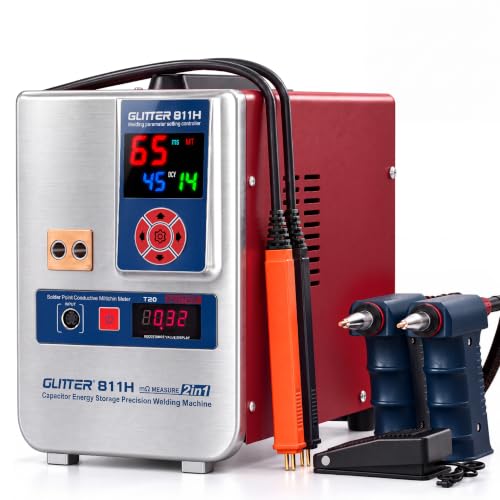
- 7000A output and 42KW pulse rating
- Supports copper and composite connections
- Built-in milliohm resistance testing
Best For: Professional high-current battery and busbar work
Portable Dual-Pulse Pick

- 13000W dual-pulse output
- 100-level rotary power control
- Up to 330 welds at maximum power
Best For: Cordless DIY battery-pack assembly and repair
Industrial Precision Pick
GLITTER 811H High-Power Spot Welder

- 42,000W and up to 7,000A output
- Built-in 0–200mΩ milliohm meter
- Supports copper, aluminum-nickel, and battery-pack work
Best For: Professional battery-pack assembly and repair
Adjustable DIY Choice
11500W Rotary-Knob Battery Spot Welder

- 100 power levels for fine adjustment
- Foot pedal and hand-trigger operation
- Thermal protection and multi-mode welding
Best For: DIY battery-pack projects and varied cell types
Portable Pick
SEESII Cordless Pocket Spot Welder
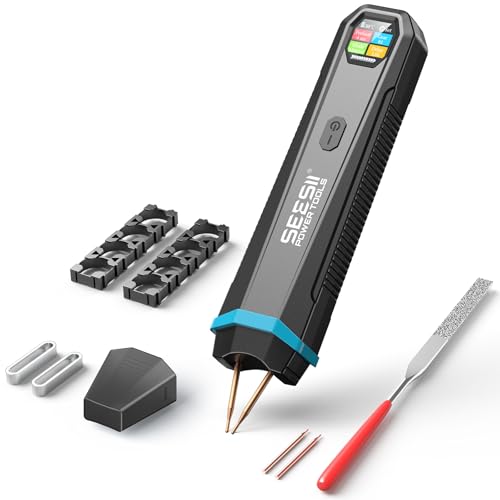
- Cordless handheld design for portable work
- 99 gears with auto and manual modes
- Welds up to 0.15mm pure nickel
Best For: Portable battery repair and thin nickel-strip welding
Best with Extra Features
SEESII 10KW Capacitive Spot Welder

- 10KW output supports thicker nickel and metal sheets.
- 250 power levels provide detailed adjustment.
- Dual automatic and foot-pedal welding modes.
Best For: DIY battery-pack building and repair work
Portable Value Pick
8000W Handheld Battery Spot Welder

- Lightweight 1.9-pound handheld design.
- Nine power levels with 0–800A adjustment.
- Dual-pulse output and foot-pedal control.
Best For: Portable DIY battery-pack welding
Cordless Convenience Pick
10000W LCD Battery Spot Welder

- Rechargeable battery enables cable-free operation.
- 10–90 power adjustment with dual-pulse technology.
- LCD status display and foot-pedal control.
Best For: Mobile battery-pack assembly and repair
High-Capacity Pick – AWithZ P20B Capacitor Spot Welder
For buyers comparing premium battery spot welders, the AWithZ P20B stands out for its 14.6KW capacitor output, broad material compatibility, and flexible controls. Its 100–240V input, automatic operation, and foot-pedal mode make it suitable for both workshop and DIY battery-pack projects.
Best For: Battery-pack builders who want adjustable power and a foot pedal for precise probe positioning.
Pros:
- Offers 999 adjustable power levels and up to 14.6KW pulse welding power.
- Supports cylindrical cells, LiFePO4 batteries, and several nickel, steel, iron, and copper sheet types.
- Includes automatic and foot-pedal modes, replacement pins, nickel strip, and an 18650 holder.
Cons:
- At 5.46 pounds, it is less portable than handheld battery-powered models.
- Its AC power design requires access to a suitable outlet.
The P20B is a versatile premium battery spot welder for users who value fine adjustment and a complete starter kit. It is especially appealing for varied materials and repeated bench-top work.
Portable Precision Pick – FNRSI SWM-20 Double-Pulse Welder
The FNRSI SWM-20 is a compact option among premium battery spot welders, combining 1200A double-pulse welding with a portable handheld design. Its color display and encoder make it easier to monitor and adjust welding parameters for small battery-pack projects and repairs.
Best For: Portable repairs and DIY users who need a compact welder with adjustable pulse settings.
Pros:
- Uses double-pulse technology to support consistent welds while limiting heat exposure.
- Welds nickel, iron, and stainless steel sheets from 0.1mm to 0.5mm.
- Includes a built-in 5000mAh battery that can also provide 5V/2.1A charging.
Cons:
- Its 1200A output is lower than the output claimed by the larger workshop models in this roundup.
- The compact battery-powered design may be better suited to lighter-duty work than extended production use.
With a weight of just 1.26 pounds, the SWM-20 prioritizes mobility and convenient controls. It is a practical choice when portability matters as much as welding flexibility.
Professional Copper Pick – GLITTER 811H Resistance Tester
For demanding battery workshops, the GLITTER 811H is one of the most specialized premium battery spot welders here. Its 7000A capacitor output, 42KW pulse rating, copper-welding focus, and built-in milliohm resistance measurement are aimed at high-current battery and busbar applications.
Best For: Professional workshops, battery manufacturers, EV or energy-storage repair, and advanced builders working with copper connections.
Pros:
- Provides 7000A capacitor output and 42KW pulse welding technology for high-current applications.
- Supports copper, nickel, and nickel-aluminum composite connections.
- Measures milliohm resistance to help verify connection quality after welding.
- Includes a 50mm² high-current cable and foot pedal.
Cons:
- At 19.32 pounds, it is substantially heavier than portable alternatives.
- Its professional capabilities may be excessive for occasional 18650 nickel-strip projects.
The 811H is designed around power transfer and weld verification rather than casual portability. Choose it when copper welding and post-weld resistance checks justify a heavier, workshop-oriented system.
Portable Dual-Pulse Pick – SK1 10000mAh Battery Welder
The SK1 combines a 13000W dual-pulse output with a rechargeable 10000mAh battery, making it a convenient contender among premium battery spot welders. A 0–100 rotary control, automatic and foot-pedal modes, and a clearly arranged display support both detailed adjustments and straightforward pack repairs.
Best For: Cordless DIY battery-pack assembly and repair using nickel-plated, steel, or iron sheet.
Pros:
- Offers up to 13000W peak output and dual-pulse operation for battery-pack work.
- Provides 100 power levels and displays mode, trigger time, power, and pulse count.
- Includes a 10000mAh battery, foot pedal, welding pens, replacement pins, nickel strip, and accessories.
- Includes low-battery and overheating warnings with automatic shutoff.
Cons:
- Maximum welding capacity depends on battery level.
- Its stated capacity is up to 0.4mm nickel-plated strip, 0.3mm steel, and 0.3mm iron sheet, so it is not positioned for the thickest copper work.
The SK1 is a strong fit for users who want cordless operation without giving up fine power control. Its included kit and safety indicators make it convenient for home projects and mobile repairs.
Industrial Precision Pick – GLITTER 811H High-Power Spot Welder
For demanding battery-pack work, the GLITTER 811H stands out among premium battery spot welders with its 42,000W rating, up to 7,000A output, and support for copper and aluminum-to-nickel welding. Its built-in milliohm meter adds useful resistance checking for more consistent connections.
Best For: Professional users building or repairing LiFePO4, 18650, and other demanding battery packs.
Pros:
- High-power pulse welding is designed for copper, aluminum-nickel, and thicker weldments.
- Built-in 0–200mΩ milliohm meter helps identify inconsistent resistance and contact issues.
- AT and MT modes, a foot pedal, and an included welding pen support flexible operation.
- High-frequency inverter and capacitor-discharge technology are designed to reduce circuit-breaker tripping.
Cons:
- At 19.32 pounds, it is substantially less portable than handheld models.
- Its industrial capabilities may be more than casual DIY users need.
The 811H is the most specialized option here, combining substantial welding output with resistance measurement. Choose it when repeatability, material flexibility, and continuous professional use matter more than compact size.
Adjustable DIY Choice – 11500W Rotary-Knob Battery Spot Welder
This 11,500W battery spot welder offers a practical balance of adjustability and portability for DIY pack builders. Its 100 power levels, dual-pulse output, selectable trigger methods, and support for several battery types make it one of the more flexible premium battery spot welders for small-scale work.
Best For: DIY users working with cylindrical, phone, and button batteries who want granular control.
Pros:
- 100 adjustable power levels help tailor welding strength to different cells and materials.
- Foot-pedal and hand-trigger operation provide workflow flexibility.
- Thermal protection, overheat alerts, and automatic shutdown improve operational safety.
- Includes welding pens, foot switch, nickel-plated sheet metal, and charging cable.
Cons:
- Its maximum current of 1,380A is considerably lower than the GLITTER 811H.
- Battery-powered operation requires attention to charging before use.
The UK1 is a versatile middle-ground option: more adjustable and capable than a basic hobby welder, but lighter and less industrial than a high-power benchtop machine. Its control layout and included accessories make it approachable for DIY projects.
Portable Pick – SEESII Cordless Pocket Spot Welder
The SEESII SE302 is a compact cordless option for portable battery repair and light pack-building tasks. With 99 adjustment gears, auto and manual modes, a display for temperature and battery status, and claimed support for pure nickel up to 0.15mm, it brings useful control to a handheld premium battery spot welder.
Best For: Portable DIY repairs, outdoor work, and users welding thin nickel strips.
Pros:
- Cordless handheld design avoids a cable between the unit and welding pen.
- 99 adjustment gears allow fine tuning for different materials and thicknesses.
- Display shows welding status, device temperature, and remaining battery.
- Supports auto and manual triggering and includes replacement copper styluses and nickel strip.
Cons:
- Its 3,360W output is intended for lighter work than industrial welders.
- Maximum stated material capacity is 0.15mm pure nickel or 0.2mm nickel-plated sheet.
- Welding quality is closely linked to the remaining battery charge.
The SE302 prioritizes freedom of movement and easy storage over maximum output. It is a sensible fit for thin-strip work, repairs, and field use, provided its material limits match your battery projects.
Best with Extra Features – SEESII 10KW Capacitive Spot Welder
For shoppers comparing premium battery spot welders, the SEESII stands out for its 10KW maximum output, capacitive energy storage, and broad adjustment range. It is designed for battery-pack DIY work and repair, with support for 12V-plus power sources and multiple welding modes.
Best For: DIY battery-pack builders and repair users who want fine control, sturdy construction, and support for thicker nickel or metal sheets.
Pros:
- 10KW output can weld up to 0.3mm nickel-plated sheets and 0.2mm pure nickel sheets.
- 250 adjustable gear levels help tune settings for different materials and thicknesses.
- Offers automatic continuous welding and foot-pedal operation.
- Metal housing, overvoltage protection, and smart cooling support frequent use.
Cons:
- At 6.69 pounds, it is less portable than smaller handheld models.
- The many adjustment levels may require practice to optimize.
- It relies on an AC power source or compatible 12V-plus supply rather than a built-in battery.
The SEESII is a strong fit when welding power, durability, and precise adjustment matter more than minimum size. Its capacitive design and dual operating modes make it especially versatile for repeated battery and repair work.
Portable Value Pick – 8000W Handheld Battery Spot Welder
This compact option gives shoppers seeking premium battery spot welders a lightweight, handheld design with dual-pulse output and foot-pedal control. Its nine-level adjustment system is aimed at battery-pack projects, small metal work, and precise DIY welding.
Best For: Beginners and DIY users who prioritize portability, straightforward controls, and a replaceable soldering pen.
Pros:
- Lightweight 1.9-pound design is easy to carry and store.
- Dual-pulse output can weld 0.1–0.3mm nickel sheets.
- Nine power levels adjust output from 0–800A.
- LCD screen displays internal voltage, while the foot switch enables controlled welding.
Cons:
- Its adjustment range is less extensive than models with finer multi-level controls.
- The listed applications are better suited to thinner nickel and metal sheets than heavy-duty work.
- It must be fully charged before first use and recharged when voltage drops below 7.3V.
This handheld welder is a practical choice for users who want an accessible battery-pack tool without the bulk of a larger machine. Its voltage display and foot control add convenience, though demanding thicker-material work may call for a more powerful, full-size unit.
Cordless Convenience Pick – 10000W LCD Battery Spot Welder
Among premium battery spot welders, this cordless model emphasizes mobility and simple operation. Its built-in rechargeable battery, LCD display, foot pedal, and 10–90 power range make it convenient for battery-pack assembly, nickel-strip welding, and repair tasks away from a fixed power source.
Best For: Mobile DIY users and repairers who want cordless operation with adjustable power for thin nickel strips.
Pros:
- Built-in rechargeable battery eliminates the need for an external power source.
- 10–90 adjustable power and dual-pulse technology support 0.1–0.25mm nickel strips.
- LCD display shows voltage and working status in real time.
- Compact, lightweight body is easy to carry and store.
Cons:
- It requires a full charge before first use for best performance.
- The stated material range is focused on thinner nickel strips rather than heavier sheets.
- Users need to practice on scrap material to determine the appropriate power level.
This model is compelling when cordless flexibility is the priority. It combines useful monitoring and adjustment features in a compact package, making it well suited to mobile battery repairs and small DIY assembly jobs.
How We Picked the Best Premium Battery Spot Welders
We compared these machines by useful welding performance rather than advertised power alone. Key considerations included pulse control, maximum material thickness, electrode configuration, operating modes, input requirements, portability, and the availability of displays or resistance-testing functions. Models with automatic and foot-pedal operation received extra attention because they can suit both repeatable production work and hands-on repair.
Specifications vary by seller and configuration, so confirm the included accessories, supported strip materials, and electrical requirements before ordering. A high wattage or amp rating does not automatically guarantee better welds; pulse stability, pressure, and setup are equally important.
Quick Comparison
| Best for | Look for |
|---|---|
| Battery-pack DIY | Adjustable dual pulses, nickel-strip support, and straightforward controls |
| Frequent repairs | Foot-pedal operation, repeatable settings, and robust electrodes |
| Copper or aluminum work | High-current output and explicit compatibility with the target material |
| Portable projects | Compact construction, manageable input requirements, and included accessories |
| Testing and diagnostics | Integrated resistance or milliohm measurement |
Key Buying Factors for Premium Battery Spot Welders
Power, Pulse Control, and Material Compatibility
Choose a welder based on the strip and cell materials you actually use. Nickel is generally easier to weld than copper or aluminum, which may require substantially higher current and carefully matched settings. Dual-pulse systems can help preheat material before the main weld, while fine adjustment lets you reduce heat on delicate cells.
Controls and Welding Consistency
Rotary power adjustment, digital displays, automatic triggering, and foot pedals each affect workflow. Automatic modes can improve repeatability, while a pedal leaves both hands available to position the workpiece. Look for stable electrode arms, replaceable tips, and clear guidance for pulse duration and pressure.
Electrical Safety and Work Area
Check voltage, current draw, cooling requirements, and duty cycle before purchase. Use appropriate protection, ventilation, insulated tools, and a nonflammable work surface. Battery cells can short, vent, or ignite if overheated, punctured, or incorrectly connected, so follow the manufacturer’s safety instructions and test settings on scrap material first.
Who Should Buy Which Premium Battery Spot Welders?
Choose a compact, adjustable model if you are assembling occasional packs or repairing small electronics. A foot-pedal machine is better for repeated work where consistent positioning matters. Buyers working with thicker nickel or more conductive metals should prioritize high-current systems with explicit copper or aluminum support, not simply the largest advertised wattage. If troubleshooting cell quality or pack connections is part of the job, a model with resistance-testing capability can justify its higher price. For mobile or space-limited work, favor a portable unit with practical power requirements and included leads, electrodes, and accessories.
