

10 Best Professional Automotive Refrigerant Machines for Automotive Shops in 2026

Choosing the right automotive refrigerant machine can improve service speed, reduce handling errors, and help your shop work across newer and legacy vehicle air-conditioning systems.
This roundup compares 10 professional automotive refrigerant machines by refrigerant support, automation, recovery capability, portability, and practical shop usability.
Best 10 Professional Automotive Refrigerant Machines Picks for 2026
Premium Hybrid-Ready Choice

- Fully automatic R-134a service cycle
- Supports hybrid and electric compressor systems
- Includes leak testing, flushing, and oil management
Best For: Professional R-134a service facilities and EV-capable shops
Dual-Refrigerant Shop Solution
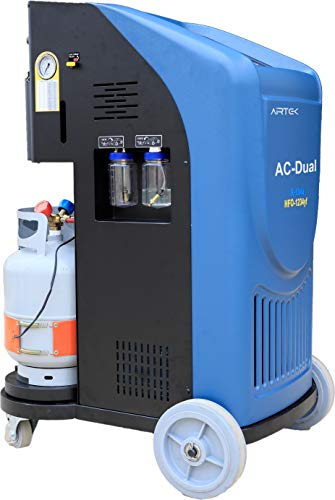
- Services R-134a and HFO1234yf
- Separate attached tanks for each refrigerant
- Fully automatic operation for domestic, foreign, EV, and hybrid vehicles
Best For: Mixed-vehicle repair shops needing dual-refrigerant coverage
Portable Recovery Specialist
Mastercool 69110 Recovery System
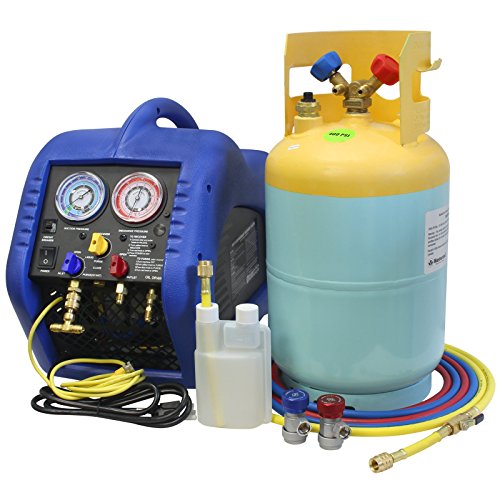
- SAE J2810-certified professional recovery
- Handles R134a, R12, R22, and HFC refrigerants
- Portable 48-pound design with included tank and hoses
Best For: Technicians prioritizing portable, multi-refrigerant recovery
Dedicated Dual-Mode Automation
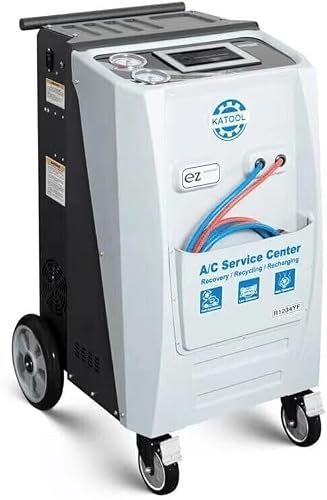
- Automates recovery, recycling, and recharge
- Multi-stage filtration with separated PAG and UV fluid lines
- Must be dedicated to R-134a or R-1234yf after first use
Best For: Fixed workshops choosing one refrigerant platform for long-term use
Portable All-Rounder

- Compact, lightweight 18-pound design
- Recovers both liquid and vapor
- Handles common CFC, HFC, and HCFC refrigerants
Best For: Portable residential, appliance, and smaller HVAC recovery jobs
Automated Automotive Station
VEVOR Fully Automatic Recovery Machine

- Automates recovery, vacuum, recharge, and oil replacement
- 10-inch touchscreen with vehicle database
- Supports R134a and 1234yf for gasoline and electric vehicles
Best For: Dedicated automotive shops handling routine A/C service
High-Speed Performer

- Twin-cylinder 3/4 HP compressor for fast recovery
- Oversized condenser and fan improve cooling
- Supports push-pull, liquid, and vapor recovery
Best For: Frequent, high-speed recovery work in demanding conditions
Workshop Dual-Refrigerant Pick
AC2100 Automatic Recovery & Recharge Machine
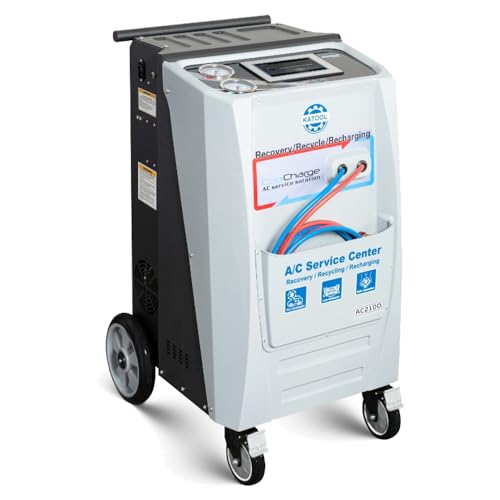
- Fully automatic recovery, evacuation, and recharge
- Supports R134a or R1234yf systems
- Independent oil and UV pipelines
Best For: Automotive workshops handling repeat AC service
Portable Conventional-Refrigerant Pick
VIVOHOME 3/4 HP Recovery Machine

- 3/4 HP oil-less compressor for vapor and liquid recovery
- Broad compatibility with conventional refrigerants
- 558 PSI shut-off and dual-stage filtration
Best For: Mobile service and compact workshop setups
High-Capacity Portable Pick
VIVOHOME A2L 1 HP Dual Cylinder Recovery Machine

- 1 HP twin-cylinder compressor and larger condenser
- Supports R32, R134a, R1234yf, R454B, and more
- Automatic or manual low-pressure bypass modes
Best For: Technicians handling varied, high-demand recovery work
Premium Hybrid-Ready Choice – Robinair 34788NI-H
For shops seeking professional automotive refrigerant machines with minimal hands-on monitoring, the Robinair 34788NI-H delivers a fully automatic workflow for R-134a systems. It recovers, evacuates, leak-tests, flushes, and recharges while adding useful hybrid and electric-vehicle support.
Best For: Professional technicians servicing R-134a vehicles, including hybrid and high-voltage electric-compressor systems.
Pros:
- Fully automatic recovery, evacuation, leak testing, and recharging with 98.5% efficiency.
- Supports high-voltage electric compressor A/C systems.
- Automatic oil draining, refrigerant refill, vacuum testing, and filter-life monitoring simplify service.
- Offers programmable vacuum time, flushing, and printer-compatible service records.
Cons:
- Large and heavy at 205 pounds, with a 36 x 25 x 49-inch footprint.
- Designed for R-134a rather than dual-refrigerant operation.
- Printer is not included.
The 34788NI-H is a strong investment for busy repair facilities that value automation, EV capability, and service documentation. Its size and single-refrigerant focus make it less suitable for mobile work or shops needing both R-134a and HFO1234yf support.
Dual-Refrigerant Shop Solution – Airtek AC-Dual
Airtek AC-Dual Fully Automatic Machine, HVAC Automotive Recovery and Recharge of R134 and HFO1234yf
Check Price On AmazonThe Airtek AC-Dual is one of the more flexible professional automotive refrigerant machines for shops working across vehicle generations. Its separate R-134a and HFO1234yf tanks allow technicians to service both refrigerants, including domestic, foreign, electric, and hybrid vehicles.
Best For: Automotive shops that need one fully automatic machine for both R-134a and HFO1234yf service.
Pros:
- Handles both R-134a and HFO1234yf refrigerant recovery and recharge.
- Fully automatic operation lets technicians enter information and walk away.
- Includes separate tanks for the two refrigerants and switches between systems in about 10 minutes.
- Software helps prevent incorrect oil injection, with local customer support available seven days a week.
Cons:
- Heavy at 275 pounds, which may limit portability.
- The supplied notes do not specify features such as printer compatibility or programmable vacuum timing.
- Oil injection is specified for non-EV and hybrid applications, so technicians must follow the machine’s compatibility guidance.
With dual-refrigerant capability and automatic operation, the AC-Dual can help a mixed-vehicle shop avoid buying separate machines. Its substantial weight makes it better suited to a fixed service bay than frequent mobile use.
Portable Recovery Specialist – Mastercool 69110 Recovery System
For technicians who primarily need dependable recovery rather than an all-in-one recharge platform, the Mastercool 69110 is a compact option among professional automotive refrigerant machines. It is SAE J2810 certified and supports several common refrigerants across automotive and refrigeration applications.
Best For: Mobile or shop-based technicians who need a portable, certified refrigerant recovery system.
Pros:
- Recovers R134a, R12, R22, and HFC refrigerants.
- SAE J2810 certified for professional recovery and oil separation.
- Includes a 30-pound DOT-approved tank and hoses for high- and low-side recovery.
- Features a 1/2 HP oil-less compressor, automatic low-pressure shutoff, and high-volume cooling fan.
Cons:
- It is a recovery system, not a fully automatic recovery, evacuation, leak-test, and recharge machine.
- Requires more technician involvement than walk-away automated equipment.
- The broad refrigerant range requires careful system and refrigerant identification before service.
The 69110 stands out when portability, refrigerant versatility, and certified recovery are the priorities. Choose a more automated machine if your workflow also requires integrated evacuation, leak testing, oil management, and recharge functions.
Dedicated Dual-Mode Automation – KATOOL AC2100
The KATOOL AC2100 is a fully automatic option for professional automotive refrigerant machines, combining recovery, recycling, and recharge in a closed-loop cycle. It supports either R-134a or R-1234yf, but the refrigerant choice must be made carefully because the machine cannot be switched after its first use.
Best For: Professional workshops that can dedicate the machine to one selected refrigerant type.
Pros:
- Performs integrated recovery, recycling, and recharge automatically.
- Uses multi-stage filtration and deep cleaning to reduce impurities.
- Separates PAG and UV fluids with individually controlled pipelines to help prevent mixing.
- Includes quick couplers for R-134a and R-1234yf modes.
Cons:
- After the first refrigerant is used, the machine cannot be switched to the other type.
- Changing the coupler is required to move from the default R-1234yf mode to R-134a before initial use.
- At 254 pounds, it is better suited to a fixed workshop position than mobile service.
The AC2100 offers convenient automation and careful fluid separation, but its permanent refrigerant commitment demands planning before installation. It is a sensible fit for a shop that knows which refrigerant it will service and wants a dedicated long-term machine.
Portable All-Rounder – Robinair RG3 Recovery Machine
For technicians comparing professional automotive refrigerant machines, the Robinair RG3 is a compact option for residential, appliance-sized, and smaller HVAC recovery work. Its oil-less compressor handles both liquid and vapor recovery while remaining easy to carry.
Best For: Portable recovery jobs involving common CFC, HFC, and HCFC refrigerants, including R-410A.
Pros:
- Compact 18-pound design with a comfortable carrying handle.
- Recovers both liquid and vapor refrigerant.
- Works with common CFC, HFC, and HCFC refrigerants.
- Automatic high-pressure shutoff activates above 550 PSI.
Cons:
- Its single-cylinder, 1/3 HP compressor is aimed at smaller recovery jobs.
- It has a smaller condenser and fan setup than the higher-output RG6.
The RG3 is a practical choice when portability and straightforward controls matter more than maximum recovery speed. Easy-to-read gauges and a two-valve layout make it approachable for routine service work.
Automated Automotive Station – VEVOR Fully Automatic Recovery Machine
Among professional automotive refrigerant machines, this VEVOR unit is designed as a full-service station for vehicle A/C work. It combines recovery, vacuum, filtration, recharging, and oil replacement, with compatibility for R134a and 1234yf systems.
Best For: Automotive shops servicing gasoline and electric vehicles, including standard and high-voltage A/C systems.
Pros:
- Fully automatic workflow combines recovery, vacuum, filtration, recharging, and oil replacement.
- 10-inch touchscreen displays operating steps and real-time data.
- Supports R134a and 1234yf refrigerants.
- Includes high- and low-pressure protection plus overcurrent protection.
Cons:
- At 252 pounds and over 43 inches tall, it is substantially less portable than recovery-only machines.
- Its vehicle-focused design is more specialized than a general-purpose portable unit.
With a built-in vehicle database and stated recovery accuracy of at least 98.5%, the VEVOR prioritizes repeatable automated service. Its size makes it better suited to a dedicated shop bay than mobile work.
High-Speed Performer – Robinair RG6 Recovery Machine
For demanding service environments, the Robinair RG6 stands out among professional automotive refrigerant machines for its twin-cylinder compressor and cooling capacity. It is built to recover liquid and vapor quickly, including in high-temperature conditions.
Best For: Technicians who need fast portable recovery across varied conditions and common refrigerant types.
Pros:
- Twin-cylinder, 3/4 HP oil-less compressor supports fast liquid and vapor recovery.
- Oversized condenser and fan help shorten cycle times.
- Supports push-pull, liquid, and vapor recovery modes.
- Built-in self-purge helps prevent incompatible refrigerant mixing.
Cons:
- At 27 pounds, it is heavier than the portable RG3.
- Its larger, higher-output design may be more than occasional small jobs require.
The RG6 is the stronger fit when recovery speed and hot-weather performance affect shop productivity. Its rugged shell, oversized gauges, and 550 PSI safety shutoff add practical features for frequent field use.
Workshop Dual-Refrigerant Pick – AC2100 Automatic Recovery & Recharge Machine
For shops comparing professional automotive refrigerant machines, the AC2100 stands out as a fully automatic option for recovering, evacuating, and recharging automotive AC systems. It supports either R134a or R1234yf, with dedicated quick couplers for each refrigerant type.
Best For: Automotive workshops that need automatic service for R134a or R1234yf systems and value separate oil and UV pipelines.
Pros:
- Automatically recovers, evacuates, and recharges refrigerant.
- Supports R134a or R1234yf with compatible quick couplers.
- Independent oil and UV modules use separate pipelines and solenoid valves.
- Filtration helps remove impurities during recovery.
Cons:
- Large and heavy at approximately 254 pounds.
- Refrigerant selection must be made carefully; once used with R1234yf, the unit cannot be switched to R134a.
- Switching to R134a requires replacing the coupler.
The AC2100 is best suited to a dedicated shop environment rather than mobile service. Its automation and independent fluid-management design are useful for repeat automotive AC work, but its size and refrigerant-switching limitation require planning.
Portable Conventional-Refrigerant Pick – VIVOHOME 3/4 HP Recovery Machine
The VIVOHOME VH471 is a practical choice among professional automotive refrigerant machines for technicians who need portable recovery equipment. Its 3/4 HP oil-less compressor handles vapor and liquid refrigerants, while the compact housing is suited to workshops and field service.
Best For: Mobile technicians and smaller shops needing broad compatibility, straightforward transport, and high-pressure protection.
Pros:
- Recovers vapor and liquid refrigerants with a 3/4 HP compressor.
- Compatible with refrigerants including R12, R134a, R22, R410A, R404A, and others.
- Automatic shut-off activates at 558 PSI, with overcurrent protection.
- Dual-stage filtration removes moisture, acids, fine contaminants, and particulates.
Cons:
- It is a recovery machine rather than a fully automatic recovery-and-recharge station.
- Its 29.7-pound weight is portable but still substantial for frequent carrying.
- The listed electrical specification is 120 volts and 4 amps, which may limit placement options.
With its compact dimensions, carrying handle, waterproof feet, and corrosion-resistant construction, the VH471 balances portability and workshop durability. It is a strong fit when refrigerant recovery is the priority and broad conventional-refrigerant compatibility matters.
High-Capacity Portable Pick – VIVOHOME A2L 1 HP Dual Cylinder Recovery Machine
For demanding service work, the VIVOHOME RR500 is one of the professional automotive refrigerant machines designed around faster recovery and wide refrigerant coverage. Its 1 HP twin-cylinder compressor, larger condenser, and high-speed fan support vapor and liquid recovery in automotive, residential HVAC, and commercial applications.
Best For: Technicians who want a portable, higher-capacity recovery unit with A2L-compatible refrigerant coverage and manual control options.
Pros:
- 1 HP twin-cylinder compressor supports rapid vapor and liquid recovery.
- Handles R32, R134a, R22, R410A, R1234yf, R454B, and more.
- Offers automatic and manual low-pressure bypass modes.
- Includes 558 PSI shut-off, overcurrent protection, and a pressure warning panel.
Cons:
- At 33 pounds, it is heavier than the smaller 3/4 HP model.
- It is a recovery unit, not a fully automatic recharge machine.
- The 110-volt AC specification may require attention to available power at the jobsite.
The RR500 is a capable middle ground between shop performance and field portability. Its dual-cylinder design, broad refrigerant compatibility, and selectable bypass modes give experienced technicians useful control across varied recovery jobs.
How We Picked the Best Professional Automotive Refrigerant Machines
We evaluated these machines around the needs of working automotive technicians and repair shops. The most important criteria were supported refrigerants, recovery and recharge functions, vacuum capability, automation, operating controls, portability, and suitability for regular shop use.
We also considered whether a machine is designed for a single refrigerant, supports both R-134a and R-1234yf, or can handle additional refrigerants such as R-12, R-22, or R-410A. Compatibility matters because using the wrong equipment can contaminate refrigerant, damage components, or create safety issues.
Quick Comparison
- Best for established R-134a service: Robinair 34788NI-H Premier.
- Best for dual-refrigerant automotive work: Airtek AC-Dual or the AC2100.
- Best for broad refrigerant versatility: Mastercool 69110.
- Best for portable recovery: Robinair RG3 or RG6.
- Best for high-capacity portable recovery: VIVOHOME A2L 1 HP Dual Cylinder.
- Best for a budget-conscious automated setup: KATOOL or VEVOR, subject to verified specifications and support.
Key Buying Factors for Professional Automotive Refrigerant Machines
Refrigerant Compatibility
Confirm the exact refrigerants your shop services before buying. R-134a and R-1234yf require appropriate equipment, fittings, identifiers, oil management, and service procedures. A dual-refrigerant machine can provide more flexibility, but only when it is clearly rated for both gases.
Automation and Service Functions
Fully automatic machines can combine recovery, recycling, vacuum, leak testing, oil management, and recharging in one guided process. These features may improve consistency and reduce labor, while simpler recovery-only units are often better for targeted evacuation or refrigerant transfer.
Recovery Performance and Capacity
Look at recovery speed, compressor design, cylinder capacity, filtration, and duty cycle. A busy shop benefits from faster recovery and a larger internal tank; mobile technicians may prefer a lighter unit that is easier to transport.
Safety and Serviceability
Prioritize clear controls, pressure protection, refrigerant identification, A2L support where applicable, accessible filters, and available replacement parts. Follow the manufacturer’s instructions and all local refrigerant-handling requirements.
Who Should Buy Which Professional Automotive Refrigerant Machines?
Choose a premium automated machine if your shop services multiple vehicles daily and needs repeatable, guided workflows. Select a dual-refrigerant model if your customer base includes both older R-134a vehicles and newer R-1234yf systems. A portable recovery machine is a better fit for mobile service, specialty work, or technicians who already have separate vacuum and charging equipment. For occasional use, a simpler unit may offer better value, provided its refrigerant rating and recovery capacity match the work.
