

10 Best Professional Laser Wheel Alignment Tools for Accurate Shop and DIY Setup in 2026

Choosing among professional laser wheel alignment tools means balancing measurement accuracy, vehicle coverage, installation space, and total operating cost. The right setup can make alignment work faster and more repeatable, whether you run a busy automotive shop or maintain performance vehicles at home.
This roundup compares complete 3D alignment machines, lift-compatible systems, and simpler front-end alignment kits so you can match the equipment to your workflow, budget, and wheel-size requirements.
Best 10 Professional Laser Wheel Alignment Tools Picks for 2026
Best Connected 3D System
KATOOL KT-AV9 Android 3D Wheel Aligner
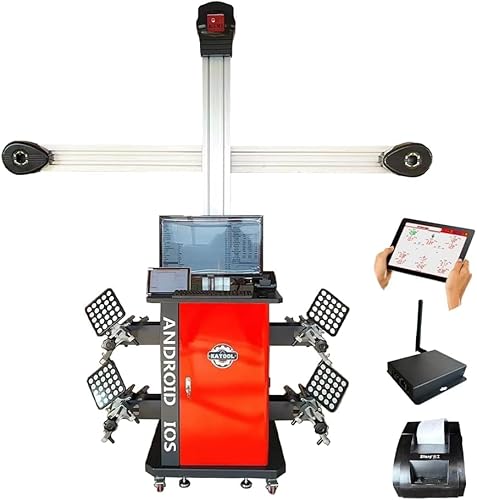
- 3D four-wheel camera measurement
- Displays readings on PC, phone, or tablet
- 5MP cameras with 1,500–3,000 mm range
Best For: Shops wanting flexible connected displays
Best Manual Value
RULLINE 3-in-1 Front End Alignment Kit

- Measures camber, caster, and KPI
- Fits 11–25-inch rims
- 4-ton, low-profile turn plates
Best For: DIY garages and small workshops
Best Heavy-Duty Shop System
KATOOL KT-5DA 5D Wheel Aligner

- Five-axis real-time imaging
- Guided computer-controlled software
- Built for high-volume service bays
Best For: Professional tire and performance shops
Best Portable DIY Kit
DIY Camber Caster Alignment Tool Set

- 3-in-1 front-end geometry gauge
- Low-profile 4-ton turn plates
- Padded case for storage and transport
Best For: Home garages and suspension work
Best Shop-Ready System

- 3D measurements for key alignment angles
- 80,000+ vehicle model database
- Mobile cabinet with guided workflow
Best For: Repair shops needing a complete alignment workstation
Best DIY Clamp Mount

- Fits 11- to 25-inch rims
- Magnetic plate holds a compatible gauge
- Tool-free, stainless steel construction
Best For: Home garages that already own a magnetic alignment gauge
Best Lift-Based Mobile Unit

- Works on post and scissor lifts
- Android and iOS software support
- Includes tablet, display, and printer
Best For: Lift-equipped workshops wanting a mobile 3D aligner
Top 3D Precision Pick

- 0.01° 3D measurement claim with 8MP camera
- 60,000+ vehicle database including EVs
- Supports 12–24-inch rims and printable reports
Best For: Busy garages needing broad vehicle coverage and guided diagnostics
Workshop Stability Pick
Yokoma 3D Wheel Alignment Machine

- 8MP camera with real-time 3D imaging
- Grounded, anti-glare target plates
- Stable alloy clamps for varied rim sizes
Best For: Repair shops prioritizing stable measurement and clamping
Connected Display Pick
KATOOL KT-AV9 3D Wheel Aligner

- Displays readings on PC, phone, and tablet
- Android and Apple iOS compatibility
- Four-wheel optical system with 5MP camera
Best For: Shops wanting flexible, synchronized display options
Best Connected 3D System – KATOOL KT-AV9 Android 3D Wheel Aligner
KATOOL KT-AV9 Android System 3D Wheel Alignment Machine Wheel Aligner Automotive Tire Alignment Tool
Check Price On AmazonThe KATOOL KT-AV9 is a professional laser wheel alignment tools alternative for shops seeking a camera-based 3D setup with flexible viewing. Its Android system can display readings on a PC, smartphone, tablet, or compatible iOS device, while the four-wheel optical system uses 5-megapixel cameras and supports a camera-to-turntable distance of 1,500–3,000 mm.
Best For: Automotive shops and technicians who want a 3D four-wheel alignment system with mobile and tablet display options.
Pros:
- Uses 3D camera measurement technology for four-wheel alignment.
- Supports synchronized readings across a PC, smartphone, and tablet.
- 5-megapixel cameras and a flexible 1,500–3,000 mm working distance.
Cons:
- The supplied notes do not specify included accessories or installation requirements.
- It is a substantial shop-oriented system rather than a simple DIY tool.
The KT-AV9 stands out when connected display options matter as much as alignment measurement. Confirm the installation details and included hardware before purchase.
Best Manual Value – RULLINE 3-in-1 Front End Alignment Kit
The RULLINE kit provides a lower-cost manual option for comparing professional laser wheel alignment tools with hands-on equipment. It combines turn plates, a camber/caster/KPI gauge, and a universal clamp for front-end alignment without a computerized or laser system.
Best For: DIY users and small workshops measuring front-end geometry on cars, trucks, and RVs.
Pros:
- Measures camber, caster, and kingpin inclination with one gauge.
- Universal clamp fits most 11–25-inch rims.
- Low-profile turn plates support up to 4 tons and rotate up to 60°.
Cons:
- Manual operation requires careful setup and interpretation.
- It is not a laser or computerized alignment system.
For users comfortable with manual measurements, the RULLINE kit covers key front-end angles at a fraction of the complexity of a 3D machine. It is best suited to patient, hands-on alignment work.
Best Heavy-Duty Shop System – KATOOL KT-5DA 5D Wheel Aligner
The KATOOL KT-5DA is a heavy-duty choice among professional laser wheel alignment tools, using a five-axis real-time imaging system for passenger vehicles and light trucks. Its high-definition cameras, computer-controlled software, reinforced alloy steel frame, and industrial-grade sensors are designed for busy service bays.
Best For: Tire centers, automotive shops, and performance garages handling frequent alignment work.
Pros:
- Five-axis real-time imaging provides live on-screen feedback.
- Software offers visual guidance to help streamline technician workflow.
- Factory-set calibration and shop-oriented construction support repeatable use.
Cons:
- At 309 pounds, it requires substantial space and handling.
- The large package may be excessive for occasional home use.
The KT-5DA is aimed at throughput and repeatability rather than portability. Its live imaging and guided software make it a strong fit for shops that can accommodate a full-size alignment machine.
Best Portable DIY Kit – DIY Camber Caster Alignment Tool Set
This compact manual kit offers a practical alternative to professional laser wheel alignment tools for garage-based front-end checks. It includes low-profile turn plates, a 3-in-1 camber/caster/KPI gauge, and a wheel clamp, with a padded gauge case and handle slots for storage and transport.
Best For: Home mechanics checking alignment before or after steering and suspension work on vehicles with 11–25-inch rims.
Pros:
- Covers camber, caster, and kingpin inclination measurements.
- Turn plates carry up to 4 tons and rotate 60° left or right.
- Includes a padded case, printed instructions, and portable components.
Cons:
- It measures front-end geometry manually and does not include a computerized system.
- Toe plates and ramps are not included.
- Setup requires following the specified plank and runway procedure.
The kit is well suited to repeat garage use when portability and straightforward storage matter. Buyers should plan for the separate ramps or toe-measurement equipment needed for a more complete alignment workflow.
Best Shop-Ready System – AUTOOL 3D Wheel Aligner
For repair shops seeking professional laser wheel alignment tools with broad vehicle coverage, the AUTOOL XC505 combines 3D camera measurement, a mobile cabinet, and guided software in one workstation. It measures toe-in, camber, caster, SAI, and thrust angle, while its short-distance run-out compensation suits tighter bays.
Best For: Auto repair shops that want a complete, mobile alignment workstation with extensive vehicle data and printed reports.
Pros:
- All-in-one wheeled cabinet includes a 32-inch monitor, printer, keyboard, and storage.
- Supports more than 80,000 vehicle models across over 100 brands, with custom-model capability.
- Voice guidance, LED indicators, expert mode, and accident-vehicle measurements support efficient shop workflows.
Cons:
- Its cabinet-style design requires more space and investment than a basic wheel-mounted gauge.
- The supplied notes do not specify the included target or wheel-clamp size range.
The AUTOOL is the most comprehensive option here for shops that need repeatable measurements, documentation, and broad vehicle-spec coverage rather than a simple DIY setup.
Best DIY Clamp Mount – AutoSolo 3D Alignment Clamp
The AutoSolo is a practical entry in professional laser wheel alignment tools for garage users who already have a compatible magnetic gauge. This rim-mounted clamp holds the gauge steady while you check camber and caster, with tool-free adjustment for repeated wheel changes.
Best For: Home-garage users who need a reusable rim clamp for camber and caster adjustments.
Pros:
- Adjusts to 11- to 25-inch rims for compact cars, trucks, and SUVs within that range.
- Magnetic adapter plate provides a flat mounting face for a compatible gauge.
- Tool-free knob, reversible locator pins, stainless steel construction, and wall-storage slots support repeated use.
Cons:
- This listing includes only the clamp and magnetic adapter plate, not a measuring gauge.
- It focuses on mounting and checking camber or caster rather than providing a complete alignment system.
Choose the AutoSolo when you want a durable, adjustable fixture for your own gauge. Confirm your rim size and budget separately for the required measuring instrument.
Best Lift-Based Mobile Unit – KATOOL 3D Wheel Aligner
The KATOOL AV6 is a lift-oriented choice among professional laser wheel alignment tools, designed to work on post and scissor lifts. Its Android and iOS software, included tablet, 30-inch display, and printer create a flexible setup with less routine software and system maintenance.
Best For: Workshops performing wheel alignments on post or scissor lifts and wanting a mobile 3D system with included display equipment.
Pros:
- Designed for use on both post lifts and scissor lifts.
- Uses Android and iOS systems to reduce software and system-maintenance demands.
- Includes a tablet, 30-inch display, mouse, keypad, and printer, with unlimited vehicle-specification memory.
Cons:
- At 229 pounds, the unit is substantially heavier than a simple clamp-based tool.
- The supplied notes do not list the vehicle database size or specific measurement features.
The KATOOL fits shops organized around lift work and wanting a dedicated 3D aligner with a generous display and included peripherals. Verify the available footprint and lift setup before purchasing.
Top 3D Precision Pick – INTSUPERMAI 3D Wheel Aligner
For shops seeking professional laser wheel alignment tools with broader automation, the INTSUPERMAI uses 3D imaging, an 8MP camera, and auto-tracking to measure alignment quickly. Its vehicle database and guided interface make it a versatile option for cars, trucks, SUVs, and EVs.
Best For: Busy garages and 4S shops that want wide vehicle coverage, guided operation, and reporting features.
Pros:
- Claims 0.01° measurement accuracy and faster data capture than conventional laser-guided systems.
- Includes specifications for more than 60,000 vehicle models, including hybrid and EV applications.
- Supports 12–24-inch rims and adds vibration analysis, accident-vehicle measurement, and printable reports.
- Offers one-push calibration, voice guidance, LED indicators, and more than 20 languages.
Cons:
- Its large 108.2-by-21.6-by-100-inch dimensions require substantial shop space.
- The system runs on 110V AC power, so placement near a suitable outlet is necessary.
The INTSUPERMAI stands out when database breadth and integrated diagnostics matter as much as alignment measurement. Confirm that your facility can accommodate its full-size layout before buying.
Workshop Stability Pick – Yokoma 3D Wheel Alignment Machine
The Yokoma 3D wheel aligner is a practical choice for workshops comparing professional laser wheel alignment tools with camera-based systems. Its 3D imaging, 8MP industrial camera, and anti-glare target plates are designed to support consistent data collection during alignment checks and adjustments.
Best For: Repair shops, 4S stores, and service centers that prioritize stable clamping and real-time monitoring.
Pros:
- Uses 3D imaging and an 8MP camera to display real-time tire and alignment data.
- Shock-absorbing, high-reflectivity target plates and a grounding pin help reduce measurement interference.
- Aluminum-alloy construction and rapid-locking clamps support stable, long-term workshop use.
- Designed for passenger cars and commercial vehicles, with anti-slip protection intended to help prevent rim scratches.
Cons:
- The 291-pound unit and 108.2-by-21.6-by-100-inch dimensions may be difficult to accommodate in smaller bays.
- It requires 110V AC power and does not list a vehicle database size in the supplied specifications.
This Yokoma model emphasizes stable hardware and signal quality rather than a long list of extra diagnostic functions. It is worth considering when dependable workshop positioning and real-time monitoring are the main priorities.
Connected Display Pick – KATOOL KT-AV9 3D Wheel Aligner
KATOOL KT-AV9 Android System 3D Wheel Alignment Machine Wheel Aligner Automotive Tire Alignment Tool
Check Price On AmazonThe KATOOL KT-AV9 offers a connected approach to professional laser wheel alignment tools, using Android-based 3D camera measurement and compatible Apple devices as display terminals. Readings can appear simultaneously on a PC, smartphone, and tablet, which may help streamline work around the alignment bay.
Best For: Automotive shops that want flexible display options and a compact working-distance requirement.
Pros:
- Android-based 3D measurement system supports smartphones and tablets as display terminals.
- Synchronizes alignment readings across a PC, smartphone, and tablet.
- Uses a four-wheel positioning optical system with a 5MP camera.
- Specifies an effective working distance of 1,500–3,000 mm.
Cons:
- The 5MP camera has lower stated resolution than the 8MP cameras listed for the other models.
- Operation requires keeping the machine within 6 feet of the target and maintaining a 5°–15° tilt angle.
- The supplied notes do not specify a vehicle database size or included reporting functions.
The KT-AV9 is especially appealing for shops that value device flexibility and synchronized readings. Its operating-angle and distance requirements should be checked against your existing bay layout before purchase.
How We Picked These Professional Laser Wheel Alignment Tools
We grouped the selected products by their intended use rather than treating every alignment tool as equivalent. Full 3D systems are evaluated for camera or sensor design, vehicle-database coverage, display and guidance features, lift compatibility, and shop-oriented workflow. More basic kits are considered for turn-plate design, camber and caster measurement, wheel-clamp range, portability, and suitability for occasional front-end adjustments.
Because specifications and included accessories can vary by seller, confirm the current package contents, software support, power requirements, calibration process, and installation dimensions before ordering. Professional alignment equipment also requires a level surface and correct vehicle setup to produce dependable readings.
Quick Comparison
| Tool type | Best for | Main advantage | Watch for |
|---|---|---|---|
| Full 3D cabinet system | High-volume repair shops | Fast guided measurements and broad vehicle data | Price, space, calibration, and installation |
| Lift-compatible 3D machine | Shops using post or scissor lifts | Flexible bay integration | Lift and mounting compatibility |
| Turn-plate and gauge kit | DIY users and basic front-end work | Lower cost and simpler setup | More manual measurement and limited automation |
| Clamp or magnetic gauge | Quick camber and caster checks | Portable, compact operation | Not a complete four-wheel alignment system |
Key Buying Factors for Professional Laser Wheel Alignment Tools
Measurement Method and Accuracy
3D camera systems can provide guided, repeatable readings without relying on traditional wired sensors, while manual gauges and turn plates are useful for targeted adjustments. Look for clear calibration instructions, stable clamps, and a setup that keeps the measuring hardware aligned with the wheel.
Vehicle Coverage and Software
A large vehicle database is valuable when servicing many makes and models, but database size alone does not guarantee usability. Check whether updates are included, how specifications are entered, and whether the system supports aftermarket wheels, modified suspension, commercial vehicles, or custom target values.
Workspace and Installation
Measure bay width, ceiling height, lift position, monitor location, and power availability. Cabinet systems need dedicated floor space, while lift-compatible machines may require specific mounting points or a precisely level platform.
Wheel Range and Included Accessories
Confirm the supported rim diameter and tire profile, then verify that turn plates, clamps, targets, steering locks, cameras, and compensation accessories are included. Replacement parts and local technical support can matter as much as the initial purchase price.
Who Should Buy Which Professional Laser Wheel Alignment Tools?
Choose a complete 3D cabinet system if you operate a professional shop and need faster throughput, guided procedures, and broad vehicle coverage. A lift-compatible 3D machine is a better fit when your existing bay is built around a post or scissor lift. For occasional repairs, restoration work, or a home garage, a turn-plate kit or camber/caster gauge offers a more affordable entry point, provided you are comfortable with manual measurements. Portable clamp-style tools are best for checking camber and caster or supporting suspension setup, not replacing a complete alignment rack. Whichever option you choose, prioritize documented calibration, accurate vehicle specifications, a truly level working surface, and accessible support over headline features alone.
