

10 Best Vehicle Ramps for DIY Mechanics in 2026: Safe, Stable Lifting Picks

The best vehicle ramps for DIY mechanics make routine jobs such as oil changes, inspections, and underbody repairs easier without requiring a full shop lift. The right pair should match your vehicle’s weight, ground clearance, tire size, and available garage space.
We selected 10 ramps spanning lightweight portable designs, heavy-duty steel models, low-profile options, and hydraulic systems. Use the guide below to compare capacity, lift height, traction, storage, and overall suitability before buying.
Best 10 Vehicle Ramps for DIY Mechanics Picks for 2026
Reliable Everyday Lift
MaxxHaul 50515 6.25-Inch Car Ramps

- 6.25-inch lift for underbody access
- 6,500-lb capacity per pair
- Grooved surface and rubber base stops
Best For: Routine home maintenance on compatible vehicles
Heavy-Duty Poly Support
Ironton 12,000-Lb. Poly Car Ramp Set

- 12,000-lb capacity per pair
- 6,000-lb rating per ramp
- 12-inch tread with non-skid surface
Best For: Larger trucks, SUVs, vans, and heavy-duty garage work
High-Capacity Low-Profile Option

- 13,000-lb gross vehicle weight rating
- 6.1-inch lift with 17-degree slope
- 12-inch width and multiple traction features
Best For: High-capacity maintenance on cars, trucks, and SUVs
Flexible Portable Design
MaxxHaul 50709 Detachable Car Ramps

- Detachable sections free under-vehicle space
- 6.5-inch lift and 6,500-lb pair capacity
- Handles and optional extensions improve flexibility
Best For: Portable garage work on hard, level surfaces
Heavy-Duty Pick
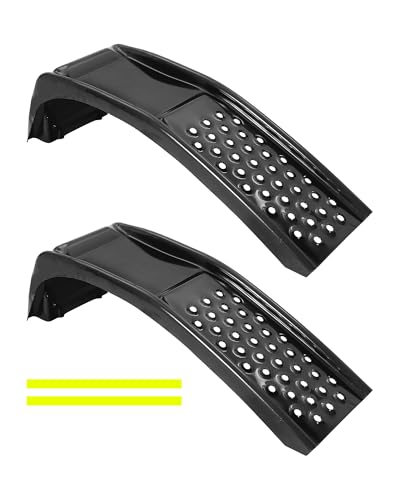
- 8,000-pound total capacity
- 8-inch lift for maintenance access
- Solid steel, anti-slip design
Best For: DIY mechanics needing high-capacity ramps for cars, trucks, or SUVs
Easy-Storage Choice
MaxxHaul Stackable Vehicle Ramps

- 6,500-pound capacity per pair
- 6.7-inch lift height
- Stackable with built-in handles
Best For: DIY mechanics prioritizing portability and compact garage storage
Low-Profile Pick

- 2.6-inch lift for low-chassis cars
- 10-inch-wide tire platform
- Lightweight, portable PP construction
Best For: Sports cars, tuners, and other low-clearance vehicles
Best Everyday Garage Ramps
Amazon Basics Low-Profile Car Ramps
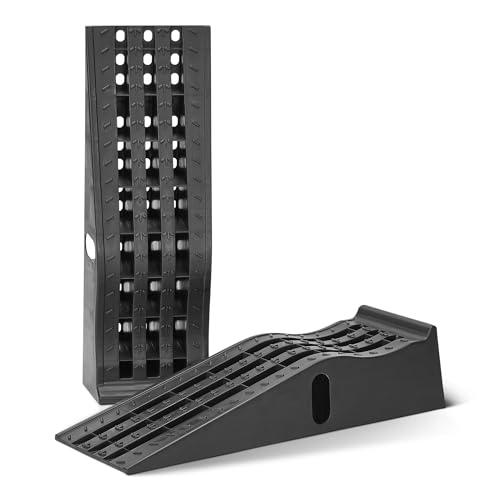
- 3,250-pound capacity per ramp
- Textured traction surface and rubber stops
- Lightweight reinforced-plastic construction
Best For: Home-garage oil changes and routine maintenance
Best Heavy-Load Single Ramp
VEVOR 20,000-Lb Vehicle Service Ramp

- 20,000-pound stated load capacity
- 5.5-inch lift for inspections and repairs
- Portable PP design with carry handle
Best For: Tandem-wheel vehicles, trucks, and RV service
Best Adjustable Hydraulic Ramps
Heavy-Duty Steel Hydraulic Car Ramps

- 11,065-pound stated capacity
- Adjustable 9- to 14.3-inch lift
- Dual integrated 5-ton hydraulic pumps
Best For: Heavier vehicles and adjustable underbody access
Reliable Everyday Lift – MaxxHaul 50515 6.25-Inch Car Ramps
For DIY mechanics looking for practical vehicle ramps, the MaxxHaul 50515 offers a 6.25-inch lift and a 6,500-pound paired capacity. Its grooved plastic surface and rubber base stops are designed to help keep tires and ramps stable during routine underbody work.
Best For: Home mechanics performing maintenance on cars and light-to-moderate trucks.
Pros:
- Supports up to 3,250 pounds per ramp and 6,500 pounds per pair.
- Provides 6.25 inches of lift for access beneath the vehicle.
- Deep ridges improve tire traction, while rubber stops help limit movement.
- Heavy-duty plastic construction is lighter than comparable steel ramps.
Cons:
- The 6,500-pound pair capacity may not suit heavier vehicles.
- The 90-day manufacturer warranty is relatively limited.
This is a straightforward option for routine garage jobs when its capacity matches the vehicle. Verify the vehicle weight and use the ramps on a suitable, stable surface before driving onto them.
Heavy-Duty Poly Support – Ironton 12,000-Lb. Poly Car Ramp Set
Among vehicle ramps for DIY mechanics, the Ironton Poly Car Ramp Set stands out for its 12,000-pound gross vehicle weight capacity. The high-impact poly construction, non-skid tread, rubber feet, and 12-inch width make it suited to a broad range of cars, trucks, SUVs, and vans.
Best For: DIY mechanics who need high-rated ramps for larger vehicles, including 3/4-ton and 1-ton trucks.
Pros:
- Rated for 6,000 pounds per ramp and 12,000 pounds per pair.
- Fits cars, trucks, SUVs, and vans with a 12-inch-wide tread surface.
- Non-skid tread helps maintain tire grip while loading.
- Rubber feet help anchor the ramps to the ground.
Cons:
- The ramps are limited to an 8.5-inch overall height, which may not meet every repair need.
- Vehicle and ramp compatibility still depends on tire width, clearance, and actual weight.
This is the strongest capacity choice in the group for mechanics working on heavier vehicles. Confirm the vehicle’s loaded weight and use a firm, appropriate surface despite the ramps’ traction features.
High-Capacity Low-Profile Option – ROBLOCK Heavy Duty Car Ramps
The ROBLOCK ramps combine a 6.1-inch lift with a 13,000-pound gross vehicle weight rating, making them a compelling option for DIY mechanics who want substantial capacity without a tall approach. A 17-degree slope, 12-inch width, tire grooves, drainage texture, and bottom pads are built into the design.
Best For: Home garages and service areas handling cars, pickups, SUVs, light trucks, and light agricultural vehicles.
Pros:
- 13,000-pound gross vehicle weight capacity.
- 6.1-inch lift provides working clearance under the chassis.
- 12-inch width, curved tire grooves, and bumper strips support positioning.
- Honeycomb plastic construction and carry openings help balance strength and portability.
Cons:
- The 6.1-inch lift is lower than some taller ramp options.
- Plastic construction may not appeal to mechanics who prefer steel ramps.
- Capacity claims should still be matched against the vehicle’s actual weight and loading conditions.
ROBLOCK is a capacity-focused pick with practical stability and handling features. Its moderate lift makes it useful for oil changes and similar work, provided the ramps are used as directed on a stable surface.
Flexible Portable Design – MaxxHaul 50709 Detachable Car Ramps
For DIY mechanics who value storage flexibility, the MaxxHaul 50709 uses detachable ramp sections to free space beneath the vehicle and accepts optional sectional extensions. It provides a 6.5-inch lift, a 6,500-pound paired capacity, and built-in side handles for moving the 33-pound set.
Best For: Mechanics who need portable ramps with a detachable layout and potential length extension.
Pros:
- Detachable sections can create more working space beneath the vehicle.
- Optional extensions can increase the overall ramp length.
- Supports 3,250 pounds per ramp and 6,500 pounds per pair.
- Built-in handles improve portability.
Cons:
- Extensions are sold separately.
- The 33-pound set is heavier than some compact plastic ramp pairs.
- It must be used on a hard, smooth, level surface—not dirt, gravel, grass, slopes, or other unstable areas.
The 50709 is a specialized choice for mechanics who want adaptable ramp sections rather than a simple fixed design. Its surface-use restrictions are important, so plan for a properly prepared garage or driveway area.
Heavy-Duty Pick – Garvee 8-Inch Steel Car Ramps
For DIY mechanics seeking vehicle ramps for DIY mechanics, the Garvee ramps provide an 8-inch lift and a solid-steel build for routine work on cars, trucks, and SUVs. Their 8,000-pound total capacity makes them suited to oil changes, inspections, tire rotations, and general maintenance.
Best For: Home garages and DIY maintenance requiring substantial lift height and heavy-duty steel construction.
Pros:
- Supports up to 8,000 pounds total, or 2,000 pounds per ramp.
- Provides an 8-inch lift for added under-vehicle working room.
- Solid steel construction and an anti-slip structure support stability.
- Black coating helps resist rust and wear for indoor or outdoor use.
Cons:
- At 32.7 pounds, this pair is heavier than the plastic alternatives.
- The 8-inch lift may be more than needed for low-clearance vehicles.
Choose these ramps when capacity and lift height matter more than minimizing weight. Verify that your vehicle’s tires and clearance are compatible before use, and follow safe ramp-placement practices.
Easy-Storage Choice – MaxxHaul Stackable Vehicle Ramps
MaxxHaul 50947 Lift Stackable Vehicle Car Ramp 6500 LBS Capacity Per Pair 3250 LBS Per Ramp 2 Pack
Check Price On AmazonThe MaxxHaul 50947 is a practical option for DIY mechanics who want vehicle ramps for DIY mechanics that are easier to carry and store. Its stackable polypropylene design provides a 6.7-inch lift, ribbed traction, and a 6,500-pound capacity per pair.
Best For: Garages and automotive enthusiasts who value portable, stackable ramps for routine maintenance.
Pros:
- Rated for 6,500 pounds per pair, or 3,250 pounds per ramp.
- Stackable construction simplifies storage and transportation.
- Built-in side handles improve portability.
- Ribbed platform surfaces provide added tire traction.
Cons:
- Its 6.7-inch lift is lower than the Garvee ramp’s 8-inch lift.
- Polypropylene construction may not appeal to buyers specifically seeking steel ramps.
This is a balanced pick for users who need meaningful clearance without storing bulky, non-stackable equipment. Check the vehicle’s weight and tire fit against the stated per-ramp capacity before use.
Low-Profile Pick – ROBLOCK 2.6-Inch Car Ramps
For low-clearance cars, the ROBLOCK ramps offer a low-profile approach to vehicle ramps for DIY mechanics. They raise the tire position 2.6 inches, use a 17-degree slope, and provide a 10-inch-wide platform intended for sports cars, tuners, and other low-chassis vehicles.
Best For: Low-profile cars needing modest lift for jack access, inspections, replacements, or maintenance.
Pros:
- Designed specifically for low-chassis vehicles and sports cars.
- Wide 10-inch platform helps accommodate wider modified tires.
- Honeycomb PP construction, curved surfaces, and non-slip pads support traction.
- Lightweight at 5.3 pounds per pair for easy carrying and storage.
Cons:
- The 2.6-inch lift may not provide enough room for every repair task.
- These ramps are not intended as a substitute for greater-height service ramps.
- Vehicle ground clearance and maintenance requirements must be checked before purchase.
The ROBLOCK set is best when approach angle and tire clearance are the main concerns, not maximum underbody space. Confirm the 2.6-inch lift suits your specific vehicle and job before relying on it.
Best Everyday Garage Ramps – Amazon Basics Low-Profile Car Ramps
For DIY mechanics seeking vehicle ramps for DIY mechanics, this Amazon Basics two-pack offers a straightforward option for oil changes, underbody access, and routine garage maintenance. Each reinforced-plastic ramp supports up to 3,250 pounds, with a textured traction surface and rubber base stops for added stability on solid, level ground.
Best For: Home-garage oil changes and general maintenance on compatible vehicles.
Pros:
- Supports up to 3,250 pounds per ramp, or 6,500 pounds per pair.
- Textured traction surface, anti-slip technology, and rubber base stops help limit movement.
- At 9.24 pounds per ramp, the pair is relatively easy to handle and store.
- 35.51-inch length and 8.07-inch height provide a gradual approach and useful underbody clearance.
Cons:
- Designed for solid, level surfaces rather than uneven work areas.
- The plastic construction may not suit buyers specifically seeking steel ramps.
With its two-ramp format, high stated capacity, and traction-focused design, this is a practical pick for routine DIY maintenance where portability and simple setup matter.
Best Heavy-Load Single Ramp – VEVOR 20,000-Lb Vehicle Service Ramp
Among vehicle ramps for DIY mechanics, this VEVOR ramp stands out for its exceptionally high stated capacity and portable single-ramp design. It lifts a vehicle 5.5 inches and uses wear-resistant polypropylene, a concave profile, and a textured surface for routine tire replacement, inspections, and repair work.
Best For: Tandem-wheel vehicles, trucks, and RV-related service tasks requiring a portable high-capacity ramp.
Pros:
- Rated for up to 20,000 pounds and intended for a range of tandem-wheel vehicles.
- 5.5-inch lift creates additional room for inspections and repairs.
- Wear-resistant PP construction is designed to resist deformation and cracking.
- Integrated handle and 6.8-pound weight support easy transport.
Cons:
- This listing includes one ramp, so paired-wheel lifting requires an additional unit.
- The 5.5-inch lift may provide less clearance than taller ramp systems.
This is a specialized option for buyers prioritizing load rating and portability. Confirm that a single ramp matches the intended wheel arrangement and service task before purchasing.
Best Adjustable Hydraulic Ramps – Heavy-Duty Steel Hydraulic Car Ramps
For DIY mechanics who need more than a fixed incline, these hydraulic steel ramps combine lifting and ramp access in a two-piece set. Dual integrated 5-ton hydraulic pumps support vehicles up to 11,065 pounds, while the adjustable 9- to 14.3-inch height range suits oil changes and undercarriage repairs.
Best For: Home garages and workshops needing adjustable lift height for heavier vehicles and underbody work.
Pros:
- Welded structural-steel construction is designed to resist deformation and rust.
- Dual hydraulic pumps provide an adjustable 9- to 14.3-inch lift range.
- Anti-slip treads and automatic locking mechanisms support stable operation.
- Two-piece configuration supports use under both sides of a vehicle.
Cons:
- At 45 inches long and up to 14.3 inches high, these ramps need more storage space.
- Hydraulic operation is more involved than a simple fixed plastic ramp.
- Use requires level ground, the parking brake engaged, and centered wheels.
This set is the most capable choice here for adjustable clearance and heavier-duty garage work, provided you have adequate storage space and follow the stated positioning and safety guidance.
How We Picked the Best Vehicle Ramps for DIY Mechanics
We compared the selected ramps by rated capacity, lift height, construction, tire-contact design, portability, and intended use. We also considered whether each model is better suited to cars, crossovers, trucks, or low-clearance vehicles. Capacity ratings are important, but they should never be treated as permission to exceed the manufacturer’s instructions or ignore proper wheel chocking and parking-surface requirements.
Because product specifications can vary by configuration, verify the current listing for exact dimensions, per-ramp limits, included hardware, and compatibility with your vehicle before purchase.
Quick Comparison
| Ramp Type | Best For | Main Advantage | Watch For |
|---|---|---|---|
| Low-profile plastic or composite | Cars and home garages | Lightweight and easy to store | May provide less lift height |
| Heavy-duty steel | Trucks and frequent repairs | High strength and durability | Heavier and less portable |
| Stackable ramps | Adjustable storage and lift needs | Flexible height or nesting | Confirm stacking procedure |
| Extendable ramps | Mixed vehicle sizes | Adaptable approach length | More moving parts to inspect |
| Hydraulic ramps | Higher lifting requirements | Greater adjustable lift | More complex and costly |
Key Buying Factors for Vehicle Ramps for DIY Mechanics
Capacity and Load Distribution
Choose ramps with a combined rating comfortably above the vehicle’s actual weight. Check whether the advertised figure applies per ramp or per pair, and remember that uneven loading can place more weight on one ramp.
Lift Height and Approach Angle
Higher ramps create more working room, but a steep approach can be difficult for low cars. Low-profile designs are generally easier to use with performance vehicles, while taller ramps may better suit trucks and SUVs.
Traction and Tire Support
Look for textured or deeply grooved surfaces, raised side guides, and a stable wheel stop. Use ramps only on firm, level ground, and ensure the tires are fully seated before working underneath the vehicle.
Materials, Size, and Storage
Steel ramps typically offer strong long-term durability but are heavier. Polymer ramps are easier to carry and resist corrosion. Measure your garage and tire width, and consider whether the ramps can be stacked or stored vertically.
Safety and Compatibility
Follow the instructions, chock the wheels that remain on the ground, engage the parking brake, and never rely on ramps that show cracks, bends, unstable welds, or damaged traction surfaces. Ramps are not a substitute for appropriately rated jack stands when the vehicle must be lifted beyond the ramp contact points.
Who Should Buy Which Vehicle Ramps for DIY Mechanics?
Choose a low-profile ramp if you mainly service cars with limited ground clearance. A heavy-duty steel option makes more sense for frequent work or heavier trucks. Stackable or extendable designs suit buyers who want easier storage or greater flexibility across multiple vehicles. Hydraulic ramps are best for experienced DIY mechanics who specifically need adjustable, higher lifting capability and are prepared to maintain the mechanism. For occasional oil changes in a compact home garage, prioritize stable traction, manageable weight, and a lift height that gives enough access without making loading difficult.
