

10 Best Wheel Alignment Machines for DIY Mechanics in 2026: Top Home Garage Picks

Accurate alignment can improve tire life, steering feel, and driving stability, but a professional shop visit is not always necessary for basic checks and adjustments. The right home setup can help DIY mechanics measure toe, camber, and caster with greater confidence.
These 10 options range from portable alignment systems to focused toe plates and magnetic gauges. Use the guide below to match the tool’s measurement range, precision, and setup requirements to your vehicle and garage.
Best 10 Wheel Alignment Machines for DIY Mechanics Picks for 2026
Best Portable Digital Kit
4th Gen Pro Wheel Alignment Kit

- Measures caster, camber, and toe
- Fits 13–22-inch wheels
- Hands-free and needs no level surface
Best For: DIY mechanics seeking portable digital alignment checks
Best Complete Rim-Mount System

- Complete caster, camber, and toe kit
- Fits 13–18-inch rims
- Includes digital gauge and carrying case
Best For: Home garages, track use, and professional applications
Best Budget Home Mechanic Kit
Portable 4-Wheel Alignment Kit

- Checks caster, camber, and toe
- Supports wheels up to 18 inches
- Lightweight aluminum design with instructions
Best For: Occasional home alignment checks and tire-wear diagnosis
Best Compact Angle Gauge
3-in-1 Camber Caster Kingpin Tool

- Measures camber, caster, and kingpin
- Magnetic, clamp-free mounting
- Not compatible with alloy or aluminum rims
Best For: Steel-wheel suspension tuning and angle checks
Best Toe-Adjustment Kit
ORGANPRO Digital Toe Alignment Tool

- Digital angle finder and dual tape measure support basic toe adjustments.
- Durable 2 mm steel plates are made for repeated garage use.
- Broad vehicle compatibility, with a stated under-17 mm nut limit.
Best For: DIY front-end toe checks and rough adjustments
Best Multi-Angle Gauge
AutoSolo Magnetic Camber Caster Gauge
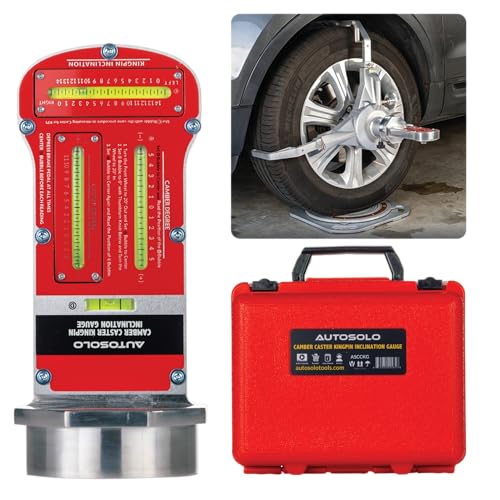
- Reads camber, caster, and kingpin inclination from one gauge.
- Power-free bubble-vial design needs no battery or software.
- Magnetic mounting works on steel wheels, discs, or bare hubs.
Best For: At-home front-end angle checks and diagnosis
Best Caliper-Free Toe Plates
PICURA Upgraded Toe Alignment Tool

- Taller, reinforced plates are designed to avoid caliper removal.
- Dual tape measures provide 1/32-inch markings for distance checks.
- Detachable construction folds for compact garage or vehicle storage.
Best For: Quick DIY toe measurements across compatible vehicles
Most Versatile Pick
Upgraded 4-in-1 Wheel Alignment Tool Kit

- Measures camber, caster, toe-in, and toe-out
- No caliper removal or electronic equipment required
- Folds approximately 40% smaller for storage
Best For: DIY users needing multiple alignment measurements
Best for Simple Toe Checks
Stainless Steel Toe Alignment Plates

- Reinforced stainless steel construction
- Tape slots help steady measurement heads
- Fits most cars, trucks, and SUVs
Best For: Basic toe checks in home garages and driveways
Best Budget Garage Tool
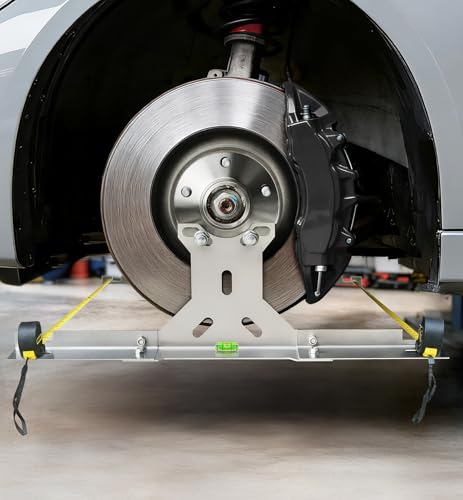
- Includes dual tape measures for quick toe checks
- No calibration or electronics needed
- Stainless steel plates suit repeated garage use
Best For: Beginner-friendly front-end toe checks
Best Portable Digital Kit – 4th Gen Pro Wheel Alignment Kit
For DIY mechanics comparing wheel alignment machines for DIY mechanics, this portable digital kit offers a practical way to check caster, camber, and toe on 13–22-inch wheels. Its hands-free design does not require a level surface, making it convenient for home garages and mobile work.
Best For: DIY mechanics who want a portable, affordable alignment solution with digital measurements and broad wheel-size compatibility.
Pros:
- Measures caster, camber, and toe.
- Fits 13–22-inch wheels.
- Hands-free operation with no level surface required.
- Made in the USA by a family-owned manufacturer.
Cons:
- Manual operation may require more involvement during setup.
- The notes do not specify included carrying or storage accessories.
This is a strong option when portability and wide fitment matter more than a fully automated shop-style system. The digital readout and surface flexibility make it especially adaptable for home use.
Best Complete Rim-Mount System – QuickTrick Alignment 416405
Among wheel alignment machines for DIY mechanics, the QuickTrick 416405 stands out as a complete, portable system for 13–18-inch rims. It includes the measurement and setup accessories needed to check caster, camber, and toe in a home garage, track environment, or professional shop.
Best For: DIY mechanics who want a comprehensive rim-mounted kit with a digital gauge, carrying case, and accessories included.
Pros:
- Includes a dual-side aluminum frame, digital gauge, tape measures, pins, wrench, and instructions.
- Designed for 13–18-inch wheels.
- Lightweight 10-pound construction supports portability.
- Includes a rugged carrying case.
Cons:
- Wheel fitment is narrower than kits designed for larger rims.
- The supplied notes do not provide a measurement range for the digital gauge.
With its complete accessory package and carrying case, this QuickTrick system is well suited to users who prefer an organized kit rather than sourcing components separately. Its 13–18-inch range should be checked against the vehicle before purchase.
Best Budget Home Mechanic Kit – Portable 4-Wheel Alignment Kit
For shoppers seeking wheel alignment machines for DIY mechanics on a budget, this portable 4-wheel kit provides a straightforward way to check caster, camber, and toe. It is designed for hard-surface use and supports standard and offset wheels up to 18 inches.
Best For: Home mechanics checking alignment after curb impacts, minor bumps, tire replacements, or routine tire-wear concerns.
Pros:
- Checks caster, camber, and toe.
- Works with standard and offset wheels up to 18 inches.
- Includes instructions and is designed for users without prior alignment experience.
- Lightweight 6.44-pound aluminum construction.
Cons:
- Requires a hard surface for use.
- Its stated fitment is limited to wheels up to 18 inches.
This kit makes sense for budget-conscious owners who want a dedicated alignment-checking tool without the size or weight of shop equipment. Its beginner-friendly positioning is useful for occasional maintenance and post-repair checks.
Best Compact Angle Gauge – 3-in-1 Camber Caster Kingpin Tool
This compact gauge is a focused alternative to larger wheel alignment machines for DIY mechanics. Its magnetic base measures camber, caster, and kingpin inclination, making it useful for suspension tuning and alignment checks when working with compatible steel wheels, hubs, or brake discs.
Best For: DIY suspension work on cars and light trucks with steel wheels or exposed steel hub surfaces.
Pros:
- Measures camber, caster, and kingpin inclination.
- Magnetic base attaches without clamps.
- Provides stated ranges for camber, caster, and kingpin measurements.
- Includes a storage case and arrives pre-calibrated for camber.
Cons:
- Not compatible with alloy or aluminum rims.
- Reliable use requires a level surface.
- Manual adjustment is needed for caster and kingpin settings.
This tool is best viewed as a specialized angle gauge rather than a complete multi-wheel alignment system. Its magnetic, hands-free mounting is convenient, but compatibility with steel mounting surfaces should be confirmed first.
Best Toe-Adjustment Kit – ORGANPRO Digital Toe Alignment Tool
For DIY mechanics comparing wheel alignment machines for DIY mechanics, the ORGANPRO kit offers a straightforward way to check and adjust front-end toe without complex calibration or electronics. Its toe plates, digital angle finder, and dual tape measure are designed for basic adjustments on many vehicles.
Best For: Home garages needing a practical toe-in or toe-out adjustment tool after suspension, steering, tire, or shock work.
Pros:
- Includes toe plates, digital angle finder, dual tape measure, and storage bag.
- Heavy-duty 2 mm steel plates resist deformation and corrosion.
- Works with many cars, SUVs, trucks, ATVs, SXSs, and dirt bikes with nuts under 17 mm.
- Assembly takes under a minute and requires no complex electronics.
Cons:
- Not a replacement for a high-precision computerized four-wheel alignment system.
- Not intended for fine-tuning complex multi-link suspensions.
- The tape measure may have a 1 mm margin of error.
This is a useful garage-level solution for rough front-end toe corrections, but users should follow the setup instructions carefully and keep the steering wheel straight and locked. Choose a professional alignment service when precise four-wheel measurements are required.
Best Multi-Angle Gauge – AutoSolo Magnetic Camber Caster Gauge
Among wheel alignment machines for DIY mechanics, this AutoSolo gauge is a compact, power-free option for measuring front-wheel camber, caster, and kingpin inclination. It uses bubble vials and a magnetic mount, making it suitable for home checks on level ground.
Best For: DIY mechanics diagnosing front-end angles after ride-height changes, coilover installation, or uneven tire wear.
Pros:
- Measures camber, caster, and kingpin inclination with one gauge.
- Requires no battery, charging, software, or calibration electronics.
- Magnetic base mounts to steel wheels, brake discs, or clean bare hubs.
- Includes a composite carry case for storage and transport.
Cons:
- Turn plates, wheel clamps, ramps, and the alloy-wheel adapter plate are not included.
- Designed for cars and light trucks rather than broad vehicle categories.
- Caster measurement requires a 20-degree sweep and calculation.
This gauge is best viewed as a measurement and diagnostic tool rather than a complete alignment setup. It can provide useful angle readings at home, but the required mounting surface and additional equipment should be considered before buying.
Best Caliper-Free Toe Plates – PICURA Upgraded Toe Alignment Tool
For DIY mechanics seeking wheel alignment machines for DIY mechanics, the upgraded PICURA toe plates focus on fast distance measurements without removing the brake calipers. Reinforced components, detachable storage, and dual imperial tape measures make this a practical toe-checking setup for a home garage.
Best For: DIY owners who want a compact toe measurement tool for Jeeps, sedans, trucks, SUVs, dirt bikes, UTVs, and ATVs.
Pros:
- Thicker, taller construction is designed to avoid brake-caliper removal.
- Two 16.4-foot tape measures are marked to 1/32 inch.
- Detachable design collapses to about 16 inches for storage.
- Painted iron construction resists rust and corrosion.
Cons:
- Compatibility is listed for nuts under 15 mm, which may exclude some vehicles.
- It measures toe distance rather than providing a complete four-wheel alignment system.
- The product details do not indicate that a digital angle gauge is included.
The caliper-free design is the main advantage for routine DIY toe checks, especially when storage space matters. Verify the nut-size limit and vehicle fit before purchase, and use professional equipment when complete alignment accuracy is needed.
Most Versatile Pick – Upgraded 4-in-1 Wheel Alignment Tool Kit
For DIY mechanics looking for wheel alignment machines for DIY mechanics without electronic equipment, this metal kit covers more than a basic toe check. Its adjustable magnetic gauge measures camber, caster, toe-in, and toe-out, while the dual tape measures support front-to-rear comparisons.
Best For: DIY users who want a compact, multi-angle alignment tool for cars, trucks, and SUVs.
Pros:
- Measures camber, caster, toe-in, and toe-out.
- Sets up without caliper removal, calibration, or electronics.
- Folding design is approximately 40% more compact for storage.
- Heavy-duty all-metal construction with a baked-on finish.
Cons:
- Manual tape-based measurements require careful positioning and comparison.
- It is a hand tool rather than a computerized alignment system.
This is the most feature-rich option in the group for DIY mechanics who need more than toe measurement. The magnetic camber gauge adds versatility, while the folding frame helps make garage storage easier.
Best for Simple Toe Checks – Stainless Steel Toe Alignment Plates
These stainless steel plates are a straightforward choice for wheel alignment machines for DIY mechanics who mainly need to check toe-in and toe-out at home. Built-in tape slots help keep the tape heads steady while you compare front-to-rear readings on many cars, trucks, and SUVs.
Best For: Home garages and driveway users who want a stable, reusable tool for basic toe checks.
Pros:
- Reinforced stainless steel plates support repeated use.
- Tape slot design helps reduce slipping during measurements.
- Designed for most cars, trucks, and SUVs.
- Can help reduce repeated shop visits for simple toe checks.
Cons:
- Focused on toe-in and toe-out rather than a full range of alignment angles.
- Requires a separate tape measure for readings.
Choose this model if your priority is a durable, uncomplicated toe reference tool. It is less versatile than a multi-angle kit, but its stainless steel plates and guided tape slots suit repeated basic checks.
Best Budget Garage Tool – Stainless Steel Toe Plate Kit
For DIY mechanics comparing wheel alignment machines for DIY mechanics, this kit offers a compact way to check front-end toe after tire, steering, or minor suspension work. The stainless steel plates and dual tape measures provide a quick reference for toe-in or toe-out without calibration or electronics.
Best For: Beginners and home garages that need an affordable toe check between professional alignment visits.
Pros:
- Includes stainless steel toe plates and dual tape measures.
- Quick setup with no special skills, calibration, or electronics.
- Designed for cars, trucks, and SUVs.
- Compact and manageable for typical garage or driveway use.
Cons:
- Checks toe rather than providing a complete four-wheel alignment.
- Works as a reference and adjustment aid, not a computerized alignment machine.
This is a practical choice for routine front-end toe checks and basic adjustments. Its included tape measures make it ready to use, while the limited scope keeps it best suited to maintenance between professional visits.
How We Picked the Best Wheel Alignment Machines for DIY Mechanics
We compared these tools by considering the alignment measurements they support, wheel-size compatibility, portability, construction, ease of setup, and suitability for home garages. We also separated complete systems from single-purpose tools, since a toe plate or camber gauge can be useful for routine adjustments but may not replace a full alignment setup.
Digital levels, magnetic gauges, dual tape measures, stainless-steel plates, and carrying bags can each improve convenience. However, accuracy still depends on a level work surface, properly inflated tires, correct vehicle loading, and careful calibration.
Quick Comparison
| Tool type | Best for | Main advantage | Potential limitation |
|---|---|---|---|
| Portable alignment kit | DIYers needing broader measurements | More complete alignment capability | Requires more setup and learning |
| Digital or magnetic gauge | Camber and caster checks | Fast, compact measurements | May not measure toe by itself |
| Toe plates | Front-end toe adjustments | Simple and affordable | Limited measurement scope |
| Toe kit with level and tape | Basic home alignment checks | Useful all-in-one starter format | Manual technique affects results |
Key Buying Factors for Wheel Alignment Machines for DIY Mechanics
Measurement Coverage
Decide whether you need toe only or want to check camber, caster, and kingpin inclination as well. A complete kit is more versatile, while dedicated toe plates or a camber gauge may be better value for a vehicle with a narrow adjustment routine.
Wheel and Vehicle Compatibility
Check the stated rim-size range before buying. Some systems fit 13- to 18-inch wheels, while others accommodate wheels up to 22 inches. Also verify that the mounting method works with your wheel design and does not interfere with spokes, hubcaps, or unusual tire sidewalls.
Accuracy and Repeatability
Look for a readable digital level, secure magnetic contact, rigid plates, and stable reference points. A tool that is easy to position consistently is often more useful than one with more features but a complicated setup.
Garage Conditions and Included Accessories
Alignment measurements are most reliable on a flat surface. Consider whether the kit includes a tape measure, storage bag, leveling hardware, or instructions. These details reduce setup time and help prevent lost accessories.
Who Should Buy Which Wheel Alignment Machines for DIY Mechanics?
Choose a portable alignment system if you regularly work on multiple vehicles or need broader adjustment information. A magnetic camber-caster gauge suits DIYers focused on suspension work and quick before-and-after checks. Toe plates are the practical choice for home mechanics who mainly adjust front-end toe and want a low-cost, compact tool. For occasional maintenance, a combination kit with a digital level and tape measure can provide a useful middle ground.
None of these tools automatically replaces a professional alignment rack in every situation. After suspension repairs, when steering-wheel centering remains difficult, or when measurements appear inconsistent, confirm the results with a qualified alignment shop.
