

10 Best Wheel Alignment Machines for Professional Shops in 2026

Choosing among today’s wheel alignment machines means balancing measurement accuracy, shop space, vehicle coverage, and operating speed. The right system can improve setup consistency while reducing repeat adjustments.
This roundup compares professional 3D aligners, mobile systems, and simpler camber, caster, toe, and turn-plate tools so you can match the equipment to your workload and budget.
Best 10 Wheel Alignment Machines Picks for 2026
Premium 3D Alignment System
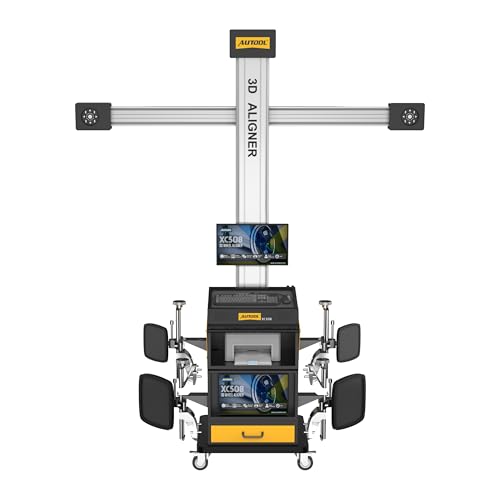
- Dual 20-inch HD displays
- Built-in report printer
- 80,000+ vehicle database
Best For: Professional garages needing broad coverage and detailed alignment reporting
Heavy-Duty Turn Plate Kit
VEVOR Wheel Alignment Turn Plates
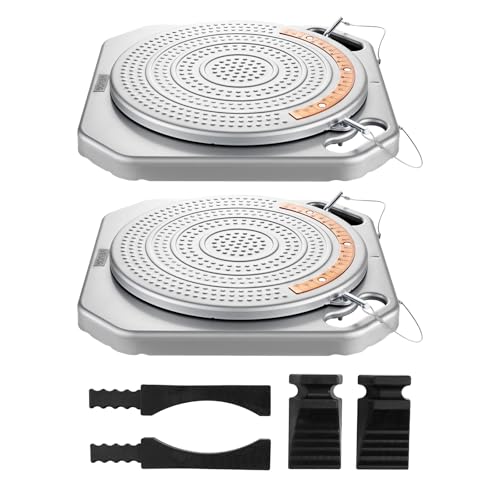
- 2-ton capacity per plate
- 360-degree turntable design with 60-degree rotation
- Includes bridges and wheel chocks
Best For: Supporting manual or electronic alignment work on cars, SUVs, and light trucks
Flexible Automatic 3D Aligner
AV9 Pro Mobile 3D Wheel Alignment System

- Fits two-post and scissor lifts
- Android/iOS-compatible measurement display
- Includes monitor, tablet, printer, and Wi-Fi
Best For: Professional shops needing lift flexibility and a mobile 3D setup
Compact Manual Alignment Tool
Tenhulzen All-in-One Camber/Caster/Toe Tool

- Measures camber, caster, and toe
- Camber accuracy within 0.1 degrees
- No turn plates needed for caster measurement
Best For: DIY users and mechanics wanting a portable manual alignment solution
Professional Shop Pick

- ±0.01° 3D measurements for key alignment angles
- Push-and-measure operation with no manual calibration
- 60,000+ vehicle database and printable reports
Best For: Busy tire shops and professional repair garages
Budget-Friendly Manual Option

- Measures camber, caster, and toe at the hub
- 0.1° digital camber gauge and adjustable rods
- Durable stainless-steel plates with magnetic tape slots
Best For: DIY users and garages seeking manual alignment tools
Ready-to-Use 3D System

- 3D imaging analyzes camber, toe, and related parameters
- Fully calibrated and ready to use
- Voice prompts and LED indicators guide measurements
Best For: Service shops wanting guided computerized alignment
Precision Shop Upgrade
KATOOL KT-5DA 5D Wheel Aligner

- Five-axis alignment precision
- Real-time high-definition imaging
- Factory-set calibration and rugged construction
Best For: Busy automotive shops and performance garages
Large-Screen Workshop System

- 42-inch display with voice guidance
- Automatic 3D measurement process
- Printable reports and collision measurement
Best For: Repair shops needing guided workflows and documentation
Connected Alignment Solution
KATOOL KT-AV9 Android 3D Aligner
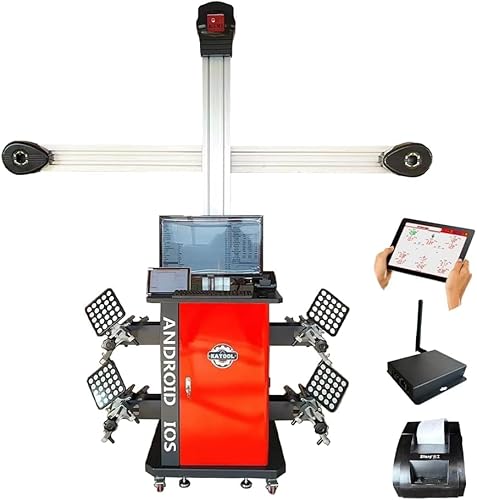
- Android-based 3D measurement
- Displays readings on PC and mobile devices
- Five-megapixel optical camera system
Best For: Connected shops using flexible PC and mobile displays
Premium 3D Alignment System – AUTOOL XC508 3D Wheel Aligner
For busy repair shops looking for professional wheel alignment machines, the AUTOOL XC508 combines 3D measurement, a large vehicle database, and built-in reporting tools. Its dual 20-inch screens and automatic lift tracking are designed to make daily alignment work more efficient.
Best For: Professional garages that need a feature-rich 3D aligner with broad vehicle coverage and customer-ready reports.
Pros:
- Dual 20-inch HD screens support simultaneous viewing and operation.
- Built-in thermal printer produces alignment reports without separate equipment.
- 80,000+ vehicle models with free lifetime updates and custom model entry.
- Measures camber, caster, toe, thrust angle, wheelbase, and track difference.
Cons:
- Its extensive professional feature set may be more than occasional users need.
- The garage-grade workstation requires dedicated shop space.
The XC508 stands out when workflow, documentation, and vehicle-data coverage matter as much as measurement capability. Accident-vehicle chassis detection and automatic lift tracking add useful functionality for demanding repair environments.
Heavy-Duty Turn Plate Kit – VEVOR Wheel Alignment Turn Plates
These VEVOR turn plates are a practical supporting tool for wheel alignment machines or manual alignment setups. The low-friction plates let front wheels rotate smoothly while brass degree dials help technicians monitor steering-angle changes.
Best For: Shops and mechanics needing durable turn plates for cars, SUVs, and light trucks.
Pros:
- Each carbon-steel plate supports up to 2 tons.
- Plates rotate up to 60 degrees with clear 1-degree markings.
- Includes transition bridges, wheel chocks, locking pins, and handle slots.
- Supports up to 1 inch of center offset for slight tire variations.
Cons:
- This is a turn-plate tool rather than a complete electronic alignment machine.
- The 38.8-pound set may require effort to position between jobs.
The VEVOR kit offers a sturdy, straightforward way to support steering-angle adjustments. Its capacity and included access pieces make it useful for common passenger and light-truck applications, provided you already have the measurement equipment needed for the alignment.
Flexible Automatic 3D Aligner – AV9 Pro Mobile 3D Wheel Alignment System
The AV9 Pro is a mobile 3D option for garages comparing wheel alignment machines that can work across different lift configurations. It supports both two-post and scissor lifts, while its tablet, 30-inch monitor, printer, and connectivity options provide several ways to view and share alignment data.
Best For: Professional shops wanting a movable 3D system compatible with two-post and scissor lifts.
Pros:
- Works with two-post and scissor lifts without additional modification.
- Automatic 3D measurement uses four-wheel positioning.
- Supports Android and iOS tablets and includes a 30-inch monitor.
- Includes a printer, Wi-Fi device, mouse, keyboard, and USB support.
Cons:
- Package unloading requires a forklift or equivalent equipment.
- The substantial package size and weight can complicate installation and placement.
- Its one-year warranty is shorter than some buyers may prefer.
With broad lift compatibility and a flexible display setup, the AV9 Pro is aimed at shops that need to move or adapt their alignment equipment. Plan for appropriate unloading help and floor space before ordering.
Compact Manual Alignment Tool – Tenhulzen All-in-One Camber/Caster/Toe Tool
Tenhulzen Automotive 2-Wheel Alignment Tool - All-in-one (Camber/Caster/Toe Plates) - Made in USA
Check Price On AmazonFor mechanics who do not need a full electronic system, this Tenhulzen tool offers a compact approach to wheel alignment. It combines camber, caster, and toe measurement in one device and uses patent-pending wheel stand-offs for positioning accuracy.
Best For: DIY users and mechanics seeking a portable manual tool for measuring camber, caster, and toe.
Pros:
- Measures camber, caster, and toe with one tool.
- Camber accuracy is specified to within 0.1 degrees.
- Caster measurement does not require expensive turn plates.
- Includes detailed step-by-step video instructions.
Cons:
- It does not provide the automated 3D workflow of full wheel alignment machines.
- Manual setup and readings require more technician involvement.
The Tenhulzen is a space-saving alternative for users who value portability and basic alignment measurement. It is best viewed as a hands-on alignment tool rather than a shop-scale computerized system.
Professional Shop Pick – 3D Wheel Aligner
For repair shops comparing wheel alignment machines, this professional 3D system emphasizes fast, repeatable measurements with a claimed accuracy of ±0.01°. Its push-and-measure workflow, broad vehicle database, and printable reports are designed for busy tire and automotive service environments.
Best For: Professional tire shops and repair garages handling passenger vehicles, SUVs, and light trucks.
Pros:
- Industrial 3D camera technology measures toe, camber, caster, and kingpin.
- Push-forward operation requires no manual calibration and uses reflector targets without electronic components.
- Includes a database covering more than 60,000 passenger vehicle models.
- Offers voice and LED guidance, printable reports, and compatibility with multiple lift setups.
Cons:
- Its 350-pound weight and large footprint require substantial shop space.
- The corded 110V system is intended for a fixed professional installation rather than portable use.
Choose this model when throughput, database coverage, and shop-oriented reporting matter more than compact size. Its rugged targets and integrated collision-measurement features add practical value for daily service work.
Budget-Friendly Manual Option – Toe Plates and Gauge Kit
This VEVOR kit offers a simpler alternative to electronic wheel alignment machines for measuring camber, caster, and toe directly at the hub. The stainless-steel toe plates, adjustable rods, and included tape measures make it a practical choice for hands-on alignment checks.
Best For: DIY mechanics, garages, and technicians who prefer manual alignment measurements across compatible vehicles.
Pros:
- Measures camber, caster, and toe without removing the tires.
- Digital camber gauge provides claimed 0.1° accuracy.
- Stainless-steel plates resist deformation and rust better than traditional aluminum plates.
- Magnetic tape slots, non-slip bases, six rods, two tape measures, and a conversion chart support solo use.
Cons:
- Manual measurements require more technician involvement than a 3D alignment system.
- Compatibility depends on hub and wheel-size limits listed for each vehicle.
- It does not provide automated vehicle databases, voice guidance, or shop reporting features.
This is a useful low-complexity solution when portability and purchase cost are priorities. Verify the hub-size compatibility before buying, particularly for larger wheels, and expect a more hands-on process than with computerized wheel alignment machines.
Ready-to-Use 3D System – 24-Inch Monitor Wheel Aligner
This 3D wheel alignment machine is built around camera-based imaging, automatic wheel-position recognition, and software analysis of alignment data. It arrives calibrated according to the supplied notes, making it a straightforward option for shops that want a ready-to-use computerized setup.
Best For: Automotive service facilities seeking guided 3D alignment measurements for a broad range of vehicles.
Pros:
- Uses 3D imaging, cameras, and sensors to analyze camber, toe, and related parameters.
- Comes fully calibrated and ready to use, reducing setup complexity.
- Stores specifications for up to 6,000 vehicles.
- Combines voice prompts with LED indicators for step-by-step measurement guidance.
Cons:
- At 400 pounds, it is heavy and better suited to a permanent shop installation.
- Its vehicle database is smaller than the 60,000-plus database offered by the other professional 3D model in this roundup.
- The supplied details do not mention printable reports or collision-measurement functions.
This model makes sense for shops that value guided operation and minimal initial setup. Compare its database size and included workflow features with your service volume before choosing among computerized wheel alignment machines.
Precision Shop Upgrade – KATOOL KT-5DA 5D Wheel Aligner
For shops seeking advanced wheel alignment machines, the KATOOL KT-5DA combines five-axis alignment precision with real-time imaging. Its software-guided workflow and factory-set calibration are designed to help technicians diagnose and correct alignment issues efficiently across passenger vehicles and light trucks.
Best For: Automotive shops, tire centers, and performance garages handling frequent passenger-vehicle and light-truck alignments.
Pros:
- Five-axis precision helps deliver consistent alignment readings.
- Real-time high-definition imaging mirrors adjustments on screen.
- Reinforced alloy steel construction and industrial-grade sensors suit busy service bays.
- Factory-set calibration and guided software reduce setup complexity.
Cons:
- At 309 pounds, it is substantial shop equipment that requires a suitable installation area.
- The feature-rich system may be more than occasional users need.
The KT-5DA is a strong choice when workflow speed, clear live feedback, and shop durability matter more than a basic alignment setup.
Large-Screen Workshop System – GIYI 3D Wheel Aligner
This GIYI system is one of the more comprehensive wheel alignment machines for repair shops that want large, easy-to-read displays and automated measurement. Its 3D cameras measure key alignment angles, while voice guidance, LED indicators, reporting, and collision-repair measurement support a structured workflow.
Best For: Tire shops and auto repair facilities that need visible guided operation, printable reports, and frame-related measurement support.
Pros:
- Measures toe, camber, thrust angle, and setback with stated ±0.01° accuracy.
- Automatic measurement after pushing the vehicle forward eliminates manual calibration.
- 42-inch display, voice guidance, and LED indicators improve visibility and usability.
- Printable reports, data tracking, and collision-repair measurement add shop functionality.
Cons:
- Its 346-pound weight and large system dimensions call for dedicated shop space.
- The advanced reporting and measurement features may be unnecessary for simple alignment work.
Choose the GIYI when a shop prioritizes guided operation, prominent on-screen data, and documentation alongside core alignment measurements.
Connected Alignment Solution – KATOOL KT-AV9 Android 3D Aligner
KATOOL KT-AV9 Android System 3D Wheel Alignment Machine Wheel Aligner Automotive Tire Alignment Tool
Check Price On AmazonThe KATOOL KT-AV9 brings Android-based connectivity to wheel alignment machines. Its 3D camera measurement system can display alignment readings on a PC, smartphone, tablet, or compatible Apple iOS device, giving shops flexibility in how technicians view alignment information.
Best For: Shops and technicians who want flexible alignment-data display across computers and mobile devices.
Pros:
- Uses 3D camera measurement technology for four-wheel alignment.
- Supports display on PCs, smartphones, tablets, and compatible iOS devices.
- Five-megapixel cameras support the optical positioning system.
- Camera-to-turntable distance is specified at 1,500–3,000 mm.
Cons:
- The supplied notes provide fewer details about included workflow or reporting features.
- Mobile-display compatibility may require users to manage additional connected devices.
The KT-AV9 stands out for connected viewing rather than a fixed-monitor-only setup, making it worth considering for modern shops that value flexible access to alignment readings.
How We Picked the Best Wheel Alignment Machines
We evaluated the selected equipment by looking at measurement method, stated accuracy, display and reporting features, vehicle database coverage, portability, lift compatibility, and suitability for professional use. We also separated full 3D alignment systems from manual tools because they serve different jobs and budgets. Features such as built-in printers, large monitors, Android or iOS support, real-time imaging, and included gauges can improve workflow, but they should not replace verification of calibration procedures and manufacturer support.
Quick Comparison
| Type | Best For | Main Advantage | What to Check |
|---|---|---|---|
| Professional 3D aligner | Busy repair and tire shops | Fast, repeatable measurements and reports | Calibration, database updates, lift compatibility |
| Mobile 3D system | Shops needing flexibility | Works across compatible lifts and service bays | Wheel target setup, cart design, software support |
| Manual alignment tool | DIY, racing, and basic service | Lower cost and simple operation | Technician skill and adjustment accuracy |
| Turn plates | Steering-angle measurement | Useful supporting equipment | Weight capacity and scale readability |
Key Buying Factors for Wheel Alignment Machines
Measurement Accuracy and Calibration
Look for clearly stated resolution, repeatability, and calibration requirements rather than relying only on claims such as “3D” or “5D.” Accurate results also depend on level surfaces, properly mounted targets or sensors, tire condition, and correct vehicle setup.
Vehicle Coverage and Software
A broad vehicle database is valuable for a general repair shop, while update availability may matter more than the initial database size. Confirm that the software supports the makes, models, suspension configurations, and specifications you service most often.
Installation and Lift Compatibility
Check whether the machine is designed for two-post, four-post, or scissor lifts. Consider bay dimensions, cabinet or tower placement, power requirements, camera line of sight, and whether the system needs a permanently dedicated workstation.
Workflow and Reporting
Large displays, automatic readings, customer printouts, wireless connectivity, and mobile operating systems can reduce service time. However, simpler controls may be preferable if your technicians value reliability and minimal software complexity.
Support, Training, and Total Cost
Include installation, calibration tools, software subscriptions or updates, replacement targets or clamps, warranty coverage, and technical support in the budget. A lower purchase price can be less attractive if downtime or difficult calibration interrupts daily work.
Who Should Buy Which Wheel Alignment Machines?
Busy tire and repair shops should prioritize a full 3D system with a strong vehicle database, quick readings, and printable before-and-after reports. Shops that share bays or service vehicles on different lifts may prefer a mobile 3D design. Performance-focused technicians and smaller garages can consider a capable manual camber, caster, and toe tool when they have the experience to interpret measurements and make adjustments. Turn plates are best treated as complementary equipment for steering-angle and alignment checks, not as a complete replacement for a computerized aligner.
Before ordering, verify the machine’s power requirements, physical dimensions, included accessories, calibration process, software support, and return or service policy. Those details often determine whether a promising system fits your shop in practice.
