

10 Best Wireless EV Diagnostic Scanners for 2026: Smart, Easy, and Dealer-Style Troubleshooting

Wireless diagnostics can make EV troubleshooting faster, cleaner, and far more convenient than tethered tools. Whether you want a simple app-based code reader or a more advanced scanner for deeper system checks, the right pick depends on your vehicle, your experience, and how much detail you need.
Below, we’ve rounded up 10 of the best wireless EV diagnostic scanners for 2026, focusing on compatibility, features, app support, and overall value for everyday drivers and serious DIY users alike.
Best 10 Wireless EV Diagnostic Scanners Picks for 2026
Blue-tooth Everyday Scanner
OBD2 Scanner for iOS & Android
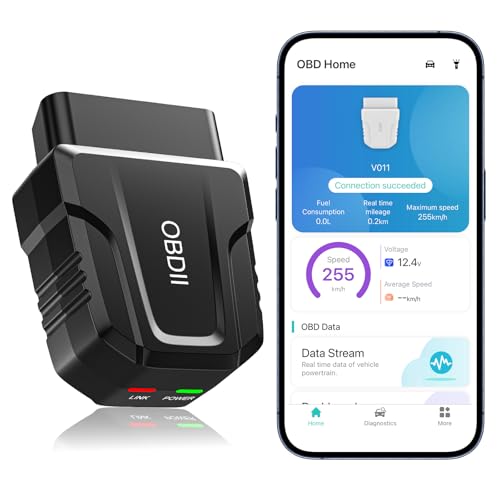
- Bluetooth 5.4 wireless connection
- Reads codes, live data, VIN, and freeze frame
- Supports 96%+ of vehicles from 1996+
Best For: Everyday drivers who want simple wireless code reading and live data
Pro-Grade Adapter

- Works with iPhone, Android, and Windows
- Supports major apps like FORScan and BimmerCode
- Includes battery drain and over-voltage protection
Best For: App users who want a dependable wireless adapter with broad software support
Advanced Shop-Level Tool
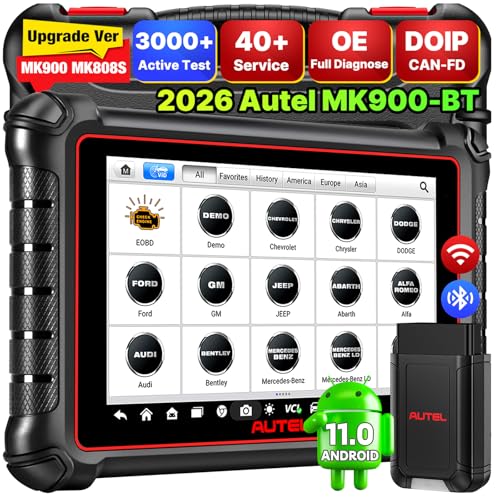
- 3000+ active tests for bidirectional control
- 40+ service functions and all-system diagnosis
- Supports CAN-FD and DOIP
Best For: Experienced DIYers and shop users needing advanced wireless diagnostics
AI Compact Scanner
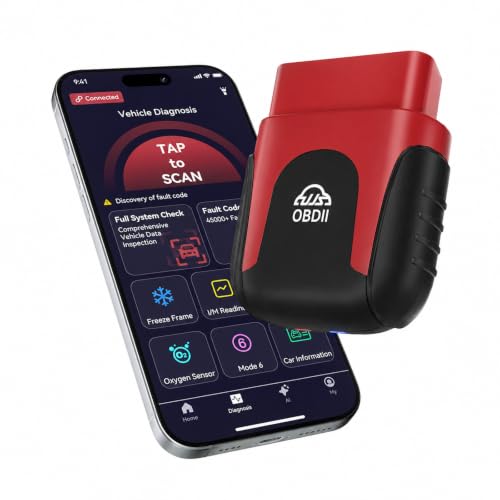
- AI-generated car health reports in minutes
- Bluetooth 5.4 in a tiny always-ready design
- Free app updates with 65,000+ fault codes
Best For: Drivers who want a compact, app-guided wireless scanner with AI help
TOPDON Pick
All-System Wireless Diagnostic Tool

- Bluetooth 5.0 with phone app support
- All-system scan plus code guidance
- Includes 6 common reset functions
Best For: Drivers who want a compact wireless scanner for broad diagnostics and maintenance
Budget App-Based Pick

- Bluetooth LE for iOS and Android
- Basic code reading and live data
- Depends on a compatible third-party app
Best For: Budget-minded users who only need basic wireless OBD-II diagnostics
Premium Diagnostic Pick
Bluetooth Scan Tool with Enhanced Diagnostics

- Enhanced diagnostics for ABS, SRS, TPMS, and transmission
- VIN-matched repair reports with verified fixes
- No subscription fees or add-ons
Best For: Drivers who want deeper wireless diagnostics and repair guidance
App-Based Starter Pick
Veepeak OBDCheck BLE+ for iOS & Android

- Bluetooth LE for iPhone and Android
- Reads and clears standard OBD-II codes
- Depends on compatible third-party apps
Best For: Basic diagnostics with app-based flexibility
Feature-Rich Upgrade
BlueDriver Pro Next-Gen Bluetooth Scanner
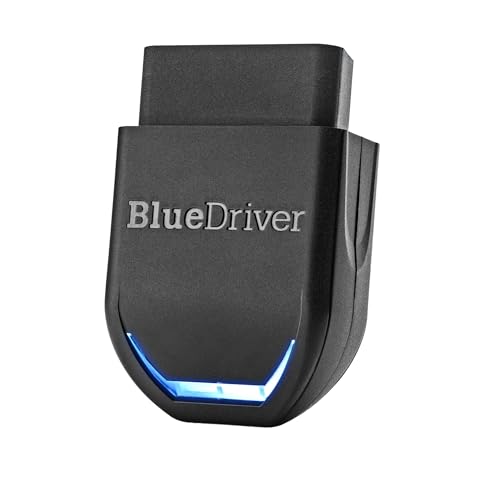
- Enhanced diagnostics for ABS, SRS, TPMS, and more
- No subscription fees or add-ons
- Includes VIN-matched repair reports
Best For: Drivers who want deeper diagnostics without ongoing fees
Budget-Friendly Basic Scanner

- Free AutoOBDII app, no subscription
- Bluetooth LE for iOS, Android, and Windows
- Basic OBD-II features only
Best For: Simple code reading without ongoing app fees
Blue-tooth Everyday Scanner – OBD2 Scanner for iOS & Android
If you want wireless EV diagnostic scanners that cover everyday check-engine checks without a steep learning curve, this OBD2 scanner is built for quick phone-based use. It supports Bluetooth 5.4, reads and clears DTCs, shows live data and freeze-frame info, and includes visual charts to help you interpret readings fast.
Best For: Drivers who want a simple Bluetooth scanner for basic diagnostics, live data, and code clearing on iPhone or Android.
Pros:
- Bluetooth 5.4 for wireless use with iOS and Android
- Reads/clears codes, live data, VIN, freeze frame, and readiness data
- Charts and data visualization make readings easier to understand
- Supports over 96% of makes and models from 1996 to present
Cons:
- Fault codes can only be cleared after the vehicle is repaired
- Requires the car to be on and the phone Bluetooth to be enabled
- Focuses on core diagnostics rather than advanced bidirectional service functions
This is a practical entry-level wireless scanner for drivers who want broad compatibility and straightforward diagnostics. It offers useful everyday features without overcomplicating the app-based experience.
Pro-Grade Adapter – OBDLink MX+ Bluetooth Scanner
Among wireless EV diagnostic scanners, the OBDLink MX+ stands out for users who want a compact adapter that works with major diagnostic apps on iPhone, Android, and Windows. It turns a phone or PC into a more capable scan tool, adds enhanced OEM support for several major brands, and includes protection features that help reduce battery drain concerns.
Best For: App-based users who want a reliable wireless adapter for deeper diagnostics across supported Ford, GM, Mazda, Toyota/Lexus, Honda, Hyundai, Kia, and more.
Pros:
- Works with iPhone, Android, and Windows
- Recommended for FORScan, Torque, BimmerCode, Dashcommand, AlfaOBD, and Carista
- Enhanced OEM support for multiple major automakers
- Includes over-voltage and battery drain protection
Cons:
- Compatibility and feature support should be checked before purchase
- Depends on third-party apps for many advanced functions
- No built-in screen or standalone interface
If you want a proven Bluetooth adapter rather than a dedicated handheld scanner, this is a strong choice. Its value comes from app compatibility, OEM support, and a small form factor that is easy to keep in the vehicle.
Advanced Shop-Level Tool – Autel MaxiCOM MK900BT
If you need wireless EV diagnostic scanners with far more than basic code reading, the Autel MaxiCOM MK900BT is aimed at serious DIYers and shop-style diagnostics. It offers bidirectional controls, 40+ service functions, all-system diagnosis, Auto VIN, Scan License, and support for CAN-FD and DOIP on a wide range of vehicles.
Best For: Experienced users who want a wireless tablet scanner with bidirectional testing, advanced resets, and broad vehicle coverage.
Pros:
- 3000+ active tests for bidirectional diagnostics
- 40+ service functions including oil reset, ABS bleed, SAS calibration, and more
- All-system scan with live data, record/playback, and Auto VIN
- Supports CAN-FD and DOIP, plus a 1-year free software update
Cons:
- Advanced functions are not available on every vehicle
- Compatibility may require sending VIN before purchase
- Higher-end tool with more complexity than a basic code reader
This is the most capable option in the group for users who want near-professional functionality. It makes sense when you need active tests, maintenance resets, and deeper system coverage rather than just check-engine diagnostics.
AI Compact Scanner – Rocco Bluetooth OBD2 Scanner
This pick fits wireless EV diagnostic scanners shoppers who want a small, always-ready Bluetooth tool with app-based guidance. The Rocco scanner uses AI-powered car health reports, live data and freeze-frame analysis, and a one-tap full vehicle scan to turn code checking into a simpler process.
Best For: Drivers who want a compact wireless scanner with AI-assisted reports, live data graphs, and easy phone-based diagnostics.
Pros:
- AI-powered health reports with actionable repair advice
- Bluetooth 5.4 wireless connection with ultra-compact design
- Live data graphs and charts for RPM, coolant temp, and oxygen sensor voltage
- Free lifetime app updates and 65,000+ fault codes
Cons:
- Requires the mobile app for diagnostics and reports
- Does not include a built-in display
- Manufacturer details list the operating system as Android 11.0
This scanner is a good fit if you want the convenience of a tiny plug-in adapter and the clarity of app-generated reports. It emphasizes ease of use and everyday monitoring more than advanced professional service features.
TOPDON Pick – All-System Wireless Diagnostic Tool
If you want wireless EV diagnostic scanners that do more than just read an engine light, the TOPDON Carpal is built for broad, everyday vehicle checks from your phone. It uses Bluetooth 5.0 for a stable no-cable connection, supports iPhone and Android, and adds a deeper feature set that includes all-system diagnostics, live data views, and several common maintenance resets.
Best For: Drivers and DIYers who want a pocketable wireless scanner for multi-car households and routine maintenance resets.
Pros:
- All-system diagnostics with read/clear codes and fault severity guidance
- 6 maintenance functions including oil, TPMS, BMS, EPB, throttle adaptation, and DPF regeneration
- Bluetooth 5.0 wireless connection with up to 33 ft range and mobile app support
- AutoVIN, live graphs, data recording, TSBs, and warning light explanations
Cons:
- Advanced special functions are limited beyond the included six resets
- Requires a compatible phone and app on Android 7.0+ or iOS 11.0+
- Feature depth may be more than needed if you only want basic code reading
The Carpal stands out if you want one wireless scanner that can handle both quick checks and more involved maintenance tasks. It is a practical choice for owners who want guided diagnostics without carrying a larger handheld tool.
Budget App-Based Pick – BLE Bluetooth OBD-II Scanner
For shoppers comparing wireless EV diagnostic scanners on a budget, the Veepeak OBDCheck BLE is a simple app-based adapter that focuses on standard OBD-II functions. It connects by Bluetooth LE to iOS and Android apps, making it a straightforward option for reading and clearing basic trouble codes, checking readiness monitors, and viewing live sensor data.
Best For: Users who want an inexpensive Bluetooth adapter for basic OBD-II checks and app-based diagnostics.
Pros:
- Works with iOS and Android using Bluetooth LE
- Reads and clears generic OBD-II codes, freeze frame data, and live sensor data
- Compatible with several third-party apps, including Car Scanner, Torque, and OBD Fusion
- Compact design with a mini carrying case included
Cons:
- Requires a compatible third-party app to operate
- Limited to standard OBD-II functions; no ABS, SRS, or service reset support
- EV and hybrid support is app-dependent and should be checked in advance
This is a good entry-level pick if you mainly want basic wireless diagnostics and already plan to use a phone app. It is less suited to buyers looking for deeper maintenance features or built-in advanced functions.
Premium Diagnostic Pick – Bluetooth Scan Tool with Enhanced Diagnostics
If you want wireless EV diagnostic scanners with a more polished, feature-rich experience, BlueDriver is one of the strongest app-driven options here. It pairs through Bluetooth with your phone or tablet and offers enhanced diagnostics beyond basic check-engine work, including ABS, SRS, airbag, TPMS, and transmission coverage, plus VIN-matched repair reports.
Best For: Drivers who want a wireless scanner with broad code coverage, verified repair info, and no subscription fees.
Pros:
- Reads and clears enhanced codes for ABS, SRS, airbag, TPMS, and transmission
- Unlimited VIN-based repair reports with technician-verified fixes
- Wireless Bluetooth connection with no cables or bulky handheld unit
- No subscription fees and free app updates included
Cons:
- Coverage is strongest on gas vehicles sold in North America
- Vehicle-specific fit and app experience may matter more than with a universal basic reader
- Not designed as a budget-only code reader if you only need the basics
BlueDriver is the most complete wireless option in this group for buyers who want better-than-basic diagnostics and clear repair guidance. It makes the most sense for owners who value broad support and a cleaner app experience over the lowest possible price.
App-Based Starter Pick – Veepeak OBDCheck BLE+ for iOS & Android
If you want a flexible option among wireless EV diagnostic scanners, the Veepeak OBDCheck BLE+ is best viewed as a compact, app-based OBD-II adapter for standard diagnostics. It reads and clears check engine codes, shows freeze frame data, supports I/M readiness, and streams live sensor data through compatible third-party apps. Advanced vehicle-specific data may be available depending on the make, model, and year, but special functions are not supported by the device itself.
Best For: Drivers who want a simple Bluetooth OBD-II scanner for basic diagnostics and app-based data access on iPhone or Android.
Pros:
- Supports Bluetooth LE for iOS and Android, plus classic Bluetooth for certain Android apps
- Reads and clears trouble codes, freeze frame data, readiness status, and live sensor data
- Works with popular apps like Car Scanner, Torque, OBD Fusion, and select vehicle-specific apps
- Can expose advanced vehicle data on supported vehicles through compatible apps
Cons:
- Requires a compatible third-party app to operate
- Does not support special functions like injector coding, EPB reset, ABS bleeding, or oil/service resets
- Advanced coverage such as ABS, SRS, and TPMS depends on vehicle and app compatibility
Overall, this is a practical low-friction scanner if your goal is standard OBD-II troubleshooting with app-based flexibility. It is less suitable if you need standalone tools or deeper service functions built in.
Feature-Rich Upgrade – BlueDriver Pro Next-Gen Bluetooth Scanner
Among wireless EV diagnostic scanners, BlueDriver stands out for drivers who want more than basic code reading without paying a subscription. It plugs into the OBDII port and connects wirelessly to your phone or tablet, then adds enhanced diagnostics for supported vehicles, including ABS, SRS, airbag, TPMS, transmission, and more. The app also provides verified repair reports, live data, freeze frames, smog readiness, and Mode 6 test results.
Best For: Drivers who want a wireless scanner with stronger diagnostic coverage, verified repair guidance, and no subscription fees.
Pros:
- Enhanced diagnostics for systems like ABS, SRS, TPMS, and transmission on supported vehicles
- Includes technician-verified repair reports matched to your VIN
- No subscription fees, add-ons, or accounts required
- Works with gas vehicles 1996+ and select light-duty trucks and diesels
Cons:
- Enhanced features depend on vehicle support
- Designed around phone or tablet use rather than a standalone handheld screen
- Best coverage is concentrated on specific makes and newer model years
This is a strong choice if you want a more capable app-connected scanner for everyday use, used-car checks, and deeper troubleshooting. It offers a solid balance of convenience, support, and expanded code coverage.
Budget-Friendly Basic Scanner – LB03 Bluetooth OBD2 Scanner
If you’re shopping for wireless EV diagnostic scanners on a budget, the LB03 is positioned as a straightforward, beginner-friendly OBD-II tool for standard engine diagnostics. It supports reading and clearing fault codes, live data, freeze-frame records, I/M readiness checks, and EVAP status through its free AutoOBDII app. It does not include advanced systems or service resets, so it is best suited to basic troubleshooting rather than full vehicle module diagnostics.
Best For: Beginners who want a free-app Bluetooth scanner for basic code reading and everyday maintenance checks.
Pros:
- Free app with no subscription required
- Supports Bluetooth LE on iOS and Android, plus Windows
- Reads and clears fault codes, freeze-frame data, and live sensor information
- Includes a 1-year quality warranty and free firmware updates
Cons:
- Does not support ABS, SRS, EPB, TPMS, transmission, or oil reset functions
- Not compatible with hybrid, plug-in hybrid, or fully electric vehicles
- Designed mainly for standard OBD-II diagnostics
For basic car health checks, this scanner keeps things simple with a free app and easy wireless setup. It is a practical pick if you only need core OBD-II functions and want to avoid subscription costs.
How We Picked These Wireless EV Diagnostic Scanners
We prioritized compatibility with iPhone and Android, Bluetooth reliability, supported vehicle systems, app quality, and whether each tool offers useful diagnostics without unnecessary subscription hassles. We also weighed scan depth, live data access, and practical features such as freeze-frame data, service resets, and bidirectional controls where available.
Quick Comparison: What These Scanners Are Best for
Not every scanner serves the same buyer. Entry-level wireless OBD readers are best for reading and clearing basic fault codes, while premium tools add ABS, SRS, TPMS, service functions, and deeper system access. If you need more than check-engine-light coverage, look for multi-system support and stronger app integration.
Key Buying Factors for Wireless EV Diagnostic Scanners
Vehicle and App Compatibility
Make sure the scanner supports your vehicle make, model year, and operating system. Some tools work best on newer vehicles or require specific apps for full functionality. For EV owners, verify support for your vehicle’s communication protocols and available modules before buying.
Diagnostic Depth
Basic readers are fine for code retrieval, but EV drivers may benefit from broader coverage, including battery-related data, system status, and more advanced module access. If you plan to do your own maintenance, service reset functions can be especially valuable.
Wireless Stability and Ease of Use
A good wireless scanner should connect quickly and stay paired without dropouts. App quality matters as much as hardware because the app determines how clearly results are displayed and how easy it is to interpret live data and fault codes.
Subscription and Long-Term Value
Some scanners charge ongoing fees, while others offer no-subscription use. Consider the total cost of ownership, especially if you’ll use the tool regularly. A slightly higher upfront price can be worthwhile if it avoids recurring charges.
Who Should Buy Which Wireless EV Diagnostic Scanners?
Casual drivers usually want a simple, no-fuss wireless scanner for check-engine light diagnostics. DIY owners who service multiple cars may prefer a midrange model with broader system access and better app support. Advanced users and EV enthusiasts should look for higher-end Wireless EV Diagnostic Scanners with bidirectional capability, multi-system coverage, and service functions that can handle more complex troubleshooting.
If you want the best balance of convenience and capability, choose the scanner that matches the depth of diagnostics you actually need rather than paying for features you may never use.
