

10 Best Automotive Paint Thickness Gauges for DIY Mechanics in 2026

Buying a used car or checking recent bodywork is easier when you can measure paint thickness instead of relying only on appearance. A suitable gauge can reveal uneven refinishing, filler, repaired panels, and differences between factory coatings.
These 10 automotive paint thickness gauges for DIY mechanics cover compact digital meters, broad measurement ranges, ferrous and nonferrous detection, and app-connected options. Use the guide below to match accuracy, usability, and budget to your inspection needs.
Best 10 Automotive Paint Thickness Gauges for DIY Mechanics Picks for 2026
Best Factory-Calibrated Pick

- Factory calibrated for immediate use
- Detects steel, aluminum, and galvanized steel
- Single and continuous measurement modes
Best For: DIY mechanics checking metal vehicle panels
Best Smart-Connected Pick

- Bluetooth app for iOS and Android
- Dedicated car-panel inspection mode
- Rechargeable battery and 3000 μm range
Best For: DIY mechanics who want organized digital inspection records
Best Support Package
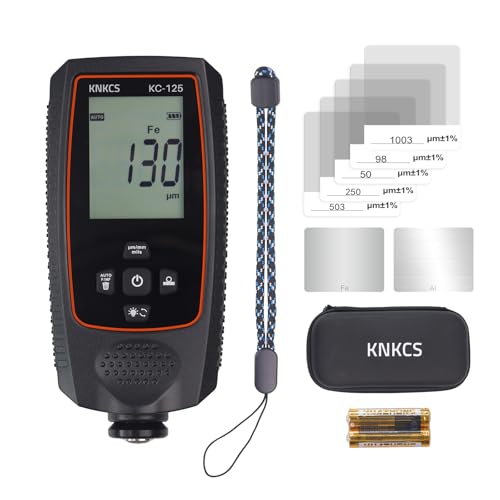
- 0.1 μm resolution and 2500 μm range
- Recognizes iron filler and iron-zinc substrates
- Includes five-year maintenance and lifetime support
Best For: DIY mechanics scanning panels and checking possible filler repairs
Best Field-Inspection Design

- Automatic steel, aluminum, and zinc detection
- Ruby probe and backlit multi-unit display
- Designed for portable outdoor inspections
Best For: DIY mechanics performing on-site used-car checks
Best All-Around Pick
CM-205FN Digital Paint Thickness Gauge

- 0.1 μm resolution and ±(3%+2 μm) accuracy
- Automatic Fe/NFe detection for steel and aluminum
- Single and continuous scanning modes
Best For: DIY mechanics checking repainting and repairs on metal body panels
Best for Fast Pass/Fail Checks
UNI-T UT343D Coating Thickness Gauge

- Three-color LED and audio alarm for quick checks
- Automatic Fe/NF detection with single or continuous modes
- 2-inch auto-rotating TFT display
Best For: Fast used-car inspections and easy-to-read coating comparisons
Best for Data Logging
POROMETISTO CTG01 Paint Thickness Gauge

- 0–2000 μm range with automatic Fe/NFe detection
- Stores 30 sets and exports via USB-C
- Continuous scanning shows average, maximum, and minimum
Best For: DIY mechanics documenting readings for inspections or quality-control records
Budget Used-Car Check
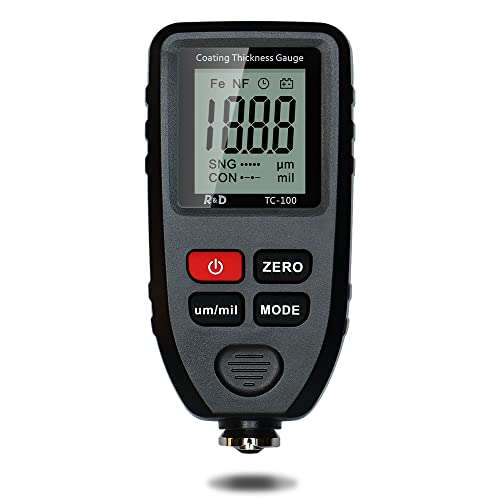
- Auto-detects steel and aluminum
- Includes calibration accessories
- Three-year replacement warranty
Best For: DIY used-car buyers inspecting metal body panels
Professional Data Logging

- High-resolution readings to 78 mils
- Shows measurement statistics
- Exports data over USB
Best For: Detailed inspections and documented panel comparisons
Simple Pocket Inspection

- Backlit LCD for dim conditions
- Switches between mils and µm
- Compact two-button design
Best For: Portable used-car and detailing checks
Best Factory-Calibrated Pick – CM-224 Auto
For DIY mechanics seeking automotive paint thickness gauges for DIY mechanics, the CM-224 Auto is a straightforward choice for checking metal vehicle panels. It arrives factory calibrated, automatically recognizes common substrates, and provides readings without requiring setup after installing its included batteries.
Best For: Used-car buyers, first-time inspectors, and DIY mechanics who want quick spot checks on steel, aluminum, and galvanized metal panels.
Pros:
- Factory calibrated and ready to use.
- Automatically detects Fe, NFe, and Fe+Zn substrates.
- Offers single-point and continuous measurement modes.
- Large backlit LCD with 0.1 μm resolution and a 0–1500 μm range.
Cons:
- Designed for metal surfaces only; it does not measure plastic, carbon fiber, or composite parts.
- Uses two AAA batteries rather than a rechargeable battery.
The CM-224 Auto balances ease of use with useful automotive features. Its metal-only limitation is important, but automatic substrate detection and optional calibration make it practical for routine DIY vehicle inspections.
Best Smart-Connected Pick – CM-226Pro Bluetooth
The CM-226Pro adds smartphone connectivity to the usual functions expected from automotive paint thickness gauges for DIY mechanics. Its Bluetooth app, dedicated car mode, rechargeable battery, and data features make it suited to more organized vehicle inspections.
Best For: DIY mechanics, inspectors, and detailers who want app-based measurement tracking and a wider measurement range.
Pros:
- Connects to iOS and Android devices through Bluetooth.
- Car Mode organizes checks by panels such as doors, hood, roof, and trunk.
- Measures up to 3000 μm (118 mils) with 0.1 μm resolution.
- Rechargeable 600mAh battery with USB charging.
Cons:
- App connectivity may be unnecessary for simple spot checks.
- Its broader feature set may involve more setup than a basic standalone gauge.
Choose the CM-226Pro if recording and organizing measurements matters as much as taking them. Voice prompts, automatic substrate recognition, statistics, alarms, and storage give it a strong feature set for repeated inspections.
Best Support Package – KC-125
The KC-125 is a compact option among automotive paint thickness gauges for DIY mechanics, combining continuous measurement with recognition for iron filler and iron-zinc-coated substrates. Its stated accuracy and broad range support comparisons across repaired or repainted metal panels.
Best For: Used-car buyers and DIY mechanics who want continuous scanning and assistance backed by a five-year maintenance program and lifetime technical support.
Pros:
- 0.1 μm resolution with stated accuracy of ±(3% + 1 μm).
- Measures from 0 to 2500 μm.
- Recognizes iron powder filler and iron-zinc-coated substrates.
- Supports continuous measurement for faster panel checks.
Cons:
- The supplied notes do not specify a rechargeable battery or backlit display.
- Its feature details are less extensive than models with app connectivity or dedicated car modes.
The KC-125 is appealing when filler recognition, continuous scanning, and product support are priorities. It is a practical inspection tool for comparing paint depth and spotting potential hidden repairs on compatible metal surfaces.
Best Field-Inspection Design – CM-206X
The CM-206X is a portable choice for automotive paint thickness gauges for DIY mechanics who inspect vehicles outdoors or on the go. Its automatic Fe, NFe, and zinc detection, ruby probe, backlit display, and protective carrying case support repeated panel-to-panel comparisons.
Best For: Mobile DIY mechanics, used-car buyers, and dealership-style inspections involving mixed-metal vehicle panels.
Pros:
- Automatically identifies steel, aluminum, and galvanized surfaces.
- Provides a 0–1500 μm range with 0.001 mil resolution.
- Ruby probe is designed for stable, controlled contact.
- Operates from -13°F to 131°F and includes a carrying case.
Cons:
- Uses two AAA batteries, which are not listed as included.
- Does not offer the app connectivity or rechargeable battery described for some competing models.
The CM-206X emphasizes portability and quick field use rather than connected features. Its weather range, illuminated multi-unit display, and automatic substrate recognition make it well suited to practical outdoor vehicle checks.
Best All-Around Pick – CM-205FN Digital Paint Thickness Gauge
For DIY mechanics comparing automotive paint thickness gauges for DIY mechanics, the CM-205FN offers a practical balance of accuracy, coverage, and ease of use. It automatically detects ferrous and non-ferrous metal panels, making it suitable for checking steel and aluminum bodywork during used-car inspections or repair evaluation.
Best For: DIY mechanics who want quick, accurate readings across common metal car panels.
Pros:
- 0.1 μm resolution with stated accuracy of ±(3%+2 μm).
- Automatically detects Fe and NFe substrates.
- Supports single-point checks and continuous panel scanning.
- Includes optional zero and multi-point calibration features.
Cons:
- Designed for metal surfaces only.
- Cannot measure plastic, fiberglass, carbon-fiber, or composite panels.
The 0–1500 μm range covers typical automotive paint and thicker coatings, while the backlit display and factory calibration help keep routine inspections straightforward. Just remember that non-metal bumpers and composite body parts require a different inspection method.
Best for Fast Pass/Fail Checks – UNI-T UT343D Coating Thickness Gauge
The UNI-T UT343D is a useful choice among automotive paint thickness gauges for DIY mechanics when speed and easy-to-read results matter. Its preset thickness ranges, three-color LED, and audio alarm can help identify whether a measurement falls within an expected range during a used-car inspection.
Best For: DIY mechanics and used-car buyers who want quick visual and audible coating checks.
Pros:
- Measures ferrous and non-ferrous materials with automatic detection.
- Quick-test feature uses color indicators and an audio alarm.
- Large 2-inch TFT display with automatic screen rotation.
- Offers single and continuous modes plus max, minimum, and average readings.
Cons:
- Resolution changes from 0.1 μm below 100 μm to 1 μm from 100 to 1250 μm.
- The supplied notes do not specify a dedicated data-storage function.
Its dynamic sensor is designed to measure surfaces with concave, rough, or convex shapes, and the 0–1250 μm range suits many automotive coating checks. The included cable, standard piece, battery, and storage bag add useful inspection-day convenience.
Best for Data Logging – POROMETISTO CTG01 Paint Thickness Gauge
For DIY mechanics who want to record inspection results, the POROMETISTO CTG01 stands out among automotive paint thickness gauges for DIY mechanics. It measures steel, iron, aluminum, and copper automatically, while its memory and USB-C export features support more organized used-car evaluations and repair documentation.
Best For: DIY mechanics who need stored readings, continuous scans, and PC transfer for inspection records.
Pros:
- 0–2000 μm range with 0.1 μm resolution below 100 μm.
- Automatic Fe/NFe detection for steel and aluminum panels.
- Stores up to 30 sets and exports data to a Windows PC through USB-C.
- Continuous mode refreshes readings every 0.3 seconds and shows recent average, maximum, and minimum values.
Cons:
- Metal substrates only; it cannot measure plastic, fiberglass, carbon fiber, or wood.
- Requires careful calibration and a flat, clean probe position for reliable readings.
- Convex curves under 5 mm, weld seams, rust, and dirt should be avoided.
The color auto-rotating display, data hold, included calibration materials, and three AAA batteries make this a well-equipped option. Its 2-year repair-or-replace warranty is an added consideration for mechanics who plan to use the gauge regularly.
Budget Used-Car Check – Dual-Metal Paint Meter
For DIY mechanics seeking automotive paint thickness gauges for DIY mechanics, this RDINSCOS meter offers straightforward panel-by-panel checks on steel and aluminum. Its automatic substrate detection helps compare readings when inspecting a used vehicle for repainting or previous repairs.
Best For: DIY used-car buyers who need a simple gauge for metallic body panels.
Pros:
- Automatically detects ferrous and non-ferrous metal substrates.
- Includes calibration foils plus iron and aluminum substrates.
- Comes with a 9V battery, storage bag, and three-year replacement warranty.
Cons:
- Designed for metal surfaces only; it cannot measure plastic, fiberglass, or wood.
- The supplied notes do not list a USB export function or statistical analysis.
This is a practical, affordable option for spotting inconsistent coating readings across steel and aluminum panels. It is best suited to occasional inspections rather than broader non-metal surface work.
Professional Data Logging – CM-208FN Industrial Gauge
Among automotive paint thickness gauges for DIY mechanics, the CM-208FN is the most measurement-focused choice for users who want detailed readings. It handles steel and aluminum automatically, records basic statistics, and can export measurement data by USB.
Best For: DIY mechanics, detailers, and inspectors who want higher-resolution readings and documented measurements.
Pros:
- Measures up to 2,000 µm, or 78 mils, with resolution that varies by range.
- Automatically identifies Fe and NFe substrates.
- Displays average, minimum, maximum, and reading count.
- Supports USB data export for documentation and comparison.
Cons:
- Works on metal substrates only, not plastic, composite, or carbon fiber.
- Its broader inspection features may be more than needed for occasional buyers.
The CM-208FN stands out when a DIY inspection involves repeated readings or records that need to be saved. Its statistical display and USB connection make it a stronger fit for systematic panel comparisons.
Simple Pocket Inspection – Backlit Digital Meter
This compact gauge is a convenient pick for DIY mechanics comparing automotive paint thickness gauges for DIY mechanics. It provides quick digital readings on automotive metal surfaces, with a backlit display, unit switching, and a pocket-friendly design for auctions or garage inspections.
Best For: DIY car buyers and detailers who prioritize simple, portable operation.
Pros:
- Provides fast digital readings with a high-contrast backlit LCD.
- Switches between mils and µm.
- Uses simple two-button operation with data hold and auto power-off.
- Small, lightweight design fits in a glove box or tool kit.
Cons:
- Measures automotive coatings on metal surfaces only.
- Its stated resolution is 2 mils, less detailed than the CM-208FN.
Choose this model for convenience rather than advanced reporting. The illuminated screen and uncomplicated controls make it well suited to quick panel checks in varied lighting.
How We Picked the Best Automotive Paint Thickness Gauges for DIY Mechanics
We focused on the features that matter during real-world vehicle inspections: compatibility with steel and aluminum panels, support for galvanized or zinc-coated surfaces, measurement range, resolution, calibration options, display readability, and ease of operation. We also considered practical extras such as automatic substrate detection, data recording, Bluetooth connectivity, and portability.
Because product specifications and included accessories can vary, confirm the seller’s current details before purchasing. Resolution is not the same as overall accuracy, so a gauge showing very fine increments is not automatically the most precise choice.
Quick Comparison
| Feature | Why It Matters |
|---|---|
| Fe measurement | Checks steel body panels and many older vehicles. |
| NFe measurement | Supports aluminum panels, which are common on newer cars. |
| Fe+Zn or zinc support | Helps account for galvanized coatings and mixed panel construction. |
| Wide measurement range | Provides more flexibility for thick repainting, filler, and industrial-style coatings. |
| Bluetooth or app support | Useful for storing readings, comparing panels, and documenting inspections. |
| Backlit display | Makes readings easier to see in garages, driveways, and shaded areas. |
Key Buying Factors for Automotive Paint Thickness Gauges for DIY Mechanics
Substrate Compatibility
Choose a model that detects both ferrous and nonferrous metals if you inspect a range of vehicles. A steel-only gauge may miss or misinterpret readings on aluminum hoods, doors, and fenders. Zinc-aware models can provide more useful results on galvanized panels.
Range, Resolution, and Accuracy
A broad range is helpful when checking heavy repairs or multiple coating layers. For ordinary car-buying inspections, consistent readings and dependable calibration matter more than chasing the smallest displayed increment. Look for zeroing plates, calibration foils, or clear calibration instructions.
Usability in the Field
Prioritize a simple probe, quick startup, automatic material recognition, and a readable screen. A backlight is valuable in low light, while a compact design is easier to carry during dealership or private-party visits. App connectivity is worthwhile if you want saved measurements or inspection records.
Reading Technique
Take several measurements across each panel, keep the probe flat, and compare corresponding areas on opposite sides of the vehicle. One reading is rarely conclusive; consistent differences are more meaningful.
Who Should Buy Which Automotive Paint Thickness Gauges for DIY Mechanics?
Occasional used-car buyers: Choose a straightforward digital gauge with automatic Fe/NFe detection and a clear display. It offers useful panel comparisons without unnecessary complexity.
DIY mechanics and frequent inspectors: Select a model with broad range, calibration accessories, zinc support, and durable controls. These features improve flexibility across different vehicles and repair histories.
Data-focused buyers: A Bluetooth-enabled gauge with an iOS or Android app is the better fit for saving readings, comparing panels, and sharing inspection notes.
Low-light or garage users: Favor a backlit, high-contrast display and a responsive probe. The best Automotive Paint Thickness Gauges for DIY Mechanics are the ones you can operate consistently and interpret confidently.
