

10 Best Battery Capacity Testers of 2026 for Accurate Battery Testing and Load Analysis

Choosing the right battery capacity tester depends on the battery type, voltage range, and how much detail you need from each test.
This roundup highlights versatile options for hobby cells, automotive batteries, and electronic load testing so you can buy with confidence.
Best 10 Battery Capacity Testers Picks for 2026
Portable DC Capacity Tester
HiLetgo 1.5V-12V Discharge Tester
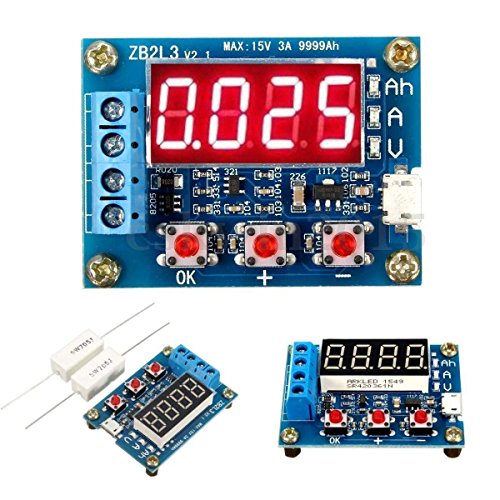
- Works with 1.5V-12V batteries, including Li-ion and lead-acid
- Micro USB powered with under 70mA working current
- Up to 3.000A support with 0.001A current resolution
Best For: DIY users testing small battery packs and mixed low-voltage cells
Heavy-Duty Electronic Load
150W 200V 20A Battery Load Tester

- Handles up to 150W, 200V, and 20A
- Reads capacity, impedance, temperature, energy, and time
- Includes LCD interface and cooling fan
Best For: Engineers and makers needing a higher-power bench load tester
Automotive Battery Load Tester
MOTOPOWER MP0515A 12V Car Battery Tester

- Built for 12V car batteries and automotive systems
- Tests cranking and charging systems
- Includes storage bag and instruction manual
Best For: Drivers and mechanics checking 12V automotive batteries
Cell-Level Battery Checker
RC Cellmeter 7 Multi-Cell Battery Tester

- Checks LiPo, LiFe, Li-ion, NiMH, and NiCd packs
- Shows cell voltages, total voltage, and remaining capacity
- Supports NiMH/NiCd 4-7 cells and lithium 2-7 cells
Best For: RC hobbyists checking multi-cell battery packs quickly
Compact RC Battery Checker
Cellmeter 8 Digital Capacity Tester

- Voltage and capacity measurement in a compact checker
- Supports LiPo, Li-ion, LiFe, NiMH, and NiCd batteries
- Large LCD with one-click operation
Best For: RC users and beginners who want quick, simple battery checks
Car Battery Health Checker
ANCEL BA101 12V Diagnostic Tester

- Reads SOH, SOC, CCA, and charging/cranking results
- Works with Flooded, AGM, GEL, and EFB batteries
- Easy-to-read screen with built-in safety protection
Best For: 12V vehicle owners who want a simple diagnostic tester
High-Power USB Discharger

- Measures capacity, voltage, current, power, and resistance
- Four discharge modes plus app, BT, and PC support
- Four-wire design improves measurement accuracy
Best For: USB and electronic load testing on batteries and power devices
Compact Bench Load Tester
Treedix 120W Mini Discharge Module
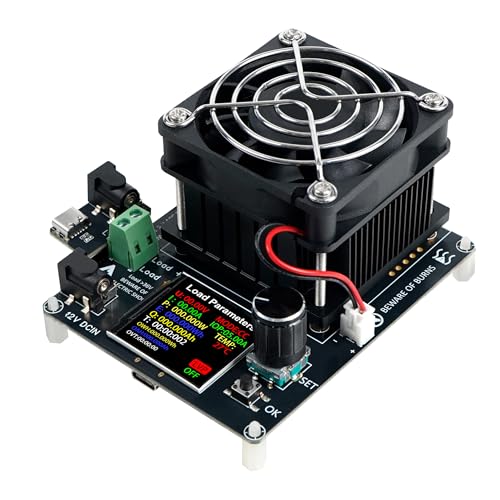
- Compact load tester with 50V, 15A, 120W limits
- Measures energy, capacity, time, and temperature
- Safety protections help during discharge testing
Best For: Portable bench testing of batteries and small DC devices
Portable DC Capacity Tester – HiLetgo 1.5V-12V Discharge Tester
If you want a compact battery capacity tester for small packs and everyday bench use, the HiLetgo unit focuses on discharge-based measurements for 1.5V to 12V batteries. It runs from a micro USB 4.5V-6V supply, supports up to 3.000A current, and is built to measure voltage and capacity with simple resolution figures that suit hobby and light diagnostic work.
Best For: Hobbyists and DIY users checking common 1.5V-12V batteries, including 18650 Li-ion, lithium, and lead-acid packs.
Pros:
- Supports 1.5V-12V batteries, including 18650 Li-ion, lithium, and lead-acid types
- Micro USB powered with low working current under 70mA
- Up to 3.000A supported current with 0.001A resolution
- Discharge voltage range and termination settings help tailor tests
Cons:
- Basic board-style design is better for bench use than portable field testing
- Measurement accuracy specs are solid but still aimed at practical, not lab-grade, work
- Requires understanding of discharge testing and wiring setup
This is a straightforward choice if you need a simple battery capacity tester for mixed low-voltage batteries and want easy USB-powered operation. It is especially useful when you care more about repeatable discharge testing than advanced reporting features.
Heavy-Duty Electronic Load – 150W 200V 20A Battery Load Tester
This battery capacity tester is aimed at users who need a more capable electronic load for batteries, DC power supplies, and charging data lines. With up to 150W, 200V, and 20A supported, it is built for broader load testing and can display voltage, current, power, capacity, impedance, temperature, energy, and time.
Best For: Engineers, makers, and experimenters who want an electronic load with wide measurement coverage and higher power handling.
Pros:
- High-capacity specs: 150W, 200V, and 20A maximums
- Measures many useful values, including capacity, impedance, temperature, energy, and time
- LCD screen supports Chinese and English interfaces
- Built-in cooling fan and discharge tube for heat management
Cons:
- More complex than a simple battery checker
- Best suited to bench use rather than grab-and-go testing
- Tip notes suggest careful setup of the load knob before use
If you need a feature-rich battery capacity tester for bench diagnostics, this model offers a lot of flexibility and a wide measurement range. The tradeoff is that it is designed more like a lab-style electronic load than a casual pocket tester.
Automotive Battery Load Tester – MOTOPOWER MP0515A 12V Car Battery Tester
For car owners shopping for battery capacity testers, the MOTOPOWER MP0515A is focused on 12V automotive batteries and cranking or charging system checks. It is built as a battery-powered tester, uses a multimeter-style measurement approach, and is designed specifically around car batteries rather than general-purpose cell testing.
Best For: Drivers and DIY mechanics who want a compact 12V automotive battery tester.
Pros:
- Designed for 12V car batteries and automotive testing
- Checks cranking and charging systems in addition to battery condition
- Compact and relatively lightweight at 340 g
- Includes a storage bag and instruction manual
Cons:
- Limited to 12V automotive use
- Not intended for Li-ion, NiMH, or other small battery packs
- Does not offer the broader capacity readouts found on electronic load testers
This is a practical pick if your battery capacity tester needs are centered on one job: evaluating a 12V car battery and related charging performance. It is less versatile than bench testers, but it is better matched to automotive use.
Cell-Level Battery Checker – RC Cellmeter 7 Multi-Cell Battery Tester
If you need battery capacity testers for multi-cell packs, the RC Cellmeter 7 is designed to check individual cell voltages and show pack-level information in a simple handheld format. It supports LiPo, LiFe, Li-ion, NiMH, and NiCd batteries, and can display total voltage, lowest and highest cell voltage, the gap between cells, and remaining capacity percentage.
Best For: RC users and battery hobbyists who want a quick cell-by-cell checker for multi-cell packs.
Pros:
- Supports LiPo, LiFe, Li-ion, NiMH, and NiCd battery types
- Displays cell voltages plus total voltage, spread, and remaining capacity
- Works with NiCd/NiMH 4-7 cells and lithium 2-7 cells
- Small and lightweight handheld design
Cons:
- Not a discharge-style capacity tester
- Limited to battery checking and voltage display functions
- Battery is not included
This model is best viewed as a fast battery checker rather than a full bench capacity analyzer. For RC packs, though, the cell-level display and remaining-capacity readout make it a convenient everyday tool.
Portable High-Load Discharge Tester – MakerHawk 150W USB Electronic Load
If you need a battery capacity tester that can handle higher-voltage and higher-current discharge checks, this MakerHawk electronic load is built for hands-on bench use. It supports adjustable constant current discharge, measures voltage and current, and can display capacity and discharge timing for practical battery testing.
Best For: Hobbyists and bench users testing batteries, power supplies, and other DC sources that stay within the 150W limit.
Pros:
- 150W max power and up to 20A current measurement range.
- Wide voltage measurement range from 0.00V to 200V.
- Offers capacity, power, and time tracking with reset functions.
- Can be powered by DC or Micro USB for added flexibility.
Cons:
- Discharge power cannot exceed 150W.
- Requires careful setup to avoid burnout from sudden high current.
- Best suited to users comfortable with electronic load operation.
This is a capable option if your battery capacity testing needs go beyond simple voltage checks. The key is staying within its power limits and using the current controls carefully during setup.
Compact RC Battery Checker – Cellmeter 8 Digital Capacity Tester
For quick battery capacity testers checks on common RC packs and small devices, this Cellmeter 8 is a simple plug-in option with voltage and capacity measurement. The large LCD and one-button operation make it easy to use when you want fast readings without a more complex discharge station.
Best For: RC users and beginners who want a compact checker for LiPo, Li-ion, LiFe, NiMH, and NiCd batteries.
Pros:
- Measures both voltage and capacity in one compact unit.
- Supports LiPo, Li-ion, LiFe, NiMH, and NiCd batteries.
- Large LCD screen and one-click measurement button.
- Minimum operating voltage of 1.2V helps protect compatible batteries.
Cons:
- More of a checker than a full electronic load tester.
- Best suited to supported battery chemistries and RC-style use.
- Less feature-heavy than advanced bench units.
This is the easiest pick in the group if your main goal is fast battery status checks rather than deeper discharge testing. It keeps the workflow simple while still covering several popular rechargeable battery types.
Color Screen Electronic Load – 150W Adjustable Capacity Monitor
If you want battery capacity testers with a more modern display and detailed discharge readouts, this 150W electronic load adds a 2.4-inch TFT color screen and multiple working modes. It measures voltage, current, power, electricity, capacity, internal resistance, and load status, making it a feature-rich choice for controlled battery testing.
Best For: Users who want a detailed electronic load with configurable discharge limits and on-screen test data.
Pros:
- 150W max power and 20A max load current.
- 2.4-inch TFT color screen with extensive test readouts.
- Four working modes: constant current, constant voltage, constant power, and constant resistance.
- Supports overrun protection plus settable stop voltage and discharge time.
Cons:
- Requires more setup than a basic battery checker.
- Still limited to the 150W maximum power rating.
- External NTC sensor is needed for temperature monitoring.
This model stands out if you want more control and more information on screen during discharge tests. It is a strong middle ground between a basic checker and a more advanced bench load.
Car Battery Health Checker – ANCEL BA101 12V Diagnostic Tester
If you want a practical battery capacity tester for 12V automotive systems, the ANCEL BA101 focuses on the essentials: battery health, state of charge, cranking performance, and charging-system checks. It’s built to help you catch problems early and get a clearer read on whether a battery is still usable or starting to fail.
Best For: Drivers and DIY users who need a straightforward 12V battery and alternator tester for cars, trucks, boats, RVs, and similar vehicles.
Pros:
- Shows SOH, SOC, voltage, current, CCA, plus cranking and charging tests
- Supports Flooded, AGM, GEL, and EFB batteries across common global standards
- Black-and-white display with adjustable contrast and white backlight for easier reading
- Built-in protection against reverse polarity, short circuits, overcurrent, and overvoltage
Cons:
- Works only with 12V batteries, not 6V, 8V, or 24V models
- Not compatible with lithium batteries
- Requires the correct battery type and rating entry for the most accurate results
As a battery capacity tester for vehicle use, the BA101 is strongest when you want fast, readable diagnostics without extra setup. It won’t replace advanced shop gear, but for everyday battery and charging checks, it covers the core tests well.
High-Power USB Discharger – MakerHawk 180W Load Tester
For users comparing battery capacity testers for electronics and USB-powered gear, the MakerHawk load tester is built around controlled discharge testing. It measures capacity, voltage, current, power, resistance, and time while giving you multiple discharge modes for more flexible testing.
Best For: Makers, technicians, and hobbyists who need a high-power electronic load for batteries, power banks, chargers, and adapters.
Pros:
- Large color screen shows voltage, current, power, capacity, temperature, and more
- Supports constant current, constant power, constant resistance, and constant voltage modes
- Four-wire setup improves voltage measurement accuracy by reducing wire-resistance error
- Built-in overload, overcurrent, and high-temperature protection for safer testing
Cons:
- Requires corded power, so it’s not a portable battery-operated tester
- Minimum operating voltage is listed at 200V, which may narrow some use cases
- More complex than basic handheld battery testers
This is a strong pick if your battery capacity testing involves repeatable discharge experiments rather than quick vehicle diagnostics. The app and PC connectivity also make it appealing for users who want more detailed data logging and control.
Compact Bench Load Tester – Treedix 120W Mini Discharge Module
The Treedix mini electronic load is a compact option for battery capacity testers when you need controlled discharge in a small footprint. It offers adjustable voltage, current, power, energy, capacity, and discharge-time settings, making it useful for quick test setups and bench work.
Best For: Engineers and electronics hobbyists who want a portable discharge tester for batteries, chargers, and power banks.
Pros:
- Supports up to 50V, 15A, and 120W for bench-style discharge testing
- Tracks energy, capacity, discharge time, and temperature with a color display
- Includes safety protections for over-voltage, under-voltage, over-current, and over-power
- Very compact and easy to carry for small workspaces or field use
Cons:
- Lower power and current limits than larger electronic load testers
- Requires external DC 12V or Type-C PD 12V power input
- Not aimed at automotive battery diagnostics
For users who value size and simplicity over maximum output, this Treedix unit is a practical bench companion. It’s best suited to controlled discharge checks where compact design and basic flexibility matter more than heavy-duty capacity.
How We Picked the Best Battery Capacity Testers
We focused on Battery Capacity Testers that offer reliable measurement range, clear displays, practical load control, and compatibility with common battery chemistries. We also favored models that suit real-world use, from simple cell checks to more advanced discharge testing and automotive diagnostics.
Quick Comparison of Battery Capacity Testers
For a fast match, think in terms of use case: compact cell meters are best for hobby batteries, electronic load modules are better for capacity and discharge testing, and automotive testers are designed for 12V starter batteries and charging systems. The right choice is usually the one that matches your voltage, current, and battery size requirements.
Key Buying Factors for Battery Capacity Testers
Battery Type and Voltage Range
Check that the tester supports your batteries, whether that means 1.5V cells, multi-cell lithium packs, NiMH/NiCd packs, or 12V vehicle batteries. Using the wrong range can make results inaccurate or damage the tester.
Load Capacity and Current Control
Capacity testing depends on drawing a controlled load. Adjustable current is valuable if you need to test different pack sizes or compare results across batteries. Higher-wattage electronic loads are better for demanding tests, while smaller meters are fine for basic checks.
Display, Accuracy, and Readout Detail
Look for a display that shows voltage, current, discharged capacity, and test time clearly. Digital readouts make it easier to compare batteries and spot weak cells or poor charging performance.
Safety and Build Quality
Good Battery Capacity Testers should include sensible heat handling, stable clamps or wiring, and protection features where applicable. This matters most when testing high-current batteries or running longer discharge cycles.
Who Should Buy Which Battery Capacity Testers?
If you test lithium packs, RC batteries, or small rechargeable cells, a compact meter-style tester is often enough. If you need deeper capacity testing, an adjustable electronic load is the better fit. Drivers and mechanics should choose an automotive battery tester built for cranking and charging diagnostics. In short, match the tool to the battery, not the other way around, and you’ll get far more useful results from your Battery Capacity Testers.
