

10 Best Budget Wheel Alignment Machines for DIYers and Shops in 2026

Finding the right wheel alignment equipment means balancing measurement accuracy, setup time, vehicle coverage, and total cost. The best choice depends on whether you need occasional DIY checks, repeatable adjustments, or a complete shop-ready system.
This roundup compares 10 budget wheel alignment machines and alignment tools, from compact toe and camber solutions to full 3D platforms for busy automotive businesses.
Best 10 Budget Wheel Alignment Machines Picks for 2026
Best DIY Value
Portable 4-Wheel Alignment Kit

- Checks caster, camber, and toe
- Works with wheels up to 18 inches
- Portable 6.44-pound aluminum design
Best For: Home mechanics and alignment checks after minor suspension or tire work
Best Supporting Tool
Adjustable Steering Wheel Holder

- Centers and locks the steering wheel
- Fits cars, trucks, vans, and buses
- Steel construction with quick release
Best For: Shops needing stable steering-wheel positioning during alignment work
Best Professional Upgrade
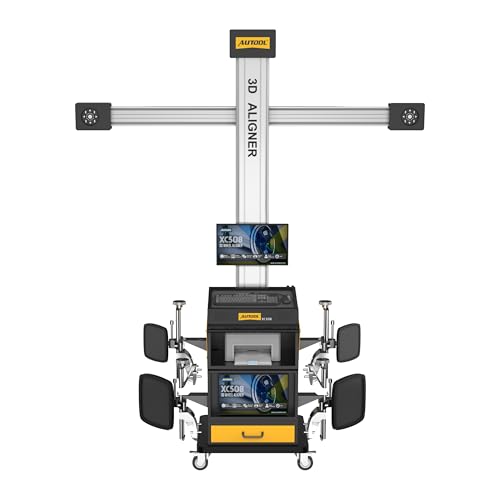
- Dual 20-inch HD screens and built-in printer
- 80,000-plus vehicle database
- Measures full alignment and chassis parameters
Best For: Professional garages needing comprehensive 3D alignment reporting
Best Heavy-Duty DIY Kit

- Fits 11- to 25-inch rims
- 4-ton turn plates with 60-degree movement
- Measures camber, caster, and kingpin inclination
Best For: Home mechanics performing repeat front-end alignment checks
Best Budget 3D Aligner
42-Inch Professional Wheel Alignment Machine

- Measures toe, camber, thrust angle, and setback
- Automated measurement with voice and LED guidance
- Printable reports and collision measurement support
Best For: Tire shops and busy auto repair workshops
Best Simple Budget Tool
Stainless Steel DIY Toe Alignment Plates

- Checks toe-in and toe-out manually
- Rust-resistant stainless steel construction
- Fits most cars, trucks, and SUVs
Best For: DIY owners performing basic toe checks
Best Versatile Budget Kit
4-in-1 Magnetic Camber Alignment Tool

- Measures camber, caster, and toe angles
- Needs no caliper removal or electronic equipment
- Folds smaller and includes dual 10-foot tapes
Best For: DIY users and technicians needing portable multi-angle measurement
Best Budget Pick
Toplamper Toe Alignment Plates

- Stainless steel plates for stable readings
- Tape slots help hold measurement points steady
- Works with most cars, trucks, and SUVs
Best For: DIY toe checks and basic garage adjustments
Best Connected 3D System
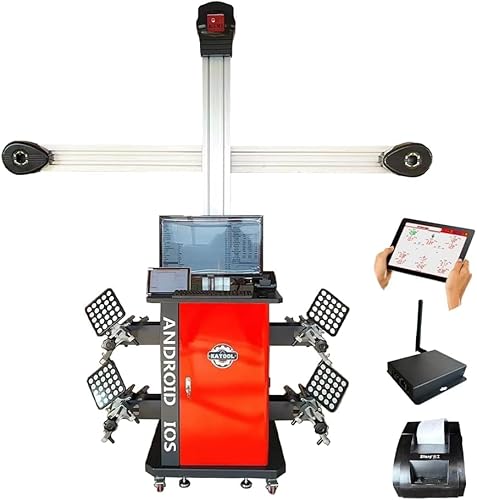
- 3D four-wheel alignment measurement
- View readings on PC, phone, or tablet
- 5-megapixel camera system
Best For: shops wanting flexible digital alignment displays
Best Heavy-Duty Upgrade

- Five-axis precision with live imaging
- Durable alloy steel frame and sensors
- Guided software for faster shop workflows
Best For: high-volume shops and performance garages
Best DIY Value – Portable 4-Wheel Alignment Kit
This portable QuickTrick kit is a practical option for shoppers comparing budget wheel alignment machines and tools for home use. It checks caster, camber, and toe on hard surfaces, supports standard and offset wheels up to 18 inches, and includes instructions for getting started.
Best For: DIY mechanics and professionals who want a portable alignment-checking kit for vehicles with wheels up to 18 inches.
Pros:
- Measures caster, camber, and toe for four-wheel alignment checks.
- Portable design weighs 6.44 pounds and is made with aluminum.
- Suitable for checking alignment after bumps, curb hits, or tire replacement.
- Manufactured in the USA with included batteries.
Cons:
- Wheel compatibility is limited to standard and offset wheels up to 18 inches.
- Designed for checking alignment rather than providing a full shop-style alignment machine.
Its combination of portability, broad basic measurements, and relatively low equipment burden makes it a strong budget choice for routine home checks, provided your vehicle falls within the wheel-size range.
Best Supporting Tool – Adjustable Steering Wheel Holder
For shoppers researching budget wheel alignment machines, this Camoo holder is a useful supporting tool rather than a complete measuring system. It locks the steering wheel in a centered position during alignment and adjusts across cars, trucks, vans, and buses.
Best For: Garages and fleets that need a stable steering-wheel lock for four-wheel alignment and balancing work.
Pros:
- Adjustable design supports cars, trucks, vans, and buses.
- Helps prevent steering-wheel movement during four-wheel alignment.
- High-strength steel frame is CNC-machined for daily use.
- Spring-loaded release allows quick one-person setup and adjustment.
Cons:
- It holds the steering wheel but does not measure alignment angles.
- Its 14-inch holder format may not suit every steering-wheel or vehicle setup.
This is best viewed as an accessory that can improve alignment consistency, especially in busy shops, but it must be paired with separate alignment-measuring equipment.
Best Professional Upgrade – AUTOOL 3D Wheel Aligner
Although it is not a basic home-budget option, the AUTOOL XC508 is worth considering when comparing budget wheel alignment machines for a professional garage. It combines 3D cameras, dual 20-inch screens, a built-in printer, and a vehicle database covering more than 80,000 models.
Best For: Repair shops that need a full-featured 3D alignment system with reporting, lift tracking, and broad vehicle coverage.
Pros:
- Measures camber, caster, toe, thrust angle, wheelbase, and track difference.
- Dual HD screens support simultaneous viewing and operation.
- Built-in thermal printer produces alignment reports without external equipment.
- Includes accident-chassis measurement mode and smart lift tracking.
Cons:
- Its professional garage-grade design is likely excessive for occasional home alignment checks.
- Requires substantially more space and setup than portable alignment tools.
With its extensive measurement suite, reporting functions, and movable workstation, this is the most capable option here for a commercial workflow, but its feature set goes well beyond typical DIY needs.
Best Heavy-Duty DIY Kit – Camber Caster Alignment Set
This 41-pound kit is a substantial choice for shoppers comparing budget wheel alignment machines for front-end work. It includes turn plates, a wheel clamp, and an analog 3-in-1 gauge for measuring camber, caster, and kingpin inclination on rims from 11 to 25 inches.
Best For: Home mechanics who want repeatable front-end checks across a wide range of rim sizes and can provide their own setup space.
Pros:
- Measures camber, caster, and kingpin inclination with one gauge.
- Turn plates support up to 4 tons and allow up to 60 degrees of wheel movement.
- Wheel clamp fits 11- to 25-inch rims.
- Includes low-profile turn plates, magnetic gauge adapter, carry case, and instructions.
Cons:
- Toe plates, ramps, and a digital gauge are not included.
- The 41-pound weight makes it less portable than simpler kits.
- Requires a plank and a two-foot runway behind the rear tires for the described setup.
This is a capable, repeat-use front-end kit with wider rim coverage than the smaller portable option. Its missing toe equipment and more involved setup should be considered before purchase.
Best Budget 3D Aligner – 42-Inch Professional Wheel Alignment Machine
For tire shops and busy repair facilities comparing budget wheel alignment machines, this 3D system emphasizes automated measurements, workshop visibility, and repeatable reporting. It measures toe, camber, thrust angle, and setback with stated accuracy of ±0.01°.
Best For: Tire shops and auto repair workshops that need a full-featured 3D alignment system.
Pros:
- 3D camera measurement covers several key alignment angles.
- Automatic measurement after pushing the vehicle forward reduces manual setup.
- 42-inch display includes voice guidance and LED indicators.
- Can generate printable reports and track measurement data.
Cons:
- At 346 pounds, it is a substantial shop installation.
- The system is more equipment-intensive than a basic DIY alignment tool.
This is the most capable option of the three for professional alignment work, especially where reporting and collision-related measurements matter. Its size and workshop-oriented design make it less suitable for occasional home use.
Best Simple Budget Tool – Stainless Steel DIY Toe Alignment Plates
Among budget wheel alignment machines and tools, this stainless steel plate kit is a straightforward choice for checking toe-in and toe-out at home. Its tape-measure slots help hold the tape in place during basic measurements.
Best For: DIY vehicle owners who want a compact tool for basic toe checks and adjustments.
Pros:
- Checks toe-in and toe-out without electronic equipment.
- Stainless steel construction resists rust and corrosion.
- Designed to fit most cars, trucks, and SUVs.
- Built-in hanging points simplify storage.
Cons:
- Measures basic toe alignment rather than camber or caster.
- It is a manual measurement tool, so results depend on careful setup.
This is a practical low-cost option for preliminary checks and minor DIY adjustments, but it does not replace a complete professional alignment system. Choose it when simplicity, portability, and storage matter more than measuring multiple angles.
Best Versatile Budget Kit – 4-in-1 Magnetic Camber Alignment Tool
For shoppers seeking budget wheel alignment machines with broader angle coverage, this 4-in-1 metal kit adds a magnetic camber gauge to toe measurement. It is designed to measure camber, caster, toe-in, and toe-out without caliper removal or electronic equipment.
Best For: DIY users and technicians who want a compact manual kit for measuring several alignment angles.
Pros:
- Measures camber, caster, toe-in, and toe-out.
- Requires no caliper removal, calibration, or electronic equipment.
- Folding design is approximately 40% more compact for storage.
- Includes dual 10-foot tape measures and an all-metal construction.
Cons:
- Manual measurements require careful positioning and technique.
- It does not provide the automated display or reporting features of a 3D system.
This kit offers broader capability than a basic toe plate while remaining portable and manually operated. It is a strong middle-ground choice for garages that want more alignment-angle coverage without investing in a full electronic machine.
Best Budget Pick – Toplamper Toe Alignment Plates
For drivers looking for budget wheel alignment machines or tools for basic home checks, the Toplamper toe alignment plates offer a simple way to compare toe-in and toe-out readings before making adjustments. Their tape-slot design helps keep measurements steadier in a garage or driveway.
Best For: DIY owners and home garages handling basic toe checks on cars, trucks, and SUVs.
Pros:
- Helps reduce repeated shop visits for simple toe checks.
- Stainless steel plates provide stable support for repeated use.
- Built-in tape slots help reduce tape-measure slipping.
- Designed for a wide range of cars, trucks, and SUVs.
Cons:
- Designed for basic toe measurement rather than full computerized alignment diagnostics.
- Requires a separate tape measure and user-performed adjustments.
This is a practical, low-cost option when you need a straightforward toe-checking aid rather than a complete shop alignment system. It can support more consistent readings, but it does not replace professional alignment equipment for comprehensive measurements.
Best Connected 3D System – KATOOL KT-AV9 Android Aligner
KATOOL KT-AV9 Android System 3D Wheel Alignment Machine Wheel Aligner Automotive Tire Alignment Tool
Check Price On AmazonAmong budget wheel alignment machines, the KATOOL KT-AV9 stands out for bringing 3D camera measurement and flexible device display options to automotive alignment work. Its readings can be viewed on a PC, smartphone, tablet, or compatible Apple device.
Best For: Automotive shops that want a 3D four-wheel alignment system with mobile or tablet viewing flexibility.
Pros:
- Uses Android-based 3D camera measurement technology.
- Supports four-wheel alignment measurements.
- Readings can display synchronously on a PC, smartphone, or tablet.
- 5-megapixel cameras support a camera-to-turntable distance of 1500–3000 mm.
Cons:
- More involved than a simple manual toe-checking tool.
- The supplied notes do not specify included display hardware or installation requirements.
The KT-AV9 is a stronger fit for users who want digital 3D measurement and remote display convenience. Verify the package contents and shop setup before purchase, especially if you need a complete ready-to-install bay system.
Best Heavy-Duty Upgrade – KATOOL KT-5DA 5D Aligner
For shops comparing budget wheel alignment machines with more advanced equipment, the KATOOL KT-5DA adds five-axis precision, real-time imaging, and shop-focused construction. It is designed for passenger vehicles and light trucks, with software intended to guide technicians through alignment jobs.
Best For: Busy tire centers, automotive shops, and performance garages that need real-time alignment data and durable equipment.
Pros:
- Five-axis alignment system helps deliver consistent measurements.
- Real-time imaging mirrors adjustments on screen.
- Reinforced alloy steel frame and industrial-grade sensors support frequent shop use.
- Guided software can help reduce input errors and speed workflow.
Cons:
- At 309 pounds, it is substantially heavier and less portable than basic alignment tools.
- Its shop-grade design may be more equipment than occasional DIY users need.
- The supplied notes do not detail installation, bay requirements, or included accessories.
The KT-5DA is the most capable option in this group for professional workflows, particularly where live data and repeatable results matter. Its size and weight make it better suited to a dedicated service bay than a home garage.
How We Picked These Budget Wheel Alignment Machines
We focused on equipment that offers useful alignment measurements without automatically moving into the highest commercial price tier. The selection includes portable kits, toe-adjustment plates, camber gauges, steering wheel holders, and complete 3D wheel aligners so different buyers can compare solutions suited to their workload.
Our main considerations were measurement capability, stated wheel-size and vehicle coverage, ease of setup, display and documentation features, portability, shop throughput, and the likely learning curve. Buyers should verify calibration procedures, included accessories, software support, and vehicle database coverage before ordering.
Quick Comparison
- For occasional DIY checks: Portable kits, toe plates, and 4-in-1 tool kits are compact and comparatively affordable.
- For front-end adjustments: Camber/caster tools, turn plates, and steering wheel holders help support more controlled setup work.
- For independent shops: 3D aligners with vehicle databases, large displays, and printers can improve repeatability and customer documentation.
- For heavy-duty service: Choose a system specifically rated for trucks, buses, vans, or larger wheels rather than assuming passenger-car compatibility.
Key Buying Factors for Budget Wheel Alignment Machines
Measurement Type and Accuracy
Decide whether you need toe checks only or complete readings for camber, caster, toe, thrust angle, and steering position. Simple tools can be effective for adjustments, but they require careful setup and a level working surface. Electronic and 3D systems may provide faster, more repeatable readings when properly calibrated.
Vehicle and Wheel Coverage
Check the supported rim diameter, tire width, axle load, and vehicle types. A low-cost unit that cannot accommodate your vehicles is poor value. Commercial users should also confirm whether the software database covers the makes and models they service most often.
Setup, Space, and Calibration
Portable tools are easier to store but may require more manual positioning. Full aligners need adequate bay space, a suitable lift or alignment rack, stable lighting, and regular calibration. Consider whether installation, training, updates, and technical support are included.
Workflow and Documentation
For a shop, dual screens, guided software, a printer, Android connectivity, and real-time imaging can reduce service time and make before-and-after reports easier to explain. For home use, those features may add cost without improving occasional alignment checks.
Who Should Buy Which Budget Wheel Alignment Machines?
DIY owners and home mechanics should prioritize portable alignment kits, toe plates, and magnetic gauges that match their wheel sizes and storage limitations. Performance enthusiasts may benefit from turn plates and camber/caster tools for repeatable suspension setup. Independent repair shops should consider a complete 3D system with broad vehicle coverage, guided measurements, and documentation features. Commercial or heavy-duty operators need a purpose-built machine with suitable clamps, capacity, and software support for larger vehicles.
Before buying, compare the complete delivered cost—not just the machine price—including shipping, installation, calibration, software updates, replacement targets or clamps, and any required alignment rack accessories.
