

10 Best Electric Vehicle Charging Adapters for DIY Mechanics in 2026

Choosing the right electric vehicle charging adapter can make home diagnosis, charging setup, and connector replacement much easier for DIY mechanics. The challenge is matching standards, amperage, voltage, and vehicle compatibility without compromising safety.
This roundup covers 10 adapter types and models spanning J1772, NACS, CCS1, Type 1, Tesla, and common 240-volt outlet connections. Use the guide below to narrow the options by charging task, electrical setup, and vehicle platform.
Best 10 Electric Vehicle Charging Adapters for DIY Mechanics Picks for 2026
Best Overall
Lectron J1772 to Tesla Adapter

- Supports up to 80A and 240V AC
- Compatible with Tesla and NACS-alliance EVs
- IP67-rated, compact design
Best For: Tesla and NACS-alliance EV owners using J1772 chargers
Best for EV Builds

- Supports up to 50A
- Works from 110V to 240V
- UL94 V-0 thermoplastic housing
Best For: Custom EV conversions and J1772 inlet replacements
Best for Garage Power Adapters
Suplevel NEMA 6-50P to 14-50R Cord

- 6 AWG heavy-duty cable
- 50A, 250V rating; use up to 32A charging
- For EV charging only, not RVs
Best For: EV charging setups with a NEMA 6-50 outlet
Best for CCS Fast Charging
Lectron NACS to CCS Fast-Charging Adapter

- Supports up to 500A and 1,000V DC
- For approved CCS1 EVs
- Locking NACS and CCS connections
Best For: CCS1 EVs authorized to use Tesla Superchargers
Compact Type Conversion

- J1772-compatible vehicle connection
- Up to 32A and 250V AC
- IP54-rated compact design
Best For: Portable Type 2 charging access for J1772 EVs
High-Capacity NACS Access

- Compatible with Tesla and NACS EVs
- Rated up to 80A and 250V
- UL 2251 and IP54 rated
Best For: NACS vehicles charging at J1772 Level 1 or Level 2 stations
Workshop-Ready Connector

- 240V single-phase, 16A or 32A
- CE, TUV, and SAE J1772 listed
- IP54 and UL94-V-0 rated
Best For: Type 1 charging-system builds and replacement projects
Best DC Fast-Charge Bridge
NACS-to-CCS1 Fast-Charge Adapter

- 500A and 1,000V DC rating
- Interlock design with UL 2252 certification
- Requires confirmed vehicle and network compatibility
Best For: CCS1 EV owners using compatible Tesla Superchargers
Best Portable AC Option
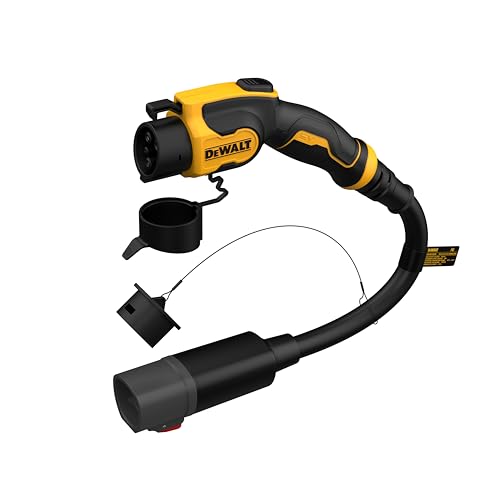
- Supports 40A at 240V
- Works with Tesla Level 1 and Level 2 chargers
- Portable plug-and-go design with three-year warranty
Best For: J1772 EV and plug-in hybrid owners charging from Tesla AC equipment
Best Overall – Lectron J1772 to Tesla Adapter
For DIY mechanics seeking electric vehicle charging adapters for DIY mechanics, the Lectron J1772-to-NACS adapter is a practical way to connect Tesla vehicles and other NACS-alliance EVs to SAE J1772 Level 1 or Level 2 chargers. Its compact design makes it convenient to keep in the vehicle.
Best For: Tesla and NACS-alliance EV owners who regularly use J1772 charging stations.
Pros:
- Supports up to 80A and 240V AC charging.
- Works with Tesla Model S, 3, X, Y, Cybertruck, and other NACS-alliance EVs.
- IP67 weatherproof construction with TUV and UL 2251 certifications.
- Lightweight, compact, and covered by a two-year warranty.
Cons:
- Designed for AC J1772 charging rather than DC fast charging.
- Compatibility is centered on Tesla and NACS-alliance vehicles.
With its broad vehicle coverage, high current rating, and weather-resistant enclosure, this is a versatile adapter for expanding AC charging access. Confirm your vehicle and charger specifications before use.
Best for EV Builds – MacMaxe J1772 Socket Inlet
DIY mechanics working on EV conversions or charging hardware can use this MacMaxe SAE J1772 Type 1 socket inlet as a vehicle-side connector for Level 1 and Level 2 charging. It supports a broad operating range, but installation requires appropriate electrical and mechanical expertise.
Best For: Custom EV projects that need a replacement or vehicle-side J1772 Type 1 inlet.
Pros:
- Rated for 16A, 32A, 40A, or 50A current.
- Supports 110V to 240V operation.
- Uses UL94 V-0 flame-retardant thermoplastic.
- Silver-plated copper-alloy pins and IP44 working-condition protection.
Cons:
- It is a socket inlet for installation, not a complete plug-in charging adapter.
- IP44 protection is more limited than higher-rated outdoor enclosures.
- Wiring and installation are not described as included.
This inlet is a useful component for a carefully planned EV build or repair. Match the connector, wiring, current rating, and enclosure to the vehicle’s charging system before installation.
Best for Garage Power Adapters – Suplevel NEMA 6-50P to 14-50R Cord
For DIY mechanics adapting an existing 6-50 outlet for EV charging equipment, this Suplevel cord converts a NEMA 6-50P plug to a NEMA 14-50R receptacle. It is intended only for EV charging—not RVs or standard 110V household outlets—and the manufacturer advises limiting charging current to 32A.
Best For: EV owners with a NEMA 6-50 outlet who need to connect compatible 14-50 EV charging equipment.
Pros:
- Uses heavy-duty 6 AWG/3-conductor cable.
- Rated at 50A, 250V, and 12,500W.
- ETL listed and covered by an 18-month warranty.
- Compact one-foot cord with ergonomic plug and connector handles.
Cons:
- Not compatible with RVs or 110V household outlets.
- Recommended charging current is no more than 32A despite the 50A rating.
- Only works with compatible NEMA 6-50 and 14-50 connections.
This adapter cord can be useful in a garage with the appropriate high-current receptacle, especially when cable heat is a concern. Verify circuit capacity, connector compatibility, and charging settings before connecting it.
Best for CCS Fast Charging – Lectron NACS to CCS Fast-Charging Adapter
DIY mechanics with a CCS1 EV can use this Lectron NACS-to-CCS adapter to access Tesla Superchargers, but only when the vehicle’s automaker has granted Supercharger-network access. It is built for DC fast charging and includes locking mechanisms on both connection points.
Best For: Compatible CCS1 EVs that have approved access to Tesla Superchargers.
Pros:
- Rated for up to 500A and 1,000V DC.
- Designed for CCS1 EVs with Tesla Supercharging access.
- Locking mechanisms help secure both NACS and CCS connections.
- Supports access to V3 and V4 Tesla Superchargers where permitted.
Cons:
- Not universally compatible with all CCS1 EVs.
- Automaker approval and vehicle-specific compatibility are required.
- The adapter may need to cool for 30 minutes after a heat-related charging fault.
This is a specialized fast-charging adapter rather than a general-purpose EV connector. Check automaker approval, vehicle requirements, and the included instructions before relying on it for road trips.
Compact Type Conversion – Type 2 to Type 1 Adapter
For DIY mechanics comparing electric vehicle charging adapters, this Type 2-to-Type 1 model is designed for J1772 vehicles and supports up to 32A at 250V AC. Its compact form makes it practical to keep in the vehicle for compatible public or home charging setups.
Best For: J1772 EV owners who need a portable Type 2 charging-station adapter.
Pros:
- Compatible with J1772 EVs.
- Supports up to 32A and 250V AC.
- IP54-rated, compact, and lightweight.
- Silver-plated copper alloy contacts and an anti-theft clip.
Cons:
- Only suitable for Type 2-to-Type 1 compatibility.
- Its 32A rating may not match higher-capacity charging equipment.
This is a straightforward adapter for mechanics who prioritize portability and broad J1772 compatibility. Verify both the vehicle inlet and charging-station connector before ordering.
High-Capacity NACS Access – LENZ J1772 to NACS Adapter
DIY mechanics working across Tesla and other NACS vehicles may value this J1772-to-NACS adapter for expanding access to Level 1 and Level 2 J1772 stations. It is rated up to 80A and 250V, with UL 2251 and CSA compliance noted by the manufacturer.
Best For: Tesla and NACS EV owners using J1772 charging stations at home, work, hotels, or public facilities.
Pros:
- Works with Tesla vehicles and listed NACS-equipped EVs.
- Supports up to 80A and 250V AC charging.
- UL 2251 and CSA C22.2 No. 282-17 compliant.
- Lightweight, glove-box-sized design with IP54 rating and a 2-year protection plan.
Cons:
- Designed for AC Level 1 and Level 2 charging, not DC fast charging.
- Compatibility should be confirmed for future or newly released NACS vehicles.
Among these electric vehicle charging adapters for DIY mechanics, the LENZ stands out for its high current rating and documented safety certifications. It is a strong fit when J1772 access is more important than the smallest possible adapter.
Workshop-Ready Connector – Acouto Type 1 EV Socket
For DIY mechanics building or servicing compatible charging setups, this Acouto Type 1 socket supports single-phase 240V operation at either 16A or 32A. Its CE, TUV, and SAE J1772 approvals, along with a UL94-V-0 flame-retardant rating, provide useful specifications to review before installation or replacement.
Best For: Type 1 single-phase charging projects requiring a 240V connector with selectable 16A or 32A ratings.
Pros:
- Supports 240V single-phase applications at 16A or 32A.
- Listed as meeting CE, TUV, and SAE J1772 standards.
- UL94-V-0 flame-retardant construction.
- IP54 protection and a -30°C to +50°C operating range.
Cons:
- It is a connector socket rather than a complete charging station.
- Limited to Type 1, single-phase applications.
- Installation compatibility must be checked before use.
This connector is best approached as a component for a compatible charging project, not a universal plug-and-play adapter. Confirm the wiring, enclosure, and vehicle interface before putting it into service.
Best DC Fast-Charge Bridge – NACS-to-CCS1 Fast-Charge Adapter
For DIY mechanics helping maintain a CCS1-equipped EV, the FOCSPROD adapter can connect compatible vehicles to Tesla Supercharger DC fast-charging stations. Its 500A/1,000V rating and interlock design are useful on road trips, but compatibility must be verified with the automaker before purchase.
Best For: CCS1 EV owners who need access to compatible Tesla Supercharger DC fast-charging stations.
Pros:
- Supports up to 500A and 1,000V for high-power DC charging.
- Interlock structure is designed for added connection stability.
- UL 2252-compliant SGS certification and a three-year warranty are included.
- Designed for access to compatible V3 and V4 Tesla Supercharger stations.
Cons:
- Not compatible with Level 1 or Level 2 AC chargers.
- Compatibility is currently excluded for several listed brands, including Audi, BMW, Kia, Nissan, Toyota, Volkswagen, and others.
- The vehicle manufacturer must enable Tesla Supercharger network access.
This is the most specialized option here: a practical choice for CCS1 vehicles with confirmed Supercharger support, but not a general-purpose shop or home-charging adapter.
Best Portable AC Option – DEWALT Tesla-to-J1772 Adapter
For DIY mechanics working with J1772 electric vehicles or plug-in hybrids, this DEWALT adapter provides a straightforward way to use compatible Tesla Level 1 and Level 2 charging equipment. It supports up to 40A at 240V and uses a plug-and-go design suited to portable charging.
Best For: J1772 EV and plug-in hybrid owners who need a portable adapter for Tesla AC chargers.
Pros:
- Compatible with SAE J1772 electric vehicles and plug-in hybrids.
- Supports up to 40A and 240V charging.
- Reinforced construction and an anti-slip grip support secure handling.
- ETL and FCC certified, with a three-year limited warranty and 24/7 technical support.
Cons:
- Designed for Tesla Level 1 and Level 2 charging, not DC fast charging.
- Its 40A limit is lower than the 48A rating of the Lectron alternative.
- Exact enclosure material and color may vary according to the supplied specifications.
The DEWALT is a sensible everyday carry option when compatibility is clear. Its portable construction and simple operation make it approachable for DIY users who do not want installation or configuration.
Best Higher-Current AC Adapter – Lectron Tesla-to-J1772 Converter
DIY mechanics seeking flexible AC charging access can use the Lectron Tesla-to-J1772 adapter to connect J1772 vehicles with compatible Tesla Wall Connectors, Destination Chargers, and Mobile Connectors. Its 48A/240V rating gives it a higher stated current capacity than the DEWALT adapter.
Best For: J1772 EV owners who regularly use compatible Tesla AC charging equipment and want a compact 48A adapter.
Pros:
- Supports up to 48A and 240V charging.
- Works with Tesla High Powered Wall Connectors, all generations of Destination Chargers, and Mobile Connectors.
- Compact and durable design is convenient for keeping in the vehicle.
- SGS certified under the UL 2251 standard.
Cons:
- Designed for J1772 vehicles and compatible Tesla AC equipment, not CCS1 DC fast charging.
- Actual charging performance depends on the vehicle and charging equipment.
- Compatibility should be confirmed before relying on specific Tesla charging hardware.
Choose the Lectron when the extra current capacity and broad Tesla AC equipment compatibility are priorities. It is a strong fit for routine charging access, provided your vehicle and charger combination supports the stated limits.
How We Picked These Electric Vehicle Charging Adapters for DIY Mechanics
We focused on adapters that solve common garage and workshop problems: connecting different charging standards, adapting 240-volt outlets, replacing vehicle-side inlets, and supporting portable Level 1 or Level 2 charging equipment. The selection includes both charging-interface converters and electrical plug adapters, because they serve different purposes and should not be treated as interchangeable.
We also considered stated amperage and voltage ratings, connector type, Tesla/NACS or J1772 compatibility, portability, safety certifications where listed, and whether an adapter is intended for charging, equipment installation, or component replacement. Always verify the product documentation and your vehicle’s requirements before energizing a connection.
Quick Comparison
| Adapter type | Best for | What to verify |
|---|---|---|
| J1772 to NACS | Charging a Tesla or NACS vehicle from J1772 equipment | Vehicle support, current rating, and lock/interlock design |
| NACS to CCS1 | Using compatible fast-charging equipment with a CCS1 vehicle | Vehicle software approval, station compatibility, and maximum voltage/current |
| Type 2 to Type 1 | Connecting European Type 2 equipment to a J1772 vehicle | Single-phase limits and connector pin configuration |
| NEMA plug adapters | Matching a charger plug to an existing 240V receptacle | Wire size, breaker rating, grounding, and continuous-load limits |
| Replacement inlet sockets | Repairing or building a charging connection | Mounting dimensions, pin layout, and rated amperage |
Key Buying Factors for Electric Vehicle Charging Adapters for DIY Mechanics
Connector and Charging Standard
Identify both sides of the connection before buying. J1772, NACS, CCS1, and Type 2 are not universal, even when they appear mechanically similar. A Tesla-to-J1772 adapter is different from a J1772-to-Tesla adapter in intended direction and use.
Voltage, Amperage, and Continuous Load
Match the adapter’s rating to the charger, receptacle, circuit, and vehicle. EV charging is a sustained load, so a high advertised amperage does not make an undersized outlet, cord, or breaker safe. For outlet adapters, confirm the circuit and receptacle are correctly installed and rated for the charger’s continuous draw.
Vehicle and Station Compatibility
Fast-charging adapters may require vehicle software support, station authorization, or a specific connector revision. Check the manufacturer’s compatibility list rather than relying only on connector shape or a nominal 500-amp/1,000-volt rating.
Build Quality and Safety
Look for secure locking, weather resistance when needed, robust strain relief, heat-resistant materials, and recognized certification claims such as UL or equivalent testing. Inspect contacts regularly and stop using an adapter that becomes unusually hot, loosens, arcs, or shows damage.
Who Should Buy Which Electric Vehicle Charging Adapters for DIY Mechanics?
Choose a J1772-to-NACS adapter if your Tesla or other NACS vehicle needs access to compatible J1772 Level 2 stations. Choose an NACS-to-CCS1 adapter only when your CCS vehicle and charging network explicitly support that combination. A Type 2-to-Type 1 adapter is aimed at owners dealing with mixed regional equipment, while a replacement J1772 inlet suits repair or fabrication work rather than routine public charging.
For home garages, a NEMA 6-50-to-14-50 adapter can help only when the charger and circuit are appropriately configured; it is not a substitute for an electrician’s assessment. Portable Tesla-to-J1772 adapters are useful for travel and destination charging, while higher-current models make sense for frequent Level 2 use when every connected component supports the same rating.
