

10 Best Portable Paint Correction Polishers for Convenient Car Care in 2026

Portable paint correction polishers make it easier to remove light defects, spread wax, and refine a vehicle’s finish without relying on a full-size shop machine. The right model depends on where you work, how much correction you need, and whether cordless convenience matters most.
This roundup compares 10 options ranging from compact mini polishers to larger dual-action and rotary machines, helping you match the tool to your vehicle, workspace, and experience level.
Best 10 Portable Paint Correction Polishers Picks for 2026
Best Cordless All-Rounder
BATOCA S3 Cordless DA Polisher

- Lightweight 2.4-pound cordless design
- Two 2.0Ah batteries included
- Adjustable 2,500–5,000 RPM range
Best For: Beginners handling routine automotive polishing and waxing
Best Simple Corded Option
WEN 6010 6-Inch Waxer/Polisher
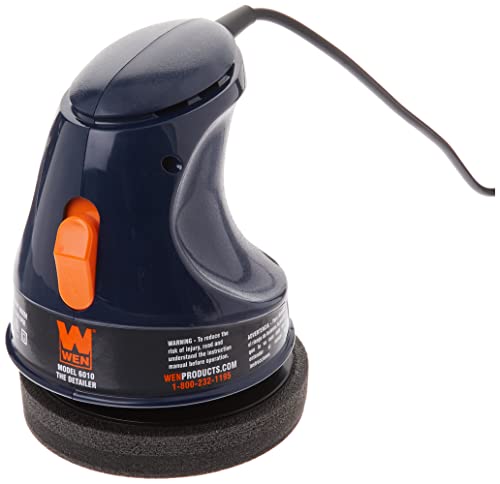
- Consistent 3,500 RPM corded motor
- Contoured one- or two-hand grip
- Includes applicator and terry cloth bonnets
Best For: Basic waxing and polishing near a power outlet
Best for Tight Areas
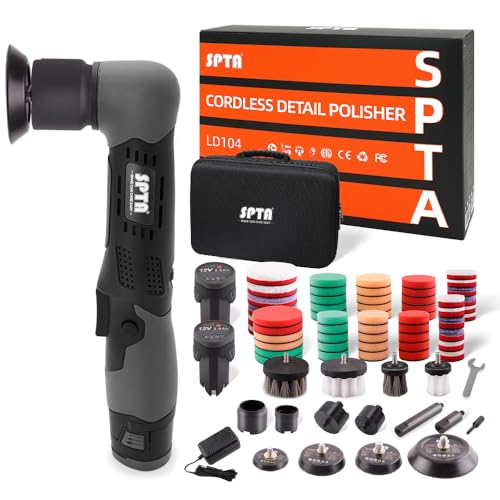
- 25mm, 50mm, and 80mm backing plates
- Dual-action and rotary attachments
- Two batteries and extensive accessory kit
Best For: Emblems, body lines, and confined detailing areas
Best Feature-Rich Cordless Kit

- Eight speeds from 2,800 to 6,300 RPM
- 8mm dual-action motion with LED display
- Two 21V batteries and multipurpose accessories
Best For: Cordless detailing across automotive and household surfaces
Best Micro Detailer
SPTA Cordless Mini Car Polisher
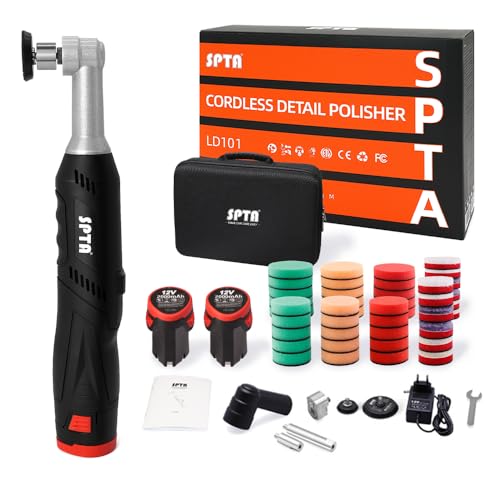
- Cordless 12V design for mobile detailing
- 1-inch plate reaches tight areas
- Variable 1,000–5,000 OPM speed
Best For: Precision polishing around emblems, lines, and confined areas
Best Full-Size Value
AOBEN 6-Inch Dual Action Polisher
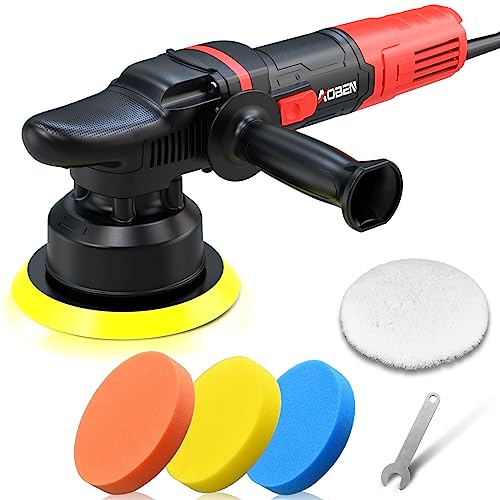
- 700W motor with six speed settings
- 6-inch dual-action polishing platform
- Includes foam and synthetic wool pads
Best For: Broad vehicle polishing, waxing, and general detailing
Best Ultra-Light Cordless

- Lightweight design for precision detailing
- Up to 50 minutes of cordless use
- Type-C charging and quick-change accessories
Best For: Small-area polishing on mirrors, badges, handles, and similar spots
Best Cordless Pick

- Cordless 8mm dual-action design
- Six speeds with LED display
- Includes two batteries and varied pads
Best For: Beginners and mobile detailing
Best Power Option

- 1600W motor for demanding correction
- Seven speeds from 1000–3500 RPM
- Includes detachable D- and side handles
Best For: Extended corded polishing and heavy-duty tasks
Best Handle Flexibility

- Three grip configurations
- 1600W motor with seven speeds
- Large assortment of pads and accessories
Best For: Multi-surface projects requiring adaptable handling
Best Cordless All-Rounder – BATOCA S3 Cordless DA Polisher
For shoppers comparing portable paint correction polishers, the BATOCA S3 combines cordless convenience with a beginner-friendly 5mm random orbit. Its 2.4-pound body, two batteries, and adjustable 2,500–5,000 RPM range make it practical for routine automotive polishing, waxing, sealing, and light sanding.
Best For: Beginners who want a lightweight cordless polisher for general car detailing.
Pros:
- Lightweight 2.4-pound design with a compact ABS housing.
- Includes two 2.0Ah batteries and a fast charger for easier workflow continuity.
- Six adjustable speed levels and a 5mm random orbit suit waxes, sealants, and glazes.
- Battery-status lights provide a quick charge reminder.
Cons:
- The 5mm orbit is oriented toward general finishing rather than more aggressive correction.
- It uses a 6-inch format, which may be less convenient than a mini tool in very tight areas.
The BATOCA S3 is a sensible portable option when low weight, cordless operation, and straightforward controls matter more than maximum cutting power.
Best Simple Corded Option – WEN 6010 6-Inch Waxer/Polisher
The WEN 6010 is a straightforward choice among portable paint correction polishers for users who prefer continuous corded power. Its 6-inch pad, 3,500 RPM motor, contoured grip, and included bonnets support basic waxing and polishing in a garage or workshop.
Best For: Users who prefer a simple corded machine for waxing and general polishing.
Pros:
- 120V corded motor delivers a consistent 3,500 RPM.
- Contoured palm and body-grip design supports one- or two-hand use.
- Lockable on/off switch provides convenient operation.
- Includes a 6-inch applicator bonnet and terry cloth bonnet.
Cons:
- Corded operation limits mobility compared with battery-powered alternatives.
- The supplied notes identify it as a waxer/polisher without variable speed control.
Choose the WEN 6010 if dependable plug-in operation and uncomplicated controls fit your workflow better than cordless portability or specialized correction features.
Best for Tight Areas – SPTA Cordless Mini Polisher
The SPTA cordless mini polisher stands out among portable paint correction polishers for detailed work around emblems, body lines, and other confined areas. It includes 25mm, 50mm, and 80mm backing plates, dual-action and rotary attachments, two batteries, and a large accessory assortment for polishing, sanding, and cleaning.
Best For: Detailers working on tight automotive areas and small paint defects.
Pros:
- Compact backing-plate options cover 25mm, 50mm, and 80mm applications.
- Cordless design and lightweight construction improve maneuverability in confined spaces.
- Dual-action operation is described as suitable for hologram-free polishing, while a rotary attachment provides heavier cutting.
- Includes two batteries and an extensive selection of pads, brushes, and accessories.
Cons:
- The 1.95 kg listed weight is higher than some compact polishers.
- Its small-pad format is specialized and may be slower for large vehicle panels.
- The large accessory kit may be more than casual users need.
For precision correction and spot work, the SPTA offers more reach and attachment flexibility than a conventional full-size polisher, though broad panels may call for a larger machine.
Best Feature-Rich Cordless Kit – 8-Speed Cordless Car Polisher
This cordless car buffer is a feature-rich option among portable paint correction polishers, pairing an 8mm dual-action motion with eight speed settings from 2,800 to 6,300 RPM. Its LED display, two 21V batteries, ergonomic grip, and included pads support automotive and broader household surface work.
Best For: Users seeking adjustable cordless control and accessories for multiple surfaces.
Pros:
- Eight speed levels and an LED display provide visible operating control.
- Two 21V 2000mAh batteries and a fast charger support longer detailing sessions.
- 8mm dual-action motion is designed for even distribution, low vibration, and reduced noise.
- Accessory set includes sponge pads, wool pads, bonnets, and sanding discs.
Cons:
- Built-in overheat protection may pause operation during extended high-speed use.
- The supplied notes do not provide a listed product weight.
- The broad accessory set may be unnecessary for users focused only on vehicle paint.
The machine offers useful speed visibility and surface versatility, making it a practical choice for shoppers who want one cordless tool for car care and selected work on wood, floors, metal, or ceramics.
Best Micro Detailer – SPTA Cordless Mini Car Polisher
For detailers comparing portable paint correction polishers, the SPTA Cordless Mini Car Polisher stands out for tight, hard-to-reach areas. Its cordless 12V design, 1-inch backing plate, and lightweight build are suited to polishing around emblems, body lines, and other confined sections without an extension cord.
Best For: Focused paint correction and polishing in tight automotive areas.
Pros:
- Compact cordless design supports mobile detailing.
- 1-inch backing plate reaches around emblems, body lines, and tight spots.
- Variable speed from 1,000 to 5,000 OPM and free-spinning dual-action motion.
- Includes an 80W battery with up to about one hour of maximum-speed use, plus a second battery for continued work.
Cons:
- The small backing plate is designed for niche areas rather than broad vehicle panels.
- Its specialized compact format may be less suitable as a sole full-size polisher.
The SPTA is a practical supplement for precision work, especially when portability and access matter more than covering large surfaces quickly.
Best Full-Size Value – AOBEN 6-Inch Dual Action Polisher
The AOBEN 6-Inch Dual Action Polisher is a corded option for shoppers seeking portable paint correction polishers with broader panel coverage. Its 700W motor, six speed settings, dual-action motion, and included pads support polishing, waxing, sanding, and cleaning across automotive and other surfaces.
Best For: Full-size vehicle detailing, waxing, and general polishing with a corded machine.
Pros:
- Six variable speeds from 1,000 to 4,500 RPM accommodate waxing, polishing, and defect removal.
- Dual-action random orbital motion is designed for a swirl-free finish.
- Includes three foam pads, a synthetic wool pad, wrench, and 6-inch polishing disc.
- Side and top handle options can help reduce fatigue during use.
Cons:
- Corded 120V operation limits portability compared with cordless models.
- At 6.8 pounds, it is substantially heavier than mini polishers.
- The machine may stop under excessive pressure at speeds 1–3, according to the supplied notes.
Choose the AOBEN when you want a more conventional 6-inch setup and useful included accessories, provided access to a wall outlet is not a concern.
Best Ultra-Light Cordless – Fanttik P10 Pro Mini Polisher
The Fanttik P10 Pro Mini Car Buffer Polisher is one of the more compact portable paint correction polishers for precision jobs. Weighing 0.78 pounds according to the product notes, it is designed for side-view mirrors, badges, door handles, and other small areas where a full-size machine can be cumbersome.
Best For: Lightweight cordless spot polishing and fine-scratch treatment in confined areas.
Pros:
- Compact, lightweight design is suited to precision detailing.
- 4000 mAh battery provides up to 50 minutes of operation.
- Type-C rapid charging offers a convenient power option.
- Quick-change backing plates, pads, sandpapers, and cleaning brush support multiple tasks.
Cons:
- Its mini format is intended for detail work rather than large panels.
- Low-speed precision design may be less appropriate when fast, aggressive correction is needed.
- The supplied specifications list a 3.6V power source and 14.4 watt-hours, indicating a compact tool rather than a full-size polisher.
The P10 Pro makes sense for users who prioritize low weight, quiet operation, and quick cordless access for small correction and finishing tasks.
Best Cordless Pick – Dual-Battery DA Polisher
For shoppers comparing portable paint correction polishers, this cordless dual-action model prioritizes freedom of movement and approachable controls. Its 8mm random-orbital action, six speed settings, LED display, and lightweight body suit routine waxing, polishing, and light scratch-removal work without a power cord.
Best For: Beginners and detailers who need a lightweight cordless polisher for garage, driveway, or outdoor use.
Pros:
- Cordless design includes two 21V 2000mAh batteries and a fast charger.
- Six speeds from 2800–5800 RPM with an LED speed and battery display.
- Includes assorted foam, wool, microfiber, non-woven, and sanding accessories.
- Works on vehicles as well as boats, furniture, metal, wood, flooring, marble, and ceramics.
Cons:
- The battery system is not compatible with DeWalt or other third-party batteries.
- Overheating protection may shut the tool off after more than 20 minutes at high speed.
- The batteries should be fully charged before first use for optimal performance.
This is a practical portable option when cord-free handling matters most. Its included accessories and beginner-friendly DA motion add versatility, though users should plan around the stated cooling behavior and proprietary batteries.
Best Power Option – 1600W Variable-Speed Rotary
This 1600W rotary model is one of the more powerful portable paint correction polishers for users who want adjustable control and extended corded operation. Seven speed settings, constant-power control, and interchangeable handles support everything from delicate sanding to heavier oxidation and scratch removal.
Best For: Home users and detailers seeking a powerful corded polisher for automotive and multi-surface projects.
Pros:
- 1600W motor with seven speeds from 1000–3500 RPM.
- Constant-power control is designed for extended operation without overheating.
- Detachable D-handle and side handle offer multiple gripping options.
- Includes sponge pads, wool pads, and sandpapers for varied applications.
Cons:
- Corded power limits mobility compared with cordless alternatives.
- Rotary operation may require more user control than a dual-action design.
- The kit’s listed maximum speed is 3500 RPM, below the cordless option’s top speed.
Choose this model if sustained power and handle flexibility outweigh the convenience of cordless operation. Its seven-speed range and multi-surface accessories make it adaptable, while the included two-year warranty adds reassurance.
Best Handle Flexibility – LDHTHOPI Rotary Buffer
For buyers seeking portable paint correction polishers with adaptable handling, the LDHTHOPI rotary buffer offers three grip methods and a broad accessory package. Its 1600W motor and seven speeds cover polishing, waxing, sanding, oxidation removal, and scratch work across automotive and household surfaces.
Best For: Users who value multiple grip positions and a broad selection of color-coded pads for car, boat, furniture, floor, wood, marble, and metal projects.
Pros:
- 1600W motor with seven adjustable speeds from 1000–3500 RPM.
- Can be used directly, with a D-handle, or with a side handle.
- Includes foam pads, wool pads, suction cups, sandpaper, a cloth bag, and replacement carbon brushes.
- Pad assortment is intended for deep scratches, oxidation, polishing, light swirls, and fine scratches.
Cons:
- AC-powered design requires access to an outlet.
- The instructions advise limiting each working period to 15 minutes and cooling for 5 minutes.
- At 4.6 pounds, it is slightly heavier than the cordless model in this selection.
This package stands out for grip versatility and included consumables. It can handle varied correction and finishing tasks, but the recommended duty-cycle limits make it better suited to paced sessions than uninterrupted polishing.
How We Picked These Portable Paint Correction Polishers
We focused on the features that matter during real paint-care jobs: polisher type, pad size, speed adjustment, power source, handling, included accessories, and likely use case. Dual-action models are generally more forgiving for beginners, while rotary machines can provide faster correction but demand better technique. Cordless tools were considered for mobility, battery flexibility, and work away from an outlet.
Because specifications and included accessories can vary by listing or bundle, confirm the current package contents, battery count, charger, backing plates, and warranty before ordering.
Quick Comparison
- Best for mobility: Cordless models with removable batteries and compact bodies.
- Best for beginners: Dual-action polishers with variable speed and manageable pad sizes.
- Best for small areas: Mini polishers for spot correction, trim-adjacent work, and tight contours.
- Best for larger panels: Six- or seven-inch machines that cover more surface per pass.
- Best for heavy correction: Higher-powered rotary units, provided the user understands heat and pad control.
Key Buying Factors for Portable Paint Correction Polishers
Polisher Type
A dual-action, or DA, polisher moves the pad in an orbit and is typically easier to control on modern clear coats. Rotary polishers spin on a fixed axis and can cut more aggressively, but they may create heat, holograms, or burn marks when used incorrectly. Mini rotary or DA tools are useful for localized defects rather than complete vehicles.
Power and Runtime
Cordless models improve portability but require charging and battery management. Look for removable batteries, a second battery, and clear voltage or capacity information if you plan to work on multiple panels. Corded units provide uninterrupted runtime and may be preferable for long correction sessions.
Speed Control and Handling
Multiple speed settings help you spread compound gently, increase correction gradually, and finish at a lower speed. A detachable side handle, comfortable grip, balanced body, and accessible controls can reduce fatigue and improve accuracy.
Pad Size and Accessories
Larger pads cover panels faster, while smaller pads improve control around mirrors, pillars, bumpers, and body contours. Check whether the kit includes backing plates, polishing pads, sanding discs, a charger, storage case, and replacement parts.
Safety and Technique
Use clean pads, suitable compound, light pressure, and frequent panel checks. Mask sensitive trim, keep the machine moving, and start with the least aggressive combination that can achieve the desired result. Always follow the manufacturer’s instructions.
Who Should Buy Which Portable Paint Correction Polishers?
Choose a cordless DA model if you value freedom from extension cords and mainly perform maintenance polishing or light correction. Choose a mini polisher for spot repairs and confined areas, not as your only tool for an entire vehicle. Choose a larger DA machine when you want a balanced option for routine panel correction. Choose a rotary polisher if you already have paint-correction experience and need stronger cutting performance. For occasional waxing, a straightforward six-inch waxer or polisher may be sufficient.
